


Table of Contents
- 1.
- 2.
- 3.
- 4.
- 5.
- 6.
- 7.
- 7.1
- 7.2
- 7.3
- 7.4
- 7.5
- 7.6
- 8.
Introduction
In 2025, the competition for IT and digital marketing jobs is more intense than ever. According to a 2024 NASSCOM report, nearly 1.4 million graduates enter the job market every year but only 45% are considered employable due to skill gaps, low confidence, and poor interview strategy.
But here’s the truth freshers rarely hear:
Interviews are not just about skills. They’re about Dark Psychology Skills Recruiters don’t always hire the best candidate, they hire the most impressive, memorable, and psychologically aligned candidate.
This is where Dark Psychology Skills come in but NOT the manipulative or unethical kind.
We’re talking about psychological triggers that help freshers present themselves with confidence, credibility, and clarity.
These techniques are used by CEOs, sales experts, top negotiators, and high-performing professionals and now, YOU can use them to crack your next interview.
Let’s dive in.
1. The Halo Effect: Master the First 20 Seconds
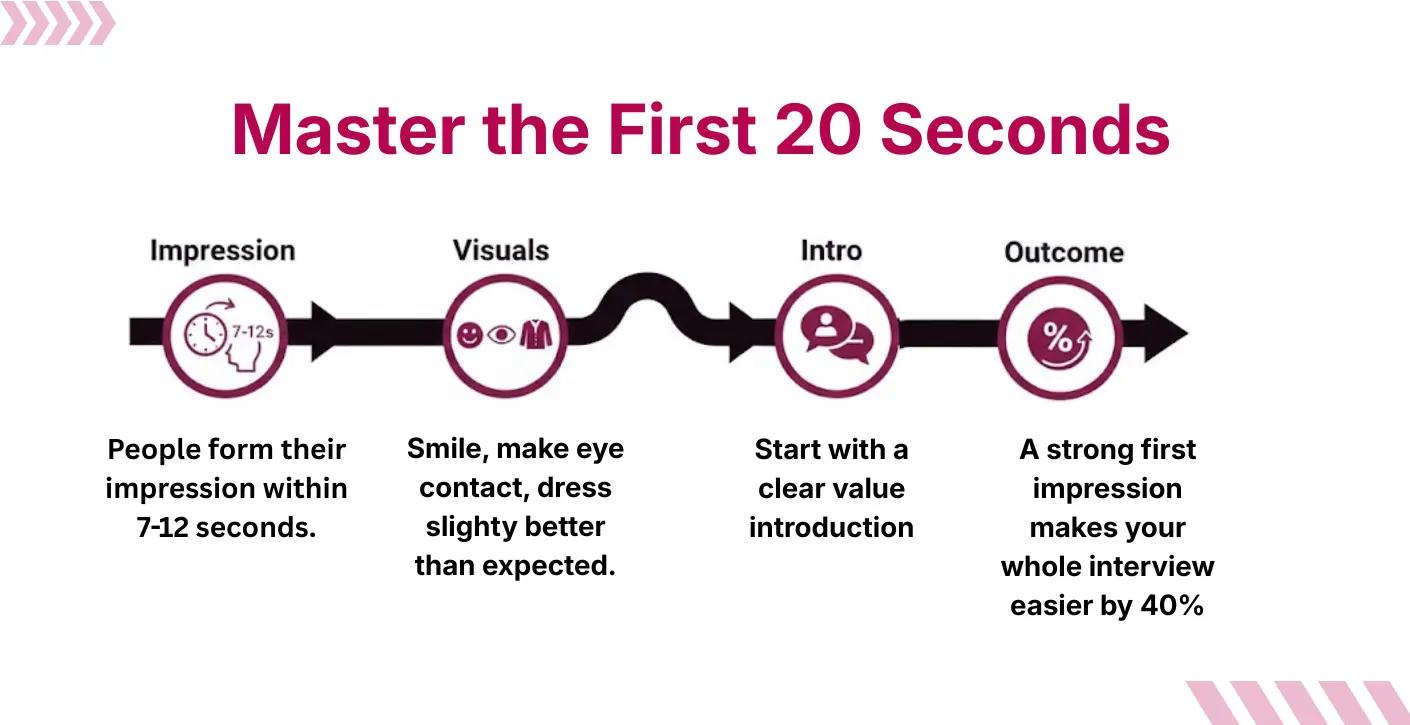
In psychology, the Halo Effect means this:
If you create a strong first impression, the interviewer subconsciously assumes the rest of you is good too.
A University of Toronto study found that first impressions are formed within 7–12 seconds, and they heavily influence final decisions.
How Freshers Can Use This
- Smile confidently when you enter.
- Make eye contact for 2–3 seconds.
- Dress 10% better than the job demands.
- Speak your first sentence slowly and clearly.
- Start with a “value introduction.”
Example:
“Hi, I’m Aakash. I’ve built three real-time projects and improved my last campaign performance by 38%. I’m excited to contribute here.”
- Instant authority.
- Instant credibility.
- Your interview just became easier by 40%.
Why It Works
Humans judge the whole personality by one strong trait. If your first impression is confident, they assume:
- You’re disciplined
- You’re skilled
- You’re professional
- You’re smart
Even before you show your portfolio.
2. Mirroring Technique: Build Subconscious Like ability
Mirroring is a popular Dark Psychology Skills principle used in negotiation, therapy, and leadership. It simply means:
Subtly match the interviewer’s tone, pace, and energy.
How to Use Mirroring in Interviews
- If the interviewer talks fast → you talk slightly faster
- If they sit upright → you sit upright
- If they use simple language → you adapt
- If they smile while speaking → mirror their warmth
You’re NOT copying them. You’re aligning to their communication style.
Why It Works
Humans trust people who “feel familiar.”
Research from Harvard University found that mirroring increases trust-building by 67%.
Example
Interviewer (calm tone): “So tell me about your final year project.”
You (mirror tone): “Sure. My final year project was focused on…”
Your energy matches theirs, immediately increasing comfort and rapport.
3. Framing Technique: Turn Weaknesses Into Strengths
Framing is one of the most powerful Dark Psychology Skills tools used in marketing and leadership.
It means: Positioning information in a way that benefits you.
Example: Weakness Question
Weak Answer: “I’m not good at multi-tasking.”
Framed Answer: “I prefer to focus deeply on one task at a time because it helps me deliver high-quality work. But I’m improving my multi-tasking using productivity tools.”
Same weakness. Higher perceived competence.
Example: Career Gap
Weak Answer: “I didn’t get a job.”
Framed Answer: “I intentionally invested these months to build real-time projects, certifications, and a strong portfolio. That preparation has made me more job-ready today.”
Why It Works
Framing allows you to control the narrative. It transforms:
Negative → Positive
Ordinary → Valuable
Weak → Strategic
In 2025, recruiters value maturity and self-awareness more than flawless profiles.
4. Why Dark Psychology Skills Matter in 2025
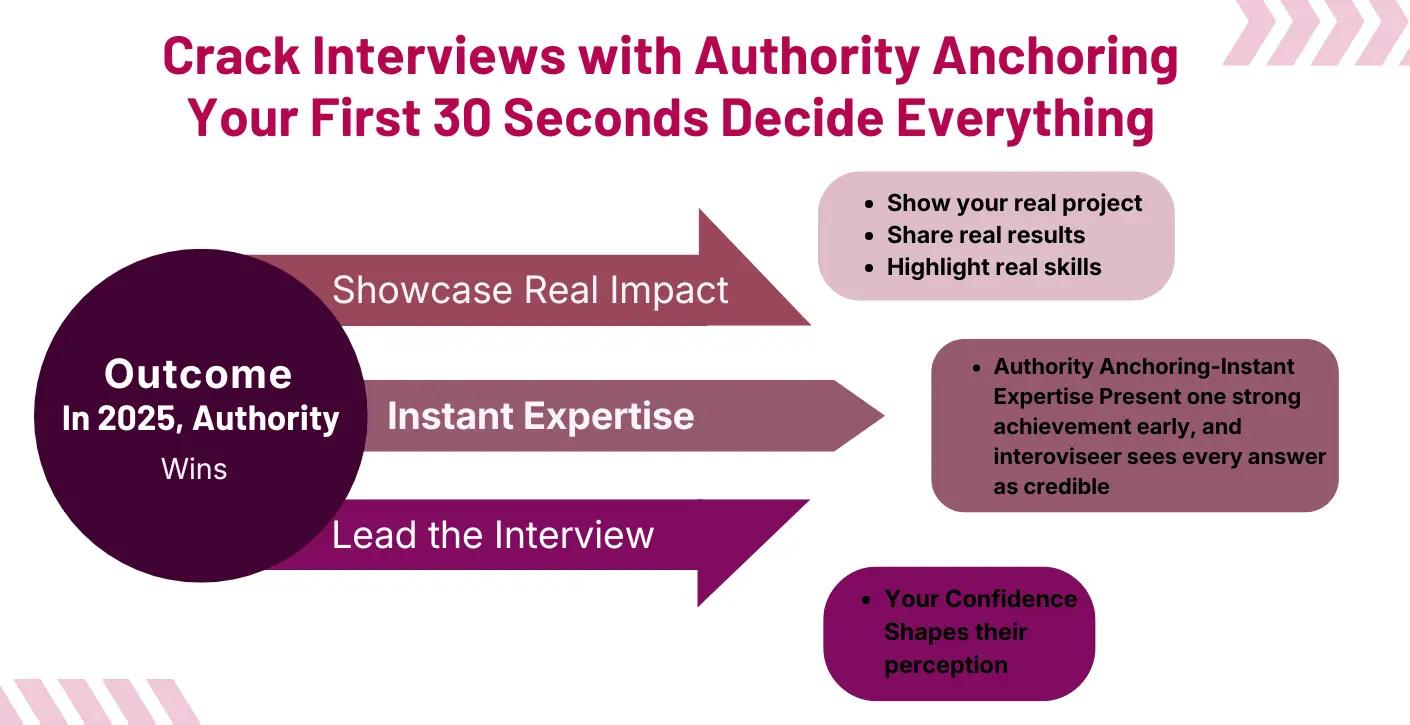
Authority Anchoring is the Dark Psychology Skills principle where:
If you present yourself with competence early, the interviewer believes your future answers are also strong.
How to Build Authority in the First 30 Seconds
Use the Project → Results → Skill formula:
“I recently worked on a social media campaign that increased engagement by 42%.
I handled strategy, automation, and analytics end-to-end.”
or
“I developed a MERN stack project with authentication, APIs, dashboard, and deployment. It helped me understand full-cycle development.”
Other Ways to Signal Authority
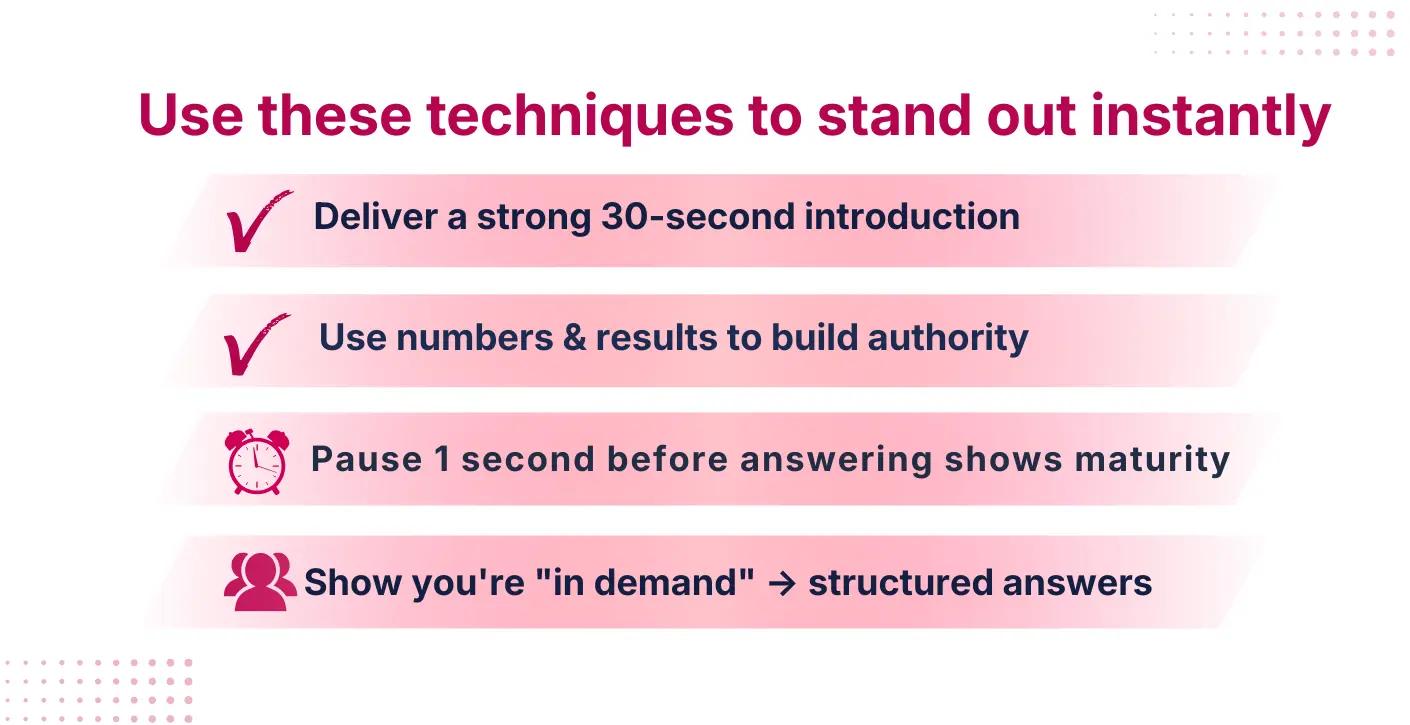
- Share numbers
- Share tools you used
- Share real client/internship work
- Share problem → solution stories
Why It Works
A Stanford study found that people perceive someone as an expert if they demonstrate proof within the first minute.
Your portfolio becomes your superpower.
5. Scarcity Effect: Make Yourself Look In Demand (But Respectfully)
The Scarcity Principle triggers the human brain to value things that appear rare or in demand.
Smart candidates subtly communicate:
“I am selective. I am prepared. I know my worth but I’m excited about your company.”
How to Use Scarcity
When asked, “Are you interviewing anywhere else?”:
Weak Answer: “No, only here.”
Scarcity Answer:
“I’m in discussions with two companies because my portfolio gained good traction. But I’m genuinely excited about this role because it aligns best with my long-term goals.”
This creates three psychological triggers:
- Value
- Urgency
- Respect
You are NOT manipulating. You are communicating confidence.
Why It Works
Recruiters prefer candidates whose demand is visible — it signals skill, effort, and market readiness.
Bonus Dark Psychology Skills Technique: The Power Pause
When you’re asked a question: Pause for 1 second before answering.
This shows:
- Thoughtfulness
- Calmness
- Maturity
- Intelligence
Executives and speakers use this technique globally.
2025 Interview Landscape: Key Stats That Matter
- India’s overall unemployment rate is around 5.1% nationally but youth unemployment remains disproportionately high at approximately 14.6% to 17.6%, with urban youth facing rates near 19% (India Macro Indicators, 2025)
- Educated youth form a large share of the unemployed: 66% of the unemployed are graduates or postgraduates, underscoring a deep structural mismatch between education output and available jobs (InsightsIAS, 2025)
- Around 3 million new graduates enter the labor market annually, creating constant pressure with far fewer suitable job openings, especially formal, well-paying roles.
These numbers show why Dark Psychology Skills> knowledge in interviews.
- Only about 43-55% of Indian graduates are considered employable by industry standards, with the rest often lacking both technical and crucial soft skills like communication, problem-solving, and teamwork (IndiaToday, 2025)
- A key problem is the academic system prioritizing degrees over practical job-ready skills, leading to graduates unprepared for technology-driven roles and modern workplace demands (Insights IAS, 2025)
- This skill mismatch leads to high rates of interview failure, rejection, and underemployment or reliance on low-paying, informal work.
6.How Freshers Should Prepare After Learning These Skills
- Build a strong portfolio
- Practice interview role-play (mirror technique)
- Create a powerful 30-second intro
- Use STAR format for answers
- Stay consistent in skill-building
- Apply psychology consciously, not manipulatively
1. Build a Strong Portfolio
In 2025, your portfolio is more important than your degree, resume, or CGPA. A strong portfolio shows recruiters what you can do, not just what you studied. Include real-time projects, case studies, campaign performance reports, GitHub repositories, live website links, UI/UX mockups, certifications, and before-after results. Use numbers and outcomes to demonstrate impact. A portfolio acts as your “Authority Anchor,” instantly positioning you as a serious candidate. Recruiters spend 72% more time reviewing portfolios than resumes, according to LinkedIn. Update your portfolio every month and ensure it reflects your best, most recent work, and Dark Psychology skills.
2. Practice Interview Role-Play (Mirror Technique)
Role-play is the fastest way to improve interview performance. Practice with a friend, mentor, or AI tool by simulating real interview scenarios. Use the Mirroring Technique: match the interviewer’s pace, tone, and communication style to subconsciously build rapport. This isn’t manipulation, it’s behavioral alignment that increases trust and comfort. Record your mock sessions, analyses your body language, and refine your clarity. Studies show that candidates who practice structured mock interviews perform 40% better in real interviews. Don’t wait for your dream company to test you, prepare aggressively through role-play and psychological alignment.
3. Create a Powerful 30-Second Introduction
Your self-introduction is your single biggest psychological trigger. Recruiters form opinions within 7–12 seconds, and a strong 30-second intro sets the tone for the entire interview.
Use the structure: Who you are → What you’ve done → What skills you bring → Why you’re here.
Example: “I’m Karthik, a Full Stack Developer who built three real-time MERN apps. I specialise in APIs, dashboards, and deployment. I enjoy solving complex problems and I’m excited about contributing to your product team.” This introduction communicates clarity, confidence, and competence without sounding scripted. Practice until it sounds natural and effortless.
4. Use STAR Format for Answers
The STAR method (Situation–Task–Action–Result) helps you answer behavioural questions with structure and impact. Instead of rambling, you communicate your thought process clearly and show measurable outcomes.
Example: “In my internship (Situation), I was assigned to improve campaign engagement (Task). I analysed audience insights and redesigned creatives (Action), increasing engagement by 42% (Result).” This method proves you can think, execute, and deliver results, the top three traits recruiters look for. STAR makes even simple experiences sound professional and credible. Practice converting your projects, challenges, and tasks into STAR stories to stand out instantly.
5. Stay Consistent in Skill-Building
Consistency is the separator between average freshers and job-ready professionals. Instead of trying to learn everything in one week, focus on daily micro-learning, 1 hour per day improves long-term retention by 60%.
Build habits: daily coding, weekly projects, monthly portfolio updates, and regular mock interviews. Companies today look for “proof of consistency,” not just knowledge. Certifications, GitHub activity, LinkedIn posts, and continuous practice signal commitment.
You don’t need big progress; you need consistent progress. Skills compound, and interview confidence naturally rises when you practice regularly. Treat your learning journey like a gym routine: small steps, big transformation.
6. Apply Psychology Consciously, Not Manipulatively
Dark psychology skills are powerful when used ethically. Your intention should never be to deceive but to communicate confidently, present your strengths clearly, and connect better with interviewers. Use techniques like mirroring, framing, authority anchoring, and the halo effect to enhance clarity and influence, not to manipulate. Recruiters can sense authenticity versus artificial behavior within minutes.
Ethical psychology builds trust and leaves a positive impression. Remember, interviews are human interactions: honesty + psychological awareness is the winning combination. Use these skills to highlight your value, not hide your flaws. The goal is alignment, not manipulation.
Ready to Build Interview-Proof Skills & Crack Your Dream Job?
At WHY TAP, thousands of freshers have transformed their careers through:
- Real-time projects
- Portfolio building
- Interview mastery
- Communication training
- Mock interviews
- Placement support
- Industry mentorship
- AI-powered learning tools
👉Join our Full Stack / Digital Marketing / Data Science programs and become job-ready in 6 months.
Your dream job is not luck.
It’s psychology + skills + preparation.