



Table of Contents
- 1.
- 2.
- 3.
- 3.1
- 3.2
- 3.3
- 3.4
- 4.
- 4.1
- 4.2
- 4.3
- 4.4
- 4.5
- 5.
- 5.1
- 5.2
- 5.3
- 5.4
- 6.
- 6.1
- 6.2
- 6.3
- 6.4
- 7.
- 7.1
- 7.2
- 7.3
- 7.4
- 7.5
- 8.
- 8.1
- 8.2
- 8.3
- 8.4
- 9.
- 9.1
- 9.2
- 9.3
- 9.4
- 10.
Introduction
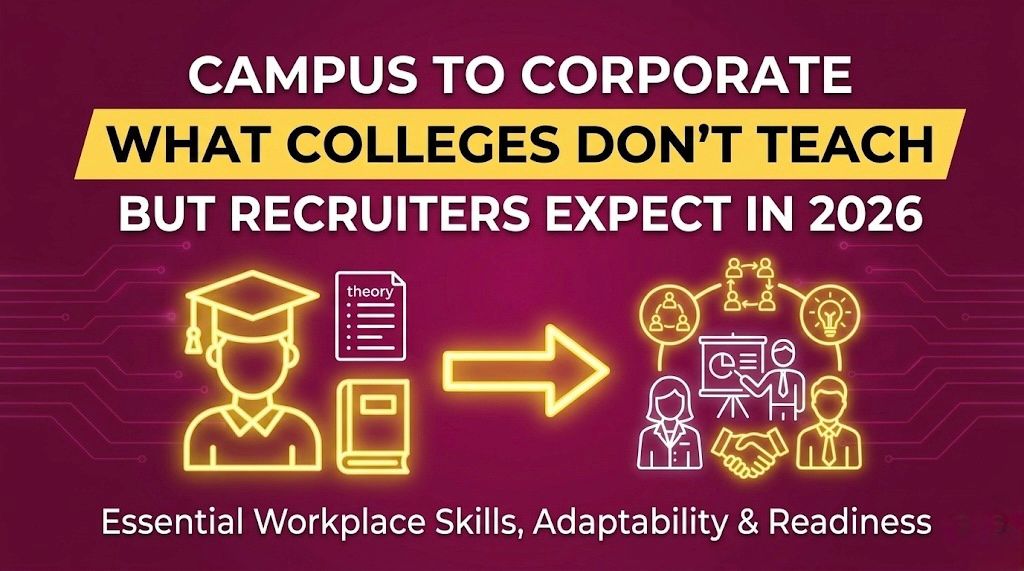
Campus to Corporate refers to the transition from academic life to a professional workplace environment. It involves adapting to structured work culture, performance expectations, corporate communication standards, and accountability systems. Success in this transition depends on developing practical skills, emotional intelligence, workplace etiquette, and a proactive learning mindset.
- You spent years chasing grades but no one taught you how to survive your first corporate meeting.
- According to the National Association of Colleges and Employers (NACE), employers prioritize communication, teamwork, and problem-solving over GPA when hiring freshers.
- A McKinsey Global Institute report highlights that nearly 40% of employers struggle to find job-ready candidates due to skill gaps.
This guide breaks down exactly how to bridge the gap practically and strategically.
What Does “Campus to Corporate” Really Mean?
“Campus to Corporate” describes the transition from student life to professional work life. It’s not just about getting a job, it’s about changing how you think, communicate, and perform.
In college, you focus on:
- Passing exams
- Completing assignments before deadlines
- Managing flexible schedules
- Studying theory
In corporate life, you must:
- Deliver measurable results
- Take ownership of tasks
- Work within strict timelines
- Solve real business problems
Example:
In college, if you miss a deadline, you might request an extension.
In a company, missing a deadline can delay a client project and affect revenue.
That’s the difference.
Campus life rewards effort.
Corporate life rewards impact.
Here’s what really changes:
- Accountability increases → Managers expect ownership, not excuses.
- Communication becomes strategic → Emails, presentations, and meetings require clarity and professionalism.
- Feedback becomes continuous → You receive performance reviews, not semester grades.
- Learning becomes self-driven → No one forces you to grow; you must upgrade yourself.
The biggest shift?
You move from being evaluated on what you know to being evaluated on how you apply what you know.
Campus to Corporate means stepping into responsibility, building professional identity, and creating value consistently. The Campus to Corporate shift changes how you think, work, and communicate.
Top Challenges Freshers Face in the Campus to Corporate Transition
The first job feels exciting until the pressure kicks in. Most freshers don’t struggle because they lack degrees. They struggle because they lack workplace readiness.
Here are the biggest challenges:
1. Imposter Syndrome
Many freshers secretly think: “Do I really deserve this job?”
In Times Of India, the KPMG study indicates nearly 75% of professionals experience imposter syndrome at some point in their careers.
- You hesitate to speak in meetings
- You overthink simple emails
- You compare yourself with experienced colleagues
Example: A fresher avoids asking questions during onboarding, then struggles silently with tasks.
2. Communication Gaps
Employers consistently rank communication as a top skill. The National Association of Colleges and Employers (NACE) highlights communication as one of the most desired competencies.
Freshers often struggle with:
- Writing professional emails
- Presenting ideas clearly
- Speaking confidently with managers
3. Time & Priority Management
College deadlines feel flexible. Corporate deadlines affect teams and clients.
- Multiple tasks run simultaneously
- Managers expect quick updates
- Delays impact project timelines
4. Understanding Corporate Culture
Workplace politics, hierarchy, and performance metrics confuse many freshers.
A McKinsey Global Institute report found that around 46% of employers struggle to find job-ready talent due to skill gaps.
The transition feels tough but awareness solves half the problem. Once you understand these challenges, you can prepare strategically instead of reacting emotionally. Preparing early reduces Campus to Corporate stress significantly.
Essential Skills Needed for a Smooth Campus to Corporate Transition
Your degree may get you hired. Your skills will get you promoted.
If you want to move from “new joiner” to “high performer,” focus on these essential skills:
1. Communication Skills
Corporate life runs on clear communication.
You must:
- Write structured, concise emails
- Present ideas confidently in meetings
- Ask smart, specific questions
Example:
Instead of saying, “I didn’t understand the task,” say:
“Can you clarify the expected outcome and deadline for this deliverable?”
2. Time Management
You will handle multiple tasks daily.
- Prioritize high-impact work
- Break tasks into smaller milestones
- Update stakeholders proactively
Missing deadlines damages trust quickly.
3. Corporate Etiquette
Professional behavior builds credibility.
- Join meetings on time
- Keep your camera ready in virtual calls
- Avoid interrupting seniors
- Dress appropriately for office culture
4. Emotional Intelligence
You must manage pressure, feedback, and personalities.
- Accept criticism without defensiveness
- Stay calm during conflicts
- Observe before reacting
5. Core Skills
| Skill | Why It Matters | Real Example | |
|---|---|---|---|
| Communication | Time Management | Adaptability | Ownership |
| Builds clarity & trust | Prevents deadline stress | Helps you grow faster | Builds leadership traits |
| Sending structured project updates | Delivering tasks before review meetings | Learning new tools within weeks | Fixing errors without blaming others |
Master these skills early. These skills directly impact your Campus to Corporate success rate. You won’t just survive corporate life, you’ll stand out.
Want to master communication, build job-ready skills, and avoid beginner mistakes?
WHY TAP provides practical, fresher-focused guidance to help you stand out from day one.
Start building your corporate skill stack here → https://whytap.in/
Step-by-Step Guide to Prepare for Campus to Corporate Life While in College
If you wait until your final semester to “get serious,” you start late. Use your college years as a training ground for corporate life.
Here’s how you prepare strategically:
Step 1: Gain Real-World Exposure
Don’t rely only on textbooks.
- Apply for internships every semester
- Take freelance gigs on small projects
- Volunteer for leadership roles in college clubs
- Participate in business case competitions
Example:
If you study finance, analyze a listed company and publish your insights on LinkedIn. Recruiters value proof of work.
Step 2: Improve Professional Communication
Strong communication sets you apart from 80% of freshers.
Practice:
- Writing structured emails (Subject → Context → Action → Deadline)
- Presenting ideas in under 5 minutes
- Speaking confidently during group discussions
- Asking clear, concise questions
Example: Instead of saying, “Please check,” write,
“Please review the attached report and share feedback by Friday.”
Step 3: Build Technical & Tool Skills
Companies expect operational readiness.
Focus on:
- Excel (formulas, data cleaning, pivot tables)
- PowerPoint storytelling
- Basic industry tools related to your field
- LinkedIn profile optimization
Step 4: Develop a Growth Mindset
Start behaving like a professional.
- Take responsibility for mistakes
- Seek feedback regularly
- Learn new skills every quarter
College gives you time. Use it wisely so corporate life doesn’t shock you, it accelerates you.
90-Day Campus to Corporate Survival Plan
Your first 90 days shape your reputation. Managers don’t expect perfection, they expect effort, learning speed, and reliability. Use this structured plan to build credibility fast.
Days 1–30: Observe and Understand
Focus on learning before proving yourself.
- Understand team structure and reporting hierarchy
- Clarify your KRAs (Key Result Areas)
- Take notes during meetings
- Ask thoughtful, specific questions
- Learn company tools and workflows
Example:
Instead of giving opinions immediately, say:
“I’ve noticed we track weekly metrics. Can you explain how success gets measured here?”
Days 31–60: Contribute and Take Ownership
Now shift from observer to contributor.
- Volunteer for small tasks
- Deliver assignments before deadlines
- Share progress updates proactively
- Request structured feedback
Example: Send weekly update emails summarizing completed tasks and next steps.
Days 61–90: Create Visible Impact
Start positioning yourself as dependable.
- Take ownership of a mini-project
- Improve an existing process
- Build cross-team relationships
- Document measurable outcomes
The table below summarizes the Campus to Corporate 90-day roadmap:
| Action in College | Corporate Advantage | Example Outcome |
|---|---|---|
| Internship | Public speaking | Excel practice |
| Practical exposure | Meeting confidence | Data handling |
| Faster onboarding | Clear client presentations | Accurate reports |
If you follow this roadmap, you won’t just survive corporate life, you’ll stand out early.
Your first 90 days decide your reputation. Don’t leave it to guesswork.
Get structured career guidance, resume support, and corporate-readiness resources at Why Tap.
Prepare smarter → https://whytap.in/
Mistakes to Avoid During Campus to Corporate Transition
Your first year in corporate life can accelerate your growth or quietly damage your reputation. Many freshers don’t fail because they lack skill. They fail because they repeat avoidable mistakes.
Here’s what you must avoid:
1. Acting Overconfident
Confidence helps. Overconfidence hurts.
- Interrupting seniors in meetings
- Rejecting feedback instantly
- Saying “I know this” without understanding context
Example:
You might know Excel formulas, but corporate data requires accuracy, formatting standards, and business insight.
2. Staying Silent in Meetings
Silence doesn’t signal intelligence. It signals disengagement.
- Avoiding participation
- Failing to ask clarifying questions
- Agreeing without understanding
Instead, ask:
“Can you clarify the expected outcome for this task?”
3. Ignoring Feedback
Feedback fuels growth.
- Don’t take it personally
- Don’t defend every mistake
- Don’t repeat the same errors
If your manager suggests improving email clarity, apply changes immediately.
4. Comparing Salary and Growth Constantly
Comparison creates distraction.
- Avoid discussing pay frequently
- Focus on learning curve first
- Build skills before chasing increments
5. Participating in Office Gossip
Gossip damages trust quickly.
- Stay neutral
- Focus on performance
- Build a professional image
How Companies Evaluate Freshers in the First Year of the Campus to Corporate Journey
Your company doesn’t judge you only on technical knowledge. Managers evaluate behavior, attitude, and execution from day one. The first year builds your professional reputation.
According to the National Association of Colleges and Employers (NACE), employers rank communication, teamwork, problem-solving, and initiative among the top attributes they assess in new hires.
Here’s what companies actually track:
1. Learning Agility
- How fast do you understand new tools?
- Do you apply feedback quickly?
- Can you handle unfamiliar tasks confidently?
Example:
If your manager introduces a new CRM tool, do you explore tutorials immediately or wait for instructions?
2. Ownership & Accountability
- Do you meet deadlines consistently?
- Do you inform stakeholders before delays?
- Do you take responsibility for mistakes?
Managers trust freshers who say, “I made this error. I’ve corrected it and added a checklist to prevent it.”
3. Communication Clarity
- Are your emails structured?
- Do you summarize meetings clearly?
- Do you ask smart questions?
Poor communication creates rework. Clear updates build credibility.
4. Attitude & Team Behavior
A LinkedIn Workplace Learning Report highlights adaptability as a critical skill for long-term career success.
Companies observe:
- How you respond to pressure
- How you collaborate with peers
- How you handle feedback
In the first year, your attitude matters more than your experience. Skills can grow. Mindset defines growth speed.
Tools and Resources to Make Campus to Corporate Easier
You don’t need luck to survive corporate life. You need the right tools. Smart freshers upgrade faster because they use resources strategically.
Here’s what helps:
1. Communication & Writing Tools
- Grammarly – Improves email clarity and tone
- ChatGPT – Helps structure professional emails and presentations
- Toastmasters – Builds public speaking confidence
Example:
Draft your email → Run it through Grammarly → Check tone → Send confidently.
2. Productivity & Time Management
- Google Calendar – Plan deadlines and meetings
- Notion / Trello – Track tasks visually
- Pomodoro technique apps – Improve focus
Example: Break a large project into smaller tasks and assign deadlines inside Trello.
3. Technical Skill Platforms
- LinkedIn Learning – Short corporate-focused courses
- Coursera / Udemy – Excel, PowerPoint, data skills
- YouTube tutorials for tool-specific learning
Spend 30 minutes daily upgrading one skill.
4. Professional Branding Resources
- LinkedIn profile optimization guides
- Resume-building platforms
- Industry newsletters
Conclusion: From Campus to Corporate Make the Shift Strategically
The campus-to-corporate transition doesn’t test your memory. Understanding the Campus to Corporate journey early gives you a competitive advantage. It tests your mindset, discipline, communication, and adaptability. College rewarded preparation for exams. Corporate life rewards preparation for impact.
If you:
- Build practical skills early
- Communicate clearly and confidently
- Take ownership instead of making excuses
- Seek feedback and apply it fast
- Focus on long-term growth over short-term comparison
You won’t just survive your first year you’ll accelerate your career.
Most freshers struggle because they react after facing problems. Smart professionals prepare before entering the room. The difference shows in promotions, salary growth, and confidence.
The Campus to Corporate shift becomes easier when you prepare intentionally instead of reacting emotionally.