






Table of Contents
- 1.
- 2.
- 3.
- 4.
- 5.
- 6.
- 7.
- 8.
- 9.
- 10.
As technology continues to shape our lives, cybersecurity has quickly risen to become one of the most sought-after and rewarding careers. From protecting sensitive data to defending businesses against cyberattacks, cybersecurity professionals play a critical role in keeping our digital infrastructure safe. If you are passionate about technology, problem-solving, and security, a career in cybersecurity could be the perfect choice for you.
This comprehensive roadmap will guide you through the skills, certifications, and career stages needed to build a successful cybersecurity career.
Why Choose a Career in Cybersecurity?
Before diving into the roadmap, it’s important to understand why cybersecurity is a great career choice:
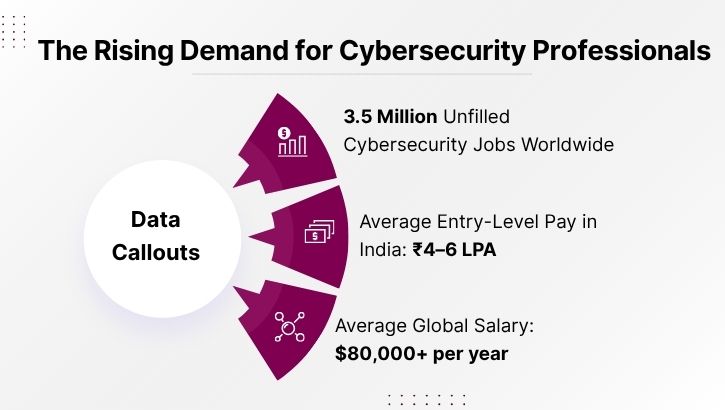
- High Demand: The global cybersecurity workforce gap is estimated to be over 3.5 million jobs. This means companies are actively looking for skilled professionals.
- Excellent Salary: Cybersecurity roles are among the top-paying IT jobs, with entry-level salaries starting at ₹4–6 LPA in India and much higher globally.
- Dynamic Growth: The field evolves quickly, keeping your work challenging and exciting.
- Impactful Work: You directly contribute to protecting businesses, governments, and individuals from cyber threats.
Step 1: Build Strong Fundamentals
Cybersecurity starts with a solid foundation in IT and networking. Before specializing, make sure you understand the basics:
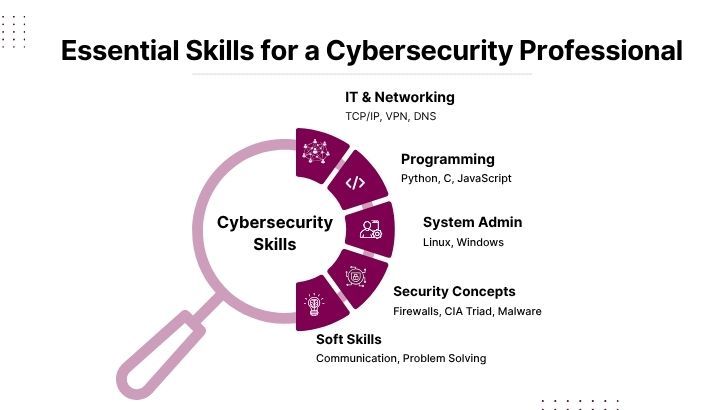
- Computer Fundamentals: Learn about operating systems (Windows, Linux), file systems, and system administration.
- Networking: Understand TCP/IP, DNS, HTTP, VPNs, and how data travels across networks. Tools like Wireshark can help you visualize traffic.
- Programming Basics: Languages like Python, C, or JavaScript will help you write scripts, automate tasks, and analyze vulnerabilities.
- Cybersecurity Basics: Study key concepts like CIA triad (Confidentiality, Integrity, Availability), firewalls, malware, and encryption.
Recommended Resources:
- CompTIA IT Fundamentals (ITF+) for absolute beginners
- Networking books like Computer Networking: A Top-Down Approach
- Free resources like Cybrary, TryHackMe, and Cisco Networking Academy
Step 2: Gain Hands-on Experience
Theoretical knowledge is not enough. Employers look for practical skills. Here’s how you can build them:
- Home Lab Setup: Use VirtualBox or VMware to create a virtual lab with multiple operating systems to practice networking, attacks, and defenses.
- Online Labs: Platforms like Hack The Box, TryHackMe, and PortSwigger’s Web Security Academy provide safe environments for ethical hacking practice.
- Capture The Flag (CTF) Challenges: Participate in CTF competitions to sharpen your problem-solving and hacking skills.
Hands-on experience builds trust and shows your expertise — two critical elements of EEAT.
Step 3: Choose Your Cybersecurity Career Path
Cybersecurity is a broad field. Identify which role interests you the most:
- Security Analyst: Monitors systems, investigates incidents, and mitigates threats.
- Penetration Tester / Ethical Hacker: Simulates attacks to find and fix vulnerabilities.
- SOC Analyst: Works in a Security Operations Center monitoring logs and responding to alerts.
- Cloud Security Engineer: Secures cloud infrastructure and services.
- Incident Responder / Forensics Expert: Investigates breaches and collects evidence.
- Governance, Risk & Compliance (GRC) Specialist: Focuses on policies, audits, and regulatory compliance.
Choosing a focus early helps you plan the right certifications and projects.
Step 4: Earn Relevant Certifications
Certifications add credibility to your profile and demonstrate your skills to employers. Start with entry-level, then move to advanced certifications as you progress:
- Beginner Level:
- CompTIA Security+
- Certified Cybersecurity (CC) by (ISC)²
- Intermediate Level:
- Certified Ethical Hacker (CEH)
- CompTIA CySA+ (Cybersecurity Analyst)
- Offensive Security Certified Professional (OSCP)
- Advanced Level:
- Certified Information Systems Security Professional (CISSP)
- Certified Cloud Security Professional (CCSP)
- GIAC Security Expert (GSE)
These certifications validate your expertise and help you stand out in a competitive job market.
Step 5: Build a Strong Portfolio
In cybersecurity, your skills speak louder than your resume. Build a portfolio that demonstrates your ability:
- Document your projects and lab exercises on GitHub.
- Write blogs about your learnings or create tutorials on LinkedIn or Medium.
- Share write-ups for CTF challenges you solved.
- Contribute to open-source security tools.
This builds authoritativeness in the community and positions you as a knowledgeable professional.
Step 6: Apply for Entry-Level Roles
Once you have a solid foundation, start applying for roles such as:
- SOC Analyst – Level 1
- Junior Penetration Tester
- IT Security Support
- Security Research Intern
Don’t wait until you’re “perfect.” Many companies value willingness to learn and grow. Tailor your resume to highlight projects, labs, and certifications.
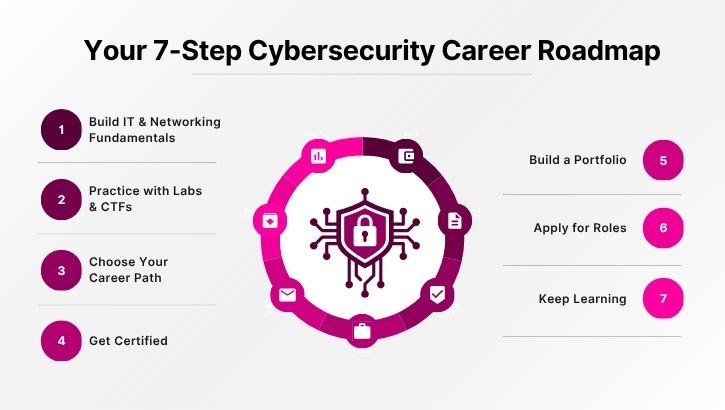
Step 7: Keep Learning and Specializing
Cybersecurity is an ever-changing field. Stay updated with new threats, tools, and technologies:
- Follow security blogs (Krebs on Security, Dark Reading)
- Subscribe to CVE databases and vulnerability feeds
- Learn about AI-driven threats, zero trust architecture, and cloud-native security
- Attend conferences (Black Hat, DEF CON, local security meetups)
Continuous learning builds trustworthiness and ensures long-term career growth.
Career Growth Opportunities
Here’s what a typical cybersecurity career progression looks like:
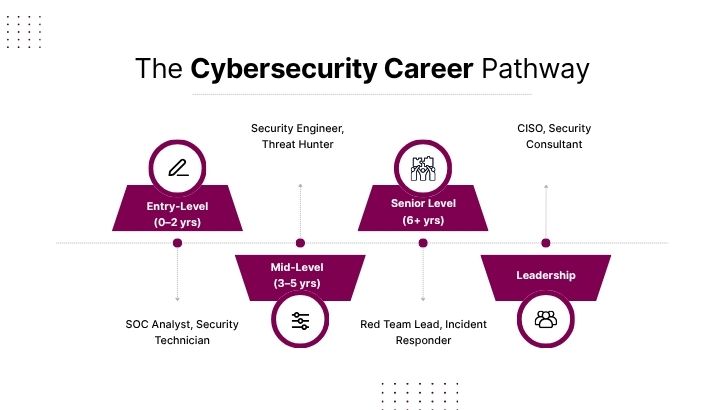
- Entry-Level (0–2 years): SOC Analyst, Security Technician
- Mid-Level (3–5 years): Security Engineer, Penetration Tester, Threat Hunter
- Senior Level (6+ years): Security Architect, Incident Response Lead, Red Team Lead
- Leadership Roles: CISO (Chief Information Security Officer), Security Consultant, Director of Cybersecurity
Each stage comes with higher responsibility, strategic decision-making, and better pay.
Final Thoughts
A career in cybersecurity is not just about hacking or defending systems — it’s about protecting the digital future. By following this roadmap, you’ll gain the right mix of knowledge, hands-on experience, certifications, and industry recognition to succeed in this field.
Whether you are a student, IT professional, or someone switching careers, there has never been a better time to enter the cybersecurity industry. Start small, stay consistent, and invest in continuous learning — your future in cybersecurity awaits.