The data science job market has become one of the fastest-growing career paths in the world. According to the US Bureau of Labor Statistics, jobs in data science will grow 35 percent by 2032, far higher than the average for all occupations. Companies across finance, healthcare, retail, logistics, and technology are shifting toward data-driven decision-making, which has created an urgent need for skilled data professionals.
This rising demand also means one thing:
Your earning potential is directly connected to the skills you learn from the data science course syllabus.
A well-structured syllabus does more than teach concepts. It builds job-ready skills, hands-on capabilities, portfolio strength, and practical exposure. In this guide, we will break down the specific skills inside a modern data science course syllabus that lead to high-paying jobs, supported by industry data, projections, and research from trusted sources like McKinsey, IBM, and Gartner.
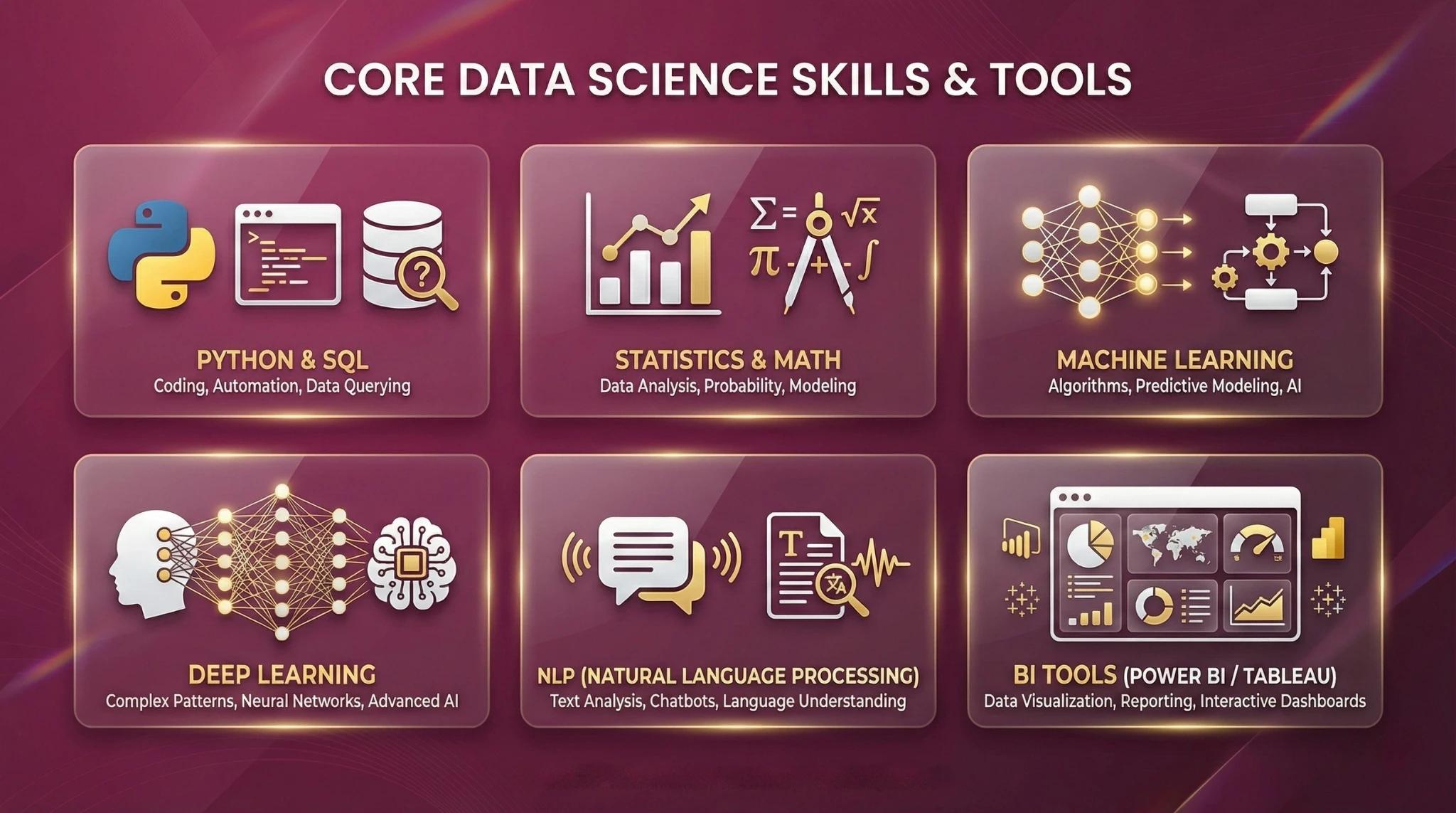
Every modern data science course syllabus places Python and SQL at the top.
This is because they are the backbone of:
The syllabus also includes advanced SQL topics like JOINs, subqueries, window functions, and optimized querying.
According to an Indeed survey, 75 percent of data scientist job descriptions list Python as a top requirement.
SQL appears in more than 60 percent of data and analytics job postings.
Companies value these skills because they:
Professionals with strong Python & SQL fundamentals earn 20 to 40 percent higher, based on Gartner’s Workforce Analytics report.
Statistics is the “brain” behind every decision in data science.
This is why the data science course syllabus includes topics like:
The Applied Statistics & Machine Learning module in the syllabus provides all these foundations.
McKinsey reports that companies using advanced statistical modeling see 6 percent to 10 percent higher profitability.
This drives demand for professionals who can:
Because statistical thinking improves business performance directly, salaries in these roles trend significantly higher.
Companies want insights, not just data.
This is why a strong data science course syllabus includes BI tools like:
A Statista report says 95 percent of business managers prefer visuals over raw spreadsheets for decision-making.
This means BI specialists are needed for:
High-paying job roles include:
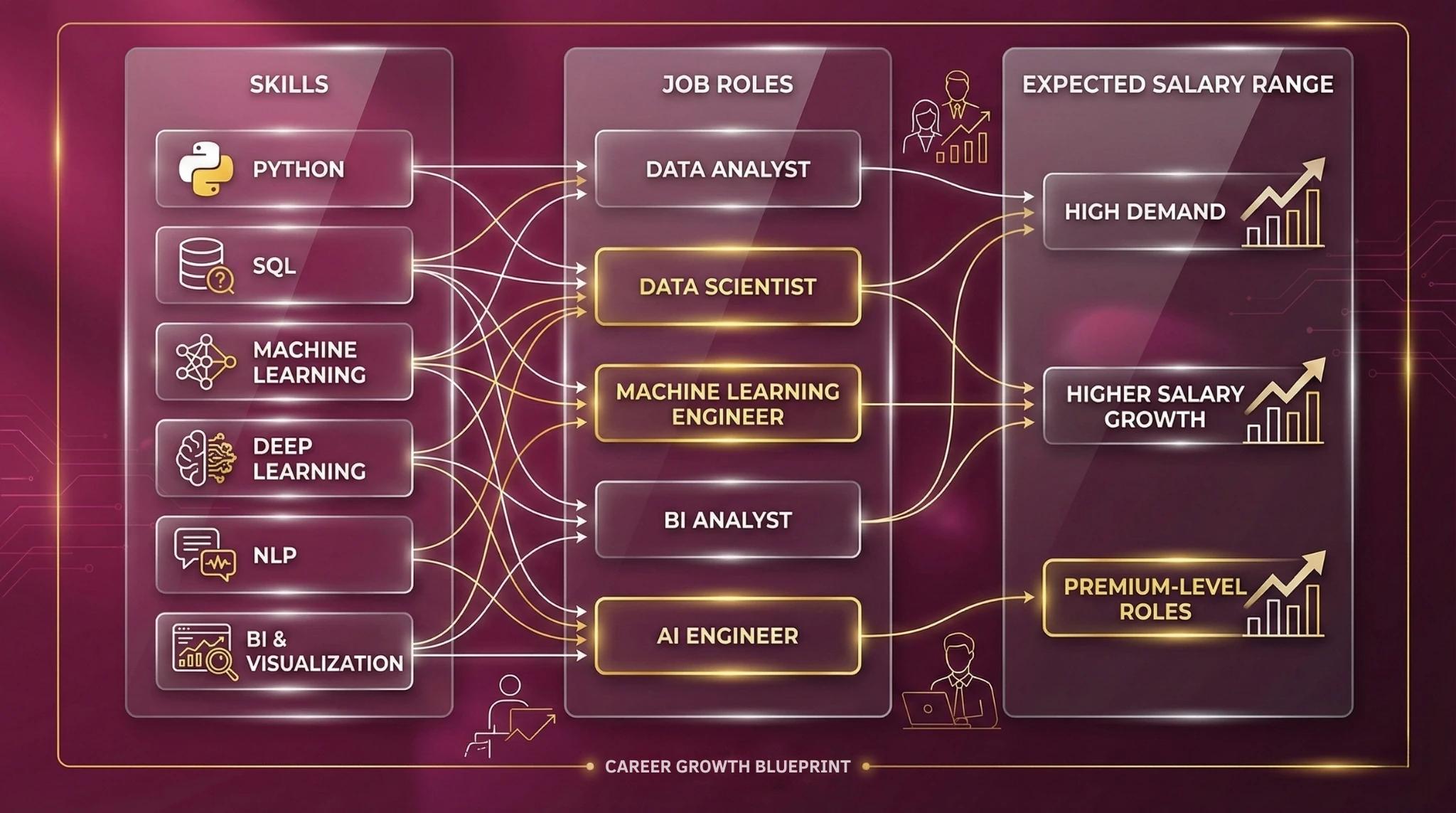
Machine Learning is the single most important high-income skill in the data science course syllabus.
The syllabus covers:
IBM reports that machine learning jobs pay 20 percent higher on average because:
Machine learning engineers and data scientists often take home double the salary of analysts.
The data science course syllabus also includes advanced skills like:
Gartner predicts 70 percent of enterprise decisions will rely on AI-based forecasting tools by 2030.
This directly benefits job roles like:
Salaries are high because these roles influence:
Deep Learning is where salaries significantly jump.
The syllabus includes:
Deloitte reports that deep learning specialists earn 40 to 60 percent more because their expertise is rare and technically demanding.
Deep Learning powers:
The syllabus covers:
Statista reports the NLP market will reach 42.04 billion USD by 2025.
Businesses need NLP for:
These roles command high salaries due to growing demand after the rise of LLMs and generative AI.
Learning deployment tools makes you a full-stack data scientist.
The syllabus includes:
Only 10 to 15 percent of data professionals know deployment skills (Source: O’Reilly AI Survey).
Companies pay more because deployed models directly power:
This skill converts knowledge into business results.
The program includes:
A Kaggle industry survey reports that portfolio strength is the number one factor in hiring decisions.
Hands-on projects help you:
This directly increases your salary negotiation power.
A good data science course syllabus also includes:
LinkedIn’s Future Skills Report states that communication is the #1 skill hiring managers look for, even in technical roles.
Professionals who can explain insights clearly often move into high-paying roles like:
A modern data science course syllabus is designed to prepare learners for high-paying roles by focusing on real tools, practical implementation, and industry scenarios. Companies today do not hire candidates based only on degrees. They hire based on:
If your syllabus covers Python, SQL, visualization, machine learning, deep learning, NLP, deployment, and business analytics, you are already on the path to a high-income career.