




Table of Contents
- 1.
- 1.1
- 2.
- 2.1
- 3.
- 4.
- 4.1
- 5.
- 6.
- 7.
- 8.
Infosys Joins Hands with Anthropic
Enterprises are moving beyond basic automation and adopting intelligent systems that can analyze data, make decisions, and act with minimal human intervention. The rise of AI Agents in Enterprise Data is reshaping how organizations manage insights, operations, and strategic planning across departments.
The collaboration between Infosys and Anthropic highlights a major shift in enterprise AI adoption. By combining advanced language models with enterprise-grade solutions, businesses can now automate complex workflows, improve decision-making speed, and unlock new levels of operational efficiency.
As global companies accelerate AI investments, enterprise leaders must understand how AI agents will transform data ecosystems and competitive positioning. In the sections below, we will explore the impact of this partnership, real enterprise use cases, and what businesses should consider when adopting AI-driven data strategies.
Why the Infosys–Anthropic Partnership Matters for Enterprises
The partnership between Infosys and Anthropic signals a major shift in how enterprises adopt and scale artificial intelligence. Instead of experimenting with isolated AI tools, organizations are now moving toward integrated AI agents that can operate across departments and business functions. This collaboration enables enterprises to deploy advanced AI capabilities within their existing data ecosystems while maintaining security, compliance, and scalability.
Through its enterprise-focused AI solutions strategy, Infosys aims to deliver industry-ready AI implementations powered by Anthropic’s advanced models. As highlighted in the official announcement, the partnership focuses on responsible AI deployment, workflow automation, and intelligent decision support across global enterprises.
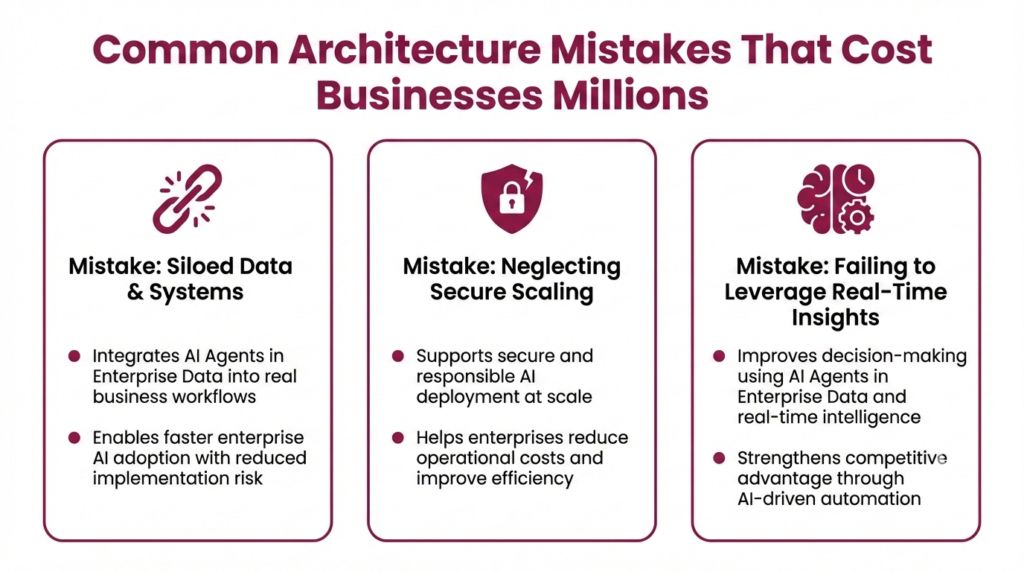
Key Reasons This Partnership Matters
- Enables faster enterprise AI adoption with reduced implementation risk
- Integrates advanced AI agents into real business workflows
- Supports secure and responsible AI deployment at scale
- Improves decision-making through real-time data intelligence
- Helps enterprises reduce operational costs and improve efficiency
- Strengthens competitive advantage through AI-driven automation
For enterprise leaders, this partnership represents more than a technology collaboration. It reflects a strategic move toward autonomous, AI-powered business operations where intelligent agents assist in analytics, decision-making, and process optimization across the organization.
What Are AI Agents in Enterprise Data Ecosystems?
AI agents are advanced software systems designed to analyze data, make decisions, and execute tasks with minimal human intervention. In modern enterprises, these agents operate within data ecosystems to automate workflows, generate insights, and support strategic planning. Unlike traditional analytics tools, AI agents can continuously learn from data and adapt to changing business environments.
As enterprises generate massive volumes of structured and unstructured data, AI agents help convert this data into actionable intelligence. They can monitor patterns, detect anomalies, and recommend next steps in real time. This makes them valuable for organizations aiming to improve efficiency, reduce manual effort, and enhance decision accuracy.
Key capabilities of enterprise AI agents include:
- Real-time data analysis and insights generation
- Automated reporting and dashboard updates
- Predictive and prescriptive decision support
- Workflow automation across departments
- Continuous learning from business data
How Enterprise AI Agents Differ from Traditional Automation
Traditional automation focuses on rule-based tasks and predefined workflows. While effective for repetitive processes, it lacks adaptability and contextual understanding. Enterprise AI agents, on the other hand, use advanced language models and machine learning to understand context, interpret data patterns, and make informed decisions.
They can analyze large datasets, generate insights, and even recommend strategic actions. This ability to combine automation with intelligence makes AI agents a core component of modern enterprise data strategies.
Enterprise Use Cases of AI Agents Across Industries
AI agents are no longer limited to experimental deployments. Enterprises across industries are embedding intelligent agents into core operations to improve efficiency, reduce cost, and enhance decisi
on-making. These systems analyze enterprise data continuously and act on insights in real time.
From finance to healthcare, AI agents are transforming how organizations manage workflows and strategic planning. The recent market update highlights how large enterprises are accelerating AI adoption to stay competitive in an increasingly automated economy.
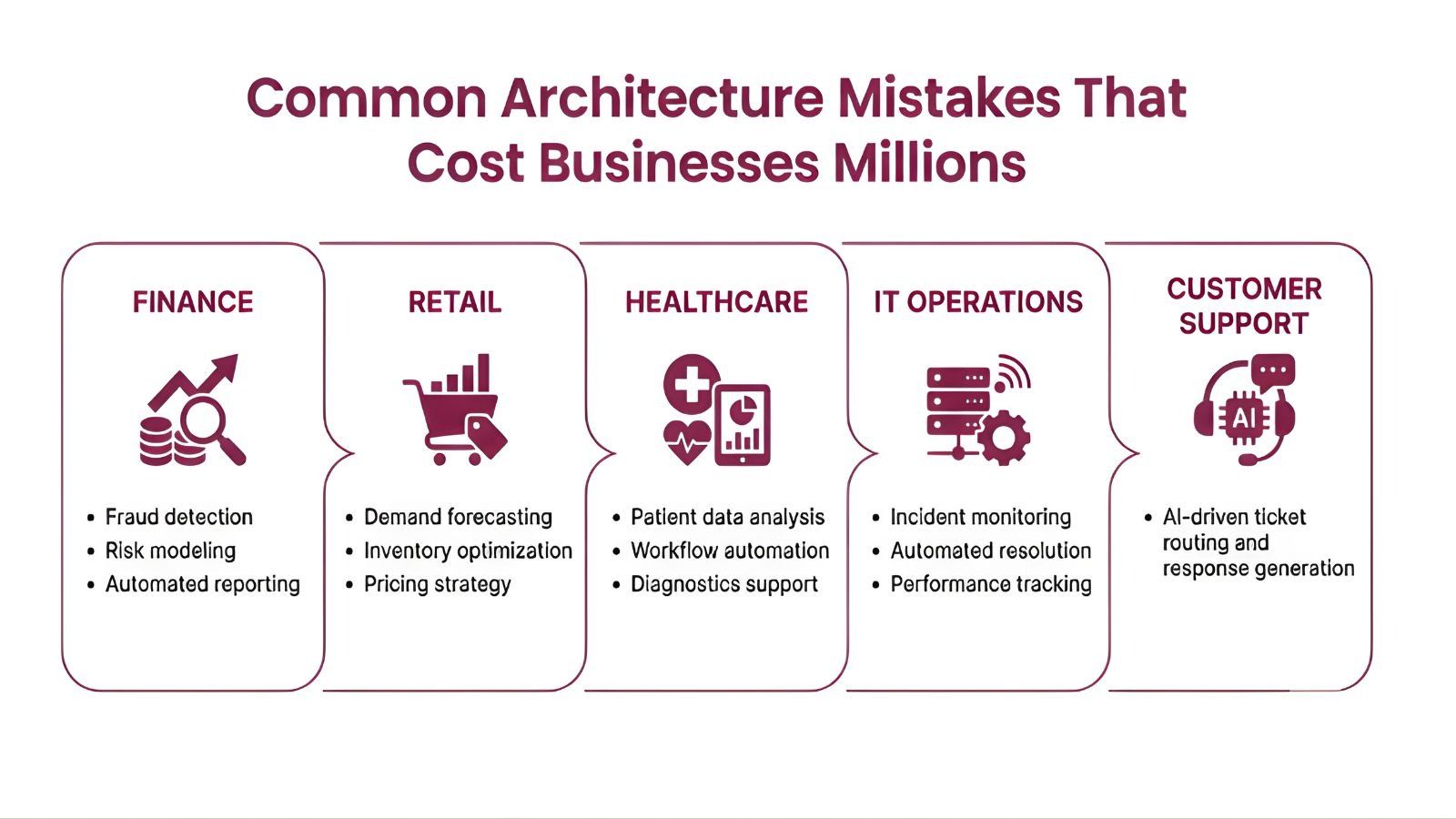
Common Enterprise Applications
- Finance: Fraud detection, risk modeling, automated reporting
- Retail: Demand forecasting, inventory optimization, pricing strategy
- Healthcare: Patient data analysis, workflow automation, diagnostics support
- IT Operations: Incident monitoring, automated resolution, performance tracking
- Customer Support: AI-driven ticket routing and response generation
AI Agent Impact Across Industries
| Industry | AI Agent Role | Business Impact | ROI Driver |
|---|---|---|---|
| Finance | Risk monitoring | Fraud reduction | Cost savings |
| Retail | Demand prediction | Inventory efficiency | Revenue growth |
| Healthcare | Data triage | Faster processing | Productivity |
| IT Services | Incident automation | Reduced downtime | Operational gain |
These use cases demonstrate how AI agents move beyond analytics and become active contributors to enterprise performance.
Business Impact: Cost, Efficiency & Competitive Advantage
AI agents are redefining how enterprises measure performance and operational efficiency. Instead of relying on manual analysis and delayed reporting, businesses can now leverage autonomous systems to process data in real time. This shift enables faster decisions, optimized resource allocation, and measurable cost savings.
Enterprises exploring AI adoption often rely on structured learning resources to understand implementation frameworks and industry best practices. When deployed strategically, AI agents can improve productivity while reducing repetitive workload across departments.
Key Business Benefits
- Lower operational costs through automation
- Faster decision cycles with real-time insights
- Improved accuracy in forecasting and reporting
- Scalable systems that adapt to growing data volumes
- Stronger competitive positioning in AI-driven markets
Traditional Systems vs AI Agents
| Area | Traditional Systems | AI Agents | Business Outcome |
|---|---|---|---|
| Decision Speed | Manual review | Real-time analysis | Faster execution |
| Data Processing | Rule-based | Context-aware | Higher accuracy |
| Scalability | Limited capacity | Autonomous scaling | Growth readiness |
| Workflow Support | Static automation | Intelligent actions | Efficiency improvement |
By integrating AI agents into enterprise data ecosystems, organizations can transition from reactive operations to proactive, intelligence-driven business models.
Challenges Enterprises Must Address Before Adoption
While AI agents offer significant advantages, enterprise adoption is not without challenges. Many organizations assume that implementing AI is only a technology decision, but in reality it requires strong data governance, infrastructure readiness, and skilled talent. Without proper planning, AI adoption can create operational risks instead of delivering expected outcomes.
One of the biggest challenges is data readiness. AI agents rely on clean, structured, and accessible data to function effectively. Enterprises with fragmented or inconsistent data systems often struggle to generate accurate insights. Integration with legacy systems can further increase complexity and slow down deployment. In regulated industries, security, compliance, and ethical AI usage must also be carefully addressed.
Another critical factor is talent preparedness. Teams must understand how AI agents influence workflows, reporting structures, and decision-making processes. Reviewing real-world student testimonials provides insight into how structured learning and skill development support successful AI adoption journeys.
Enterprises that proactively address data quality, governance, talent readiness, and change management are more likely to scale AI agents successfully. Strategic planning, phased implementation, and continuous upskilling remain essential for long-term enterprise AI success.
The Future of AI Agents in Enterprise Data Strategy
The future of enterprise technology is moving toward autonomous, AI-driven ecosystems where intelligent agents continuously monitor, analyze, and act on data. Instead of waiting for human-triggered queries or static dashboards, organizations will rely on AI agents that proactively identify risks, optimize operations, and recommend strategic decisions in real time.
Over the next few years, enterprises are expected to shift from pilot-based AI experiments to fully integrated AI-first operating models. AI agents will not just assist analytics teams; they will collaborate across finance, operations, marketing, and customer service functions. This evolution will transform enterprise data from a reporting asset into a strategic intelligence engine that drives growth and innovation.
Future enterprise data strategies will likely focus on:
- Autonomous decision-support systems
- Continuous learning models integrated with live data streams
- Cross-functional AI workflows
- AI-driven risk prediction and mitigation
- Scalable, secure AI infrastructure
Organizations that align AI agents with long-term data strategy will gain sustained competitive advantage. The key is not just adopting AI tools, but redesigning enterprise processes to fully leverage intelligent, adaptive systems that evolve with business demands.
Final Thoughts
The collaboration between Infosys and Anthropic reflects a broader shift toward intelligent, autonomous enterprise systems. Organizations are moving beyond traditional analytics tools and embracing AI agents that can process data, generate insights, and support real-time decision-making. This transformation is reshaping how enterprises operate, compete, and scale in a data-driven economy.
As AI adoption accelerates, businesses must focus on building strong data foundations, upskilling teams, and integrating AI into core workflows rather than treating it as a standalone innovation initiative. Enterprises that successfully combine technology, talent, and strategy will be better positioned to unlock efficiency, reduce operational costs, and drive sustainable growth.
The rise of AI agents in enterprise data is not a short-term trend but a long-term strategic evolution. Companies that invest early in structured AI adoption and capability building will gain a significant competitive advantage. In the coming years, intelligent agents will play a central role in shaping enterprise decision-making, operational efficiency, and overall business performance.
Preparing Your Enterprise for AI-Driven Data Transformation
The rise of AI agents in enterprise data is not just a technology shift — it is a skills and strategy shift. As organizations adopt intelligent systems, the demand for professionals who understand AI-powered analytics, enterprise data workflows, and automation strategy continues to grow. Enterprises need teams that can design, manage, and optimize AI-driven ecosystems responsibly and effectively.
If you are looking to build expertise in AI-powered enterprise analytics and stay aligned with industry transformation, structured learning becomes essential. A focused program can help you understand how AI agents function within enterprise data systems, how to manage AI-driven decision workflows, and how to align analytics strategy with business objectives.
To gain practical exposure and industry-relevant expertise, explore the Certification in AI Powered Data Analytics and prepare yourself for the evolving demands of AI-driven enterprise environments.
FAQS