Marketing teams in 2025 can no longer rely on manual tasks. With consumers expecting instant responses and personalized experiences, businesses must automate repetitive marketing activities to stay competitive. Studies show that companies using automation experience 451% more qualified leads and a 14.5% increase in sales productivity.
Marketing automation helps businesses save time, reduce errors, improve lead nurturing, and deliver better customer journeys without needing a large team. This guide breaks down what marketing automation is, which tools you should use, and the top strategies for 2025.
Marketing automation is the use of software to streamline, automate, and measure marketing activities. It handles repetitive tasks such as:
Example
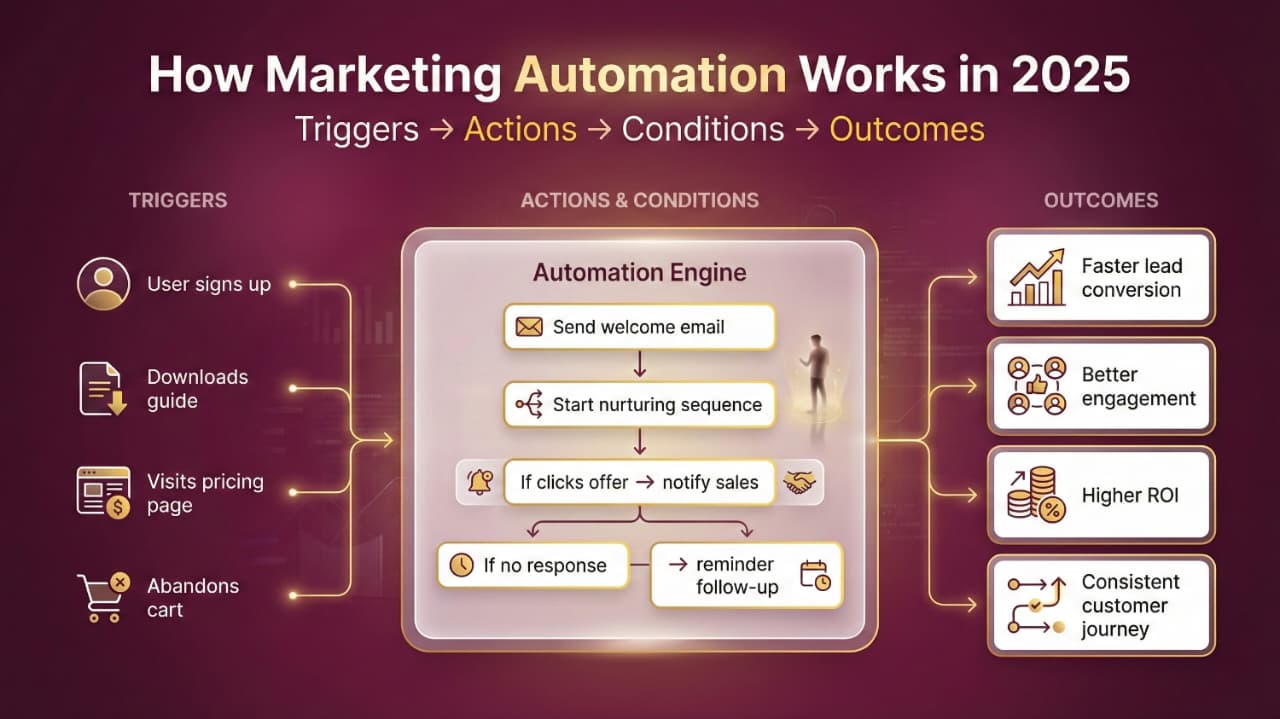
A user signs up for your newsletter → They receive a welcome email → They get a discount offer two days later → If they click, they move to a product recommendation sequence.
All of this runs automatically, saving hours of manual work.
Automation is no longer optional. Businesses depend on it to stay efficient and customer focused.
Key Benefits
Example
An online store automates abandoned-cart emails and recovers 10–15% lost sales without lifting a finger.
Marketing automation has evolved from simple email scheduling to AI-driven, behavior-based systems that manage entire customer journeys. In 2025, brands that adopt automation effectively can reduce workload by 60–70%, increase conversion rates, and deliver personalized experiences at scale.
Marketing automation is no longer optional it’s a core driver of scale and efficiency.
Brands that master automation gain a massive competitive advantage, especially as customer journeys become more fragmented across platforms.
Manual lead scoring is now outdated. AI driven models evaluate thousands of data points to identify high-intent leads automatically. This ensures sales teams focus on prospects most likely to convert.
What AI Analyzes
Why This Matters
AI-based lead scoring improves:
Example
A visitor checks a blog, clicks a CTA, then revisits the pricing page twice.
The AI model assigns this person a high lead score and automatically places them into a “High-Intent Sequence” with case studies, testimonials, and a call from the sales team.
In 2025, customers don’t stay on one platform. They move from Instagram → Email → WhatsApp → Website → YouTube.
Automation must follow them everywhere.
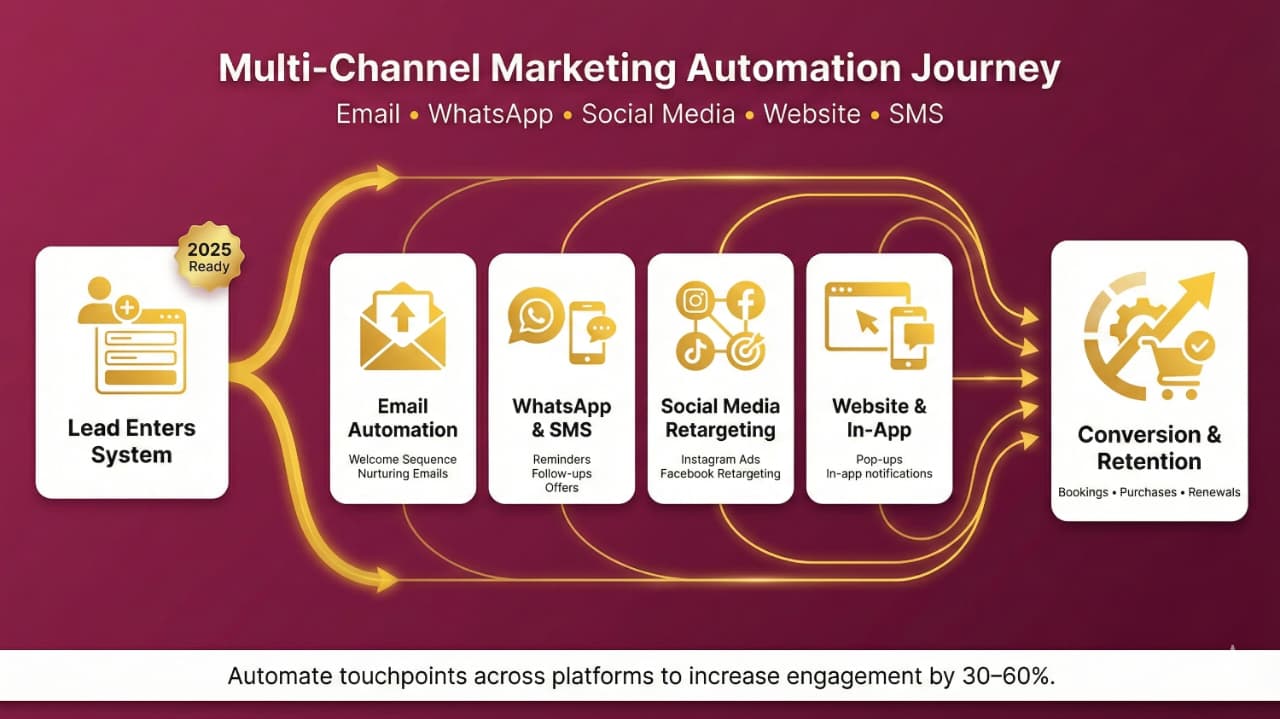
Channels You Can Automate
Why Multi-Channel Matters
Example Journey
Lead downloads a free report → receives an email → sees Instagram retargeting ad → receives WhatsApp reminder → final booking email sent.
This seamless system converts more customers without extra manual efforts.
EEAT Insight
Studies show multi-channel automation increases engagement by 30–60%, especially when combined with AI timing optimization.
Generic newsletters are dead. Personalization is now essential and AI makes it possible at scale.
What You Can Automate
Key Types of Personalized Emails
Example
If a user browses “Digital Marketing Courses,” the automation system sends:
This context-rich personalization increases email engagement dramatically.
According to HubSpot, personalized email workflows improve click-through rates by up to 40%.
Brands struggle to post every day. Social media automation helps maintain high engagement without constant manual work.
What Automation Tools Can Handle
Why It Works
Example
A brand schedules:
The system auto-posts them and tracks performance analytics, enabling data-backed content planning.
Retention is cheaper than acquisition and automation makes retention effortless.
Brands now use automated workflows to keep customers engaged long after their first purchase.
Retention-Based Automations
Example
A user does not engage for 30 days → automation sends:
If the user still doesn’t engage, they enter a win-back sequence.
If they return, they enter a loyalty sequence.
Marketing Automation Use Cases Across Industries
Automation is not one-size-fits-all. Here’s how leading sectors use it effectively.
E-Commerce Automation
Example
If a user adds a product to cart but doesn’t complete the purchase, the automation sends:
This alone recovers 20–25% of lost carts.
Service Providers & Agencies
Example
A digital agency creates an onboarding automation that sends:
Education & Training Institutions
Example
A student fills out an inquiry for a digital marketing course:
They instantly receive:
Marketing automation combines AI, data, and workflow logic to deliver consistent, personalized customer experiences.
By 2025, businesses will rely on:
Brands that adopt automation will outperform competitors in speed, efficiency, and customer engagement.
Marketing automation helps businesses increase productivity, reduce manual effort, and deliver highly personalized customer experiences. Whether you run a small business or a growing startup, automation makes your marketing smarter and more efficient.
With the right tools and strategies, you can automate lead nurturing, emails, social media, analytics, and customer journeys all leading to faster conversions and long-term growth.