






Table of Contents
- 1.
- 2.
- 3.
- 3.1
- 4.
- 5.
- 5.1
- 6.
- 7.
- 7.1
- 8.
- 9.
- 10.
Soft Skills for Tech Jobs
In today’s tech job market, having a degree or strong technical skills is no longer enough to stand out. Thousands of candidates apply with similar qualifications, certifications, and coding knowledge, making it harder for employers to decide who to hire. This is where soft skills for tech jobs have become the real differentiator.
Companies are increasingly looking for professionals who can communicate ideas clearly, work well in teams, adapt to change, and solve problems effectively. Even highly skilled developers and engineers can struggle to get hired or promoted if they lack these essential workplace skills. As technology evolves rapidly, the ability to collaborate and think critically has become just as important as technical expertise.
The good news is that soft skills can be learned and improved with the right approach. In the sections below, we’ll explore why soft skills matter more than ever in tech careers.
How they impact hiring and salary growth, and which soft skills for tech jobs professionals should focus on to succeed beyond degrees.
Why Degrees and Technical Skills Alone Are No Longer Enough
For a long time, degrees and technical skills were considered the biggest entry ticket into tech jobs. In 2026, that reality has changed. Most candidates applying for tech roles now come with similar degrees, similar certifications, and comparable technical knowledge, making it difficult for employers to differentiate between them.
Here’s why technical skills alone don’t guarantee success anymore:
● Oversupply of technically qualified candidates
○ Thousands of graduates share the same programming languages and tools
○ Online courses and certifications have made technical skills widely accessible
○ Resumes often look identical at first glance
● Tech roles demand collaboration, not isolated work
○ Developers rarely work alone in real-world projects
○ Teams require clear communication, coordination, and problem-solving
○ Poor collaboration can slow down even the most skilled teams
● Hiring decisions go beyond coding tests
○ Employers assess how candidates explain ideas and handle feedback
○ Attitude, adaptability, and ownership influence final hiring choices
○ Soft skills often become the tie-breaker between equally skilled candidates
As explained in Soft skills for tech teams, companies increasingly value professionals who combine technical ability with strong interpersonal skills.
In short, degrees may open doors but soft skills decide who gets hired, retained, and promoted in today’s tech industry.
What Are The Soft Skills For Tech Jobs?
Soft skills in tech jobs refer to the human, interpersonal, and thinking abilities that determine how effectively a professional works with others, solves problems, and adapts in a real workplace. While technical skills show what you can build, soft skills show how you work and employers increasingly prioritize both.
Core Soft Skills Employers Expect from Tech Professionals
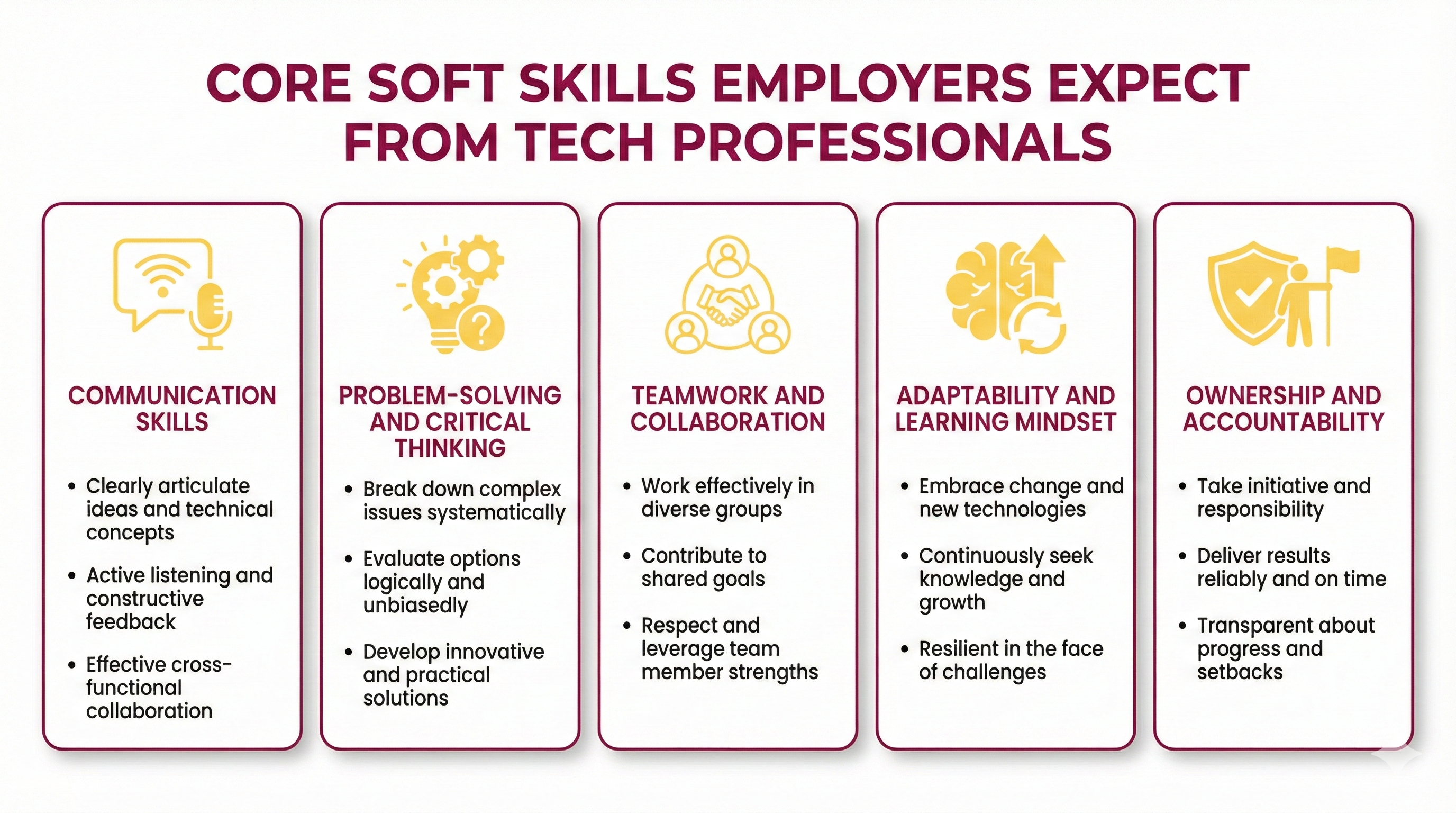
Hiring managers consistently look for the following soft skills in tech roles:
● Communication skills
○ Explaining ideas, code, and project decisions clearly
○ Writing emails, documentation, and updates effectively
○ Communicating with non-technical stakeholders
● Problem-solving and critical thinking
○ Approaching challenges logically
○ Breaking complex problems into manageable steps
○ Making decisions under pressure
● Teamwork and collaboration
○ Working smoothly in cross-functional teams
○ Accepting feedback and contributing constructively
○ Supporting shared goals instead of working in isolation
● Adaptability and learning mindset
○ Adjusting to new tools, technologies, and processes
○ Staying calm during changes and uncertainty
○ Continuously improving skills
● Ownership and accountability
○ Taking responsibility for tasks and outcomes
○ Managing time and priorities effectively
Unlike technical skills, soft skills for tech jobs apply across every tech role, from developers and analysts to testers and product engineers. They are what transform a technically capable candidate into a reliable, promotable professional.
How Soft Skills Directly Impact Salary and Career Growth
In tech careers, salary growth and promotions are no longer driven by technical skills alone. Professionals who grow faster and earn more are often those who combine technical expertise with strong soft skills for tech jobs that influence leadership, collaboration, and business impact.
Here’s how soft skills directly affect career outcomes:
● Faster promotions and leadership opportunities
○ Professionals who communicate well are trusted with bigger responsibilities
○ Team leads and managers are chosen based on people skills, not just coding ability
○ Clear communication helps in handling clients, stakeholders, and cross-functional teams
● Higher salary potential
○ Employees who solve problems proactively and collaborate effectively add more value
○ Companies are willing to pay more for professionals who reduce friction and improve team performance
○ Soft skills often justify salary hikes beyond technical output
● Greater visibility and influence
○ Professionals who articulate ideas clearly are noticed by leadership
○ Participation in discussions, planning, and decision-making increases impact
○ Visibility often leads to better projects and career acceleration
● Long-term career sustainability
○ Technical skills can become outdated, but soft skills remain relevant
○ Adaptability and learning mindset help professionals stay employable during change
As highlighted in Why soft skills lead to higher salaries in the AI era, employers consistently reward professionals who combine technical expertise with strong interpersonal and communication skills.
In today’s tech industry, soft skills don’t just support careers – they multiply growth, salary, and leadership potential.
What Hiring Managers Really Look for in 2026
As tech hiring becomes more competitive, recruiters are changing how they evaluate candidates. In 2026, hiring managers don’t look at skills in isolation they assess how well a candidate can apply skills in real workplace situations.
Soft Skills vs Hard Skills – What Matters More Today?
Hiring managers agree that technical skills are essential, but soft skills for tech jobs decide who gets hired and promoted when candidates have similar technical backgrounds.
Skills Hiring Managers Prioritize (2026)
| Skill Type | Examples | Hiring Priority |
|---|---|---|
| Soft Skills | Communication, teamwork, adaptability | Very High |
| Technical Skills | Coding, tools, frameworks | High |
| Degrees | Formal education | Medium |
| Certifications | Online / offline courses | Medium – Low |
What this means in real hiring scenarios:
● Candidates with strong communication explain solutions better in interviews
● Team-oriented professionals are preferred over solo performers
● Adaptability matters more as tools and technologies change rapidly
● Degrees and certificates help shortlist – but don’t close offers
According to Hiring managers name top hard skills & soft soft skills for tech jobs 2026 employers increasingly prioritize interpersonal and cognitive skills when making final hiring decisions.
In short, technical skills may get your resume noticed but soft skills are what get you selected.
Why Freshers Struggle Despite Strong Technical Knowledge
Many freshers enter the tech job market with solid technical knowledge, yet still face repeated rejections. The gap is rarely about coding or tools – it’s usually about how they communicate, present, and adapt in real hiring situations.
Here’s where most freshers struggle:
● Difficulty explaining what they know
○ Inability to clearly explain projects, logic, or decisions
○ Using too much technical jargon without clarity
○ Struggling to structure answers during interviews
● Lack of confidence and professional communication
○ Nervousness while speaking to interviewers
○ Poor eye contact, unclear answers, or rushed explanations
○ Difficulty expressing ideas in team discussions
● Weak problem-solving articulation
○ Knowing the solution but failing to explain the approach
○ Not thinking aloud or breaking problems into steps
○ Interviewers value reasoning as much as correctness
● Poor workplace readiness
○ Limited understanding of teamwork and collaboration
○ Difficulty receiving feedback or adapting to new tasks
○ Employers see this as a risk, even with strong technical skills
As discussed in The #1 reason freshers are struggling to get hired in 2025 Many hiring rejections stem from gaps in communication and professional readiness, not lack of knowledge.
For freshers, improving soft skills is often the fastest way to turn technical ability into real job offers.
Soft Skills That Make Tech Professionals Stand Out
In a competitive tech job market, soft skills are often what separate average candidates from high-performing professionals. When technical abilities are similar, employers look for people who can communicate clearly, collaborate effectively, and adapt quickly to change.
High-Impact Soft Skills for Tech Jobs
These soft skills for tech jobs consistently make tech professionals stand out during hiring and on the job:
● Clear and confident communication
○ Explaining technical concepts in simple terms
○ Sharing updates, challenges, and solutions effectively
○ Communicating with both technical and non-technical teams
● Structured problem-solving
○ Breaking complex problems into logical steps
○ Thinking critically instead of reacting impulsively
○ Approaching challenges with a solution-oriented mindset
● Team collaboration
○ Working smoothly in cross-functional teams
○ Respecting diverse viewpoints and giving constructive feedback
○ Contributing to shared goals rather than working in silos
● Time management and ownership
○ Prioritizing tasks and meeting deadlines
○ Taking responsibility for outcomes, not just tasks
○ Managing pressure without compromising quality
● Learning mindset and adaptability
○ Staying open to feedback and continuous improvement
○ Adjusting to new tools, technologies, and processes
○ Remaining effective during change and uncertainty
As highlighted in Top soft skills for tech jobs 2026 These skills are becoming essential as workplaces evolve and roles become more collaborative and dynamic.
Developing these soft skills helps tech professionals not only get hired – but also grow faster, earn trust, and advance into leadership roles.
How Soft Skills Improve Employability and Job Stability
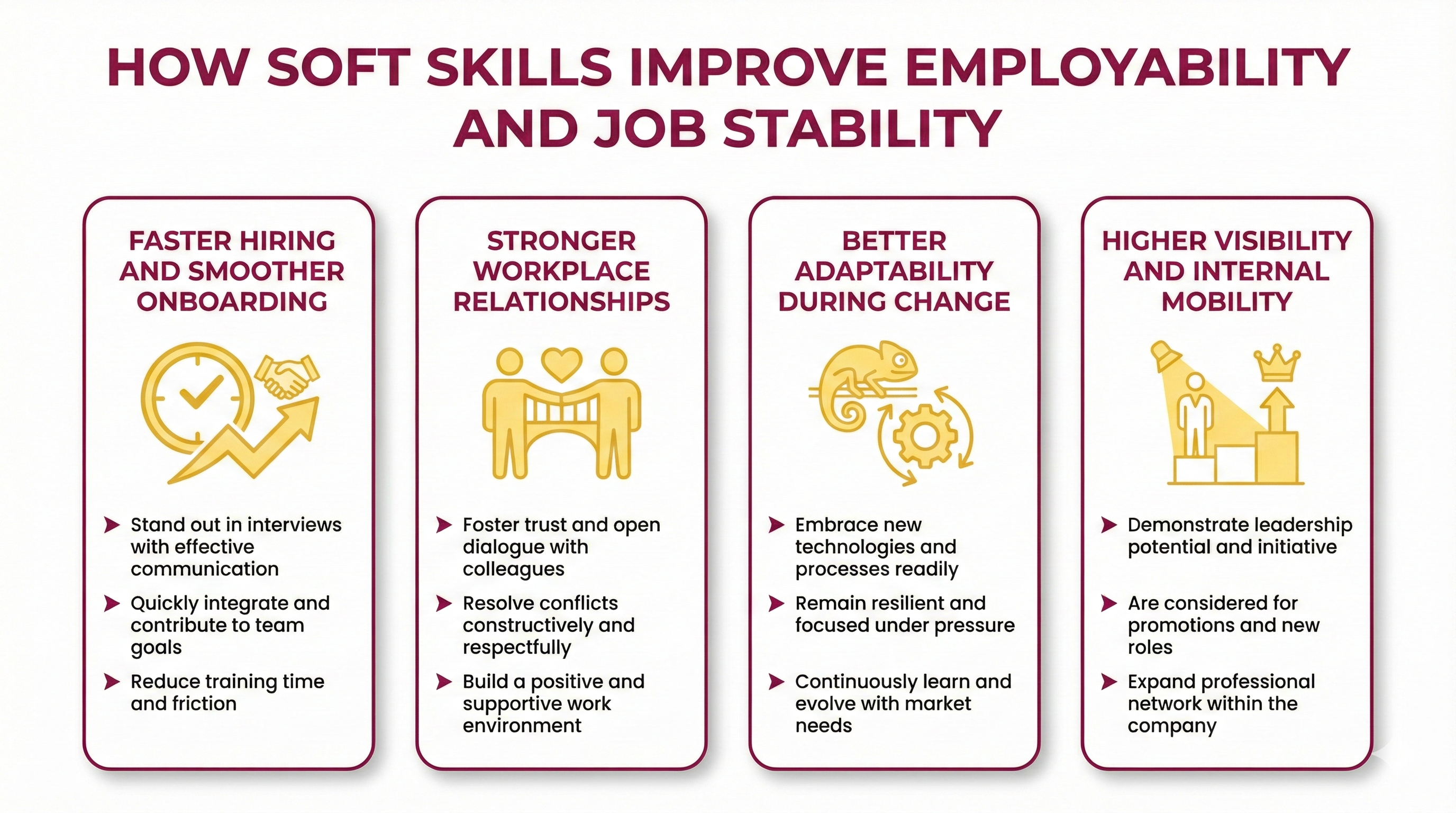
In today’s tech industry, employability is no longer defined only by how well you code or use tools. Professionals with strong soft skills are more likely to get hired, retained, and promoted – even during uncertain market conditions.
Here’s how soft skills directly improve employability and long-term job stability:
● Faster hiring and smoother onboarding
○ Candidates who communicate clearly perform better in interviews
○ Hiring managers prefer professionals who can collaborate from day one
○ Good interpersonal skills reduce onboarding friction
● Stronger workplace relationships
○ Clear communication builds trust with teammates and managers
○ Collaboration reduces conflicts and improves productivity
○ Trusted employees are more likely to be retained during restructuring
● Better adaptability during change
○ Tech roles evolve quickly with new tools and processes
○ Professionals with adaptability and learning mindset adjust faster
○ This makes them less vulnerable to role changes or layoffs
● Higher visibility and internal mobility
○ Employees who share ideas and take initiative get noticed
○ Soft skills open doors to leadership, mentoring, and cross-team roles
○ Career growth becomes more consistent and sustainable
As highlighted in Employability skills for high-paying jobs in India professionals who combine technical ability with strong soft skills enjoy better hiring outcomes and long-term career stability.
In short, soft skills don’t just help you get a job – they help you keep it and grow within it.
Why Tech Students Must Learn Soft Skills Alongside Technical Skills
In 2026, tech careers are no longer built on technical skills alone. Employers expect professionals who can code, communicate, collaborate, and adapt all at the same time. This is why tech students must develop soft skills alongside technical expertise to become truly job-ready.
Here’s why this balance matters:
● Technical skills get you shortlisted; soft skills get you selected
○ Interviews test communication, clarity, and confidence
○ Employers assess how well candidates explain ideas and handle feedback
● Modern tech roles are highly collaborative
○ Developers work with designers, managers, clients, and analysts
○ Clear communication and teamwork directly impact project success
● Career growth depends on people skills
○ Leadership, ownership, and adaptability drive promotions
○ Professionals with soft skills move into lead and managerial roles faster
● Structured learning builds both skill sets together
○ Random self-learning often ignores communication and workplace readiness
○ Guided programs focus on holistic career development
Programs like the PG Certification in AI-Powered Digital Marketing are designed to help students build technical expertise along with essential soft skills, preparing them for real-world roles not just exams or certifications.
In today’s tech landscape, success belongs to professionals who combine what they know with how they work.
Conclusion: Soft Skills Are the True Career Multiplier in Tech
Degrees and technical skills may open door but soft skills for tech jobs decide how far you go in a tech career. As hiring becomes more competitive, communication, adaptability, problem-solving, and teamwork have emerged as the real differentiators beyond qualifications.
Professionals who master these skills earn trust faster, grow into leadership roles, and enjoy better job stability and salary growth. In a rapidly evolving tech industry, soft skills are not optional they are essential for long-term success.
Build a Job-Ready Tech Career with WHY TAP
At WHY TAP, we help students and professionals become industry-ready, not just technically trained. Our programs focus on building practical skills, real-world confidence, and strong employability so you stand out beyond degrees and certifications.
If you’re ready to strengthen both your technical foundation and soft skills, explore our programs and apply for job opportunities. Take the next step toward a tech career that grows with you.