Logo

Top 10 Cybersecurity Job Roles You Can’t Ignore in 2025

Top 10 Cybersecurity Job Roles You Can’t Ignore in 2025

top 10 cybersecurity job roles
Sathishkumar Kannan, MS (UK)
09/07/2025

Table of Contents

  • 1.
  • 2.
  • 3.
  • 4.
  • 5.
  • 6.
  • 7.
  • 8.
  • 9.
  • 10.
  • 11.
  • 12.
  • 13.
  • 14.
  • 15.
  • 16.
  • 17.
  • 18.
  • 19.
  • 20.
  • 21.
  • 22.
  • 23.
  • 24.
  • 25.
  • 26.
  • 27.
  • 28.
  • 29.
  • 30.
  • 31.
  • 32.
  • 33.
  • 34.
  • 35.
  • 36.
  • 37.
  • 38.
  • 39.
  • 40.
  • 41.
  • 42.
  • 43.
  • 44.
  • 45.
  • 46.
  • 47.
  • 48.
  • 49.
  • 50.
  • 51.
  • 52.
  • 53.
  • 54.
  • 55.
  • 56.
  • 57.
  • 58.
  • 59.
  • 60.
  • 61.
  • 62.

Introduction: Careers That Secure the Digital World

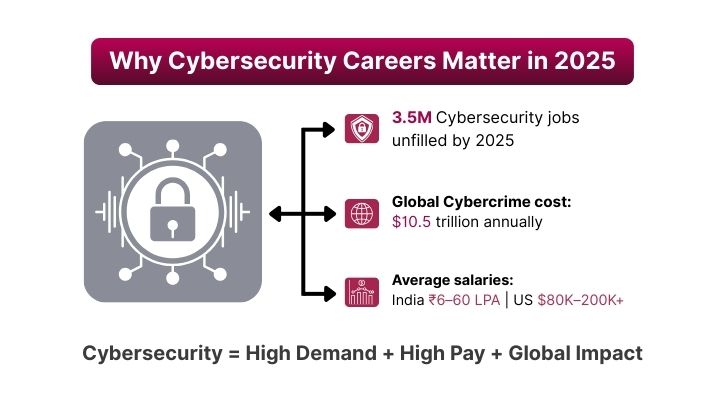
Cybersecurity is no longer a niche skill — it’s one of the most critical industries shaping our future. From banks to hospitals to governments, every organization is under constant digital attack.

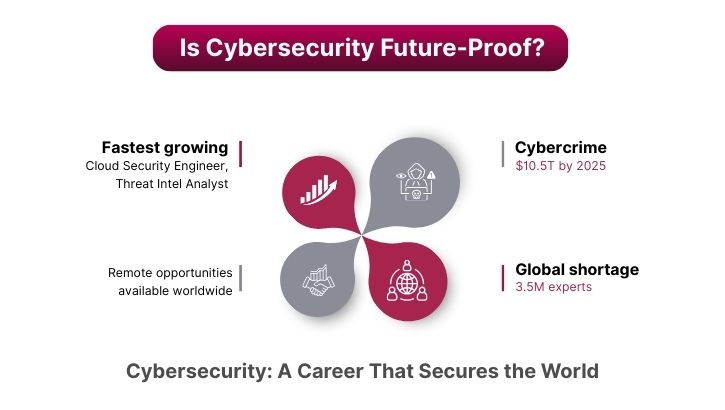
According to Cybersecurity Ventures, the world faces a shortage of 3.5 million cybersecurity professionals in 2025. This gap means huge opportunities for job seekers.

In this article, I’ll walk you through the Top 10 Cybersecurity Job Roles in 2025, what they do, the skills employers expect, and how much you can earn.

1. Security Analyst (SOC Analyst)

What They Do: First line of defense, monitor and respond to threats inside a Security Operations Center (SOC).

Responsibilities

Tools Used

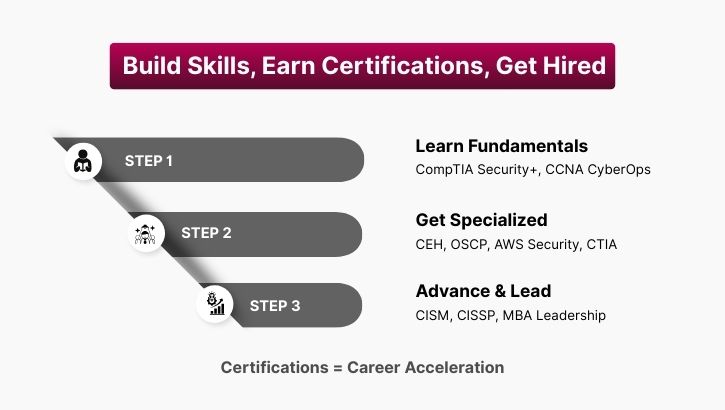
Certifications

Average Salary

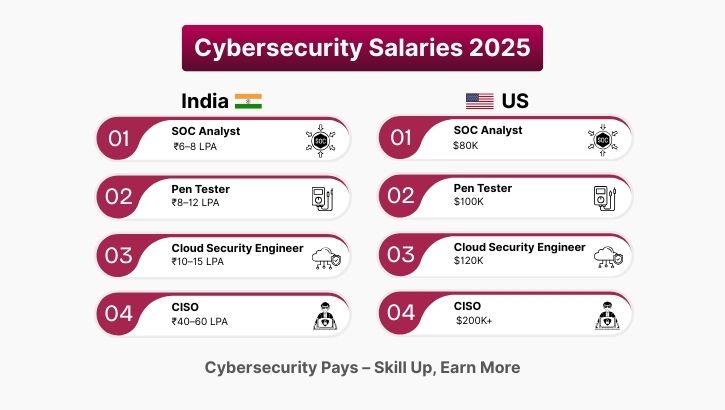
India: ₹6–8 LPA | US: $80K

Career Path

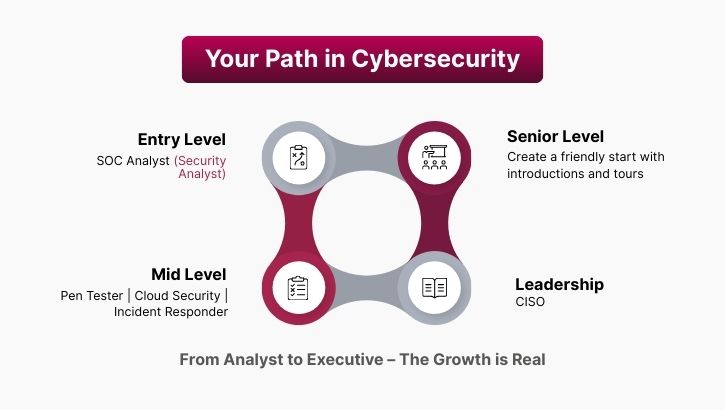
Start as a Junior SOC Analyst → move into Penetration Testing, Cloud Security, or Threat Hunting → eventually into Security Operations Manager.

why cybersecurity

2. Penetration Tester (Ethical Hacker)

What They Do: Simulate real-world cyberattacks to uncover vulnerabilities before criminals do.

Responsibilities

Tools Used

Certifications

Average Salary

India: ₹8–12 LPA | US: $100K

Career Path

Start as Ethical Hacker → Red Team Specialist → Penetration Testing Lead → Head of Offensive Security.

path in cybersecurity

3. Cloud Security Engineer

What They Do: Protect workloads, apps, and data in cloud environments (AWS, Azure, GCP).

Responsibilities

Tools Used

Certifications

Average Salary

India: ₹10–15 LPA | US: $120K

Career Path

Start as Cloud Security Associate → Cloud Security Engineer → Cloud Security Architect → Cloud Security Manager.

4. Cybersecurity Consultant

What They Do: Advise organizations on strengthening their security posture and compliance.

Responsibilities

Tools Used

Certifications

Average Salary

India: ₹12–18 LPA | US: $130K

Career Path

Start as IT Auditor → Consultant → Senior Cybersecurity Advisor → Partner/Principal Consultant.

5. Incident Responder

What They Do: Contain and mitigate breaches, investigate root causes, and restore systems.

Responsibilities

Tools Used

Certifications

Average Salary

India: ₹10–14 LPA | US: $125K

Career Path

Start as SOC Analyst → Incident Handler → Incident Response Lead → Crisis Manager → Head of Cyber Defense.

6. Threat Intelligence Analyst

What They Do: Study cybercrime trends and provide actionable intelligence to defend against future attacks.

Responsibilities

Tools Used

Certifications

Average Salary

India: ₹9–13 LPA | US: $115K

Career Path

Start as SOC Analyst → Threat Hunter → Threat Intel Analyst → CTI Team Lead → Director of Threat Intelligence.

salaries in 2025

7. Cryptographer

What They Do: Build encryption systems that secure data, communications, and transactions.

Responsibilities

Tools Used

Certifications

Average Salary

India: ₹12–16 LPA | US: $130K

Career Path

Start as Cryptography Researcher → Cryptography Engineer → Lead Cryptographer → Chief Security Scientist.

8. GRC Specialist (Governance, Risk, Compliance)

What They Do: Ensure organizations comply with cybersecurity laws and industry standards.

Responsibilities

Tools Used

Certifications

Average Salary

India: ₹8–12 LPA | US: $110K

Career Path

Start as IT Auditor → Risk Analyst → Compliance Manager → GRC Lead → Chief Risk Officer (CRO).

get hired

9. Application Security Engineer

What They Do: Protect software and applications during the entire development lifecycle.

Responsibilities

Tools Used

Certifications

Average Salary

India: ₹10–15 LPA | US: $120K

Career Path

Start as Software Developer → Application Security Engineer → Secure Software Architect → Application Security Manager.

10. Chief Information Security Officer (CISO)

What They Do: Lead an organization’s security strategy, policies, and teams at the executive level.

Responsibilities

Tools Used

Certifications

Average Salary

India: ₹40–60 LPA | US: $200K+

Career Path

Start as Security Analyst → Security Manager → Security Director → Chief Information Security Officer (CISO).

FAQs

1. Which cybersecurity job is best for freshers?
2. Do I need coding knowledge to work in cybersecurity?
3. Which cybersecurity job pays the most?
4. What is the fastest-growing role in 2025?
5. How long does it take to move from fresher to mid-level roles?
6. What certifications should freshers start with?
7. Can I switch to cybersecurity from another IT career?
8. Do cybersecurity jobs offer remote opportunities?
9. Which non-technical skills are important for cybersecurity roles?
10. Is cybersecurity future-proof?
secures the world

CEO’s Closing Note

Cybersecurity isn’t just a career path, it’s a calling. Every role, whether you’re a SOC Analyst monitoring threats, a Penetration Tester breaking into systems ethically, or a CISO shaping enterprise strategy, contributes to one mission: protecting our digital future.

The world doesn’t just need more graduates; it needs professionals who are skilled, adaptable, and relentless in their pursuit of excellence. My advice is simple: pick your role, master your craft, and never stop learning.

In 2025 and beyond, companies won’t just hire you for your degree, they will hire you for your impact, your expertise, and your ability to secure what matters most.


First advertisementSecond advertisementThird advertisementFourth advertisement
Talk to an Expert