

Table of Contents
- 1.
- 2.
- 3.
- 3.1
- 4.
- 4.1
- 5.
- 6.
- 7.
- 8.
- 8.1
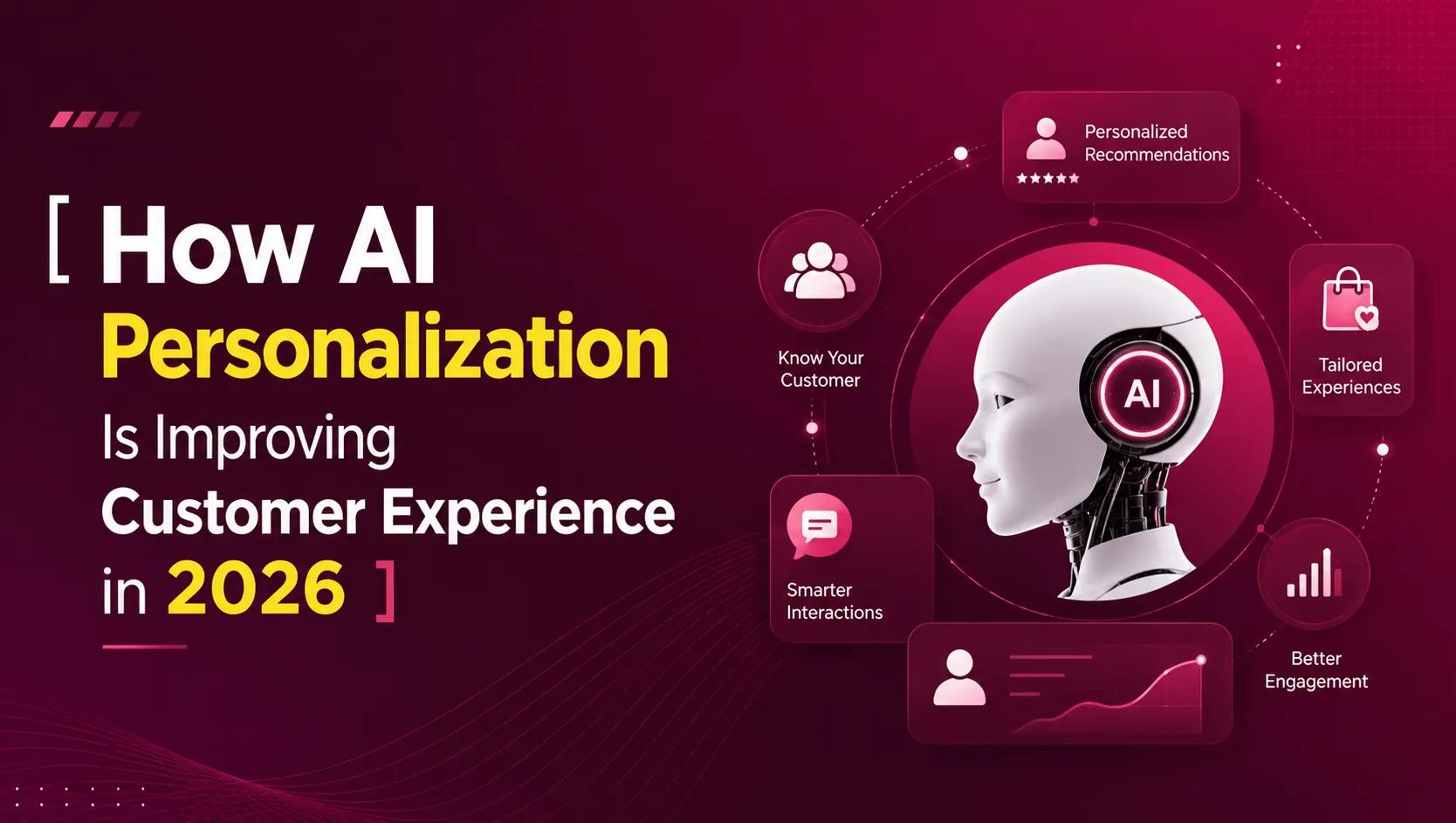
AI personalization is transforming customer experience by helping businesses deliver more relevant, personalized, and engaging interactions across digital platforms. In 2026, companies increasingly use AI-powered systems to understand customer behaviour, predict preferences, and improve communication strategies that enhance customer satisfaction and long-term loyalty.
Businesses now use AI personalization for:
- Product recommendations
- Personalized content delivery
- Customer support automation
- Predictive marketing
- Audience segmentation
These strategies help brands create experiences that feel more relevant and customer-focused.
Another major reason AI personalization is growing rapidly is because customer expectations continue increasing. Modern consumers expect faster responses, personalized communication, and smoother digital experiences across websites, apps, email campaigns, and social media platforms. Businesses that successfully combine AI-driven automation with human-centered engagement often improve customer retention and brand trust. In the upcoming sections, we will discuss how AI personalization is improving customer experience in 2026, how businesses use AI-driven engagement and predictive marketing strategies, and which personalization techniques help improve customer satisfaction, loyalty, and long-term digital growth.
Why AI Personalization Is Becoming Important for Customer Experience
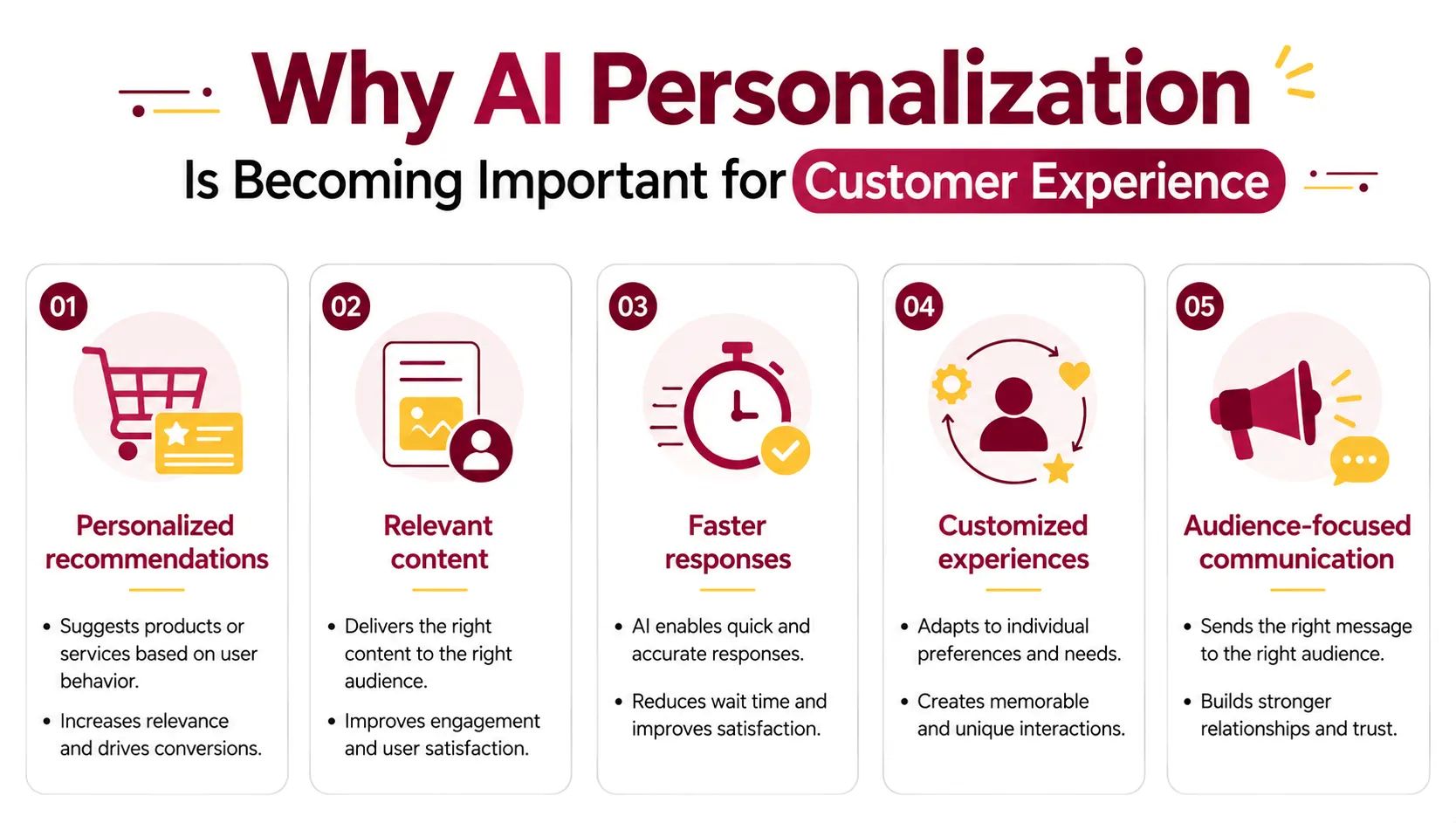
AI personalization is becoming important because customers now expect businesses to provide faster, more relevant, and personalized digital experiences. In 2026, brands increasingly use AI-driven systems to improve communication, customer engagement, and relationship-focused marketing strategies.
One major reason for this shift is changing customer behavior. Modern consumers prefer:
- Personalized recommendations
- Relevant content
- Faster responses
- Customized experiences
- Audience-focused communication
Businesses that provide these experiences often improve customer satisfaction and engagement.
AI personalization also helps brands understand customer preferences through:
- Behavioral analysis
- Search patterns
- Purchase history
- Engagement tracking
- Audience segmentation
These insights help businesses deliver more relevant interactions across multiple platforms.
Another important advantage is improved customer journey optimization.
AI-powered systems help businesses personalize:
- Website experiences
- Email communication
- Product suggestions
- Customer support
- Marketing campaigns
This creates smoother and more engaging customer experiences.
Businesses also benefit from AI personalization because it supports:
- Stronger customer retention
- Better engagement rates
- Increased loyalty
- Improved conversion opportunities
- Long-term relationship building
For businesses exploring modern AI personalization strategies, customer-focused engagement and AI-driven communication are becoming highly important for digital growth in 2026.
Personalized Recommendations Improve Customer Engagement
Personalized recommendations help businesses improve customer engagement by showing users content, products, and experiences that match their interests and behavior. In 2026, AI-powered recommendation systems are becoming highly important because customers expect more relevant and customized digital interactions.
Businesses use personalized recommendations for:
- Product suggestions
- Content recommendations
- Email personalization
- Video recommendations
- Shopping experiences
These strategies improve customer interaction and digital experience quality.
AI systems analyze customer behavior through:
- Search activity
- Purchase history
- Browsing patterns
- Engagement metrics
- User preferences
This data helps businesses deliver more accurate and audience-focused recommendations.
AI Personalization Strategy vs Customer Benefit
| AI Personalization Strategy | Customer Benefit |
|---|---|
| Personalized Recommendations | Better user experience |
| AI Chatbots Faster | customer support |
| Predictive Marketing | Relevant customer communication |
| Personalized Content | Higher engagement rates |
Another major benefit of personalized recommendations is improved customer retention. Relevant experiences often encourage users to:
- Spend more time on platforms
- Engage with content
- Return to websites
- Explore products
- Build brand loyalty
This supports long-term customer relationships and business growth.
For businesses exploring modern customer experience strategies, AI-driven recommendation systems are becoming highly effective for improving engagement and customer satisfaction in 2026.
AI Chatbots and Automation Improve Customer Support
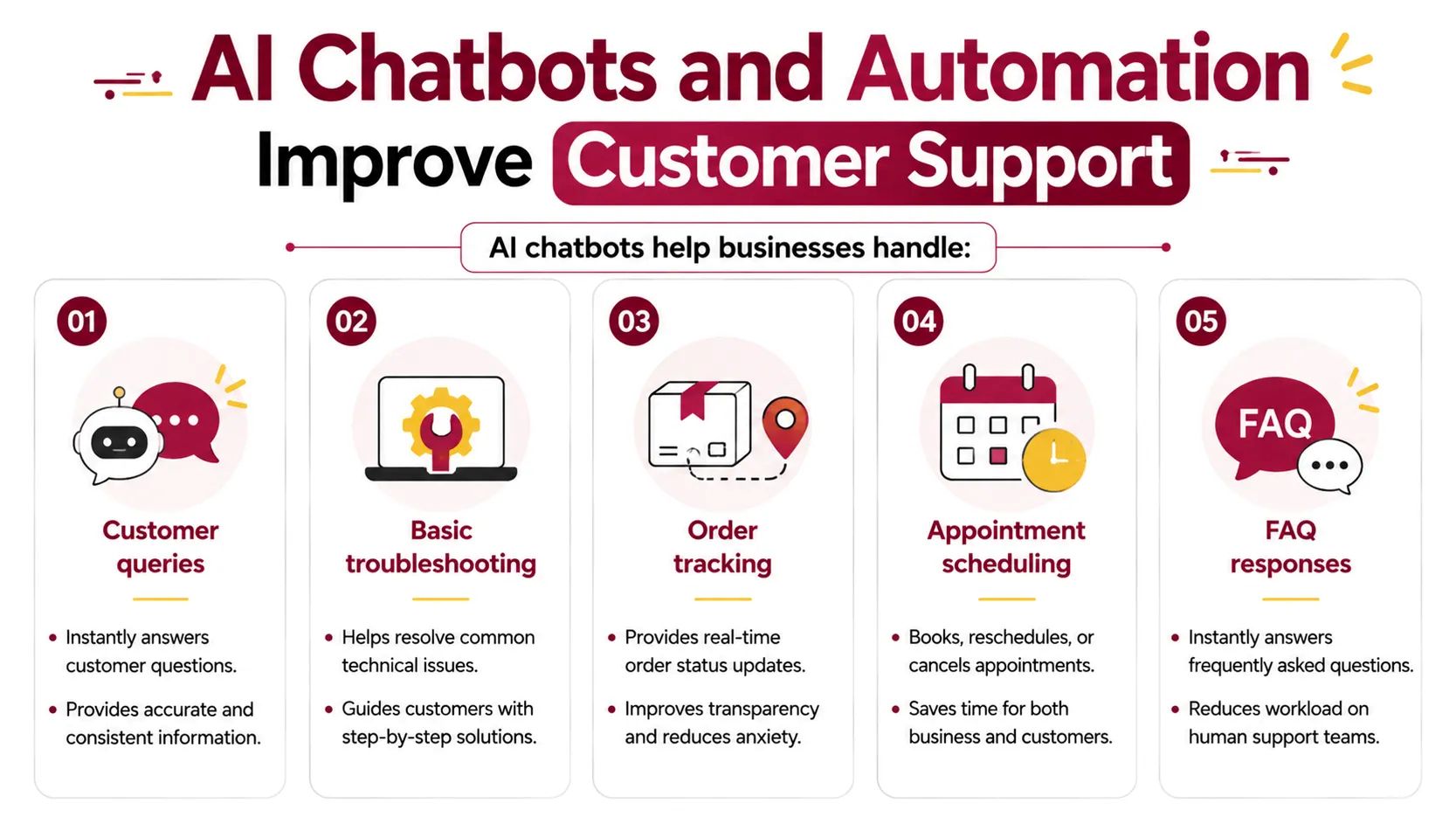
AI chatbots and automation systems are improving customer support by helping businesses provide faster and more consistent communication. In 2026, companies increasingly use AI-powered support tools to manage customer interactions efficiently across websites, apps, and messaging platforms.
AI chatbots help businesses handle:
- Customer queries
- Basic troubleshooting
- Order tracking
- Appointment scheduling
- FAQ responses
These systems improve response speed and reduce waiting times for customers.
Another major advantage is 24/7 availability. AI-powered support systems allow businesses to provide assistance:
- During non-working hours
- Across multiple time zones
- Through instant messaging
- At large communication scale
- With faster response workflows
This improves customer convenience and accessibility.
Automation also supports customer journey optimization by helping businesses personalize:
- Support responses
- Email communication
- Follow-up workflows
- Service recommendations
- User interactions
These features improve customer experience and engagement consistency.
Businesses should still balance automation with human interaction because customers often prefer human support for:
- Complex issues
- Emotional concerns
- Personalized guidance
- High-value services
- Relationship-focused communication
AI works best when it supports customer service teams instead of fully replacing human interaction.
For businesses creating customer-focused support systems and FAQs, AI chatbots and automation workflows can significantly improve communication efficiency and customer experience in 2026.
Predictive Marketing Helps Businesses Understand Customer Behavior
Predictive marketing helps businesses analyze customer behavior and anticipate future actions using AI-driven data analysis. In 2026, companies increasingly use predictive systems to improve personalization, audience targeting, and customer engagement strategies.
AI-powered predictive marketing analyzes:
- Purchase history
- Browsing behavior
- Engagement patterns
- Search activity
- Customer preferences
These insights help businesses understand what customers may need or expect next.
One major advantage of predictive marketing is improved audience targeting. Businesses can create:
- Personalized campaigns
- Relevant product suggestions
- Timely communication
- Customized offers
- Audience-focused experiences
This increases engagement and improves customer satisfaction.
Another important benefit is customer journey optimization. Predictive systems help businesses identify:
- Customer interests
- Retention risks
- Purchase intent
- Engagement opportunities
- Behavioral trends
These insights support smarter marketing decisions and long-term customer relationships.
Which AI Customer Experience Skills Will Be Important in 2026?
Students and marketers interested in AI-driven customer experience should focus on both analytical and communication-focused skills.
Important AI customer experience skills include:
- Customer analytics
- AI-assisted communication
- Marketing automation
- Audience behavior analysis
- Personalized content strategy
- AI workflow management
Professionals who understand customer behavior and AI-driven engagement strategies are often better prepared for future customer-experience and digital marketing roles.
Personalized Content Strategies Improve Customer Retention
Personalized content strategies help businesses improve customer retention by delivering more relevant and engaging communication based on customer interests and behavior. In 2026, AI-driven personalization allows brands to create experiences that feel more customized and audience-focused across digital platforms.
Businesses use personalized content strategies for:
- Email marketing
- Website recommendations
- Product suggestions
- Social media engagement
- Customer communication
These approaches improve relevance and customer interaction.
Another major advantage is behavioral segmentation. AI systems help businesses group audiences based on:
- Interests
- Purchase behavior
- Engagement patterns
- Search activity
- Customer preferences
This helps brands deliver more targeted and meaningful content experiences.
AI Customer Experience Trend vs Business Impact
| AI Customer Experience | Trend Business Impact | ||||||
|---|---|---|---|---|---|---|---|
| Predictive Personalization | Better customer retention | AI Chatbots | Improved support efficiency | Personalized Content | Higher engagement | Automated Recommendations | Stronger conversion rates |
Personalized communication also supports:
- Stronger customer relationships
- Improved loyalty
- Better engagement consistency
- Increased retention
- Higher customer satisfaction
Customers are more likely to engage with brands that provide useful and relevant experiences.
Businesses should still maintain balance between personalization and authenticity because overly automated communication may sometimes feel generic or impersonal.
For businesses exploring modern AI customer experience strategies, personalized content and AI-driven engagement are becoming highly important for long-term customer retention in 2026.
Common Mistakes Businesses Make While Using AI Personalization
Many businesses adopt AI personalization strategies but fail to create meaningful customer experiences because of overautomation and weak personalization planning. In 2026, successful AI-driven engagement depends on balancing automation with authentic and human-centered communication.
One common mistake is using generic personalization. Some businesses rely on basic automation without understanding:
- Customer behavior
- Audience preferences
- Engagement patterns
- Communication style
- Customer expectations
This often creates repetitive and ineffective experiences.
Another issue is overdependence on automation. Businesses sometimes automate:
- Customer support
- Email communication
- Product recommendations
- Marketing workflows
- User engagement
without maintaining enough human interaction.
Customers still value:
- Personalized guidance
- Emotional understanding
- Human communication
- Authentic responses
- Relationship-focused engagement
Ignoring these factors can reduce customer trust.
Poor customer data usage is another major challenge. Weak audience segmentation and inaccurate data analysis may lead to:
- Irrelevant recommendations
- Generic messaging
- Low engagement
- Customer frustration
- Reduced retention
Businesses should also avoid:
- Overpersonalization
- Excessive automation
- Weak content relevance
- Ignoring customer feedback
- Lack of strategy optimization
AI personalization works best when businesses focus on relevance, trust, and customer-focused communication.
For businesses exploring inspiring success stories, balancing AI automation with authentic customer engagement is becoming essential for long-term customer experience success.
How Students and Marketers Can Learn AI Personalization Strategies
Learning AI personalization strategies in 2026 requires understanding customer behavior, audience segmentation, predictive marketing, and AI-assisted communication workflows. Since businesses increasingly focus on personalized customer experiences, students and marketers should develop both analytical and strategic marketing skills.
One of the best ways to start learning is by practicing:
- Customer behavior analysis
- Audience segmentation
- Personalized content planning
- Marketing automation workflows
- AI-assisted engagement strategies
Hands-on implementation helps learners understand how personalization improves customer experience.
Students should also focus on learning:
- Customer journey optimization
- Predictive marketing concepts
- AI-powered recommendation systems
- Email personalization
- Audience analytics interpretation
These areas improve understanding of modern AI-driven marketing strategies.
Another important area is balancing automation with human interaction because successful personalization depends on:
- Relevant communication
- Authentic engagement
- Audience understanding
- Emotional connection
- Strategic messaging
AI tools improve efficiency, but human-centered communication remains highly important.
Marketers should also stay updated with:
- AI marketing tools
- Customer experience trends
- Automation technologies
- Privacy-focused personalization
- Behavioral targeting strategies
Professionals who combine AI knowledge with customer-focused communication and analytics skills are generally better prepared for future opportunities in AI-driven customer experience and digital marketing.
Final Thoughts
AI personalization is becoming one of the most important drivers of customer experience because businesses increasingly focus on delivering relevant, engaging, and customer-focused digital interactions. In 2026, personalized recommendations, predictive marketing, AI chatbots, and automation systems continue improving customer satisfaction and long-term engagement.
Businesses that successfully combine AI-driven insights with authentic communication often achieve stronger customer retention, loyalty, and relationship-focused engagement. Personalized content strategies and audience-focused experiences also help brands improve digital visibility and customer trust across multiple platforms.
As AI technology continues evolving, businesses and marketers must focus on balancing automation with human-centered communication. Students and professionals who understand customer analytics, personalization workflows, predictive marketing, and AI-assisted engagement will be better prepared for future opportunities in customer experience and digital marketing.
Build Future-Ready AI Customer Experience Skills
AI personalization is transforming how businesses communicate with customers through personalized recommendations, predictive marketing, automated support systems, and audience-focused engagement strategies. Companies now look for marketers who understand customer behavior, AI-driven communication, and personalization workflows that improve customer satisfaction and long-term retention.
Building expertise in AI-powered customer experience requires practical learning and continuous skill development. Students and marketers should focus on customer analytics, audience segmentation, marketing automation, personalized content strategies, and AI-assisted engagement techniques to stay competitive in evolving digital industries.
To improve AI personalization skills in 2026, learners should focus on:
- Customer analytics
- Predictive marketing
- Audience segmentation
- Personalized content strategies
- Marketing automation
- AI-assisted communication
If you want to build industry-ready expertise with practical learning exposure and future-focused marketing preparation, this AI marketing certification can help support your journey toward long-term success in AI-driven customer experience and digital marketing.