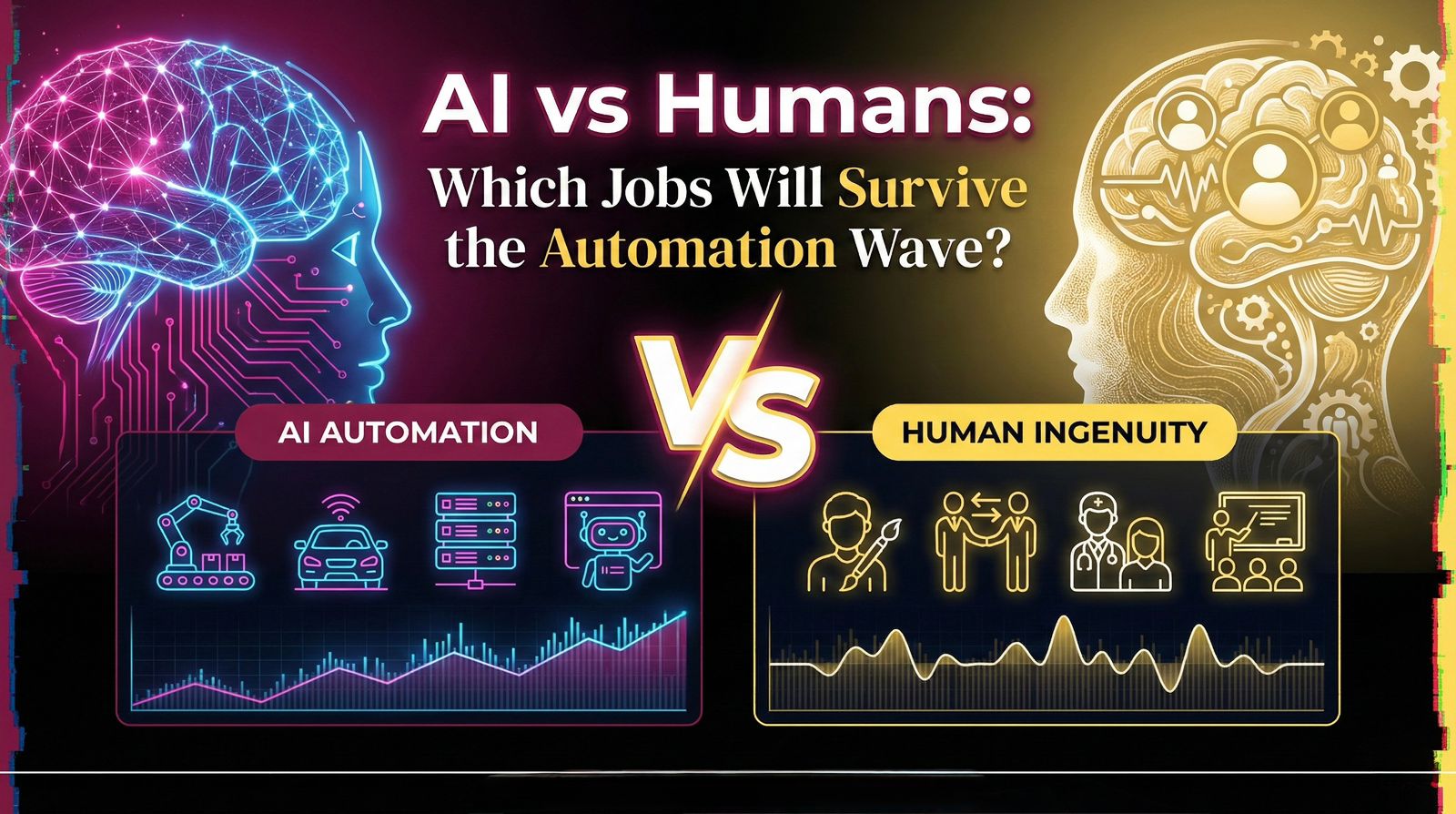
Artificial Intelligence is no longer a futuristic idea it is shaping India’s workplaces today. From AI-powered customer service at banks to automated logistics in ecommerce and coding assistants used by IT companies, automation is transforming industries at an unprecedented pace. Anyone exploring AI and jobs must understand how deeply this shift impacts hiring, roles, salaries, and long-term career stability.
According to the 2024 McKinsey Global Workforce Report, nearly 30% of all work hours could be automated by 2030, affecting IT, finance, marketing, and operations.
The World Economic Forum (WEF) adds another critical insight: while 83 million jobs may be displaced, 69 million new roles will emerge, creating a massive skill reshuffle rather than mass unemployment.
India, with its tech-driven economy, large youth workforce, and booming IT services sector, stands at the heart of this global shift. Companies like TCS, Infosys, HCL, Swiggy, Zomato, and Amazon India are already integrating AI into customer support, analytics, logistics, and development.
Industry leaders have repeatedly emphasized the human role in an AI-powered world:
“AI will not replace humans. Humans using AI will replace humans who don’t.” - Sundar Pichai, CEO, Google
“Automation will eliminate tasks, not jobs. Human judgment remains irreplaceable.” - Satya Nadella, CEO, Microsoft
The question is no longer whether AI will impact work. It is: Which Indian jobs will survive the automation wave and which will disappear?
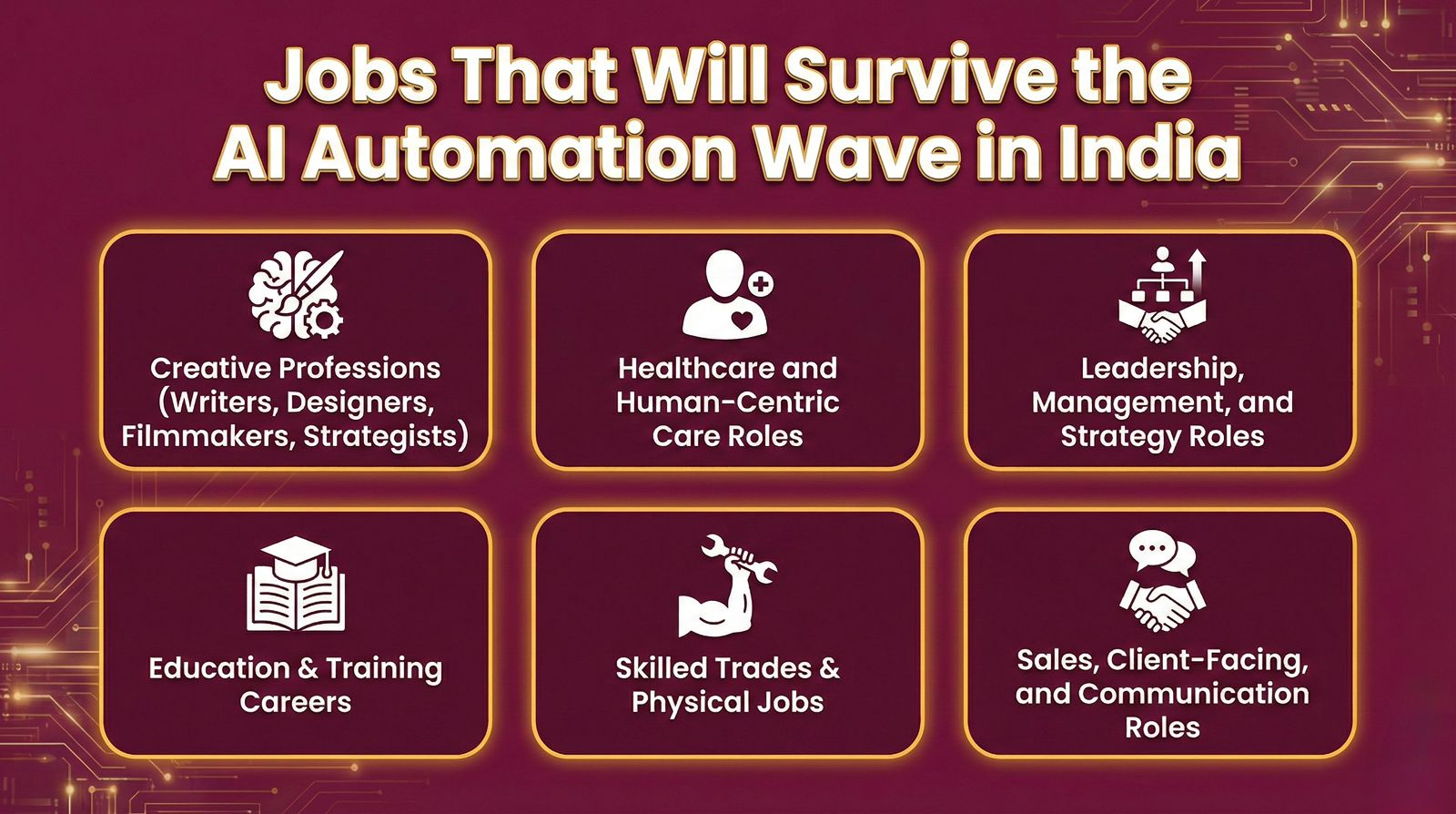
Some roles depend on human creativity, empathy, leadership, and critical thinking skills AI cannot fully replicate. These roles are not only safe but will grow stronger in an AI-first world.
AI can generate content, but it cannot recreate Indian culture, emotions, humour, storytelling, or lived experience. Creativity remains one of the strongest human advantages in the AI and jobs conversation.
These roles will thrive:
India’s booming ad agencies, D2C brands, and OTT platforms depend heavily on human storytelling.
AI can diagnose faster, but it cannot replace empathy, counselling, or human touch.
Safe roles in India:
With India’s healthcare sector projected to reach $372 billion by 2027 (Source: IBEF https://www.ibef.org), demand for human medical professionals will continue rising.
These roles require emotional intelligence, decision-making, ethics, and vision areas where AI lacks depth.
Safe leadership positions:
Companies need human leaders to motivate, resolve conflict, and drive culture.
AI can teach facts. Humans teach motivation, emotion, and personalised guidance.
Roles that remain safe:
India’s EdTech market (Byju’s, Unacademy, Vedantu, PhysicsWallah) blends both AI and human teaching.
Robots struggle with unpredictable real-life environments.
Safe trades in India:
Even with automation, India’s infrastructure and housing sectors rely heavily on skilled hands.
India’s business culture thrives on trust, persuasion, negotiation, and relationships uniquely human abilities.
Safe roles:
No AI can replace human trust.
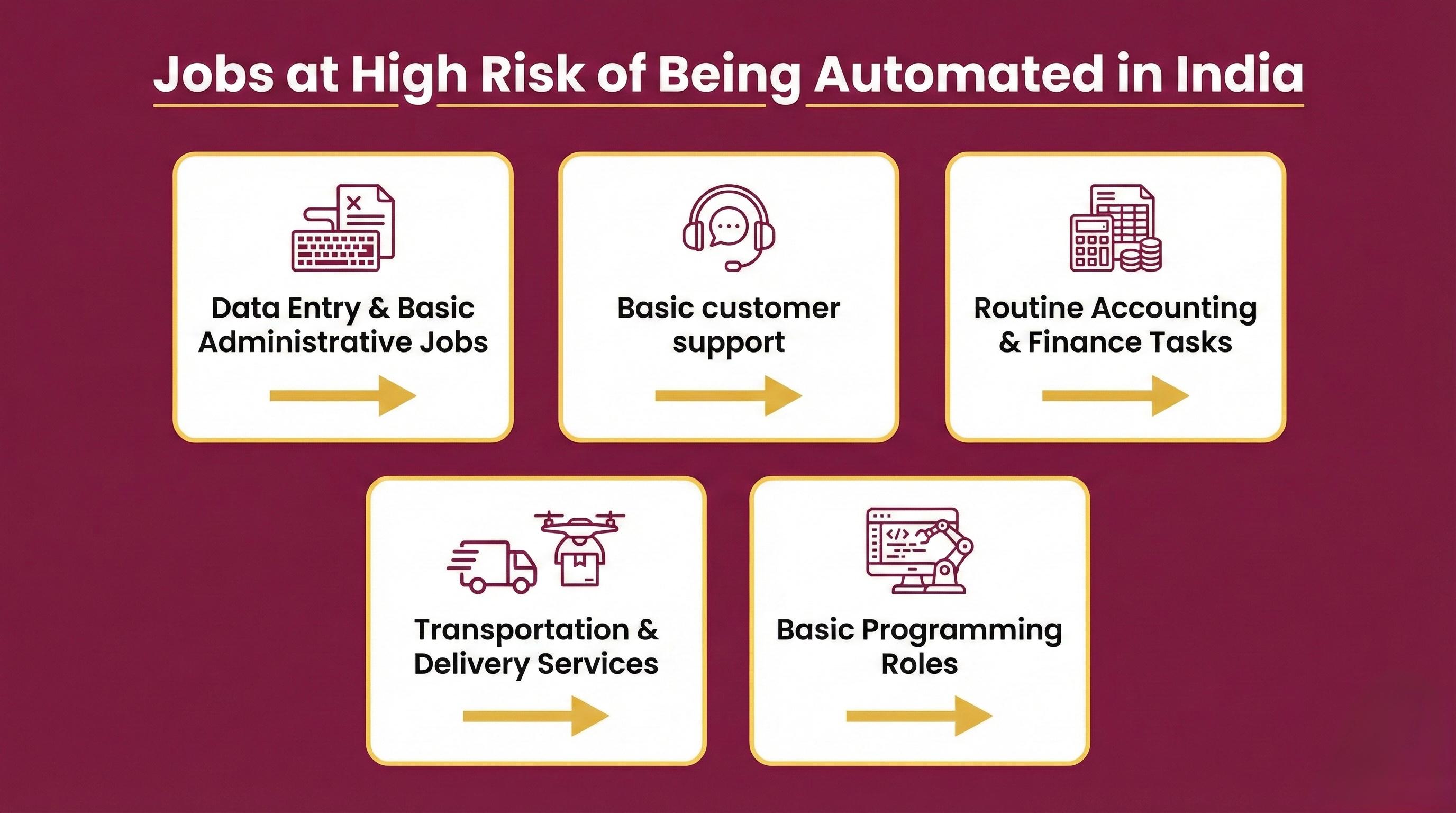
AI automation is advancing rapidly in India, especially in sectors where tasks are repetitive, rule-based, and predictable. These roles are most vulnerable because AI tools can perform them faster, cheaper, and more accurately.
Data entry and clerical work involve repetitive tasks that AI can execute instantly with perfect accuracy. Companies are already replacing these roles with automation tools that reduce cost and eliminate human error. In India, this category faces the highest automation risk.
High-risk roles:
AI does this 10x faster and without errors.
AI chatbots and voice assistants now handle millions of customer queries for Indian brands, operating 24/7 with zero fatigue. While emotional or complex queries still need humans, Tier-1 support roles are rapidly shrinking as automation becomes more reliable and scalable.
High-risk roles:
Only emotional support roles survive.
Tasks like bookkeeping, invoice processing, and reconciliation are rule-driven, making them ideal for AI automation. Many fintech tools already complete these processes faster than junior accountants. Only strategic, analytical finance roles still require human judgment.
High-risk roles:
Strategic finance roles will survive.
With India testing drone deliveries and autonomous vehicle systems, low-skill transport and delivery jobs face growing automation pressure. Although widespread adoption will take time, the shift toward automated logistics is already underway in major cities.
High-risk roles:
The shift is slow, but inevitable.
AI coding tools can now generate code, fix bugs, and even build simple applications, reducing the demand for entry-level developers. Routine coding roles will shrink, while engineers who use AI tools effectively will become more valuable.
High-risk roles:
The future belongs to AI-assisted engineers, not entry-level coders.
India’s workforce is entering a transformative era where technology and automation are reshaping industries. To stay competitive, professionals must develop skills that complement AI rather than compete with it. These human-centric abilities ensure long-term employability, career growth, and resilience in a fast-changing job market.
1. Communication & Emotional Intelligence
Empathy, persuasion, and human connection cannot be automated. These abilities help professionals build trust, handle clients, and collaborate effectively.
2. Creativity & Innovation
AI can rearrange information, but only humans can think beyond patterns. Creativity drives original ideas, storytelling, and problem-solving.
3. Critical Thinking & Decision-Making
AI offers suggestions based on data, but humans make contextual and ethical choices. Strong thinking skills help individuals handle complex challenges.
4. Adaptability & Continuous Learning
The ability to quickly learn and adjust keeps professionals relevant. In an evolving job market, adaptable workers stay ahead of automation trends.
5. Leadership & Collaboration
Teams rely on human guidance, motivation, and emotional understanding. Leadership ensures coordination, productivity, and shared purpose.
6. AI Literacy
Knowing how to use AI tools boosts productivity and job opportunities. PwC reports that AI-skilled professionals can increase their income potential by up to 40%.
India’s job landscape is evolving rapidly as AI becomes a key part of daily workflows. To stay competitive, professionals must upgrade their skills, adopt AI tools, and build strong human-centered capabilities. These strategies will help Indian workers remain relevant and thrive in an automated world.
1. Use AI tools to enhance work
Using AI to automate routine tasks helps you work faster and more efficiently. Professionals who adopt AI tools become more valuable and future-ready.
2. Build creativity-driven portfolios
Portfolios that show human creativity and original thinking stand out in an AI-driven world. Employers value unique ideas AI cannot replicate.
3. Strengthen communication & leadership
Communication and leadership skills cannot be automated and remain essential for career growth. Strong human-centered skills lead to better roles and promotions.
4. Learn high-value AI skills
Skills like prompt engineering, automation tools, and AI analytics open doors to high-paying jobs. Knowing how to use AI strategically keeps you relevant.
5. Choose people-facing careers
Jobs requiring empathy, trust, and human interaction are least likely to be automated. These roles offer long-term stability and strong career growth.
AI is not here to eliminate human workers but to transform the way we work. The future will belong to humans who use AI, not those who fear it. By developing creativity, communication, leadership, and AI literacy, anyone in India can build a future-proof career and stay ahead of automation.
The real question isn’t: “Will AI take your job?” It is: “Are you ready to evolve with AI?”