








Table of Contents
- 1.
- 2.
- 3.
- 4.
- 4.1
- 5.
- 6.
- 7.
- 8.
- 9.
Many websites publish content regularly but still struggle to rank on Google. In most cases, the problem is not the lack of content but the presence of SEO mistakes that affect search visibility and user experience. Issues such as poor keyword optimization, weak website structure, slow loading speed, and technical SEO errors can reduce a website’s ability to perform well in search engine results.
Google’s ranking algorithms have become more focused on content quality, user experience, mobile performance, and technical optimization. Businesses that ignore these factors often experience lower organic traffic, reduced engagement, and weaker online visibility. Even small SEO mistakes can impact how search engines crawl, index, and rank webpages.
As competition in digital marketing continues increasing in 2026, businesses need stronger SEO strategies to improve long-term search performance. Understanding common SEO mistakes can help website owners identify optimization problems and improve their overall ranking potential. In the upcoming sections, we will discuss the most common SEO mistakes that affect Google rankings, their impact on website performance, and the practical ways businesses can improve their SEO strategy in 2026.
Why SEO Mistakes Can Seriously Affect Website Rankings
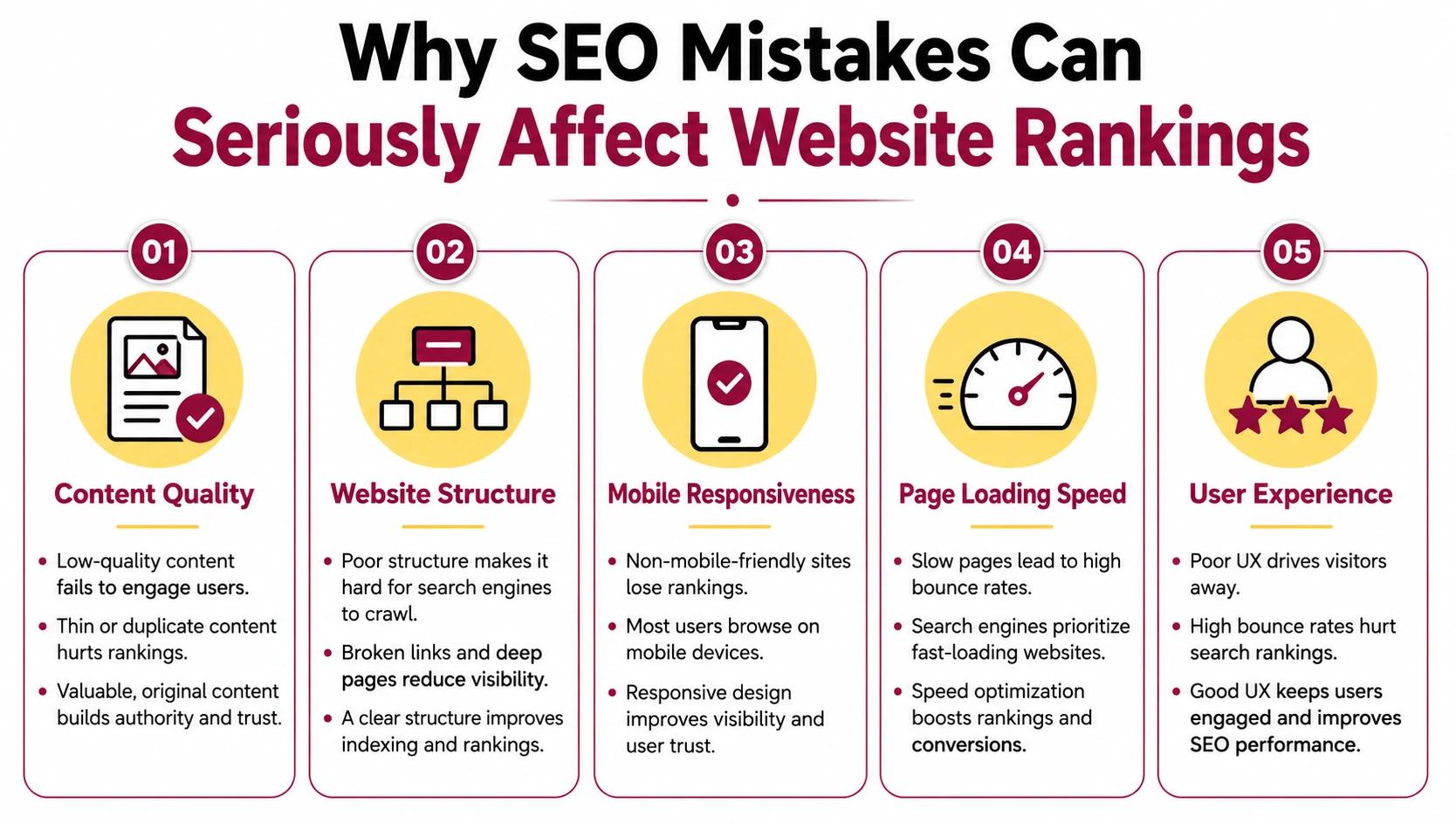
SEO mistakes can directly impact how search engines understand, crawl, and rank a website. Even if a business publishes high-quality content, poor optimization can reduce visibility and prevent webpages from appearing in relevant Google search results.
Search engines evaluate multiple factors while ranking websites, including:
- Content quality
- Website structure
- Mobile responsiveness
- Page loading speed
- User experience
- Technical SEO performance
When these areas are not optimized properly, websites may experience:
- Lower search rankings
- Reduced organic traffic
- Higher bounce rates
- Poor user engagement
- Reduced lead generation
Another major issue is competition. In highly competitive industries, even small SEO mistakes can create ranking disadvantages compared to better-optimized websites. Businesses that ignore SEO best practices often struggle to maintain long-term visibility on search engines.
SEO mistakes also affect user trust and website performance. Slow-loading pages, broken links, poor navigation, and irrelevant content can negatively impact the overall user experience, which influences Google ranking signals.
For businesses looking to understand how optimization issues affect rankings, this SEO ranking mistakes resource explains several common SEO problems that reduce website visibility and search performance.
Keyword Stuffing and Poor Content Optimization
Keyword optimization is important in SEO mistakes, but overusing keywords can negatively affect website rankings. Many websites still make the mistake of stuffing keywords unnaturally into content, headings, and meta descriptions in an attempt to improve visibility. However, Google now prioritizes content quality, readability, and user experience over excessive keyword usage.
Keyword stuffing can create several SEO problems, including:
- Poor content readability
- Weak user experience
- Lower search relevance
- Reduced engagement
- Google spam signals
Another common issue is publishing thin or low-value content that does not properly match user search intent. Content that lacks useful information, practical insights, or clear structure often struggles to rank well on search engines.
Businesses should focus more on:
- Natural keyword placement
- Search intent optimization
- Readable content structure
- High-quality information
- User-focused writing
SEO Mistake vs Impact on Rankings vs Business Consequence
| SEO Mistake | Impact on Rankings | Business Consequence |
|---|---|---|
| Keyword stuffing | Reduced search visibility | Lower organic traffic |
| Duplicate content | Indexing confusion | Weak rankings |
| Slow website speed | Poor user experience | Higher bounce rates |
| Broken links | Crawlability issues | Reduced trust |
Proper content optimization helps search engines understand webpage relevance more effectively while improving user engagement and overall website performance.
Technical SEO Problems That Reduce Search Visibility
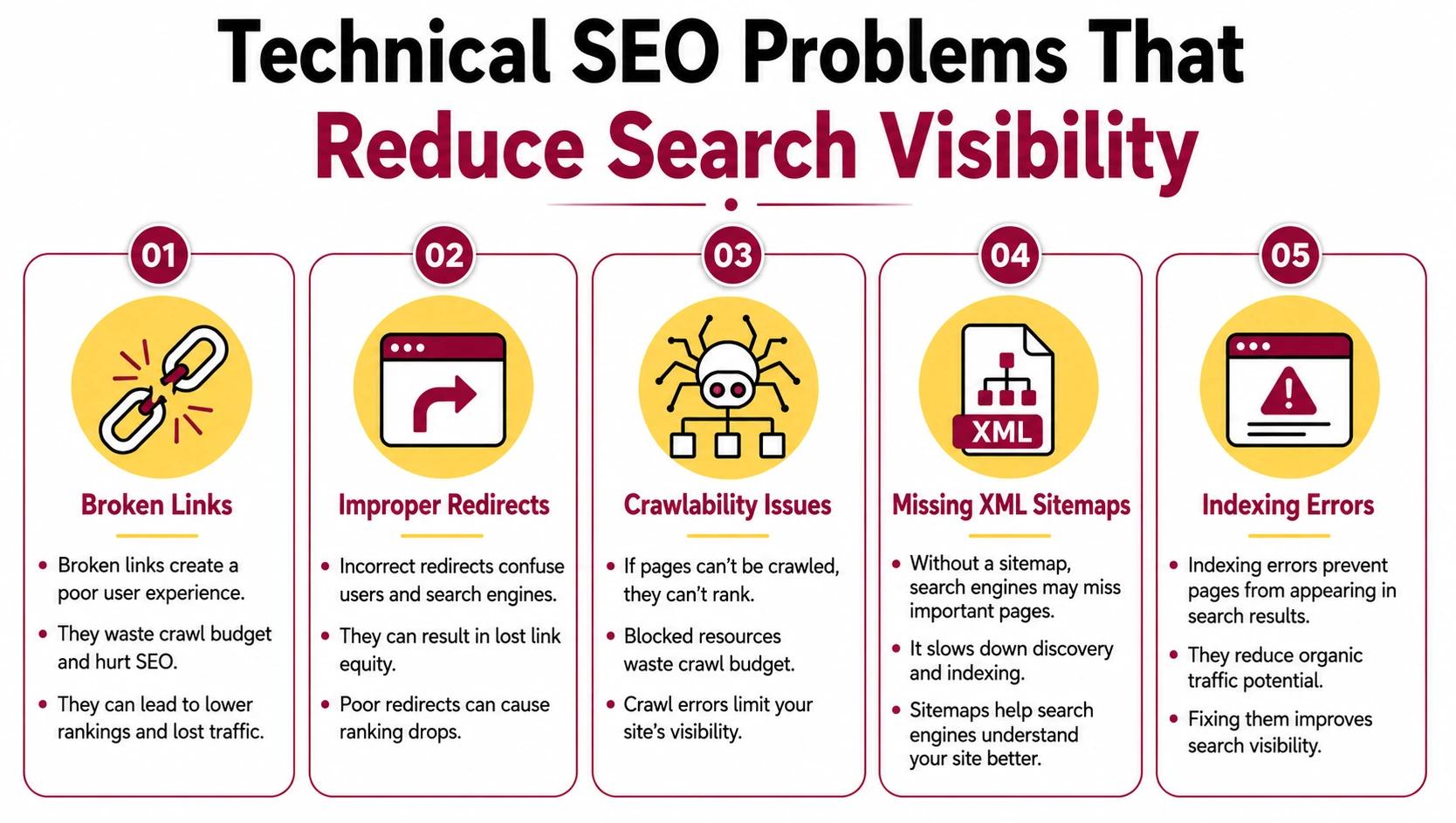
Technical SEO problems can prevent search engines from properly crawling, indexing, and understanding a website. Even well-written content may struggle to rank if the website has unresolved technical issues that affect performance and accessibility.
Some of the most common technical SEO problems include:
- Broken links
- Improper redirects
- Crawlability issues
- Missing XML sitemaps
- Indexing errors
- Duplicate pages
- Poor Core Web Vitals performance
These issues can negatively affect how search engines access website content and evaluate user experience. For example, broken links and crawl errors make it difficult for search engine bots to navigate webpages efficiently, which can reduce search visibility.
Technical SEO also impacts website performance and user satisfaction. Slow-loading pages, server errors, and poor mobile responsiveness can increase bounce rates and reduce engagement, both of which influence Google ranking signals.
Businesses should regularly perform technical SEO audits to identify optimization issues before they affect rankings significantly. Monitoring website performance, fixing crawl errors, and improving page experience can support stronger long-term SEO growth.
For businesses looking to understand more about technical optimization problems, this SEO mistakes guide explains several common SEO issues that reduce search visibility and website performance.
Mobile Optimization and Website Speed Issues
Mobile optimization and website speed have become major ranking factors because most users now access websites through mobile devices. Google also follows mobile-first indexing, which means the mobile version of a website is prioritized while evaluating search rankings.
Websites with poor mobile experience often face issues such as:
- Higher bounce rates
- Lower engagement
- Reduced search visibility
- Poor conversion performance
- Negative user experience
Slow-loading websites can also affect rankings because users expect pages to load quickly. If a webpage takes too long to open, visitors are more likely to leave before interacting with the content.
Some common website speed and mobile optimization problems include:
- Uncompressed images
- Heavy scripts and plugins
- Poor responsive design
- Excessive pop-ups
- Slow server response times
Why Website Performance Matters More in 2026
Website performance is becoming more important in 2026 because Google increasingly prioritizes user experience signals while ranking websites. Faster websites usually provide better navigation, smoother interactions, and improved engagement, which positively influence SEO performance.
Businesses are also focusing more on mobile user behavior because a large percentage of online traffic now comes from smartphones and tablets.
Websites that are optimized for speed and mobile usability often experience:
- Better search rankings
- Improved customer engagement
- Higher conversion rates
- Lower bounce rates
Optimizing mobile responsiveness and page speed can help businesses improve both user satisfaction and long-term search visibility.
Weak On-Page SEO and Website Structure Mistakes
Weak on-page SEO and poor website structure can make it difficult for search engines to understand webpage content properly. Even high-quality content may struggle to rank if important on-page optimization elements are missing or poorly implemented.
Some common on-page SEO mistakes include:
- Missing meta titles and descriptions
- Improper heading structure
- Unoptimized images
- Weak internal linking
- Poor URL structure
- Missing alt text for images
These issues affect both search visibility and user experience. For example, unclear headings and poor content organization make it harder for users and search engines to understand webpage relevance.
Internal linking is another important factor that many websites ignore. Proper internal linking helps:
- Improve website navigation
- Distribute page authority
- Increase content discoverability
- Support better crawlability
Poor SEO Practice vs Recommended Optimization
| Poor SEO Practice | Recommended Optimization |
|---|---|
| Missing title tags | Optimized keyword-focused titles |
| Unoptimized images | Compressed SEO-friendly images |
| Weak internal links | Contextual internal linking |
| Poor URL structure | Clean SEO-friendly URLs |
Optimizing website structure and on-page SEO elements can improve user engagement, crawlability, and overall ranking performance. For businesses exploring common website SEO issues, understanding these optimization problems can help improve long-term search visibility.
Common SEO Mistakes Businesses Continue to Ignore
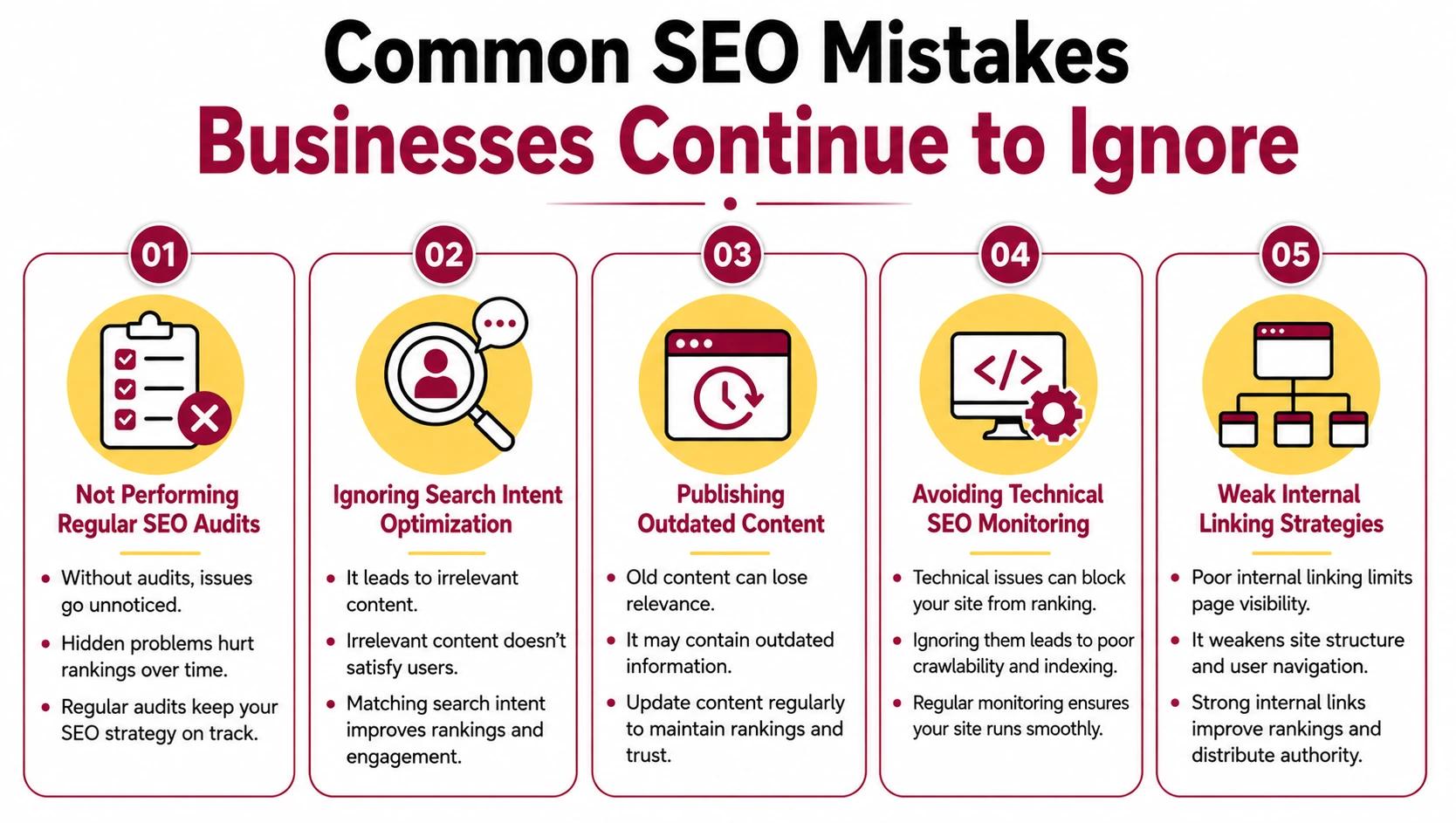
Many businesses focus only on publishing content regularly while ignoring important SEO practices that directly affect website rankings. Without continuous optimization and monitoring, websites can gradually lose visibility even if they produce quality content consistently.
Some SEO mistakes businesses commonly ignore include:
- Not performing regular SEO audits
- Ignoring search intent optimization
- Publishing outdated content
- Avoiding technical SEO monitoring
- Weak internal linking strategies
- Not analyzing website performance data
Another major issue is inconsistent SEO strategy. Many businesses target keywords without understanding what users are actually searching for. Content that does not align with search intent often struggles to rank because Google prioritizes pages that provide useful and relevant answers to users.
Businesses also underestimate the importance of analytics and ongoing optimization. SEO is not a one-time process. Search algorithms, user behavior, and competition continue changing regularly, which makes continuous improvement necessary for maintaining rankings.
For businesses and learners exploring SEO-related common questions, understanding these overlooked optimization mistakes can help improve website performance and long-term search visibility.
How to Build a Strong SEO Foundation for Better Rankings
Building a strong SEO foundation requires a combination of technical optimization, high-quality content, and consistent website improvement. Businesses that focus on long-term SEO strategies usually perform better in search rankings compared to websites that rely only on short-term optimization techniques.
Some important steps for building a strong SEO foundation include:
- Performing regular SEO audits
- Optimizing website speed and mobile usability
- Creating user-focused content
- Improving internal linking structure
- Fixing technical SEO issues
- Monitoring analytics and search performance
Content quality also plays a major role in SEO success. Businesses should focus on creating valuable, readable, and search-intent-focused content instead of publishing large amounts of low-quality pages.
Another important factor is consistency. SEO improvements usually take time, especially in competitive industries. Websites that continuously optimize content, improve technical performance, and monitor search trends are more likely to achieve sustainable ranking growth.
Businesses are also increasingly using AI-assisted SEO workflows for keyword research, content planning, and performance analysis. This helps improve productivity while supporting better optimization decisions.
For professionals exploring SEO-related career opportunities, developing practical SEO knowledge and optimization skills can create long-term opportunities in digital marketing and website growth strategies.
Final Thoughts
SEO mistakes can significantly reduce a website’s visibility, organic traffic, and overall online performance. Issues such as keyword stuffing, poor website structure, technical SEO errors, slow loading speed, and weak content optimization can prevent websites from ranking effectively on Google. Even small optimization problems can impact how search engines understand and evaluate webpages.
As Google continues prioritizing user experience, content quality, and technical performance, businesses need stronger SEO strategies to remain competitive in search results. Regular website audits, proper content optimization, mobile responsiveness, and search-intent-focused content are becoming increasingly important for maintaining long-term rankings and improving customer engagement.
SEO is not a one-time process but an ongoing effort that requires continuous monitoring and improvement. Businesses that focus on consistent optimization, technical performance, and user-focused content strategies are more likely to achieve sustainable search visibility and long-term digital growth in 2026 and beyond.
Build SEO Skills That Help Websites Rank Better
Understanding SEO mistakes is important not only for improving website rankings but also for building practical digital marketing expertise. As businesses continue competing for online visibility, professionals who understand technical SEO, content optimization, keyword strategy, and user experience are becoming increasingly valuable in the industry.
Instead of depending only on theory, learning SEO through practical implementation can help build stronger long-term skills. Working on real-time optimization strategies and understanding how Google ranking factors affect websites can improve both career opportunities and business growth knowledge.
To develop stronger SEO and digital marketing expertise, it is important to focus on:
- Technical SEO fundamentals
- Content optimization strategies
- Keyword research and search intent
- Website performance improvement
- Mobile SEO and user experience
- AI-assisted SEO workflows
If you want to build practical SEO and digital marketing skills with real-world project exposure, this AI-powered digital marketing course can help you gain industry-focused learning, hands-on experience, and modern optimization knowledge for future marketing careers.