





Table of Contents
- 1.
- 2.
- 2.1
- 2.2
- 3.
- 4.
- 5.
- 6.
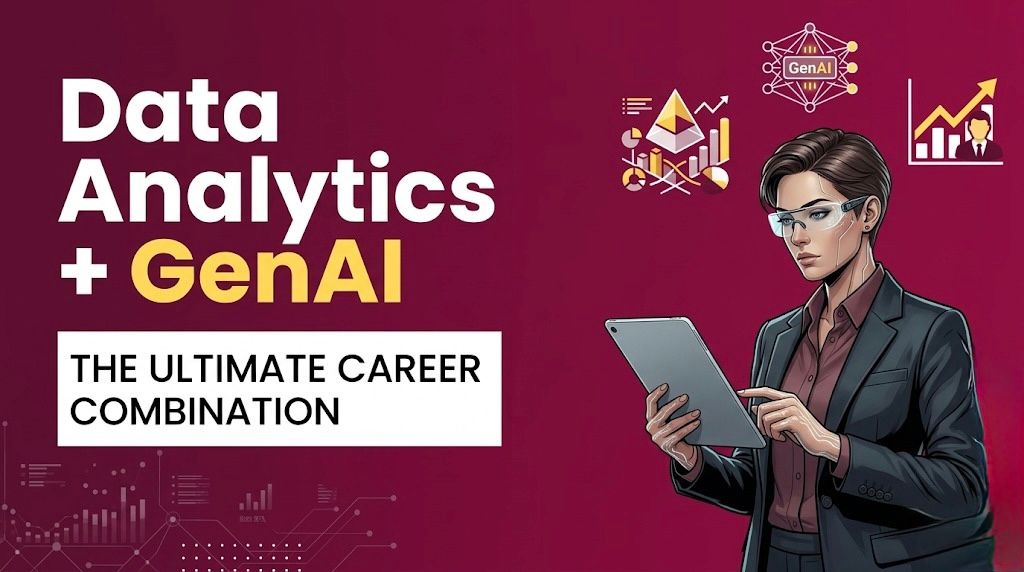
The data industry is evolving faster than ever, and professionals are quickly realizing that traditional skills alone are no longer enough. Today, Data Analytics + GenAI is emerging as one of the most powerful career combinations for students and working professionals who want to stay relevant in a rapidly changing job market. Companies are not just looking for analysts who can build dashboards; they want professionals who can automate insights, use AI tools, and support smarter business decisions.
Generative AI in analytics is transforming how data is collected, cleaned, analyzed, and presented. AI-assisted tools can now complete tasks that once took hours in just minutes. This shift in GenAI for data analytics is creating a new type of professional: the hybrid analyst who understands both analytics fundamentals and AI-driven workflows. Organizations across industries are actively hiring candidates who can combine these capabilities to improve productivity and decision-making.
For anyone planning a future in data-driven careers, Data Analytics + GenAI offers a clear competitive advantage. In the sections below, we explore why analytics and GenAI together create powerful career opportunities and how professionals can build skills that match the demands of modern data roles.
Why Data Analytics Alone Is No Longer Enough
Data Analytics + GenAI is becoming one of the most in-demand career paths in the modern data industry. However, the rapid adoption of artificial intelligence is changing what companies expect from analytics professionals. Knowing only traditional tools like Excel, SQL, or basic dashboards is no longer sufficient to stand out in a competitive job market. Organizations now want analysts who can work faster, automate processes, and generate deeper insights using AI-driven tools.
Industry insights on generative AI in analytics show that businesses are integrating AI into analytics workflows to improve efficiency and decision-making. As a result, professionals who combine analytics skills with generative AI capabilities are becoming more valuable than those with only traditional expertise.
Key reasons analytics alone is not enough today:
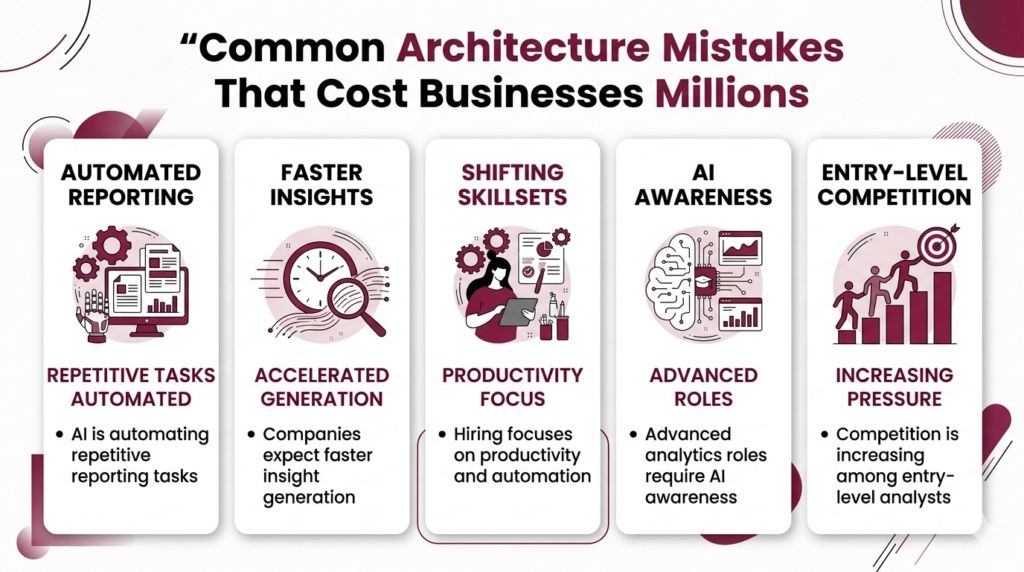
AI is automating repetitive reporting tasks
- Companies expect faster insight generation
- Hiring focuses on productivity and automation
- Advanced analytics roles require AI awareness
- Competition is increasing among entry-level analysts
Traditional Analyst vs GenAI-Enabled Analyst
| Aspect | Traditional Analyst | GenAI-Enabled Analyst |
|---|---|---|
| Data cleaning | Manual | AI-assisted automation |
| Query writing | Fully manual | AI-supported |
| Insight generation | Time-consuming | Faster & predictive |
| Productivity | Moderate | High |
| Career growth | Slower | Faster & future-ready |
To remain competitive in 2026 and beyond, analysts must evolve with AI-driven tools and workflows.
How GenAI Is Transforming Data Analytics Careers
GenAI for data analytics is rapidly changing how data analytics professionals work and grow in their careers. Instead of spending most of their time on manual data cleaning, query writing, and repetitive reporting, analysts can now automate many of these tasks using AI tools. This allows them to focus more on interpreting insights, supporting strategy, and delivering business value.
According to recent insights on GenAI careers, the integration of generative AI into analytics is creating new career paths and expanding opportunities across industries. Companies are actively hiring professionals with AI data analyst skills who can combine data expertise with AI-driven workflows to improve productivity and innovation.
Ways GenAI is transforming analytics careers:
- Automating routine data preparation and reporting
- Enabling faster insight generation and forecasting
- Improving decision support through predictive analytics
- Increasing demand for AI-enabled analysts
- Creating hybrid roles combining analytics and AI
This transformation is not eliminating analytics jobs it is redefining them. Professionals who learn to use GenAI effectively can handle complex datasets faster, provide deeper insights, and position themselves for higher-impact roles in modern organizations.
The Skills That Make This Combination Powerful
The strength of Data Analytics + GenAI lies in combining analytical fundamentals with AI-driven efficiency. Professionals who understand both domains can move beyond routine reporting and contribute to strategic decision-making. This hybrid skill set allows analysts to automate repetitive tasks while focusing on business insights and innovation.
To build Data Analytics + GenAI expertise effectively, professionals must strengthen core analytics knowledge first. Strong foundations in SQL, data modeling, and visualization remain essential. Once the fundamentals are clear, adding GenAI capabilities such as prompt engineering, AI-assisted query writing, and automation skills significantly increases productivity and value.
Key AI data analyst skills that make this combination powerful:
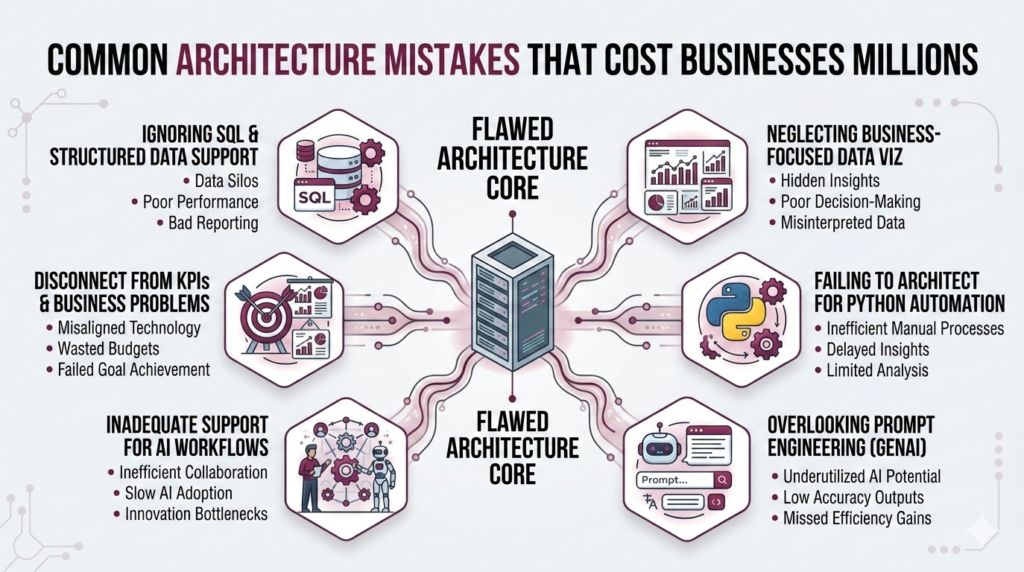
- SQL and structured data querying
- Data visualization and dashboard building
- Python for automation and analysis
- Prompt engineering for GenAI tools
- Understanding of AI-assisted workflows
- Business problem-solving and KPI analysis
Tools Every GenAI-Enabled Analyst Should Know
Insights on rising GenAI demand highlight the importance of tools like ChatGPT, AI-powered BI platforms, and automation frameworks in modern analytics roles.
Skill → Real Use Case → Career Impact
| Skill/Tool | Real Use Case | Career Impact |
|---|---|---|
| SQL | Data extraction & transformation | Core analytics requirement |
| ChatGPT / GenAI tools | Query writing & data summarization | Higher productivity |
| Python | Automation & predictive analysis | Advanced role eligibility |
| BI tools with AI | Smart dashboards & forecasting | Smart dashboards & forecasting |
| Prompt engineering | Efficient AI interaction | Competitive advantage |
This combination creates professionals who are both technically strong and future-ready.
Career Opportunities & Salary Growth in 2026
Data Analytics + GenAI is opening new career opportunities across industries. Companies are actively searching for professionals who can analyze data, automate workflows, and generate insights using AI-driven tools. This demand is creating roles that go beyond traditional analytics, offering faster career growth and higher salary potential.
Professionals with GenAI for data analytics expertise can work in roles such as AI-powered data analyst business intelligence specialist, decision intelligence analyst, and automation analyst. These positions require the ability to combine data interpretation with AI-assisted tools to support strategic decision-making.
Career advantages of this combination include:
- Higher demand across tech and non-tech industries
- Faster promotion into advanced analytics roles
- Opportunities in global and remote positions
- Better salary growth compared to traditional roles
- Involvement in AI-driven business strategies
Understanding industry demand for AI professionals highlights how organizations prioritize candidates with AI-integrated analytics skills.
In 2026, salary growth is closely tied to productivity and impact. Professionals who can automate tasks and generate faster insights using GenAI are likely to secure higher-paying roles and long-term career stability.
How to Prepare for a Data Analytics + GenAI Career
Preparing for a career that combines data analytics and generative AI requires a structured and practical learning approach. Professionals should first focus on building strong analytics fundamentals, then gradually integrate AI-driven tools into their workflow. This combination helps develop both technical depth and modern productivity skills.
Start by mastering core areas such as SQL, data visualization, and data cleaning. Once comfortable with these basics, begin exploring how generative AI can assist with tasks like query writing, data transformation, and insight generation. Building small projects that demonstrate AI-assisted analytics can significantly improve confidence and job readiness.
A practical preparation roadmap includes:
- Strengthening SQL and dashboard fundamentals
- Learning Python for automation and analysis
- Practicing prompt-based AI usage for analytics
- Building AI-assisted portfolio projects
- Preparing structured project explanations
Practicing interview scenarios through mock interviews can help candidates confidently explain how they use GenAI in analytics workflows.
Consistent practice and real-world project experience will help professionals stand out in interviews and transition smoothly into AI-enabled analytics roles.
Why This Combination Is Future-Proof
Data Analytics + GenAI is quickly becoming one of the most future-proof career paths.
As businesses continue adopting automation and AI-driven decision systems, professionals who can work with both data and intelligent tools will remain highly valuable. This hybrid expertise ensures relevance even as technology continues to evolve.
Companies are moving toward faster, data-driven operations where insights must be generated in real time. Analysts who can automate workflows, interpret AI outputs, and provide strategic recommendations will play a central role in this transformation. Instead of being replaced by technology, these professionals will work alongside AI to improve efficiency and innovation.
Reasons this combination is future-proof:
- AI adoption is increasing across industries
- Businesses rely on data-driven decision-making
- Automation is reshaping analytics workflows
- Hybrid AI + analytics roles are expanding
- Continuous demand for skilled analysts
Professionals who upgrade their skills today will be better prepared for tomorrow’s job market. Combining analytics with GenAI not only improves employability but also ensures long-term career stability in an increasingly automated world.
Final Thoughts
The future of data careers belongs to professionals who can combine strong analytical thinking with the power of generative AI. While traditional analytics skills remain important, they are no longer enough on their own. Companies now expect analysts who can automate processes, generate insights faster, and support smarter decision-making using AI-driven tools.
Data Analytics + GenAI creates a powerful advantage. It improves productivity, increases career opportunities, and positions professionals for high-impact roles in modern organizations. Those who adapt early will move faster into advanced positions and remain competitive in a rapidly evolving job market.
In 2026 and beyond, success will belong to hybrid analysts who understand both data and AI. This combination is not just a trend - it is the new standard for future-ready analytics careers.
Master Data Analytics + GenAI for Future-Ready Careers
The demand for professionals who can combine data analytics with generative AI is growing rapidly. Companies want analysts who can automate workflows, generate faster insights, and support strategic decisions using AI-powered tools. Building this hybrid skill set today can open doors to high-growth roles and long-term career stability.
If you want to stay ahead in the evolving data industry, focus on mastering both analytics fundamentals and AI-driven workflows. Structured learning, hands-on projects, and guided practice can help you develop the practical expertise employers are looking for in 2026 and beyond.
To build job-ready skills and become confident in AI-powered analytics, explore the Certification in AI Powered Data Analytics and start developing the expertise required for modern, high-demand data careers.