





Table of Contents
- 1.
- 2.
- 3.
- 3.1
- 4.
- 5.
- 6.
- 7.
- 8.
The demand for data analytics professionals has grown rapidly as organizations increasingly rely on data-driven insights to guide business decisions. Because of this trend, many students and working professionals are searching for a reliable data analytics institute that can help them build practical skills and enter this fast-growing field. However, with so many institutes offering analytics programs today, choosing the right one can be a challenging decision.
Not every training institute provides the same level of quality or career support. Some programs focus mainly on theoretical concepts, while others emphasize hands-on projects, industry tools, and real-world problem solving. Selecting the wrong institute can lead to limited practical exposure and may not fully prepare learners for real job opportunities in the analytics industry.
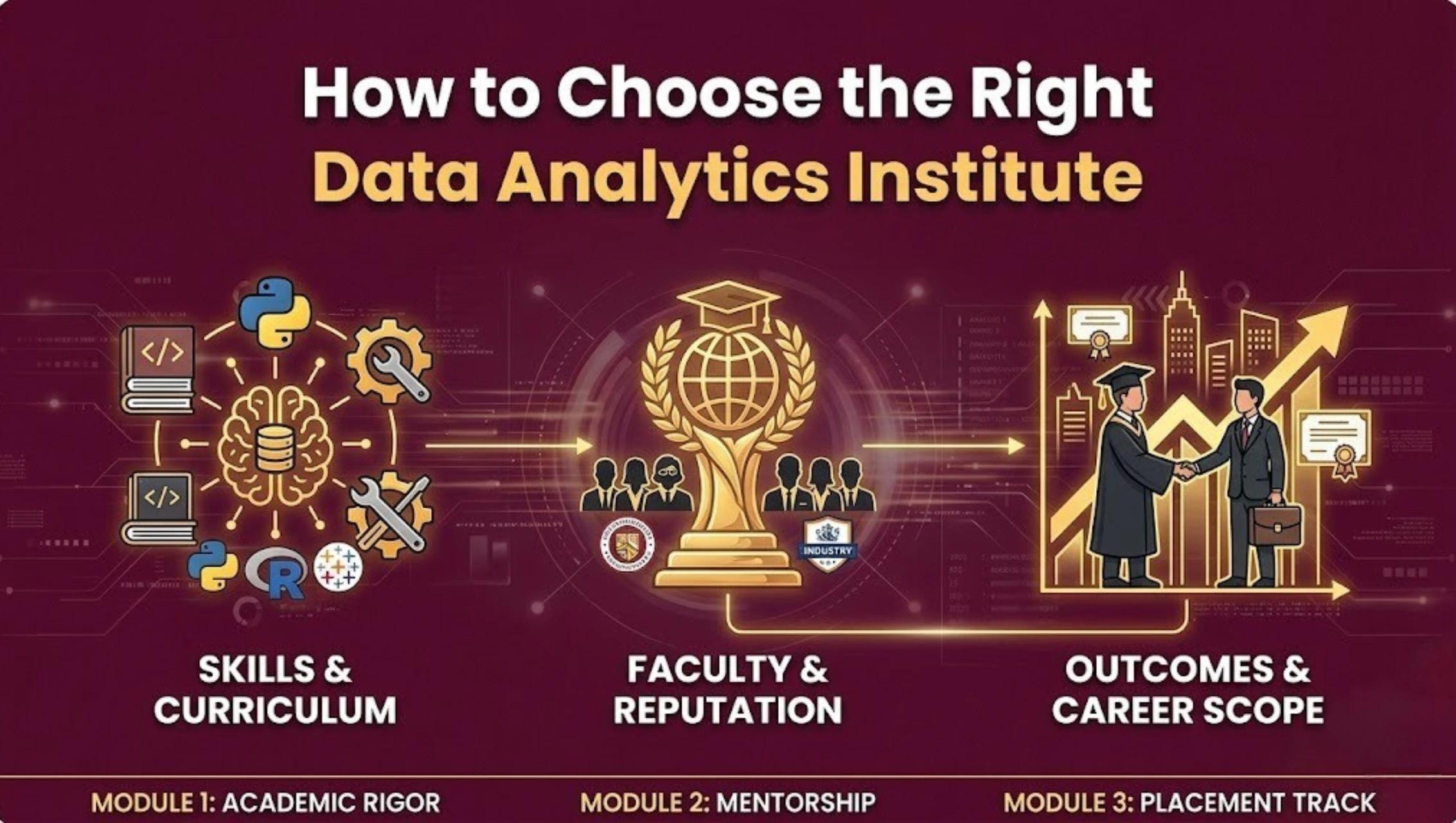
Before enrolling in any program, it is important to evaluate several factors such as curriculum structure, practical training opportunities, instructor experience, and career guidance. In this blog, we will explore the key things to look for when choosing the right data analytics institute, so you can make an informed decision and build a strong foundation for your analytics career.
Why Choosing the Right Data Analytics Institute Matters
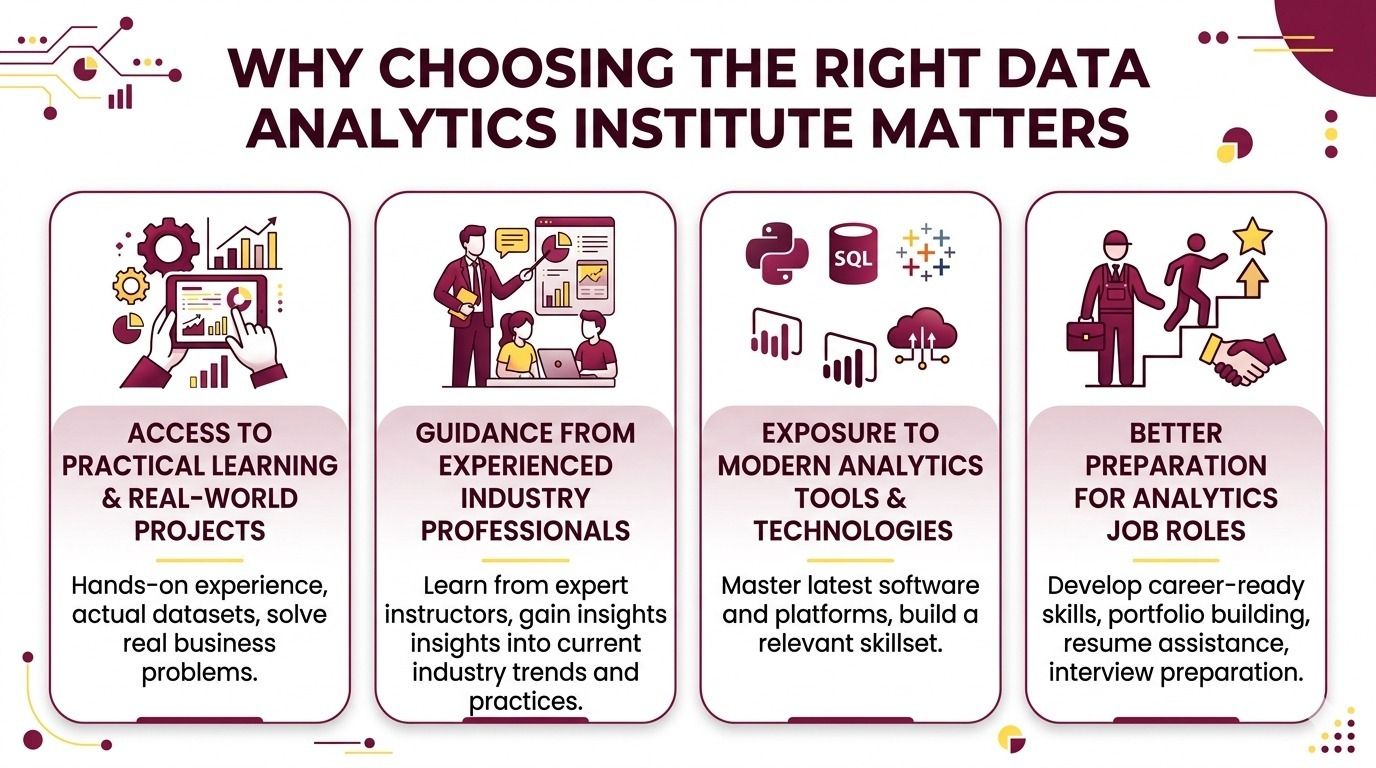
Selecting the right data analytics institute can significantly influence how well you develop practical skills and prepare for a career in analytics. While many institutes offer similar course titles, the quality of training, teaching methods, and industry exposure can vary widely. Choosing a well-structured institute ensures that learners gain both technical knowledge and the practical experience required in real-world analytics roles.
A good institute focuses not only on teaching concepts but also on helping students apply them through projects and case studies. Data analytics is a hands-on field, and professionals are expected to work with real datasets, analytical tools, and business scenarios. Institutes that provide practical learning opportunities help students understand how analytics is used in industries such as finance, healthcare, e-commerce, and technology.
Another important factor is the expertise of instructors. Trainers with real industry experience can provide insights into how analytics tools and techniques are used in professional environments. This guidance helps learners understand the practical applications of data analytics rather than just theoretical knowledge.
Some reasons why choosing the right institute is important include:
- Access to practical learning and real-world projects
- Guidance from experienced industry professionals
- Exposure to modern analytics tools and technologies
- Better preparation for analytics job roles
Learners researching different institutes can explore resources like this analytics institute guide to understand what factors are typically considered when evaluating analytics training programs.
Key Factors to Evaluate Before Selecting an Institute
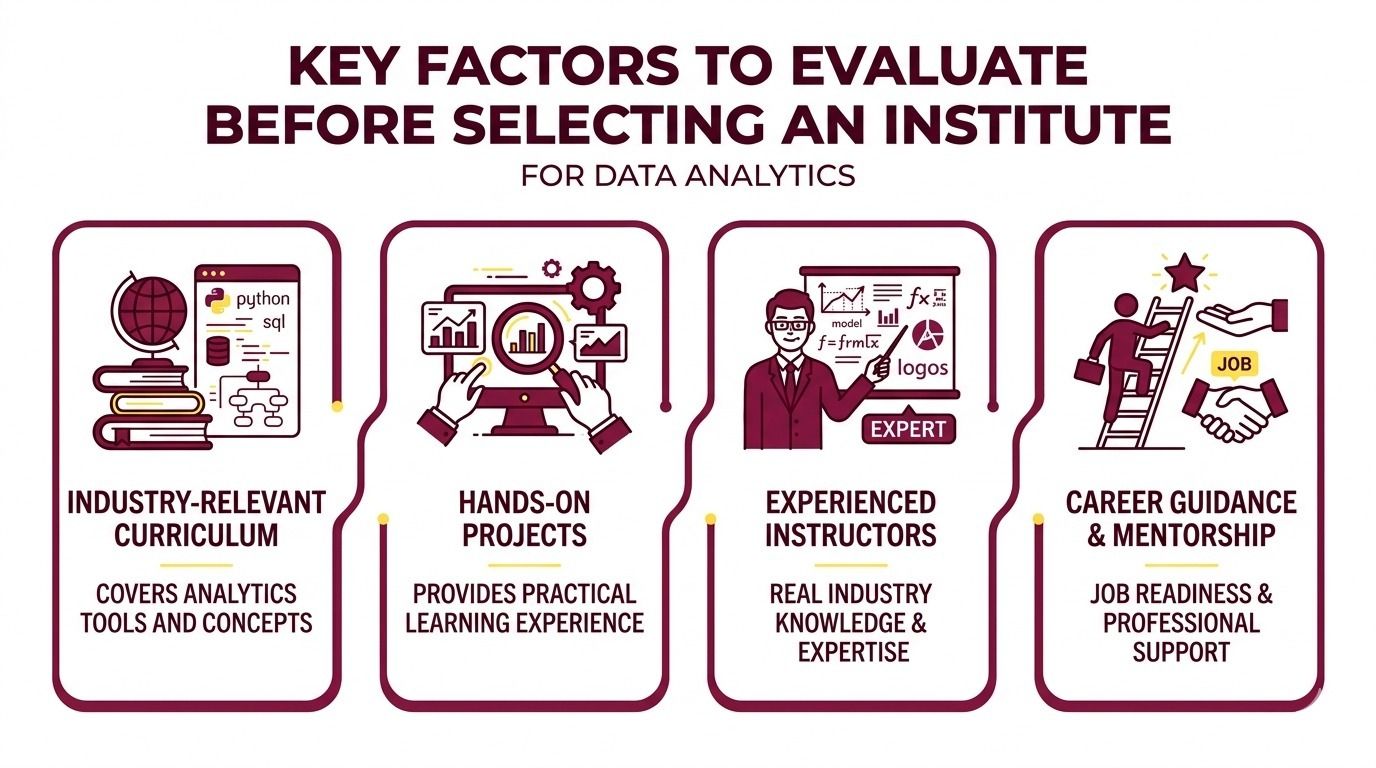
When searching for a data analytics institute, it’s important to evaluate more than just the course title or duration. Many institutes advertise similar programs, but the quality of training can differ significantly. Taking time to assess a few key factors can help learners choose an institute that offers real value and prepares them for industry roles.
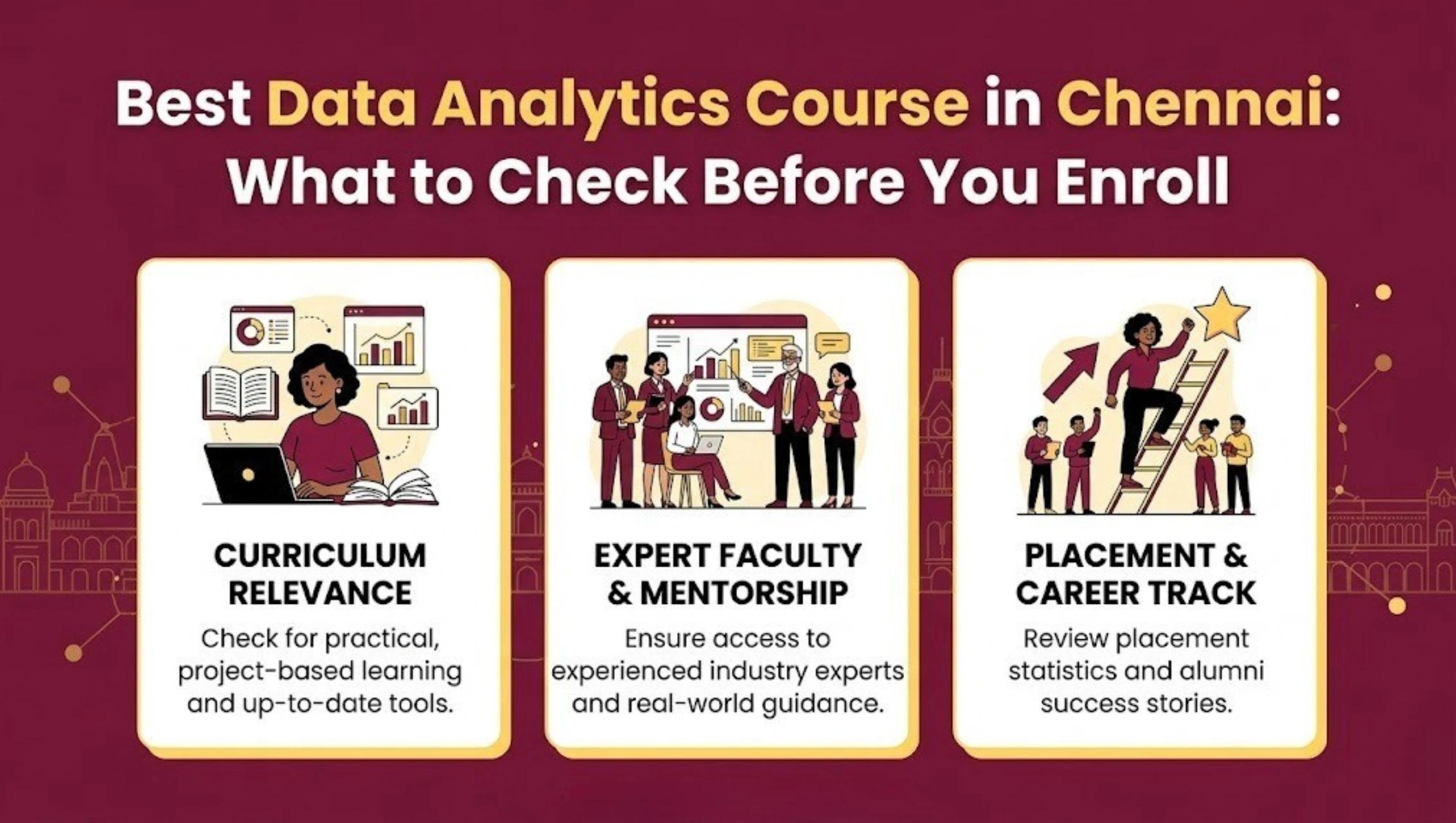
One of the first aspects to check is the course curriculum. A strong curriculum should include both foundational concepts and practical tools used in the industry. Topics such as data analysis, visualization, and basic machine learning should be part of the learning path. Courses that combine theory with hands-on learning often provide better preparation for real-world analytics tasks.
Another important factor is project-based learning. Data analytics is a practical discipline, and learners should have opportunities to work with real datasets and case studies. Projects help students understand how analytics is applied to business problems and also allow them to build a portfolio that can be shown to employers.
Before choosing an institute, consider the following factors:
- Industry-relevant curriculum covering analytics tools and concepts
- Hands-on projects that provide practical learning experience
- Experienced instructors with real industry knowledge
- Career guidance and mentorship to support job readiness
Learners comparing training options can also review advice on choosing analytics course programs to better understand what separates a strong analytics institute from a basic one.
Important Skills a Good Data Analytics Institute Should Teach
When evaluating a data analytics institute, it’s important to understand the skills that the program should actually teach. Data analytics is not only about learning concepts but also about gaining practical abilities that allow professionals to work with real datasets and generate useful insights for businesses.
A strong analytics training program usually focuses on both technical skills and analytical thinking. Learners should develop the ability to collect data, clean it, analyze patterns, and present findings clearly through reports or dashboards. These skills are essential for making data-driven decisions in modern organizations.
In addition to analytical skills, students must also learn to work with tools commonly used in the analytics industry. These tools allow professionals to process large datasets, create visualizations, and communicate insights effectively to stakeholders.
Essential Analytics Tools to Learn
A good analytics institute should provide hands-on training with widely used industry tools. Some of the most important tools include:
- Python for data analysis and automation
- SQL for querying and managing databases
- Excel for quick data analysis and reporting
- Power BI or Tableau for data visualization and dashboards
Learning these tools helps students perform real-world analytics tasks and improves their job readiness. Learners researching different training options can also explore resources such as this analytics course guide to understand what skills a comprehensive analytics program should cover.
Comparing Data Analytics Institutes: What to Look For
With many institutes offering analytics training today, comparing different programs can help learners identify which data analytics institute provides the most value. While course advertisements may appear similar, the learning experience, practical exposure, and career support offered by each institute can vary significantly.
One of the key differences between institutes lies in how they approach teaching. Some programs focus mainly on theoretical lectures, while others emphasize project-based learning and real-world case studies. Institutes that provide practical training allow students to work with real datasets, which helps them understand how analytics techniques are applied in professional environments.
Another important aspect is the range of tools and technologies covered in the course. Modern analytics roles require familiarity with programming languages, databases, and visualization platforms. Institutes that teach multiple industry-relevant tools help learners build versatile skills that are valuable in the job market.
The table below highlights some key differences between basic training institutes and industry-focused programs.
| Feature | Basic Institute | Industry-Focused Institute |
|---|---|---|
| Curriculum | Theory-based | Practical + project-based |
| Tools taught | Limited tools | Python, SQL, BI tools |
| Project work | Minimal | Real business datasets |
| Career support | Limited | Resume + interview prep |
By carefully comparing these factors, learners can identify institutes that provide stronger career preparation and practical analytics training.
Why Reviews and Student Outcomes Matter
When selecting a data analytics institute, one of the most reliable ways to evaluate the quality of training is by looking at student reviews and learning outcomes. Reviews often provide insights into the real experiences of learners who have already completed the course. They can highlight strengths such as practical training, supportive mentors, or career guidance that may not always be clear from promotional content.
Student outcomes are equally important because they reflect how effectively an institute prepares learners for industry roles. Successful alumni who have transitioned into analytics careers demonstrate that the training program delivers practical value. Many prospective learners check feedback from previous students before enrolling, as it helps them understand what to expect from the learning experience.
Positive reviews often indicate factors such as:
- Practical project-based learning that helps build real skills
- Experienced trainers who provide industry insights
- Career support services like resume building and interview preparation
- Strong student satisfaction with the learning process
Prospective learners can review feedback from previous participants through student reviews to better understand how learners evaluate the training experience.
For those interested in expanding their analytics knowledge further, programs such as an AI data science program can provide additional exposure to advanced analytics and AI-driven skills.
Evaluating both reviews and student outcomes helps learners choose an institute that offers reliable training and career-focused learning.
Questions to Ask Before Joining a Data Analytics Institute
Before enrolling in a data analytics institute, it’s important to ask a few key questions that help determine whether the training program truly meets your learning and career goals. With many institutes offering analytics courses today, asking the right questions can help you identify programs that provide practical training rather than just theoretical knowledge.
One of the first questions to ask is whether the course includes hands-on projects. Real-world projects allow learners to apply analytical techniques to real datasets and develop problem-solving skills that are essential in analytics roles. Courses that include multiple projects also help students build a portfolio that can be showcased during job interviews.
Another important question involves the tools and technologies covered in the program. A good analytics institute should teach tools that are commonly used in the industry, such as Python, SQL, Excel, and data visualization platforms. Learning these tools ensures that students are prepared to work with real data in professional environments.
Before making a decision, consider asking questions like the following:
| Question | Why It Matters |
|---|---|
| Does the institute offer project-based learning? | Builds practical analytics skills |
| Are modern analytics tools included? | Prepares learners for industry roles |
| Is career guidance available? | Improves job readiness |
| Are trainers experienced professionals? | Provides real-world insights |
By asking these questions, learners can better evaluate the quality of training and choose a program that supports their long-term analytics career goals.
Final Thoughts
Choosing the right data analytics institute is an important step for anyone looking to build a successful career in analytics. With the growing demand for data-driven professionals, enrolling in a program that offers practical training, modern tools, and career guidance can significantly improve your job readiness.
Before selecting an institute, it’s helpful to focus on a few key factors:
- A well-structured curriculum that covers industry-relevant topics
- Hands-on projects that provide practical experience
- Training in modern analytics tools such as Python, SQL, and visualization platforms
- Career support services including mentorship and interview preparation
By evaluating these elements carefully, learners can choose a data analytics institute that provides the right balance of theoretical knowledge and practical learning. A thoughtful decision at this stage can help build a strong foundation for long-term success in the analytics field.
Start Your Learning Journey with a Career-Focused Analytics Program
If you want to develop practical analytics skills and prepare for real-world data roles, exploring a structured training program can be a great starting point.
Discover the data analytics certification course designed to help learners build industry-ready skills through hands-on learning and modern analytics tools.