

Table of Contents
- 1.
- 2.
- 3.
- 4.
- 5.
- 5.1
- 6.
- 7.
- 8.
- 9.
- 10.
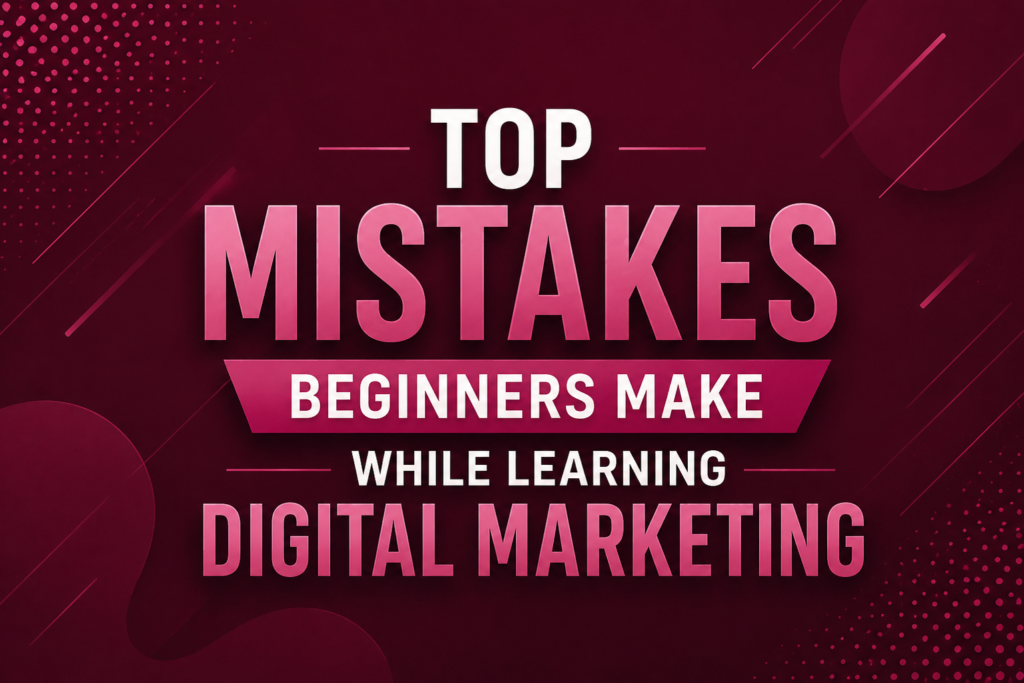
Digital Marketing Mistakes Beginners Make in 2026
Digital marketing mistakes beginners make are becoming more common in 2026 as many students start learning without a clear roadmap or practical understanding. Digital marketing has become one of the most popular career choices in 2026, but many beginners struggle because they start learning without a clear roadmap or practical understanding. With so many areas such as SEO, social media marketing, content creation, performance marketing, and analytics, beginners often feel confused about where to focus first and how to build industry-ready skills.
One of the biggest mistakes learners make is depending only on theoretical knowledge without applying concepts through real projects and practical experimentation. Digital marketing is a skill-based field where understanding campaign performance, audience behavior, and content strategy requires hands-on practice. Beginners who focus only on watching tutorials or collecting certifications may struggle to build confidence and practical expertise.
Another challenge is adapting to changing technologies and AI-powered marketing workflows. Modern marketers are expected to understand automation tools, analytics, and audience-focused strategies while still maintaining creativity and strategic thinking. In the upcoming sections, we will discuss the top mistakes beginners make while learning digital marketing, why practical learning and skill development are important, and how students can build stronger marketing knowledge and career-ready expertise in 2026.
Learning Only Theory Without Practical Implementation
One of the most common digital marketing mistakes beginners make is focusing only on theory without practicing real-world implementation.is focusing only on theory without practicing real-world implementation. Watching tutorials and reading concepts can build basic understanding, but digital marketing skills improve mainly through experimentation, campaign execution, and performance analysis. This is one of the biggest digital marketing mistakes beginners make in 2026.
Practical learning helps beginners understand how strategies work in real situations. Students should actively practice:
- SEO optimization
- Social media posting
- Content creation
- Google Ads basics
- Audience analysis
Hands-on experience improves confidence and problem-solving abilities. Avoiding these digital marketing mistakes beginners make can help students improve practical skills faster.
Another reason practical implementation matters is because digital marketing platforms constantly change. Search engines, social media algorithms, and advertising systems update regularly, making real-time practice essential for staying updated with industry trends.
Beginners who avoid implementation often struggle with:
- Campaign optimization
- Content planning
- Audience targeting
- Analytics interpretation
- Marketing strategy execution
Without practical exposure, it becomes difficult to understand how digital campaigns actually perform.
Small practice projects can help learners build stronger skills. Beginners can:
- Create sample websites
- Run test ad campaigns
- Optimize blog content
- Build social media pages
- Analyze marketing metrics
These activities improve learning much faster than theory alone.
For students exploring common digital marketing mistakes, balancing theory with practical implementation is one of the most important steps toward becoming industry-ready in digital marketing.
Trying to Learn Every Digital Marketing Skill at Once
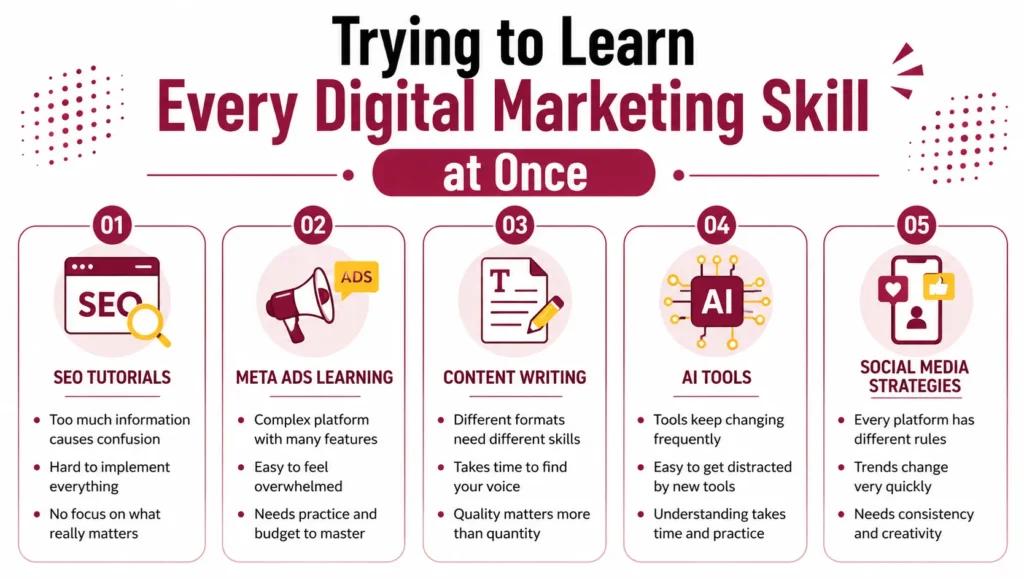
One of the biggest digital marketing mistakes beginners make is trying to learn every area of marketing at the same time. of digital marketing at the same time. Since digital marketing includes SEO, social media marketing, content creation, performance marketing, analytics, email marketing, and automation, learning everything together often creates confusion and information overload. Trying to learn everything together is among the common digital marketing mistakes beginners make today.
Instead of mastering skills gradually, beginners may jump between:
- SEO tutorials
- Meta Ads learning
- Content writing
- AI tools
- Social media strategies
without building strong understanding in any specific area.
A structured learning roadmap helps learners stay focused and improve skills more effectively. Beginners should first understand core concepts such as:
- Content marketing basics
- SEO fundamentals
- Audience behavior
- Social media engagement
- Marketing analytics
After building a foundation, they can gradually explore advanced topics and specialization areas.
Beginner Mistake vs Impact
| Beginner Mistake | Impact |
|---|---|
| Learning Only Theory | Weak practical understanding |
| Ignoring Analytics | Poor campaign decision-making |
| No Portfolio Building | Reduced job opportunities |
| Following Every Trend | Lack of specialization |
Another common problem is constantly following trends without understanding long-term marketing principles. Beginners who focus only on trending tools or viral strategies may struggle to develop sustainable skills.
Choosing one or two focus areas initially often improves:
- Learning clarity
- Practical confidence
- Skill development speed
- Career direction
- Portfolio quality
Structured learning helps students avoid common digital marketing mistakes beginners make during the early learning stage.
For students exploring strategies for learning digital marketing, structured and focused learning is usually more effective than trying to master every marketing skill at once.
Ignoring Analytics and Data Interpretation Skills
Many beginners focus heavily on content creation and social media activity but ignore analytics and data interpretation. In digital marketing, understanding numbers and campaign performance is just as important as creating content because marketing decisions depend heavily on audience behavior and measurable results. Ignoring data analysis is another important digital marketing mistake beginners make during early learning stages
Analytics help marketers understand:
- Which content performs well
- How audiences interact with campaigns
- Which platforms drive traffic
- What improves conversions
- Where optimization is needed
Without these insights, marketers may struggle to improve performance effectively.
Another common issue is relying on assumptions instead of data. Beginners sometimes create campaigns based only on personal opinions rather than analyzing:
- Audience engagement
- Search behavior
- Click-through rates
- Conversion metrics
- Retention patterns
Data-driven decisions usually produce better marketing outcomes.
Understanding analytics also improves:
- SEO optimization
- Paid advertising performance
- Content strategy planning
- Audience targeting
- Campaign scalability
Even basic familiarity with tools like Google Analytics and ad dashboards can significantly improve marketing understanding.
Beginners should practice reading reports, tracking engagement metrics, and analyzing campaign performance regularly. Small improvements in analytical thinking often lead to stronger optimization skills and better decision-making.
For students preparing for interviews and marketing roles, these digital marketing interview questions can help improve understanding of analytics, strategy, and practical digital marketing concepts.
Depending Too Much on AI Tools Without Strategy
AI tools are helping beginners learn and execute digital marketing tasks faster, but relying too heavily on automation without understanding strategy can create weak marketing skills. In 2026, AI-powered tools support content creation, SEO optimization, analytics, and campaign management, but human decision-making still remains important.
Many beginners use AI tools for:
- Content generation
- Caption writing
- SEO suggestions
- Ad copy creation
- Keyword research
without understanding why specific strategies work or how audiences respond to campaigns.
Overusing automation without strategy is one of the latest digital marketing mistakes beginners make in AI-powered marketing
One major problem with overdependence on AI is reduced originality. Automatically generated content may sometimes become:
- Repetitive
- Generic
- Weak in creativity
- Poor in audience connection
- Lacking brand identity
Search engines and audiences still value authentic and useful content experiences.
Another issue is ignoring strategic thinking. Successful digital marketing depends on:
- Audience understanding
- Brand positioning
- Search intent
- Creative messaging
- Performance analysis
AI tools can assist workflows, but they cannot completely replace human creativity and critical thinking.
Which Digital Marketing Skills Should Beginners Focus on in 2026?
Beginners should focus on building strong foundational skills before depending heavily on automation tools.
Important digital marketing skills include:
- SEO basics
- Content marketing
- Social media marketing
- Analytics
- Performance marketing
- AI-assisted marketing workflows
Marketers who combine practical knowledge with AI-assisted productivity are often better prepared for long-term digital marketing growth.
Not Building a Portfolio or Personal Brand
Many beginners complete courses and certifications but fail to build a portfolio that demonstrates their practical skills. In digital marketing, employers and clients often prefer candidates who can showcase real work instead of only theoretical knowledge.
A strong portfolio helps beginners display:
- SEO projects
- Social media campaigns
- Content writing samples
- Ad campaign experiments
- Analytics reports
Even small practice projects can improve credibility and demonstrate practical understanding.
Personal branding is also becoming highly important in 2026. Platforms like LinkedIn help beginners:
- Share industry insights
- Showcase projects
- Build professional visibility
- Connect with recruiters
- Improve networking opportunities
Consistent online presence can support long-term career growth.
Digital Marketing Skill vs Career Benefit
| Digital Marketing Skill | Career Benefit |
|---|---|
| SEO | Organic growth expertise |
| Social Media Marketing | Audience engagement skills |
| Performance Marketing | Paid advertising opportunities |
| Analytics | Better campaign optimization |
Another common mistake is waiting for “perfect” projects before building a portfolio. Beginners can start by:
- Creating sample campaigns
- Writing blog content
- Managing practice pages
- Running small ad experiments
- Documenting learning outcomes
These projects help improve both skills and confidence.
For learners exploring common beginner marketing mistakes, building a portfolio and personal brand early can significantly improve career opportunities in digital marketing.
Following Trends Without Understanding Fundamentals
Many beginners get distracted by trending tools, viral strategies, and fast-changing social media updates without understanding the core fundamentals of digital marketing. While trends can be useful, long-term success usually depends on strong foundational knowledge and strategic thinking.
Some beginners focus only on:
- Viral content formats
- Trending AI tools
- Quick growth hacks
- Short-term social media tactics
- Automation shortcuts
without learning how digital marketing systems actually work.
Understanding fundamentals helps marketers build stronger decision-making skills in areas such as:
- SEO basics
- Search intent
- Audience targeting
- Content strategy
- Marketing funnels
These concepts remain valuable even when platforms and algorithms change.
Another problem with trend-focused learning is inconsistency. Beginners who constantly switch between tools and strategies may struggle to:
- Develop specialization
- Build practical expertise
- Improve analytical thinking
- Create long-term strategies
- Understand campaign performance
Strong fundamentals make it easier to adapt to future marketing trends and technologies.
Beginners should also understand that successful marketing depends heavily on:
- Audience understanding
- Clear communication
- Consistent learning
- Data analysis
- Strategic experimentation
These skills remain important across every marketing platform.
For students exploring inspiring success stories, focusing on strong marketing fundamentals alongside practical learning can create better long-term career growth in digital marketing.
How Students Can Learn Digital Marketing More Effectively
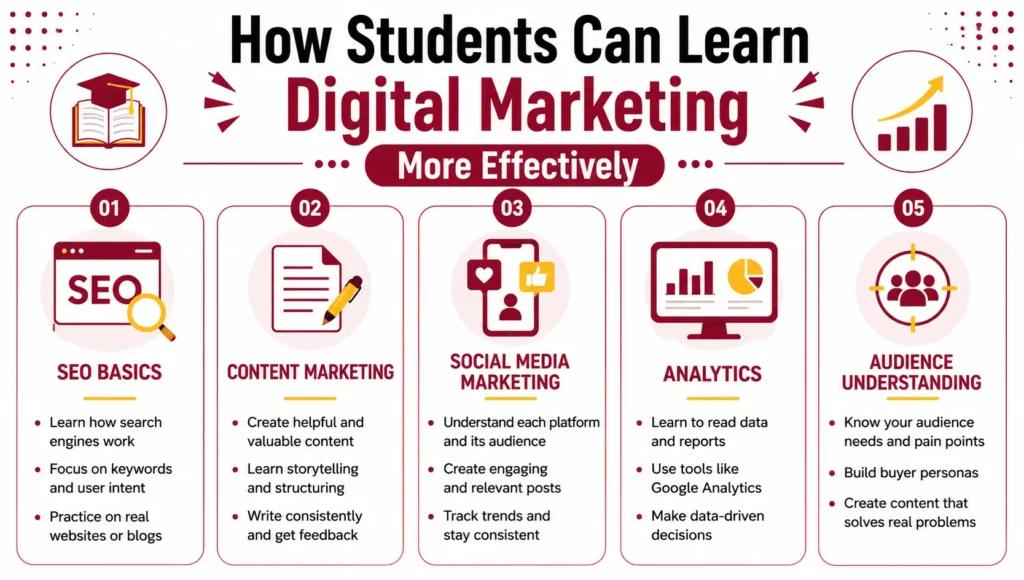
Learning digital marketing effectively requires a structured approach that combines theory, practical implementation, and continuous skill development. In 2026, students who focus on real-world practice and industry-relevant skills are often better prepared for internships, freelance projects, and full-time marketing roles.
A strong learning roadmap should begin with foundational areas such as:
- SEO basics
- Content marketing
- Social media marketing
- Analytics
- Audience understanding
Once these concepts become clear, learners can gradually explore advanced topics like performance marketing and automation.
Practical implementation is equally important. Students can improve skills by:
- Creating blog content
- Managing social media pages
- Running small ad campaigns
- Practicing keyword research
- Tracking analytics metrics
These activities help build confidence and real-world understanding.
Another important factor is continuous learning because digital marketing changes rapidly through:
- Search engine updates
- AI-powered tools
- Social media trends
- Advertising platform changes
- Audience behavior shifts
Marketers who stay updated usually adapt faster to industry changes.
Students should also focus on:
- Building portfolios
- Improving communication skills
- Learning analytics
- Understanding customer psychology
- Practicing strategic thinking
Combining technical knowledge with creativity and problem-solving can significantly improve long-term career opportunities in digital marketing.
Final Thoughts
Many beginners struggle in digital marketing because they focus on shortcuts, trends, or theory without developing practical skills and strategic understanding. In 2026, successful marketers are expected to combine creativity, analytics, audience understanding, and real-world implementation to create effective marketing campaigns.
Practical learning, portfolio building, analytics knowledge, and focused skill development play a major role in long-term career growth. Beginners who gradually build expertise in SEO, content marketing, social media, and performance marketing often develop stronger confidence and industry-ready capabilities.
As digital marketing continues evolving through AI-powered tools and changing consumer behavior, continuous learning will remain highly important. Avoiding these digital marketing mistakes beginners make can help students build stronger long-term marketing careers Students who focus on fundamentals, practical experimentation, and strategic thinking are generally better prepared for future opportunities in digital marketing and online business growth.
Build Future-Ready Digital Marketing Skills
Digital marketing offers strong career opportunities, but success depends on practical learning, consistent skill development, and understanding how real marketing strategies work. Companies now look for professionals who can combine creativity, analytics, audience understanding, and AI-assisted workflows to improve campaign performance and business growth.
Beginners who focus on practical implementation, portfolio building, SEO, content marketing, analytics, and performance marketing can improve their chances of becoming industry-ready. Learning how to adapt to changing trends while maintaining strong fundamentals is also important for long-term career growth.
To improve digital marketing skills in 2026, learners should focus on:
- SEO and content marketing
- Social media strategies
- Analytics and reporting
- Performance marketing
- AI-assisted workflows
- Portfolio and personal branding
If you want to build industry-ready expertise with practical learning exposure and future-focused marketing preparation, this AI marketing certification can help support your journey toward long-term success in digital marketing.