




Table of Contents
- 1.
- 2.
- 3.
- 4.
- 4.1
- 5.
- 6.
- 7.
- 8.
- 9.
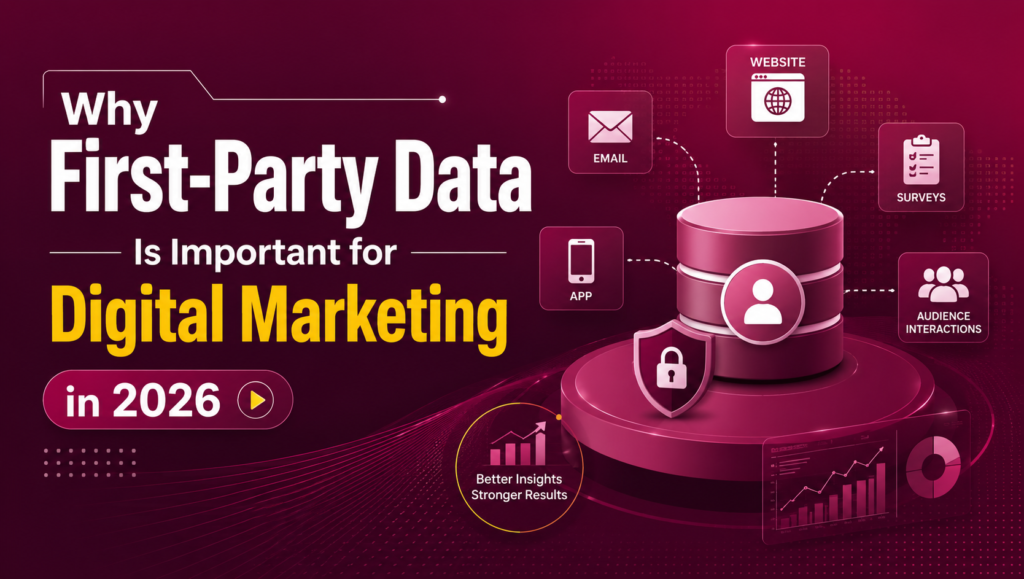
First-party data marketing is becoming one of the most valuable strategies in the digital marketing industry as businesses move toward a privacy-focused future in 2026. As third-party cookies continue declining and data privacy regulations become stricter, brands are focusing on first-party data marketing by collecting customer information directly through websites, apps, email subscriptions, surveys, and audience interactions.
First-party data helps businesses understand customer preferences, behavior patterns, and engagement interests more accurately. This allows marketers to improve:
- Personalized communication
- Audience segmentation
- Customer retention
- Campaign optimization
- User experience
Since the data comes directly from customer interactions, it is generally more reliable and relevant for marketing strategies.
Another major reason first-party data marketing is growing in importance is customer trust. Modern consumers are more aware of how businesses collect and use personal information, making transparency and consent-based marketing highly important in digital marketing strategies. Companies that use ethical first-party data marketing practices and provide personalized customer experiences are often more successful in building stronger customer relationships and long-term brand loyalty. AI-powered analytics and automation tools also help businesses manage first-party data more efficiently and create smarter privacy-focused marketing strategies. In the upcoming sections, we will discuss why first-party data marketing is becoming essential for digital marketing in 2026, how privacy-focused marketing is changing customer engagement strategies, and which approaches help businesses collect, manage, and use audience data more effectively.
Why First-Party Data Is Becoming More Valuable in 2026
First-party data marketing is becoming more valuable because businesses can no longer rely heavily on third-party tracking methods the way they did in the past. In 2026, privacy regulations, browser restrictions, and growing consumer awareness are changing how marketers collect and use customer information in digital marketing. As a result, many companies are focusing more on first-party data marketing strategies to improve customer targeting, build trust, and create privacy-focused marketing campaigns.
Unlike third-party data, first-party data comes directly from audience interactions such as:
- Website visits
- Email subscriptions
- Customer purchases
- App activity
- Survey responses
This makes the data more accurate, permission-based, and relevant for marketing decisions.
One major reason for this shift is the decline of third-party cookies. Many browsers and platforms are reducing cookie-based tracking to improve user privacy. Because of this, businesses are focusing more on:
- Owned audience data
- Consent-based collection
- Direct customer relationships
- Ethical marketing practices
- Transparent communication
These strategies help brands maintain customer trust while improving personalization.
Another advantage of first-party data is stronger data ownership. Businesses can use their own customer insights to:
- Improve targeting
- Understand audience behavior
- Create personalized campaigns
- Optimize customer journeys
- Increase retention strategies
This gives companies greater control over marketing performance and audience engagement.
Privacy-focused marketing is also becoming an important competitive advantage. Customers are more likely to trust brands that clearly explain:
- What data is collected
- Why information is needed
- How data will be used
- How privacy is protected
- How customers can manage preferences
Businesses that prioritize transparency often build stronger long-term relationships.
For marketers exploring modern first-party data strategies, understanding ethical data collection and audience ownership is becoming essential for future digital marketing success.
Personalized Marketing Depends on Audience Data
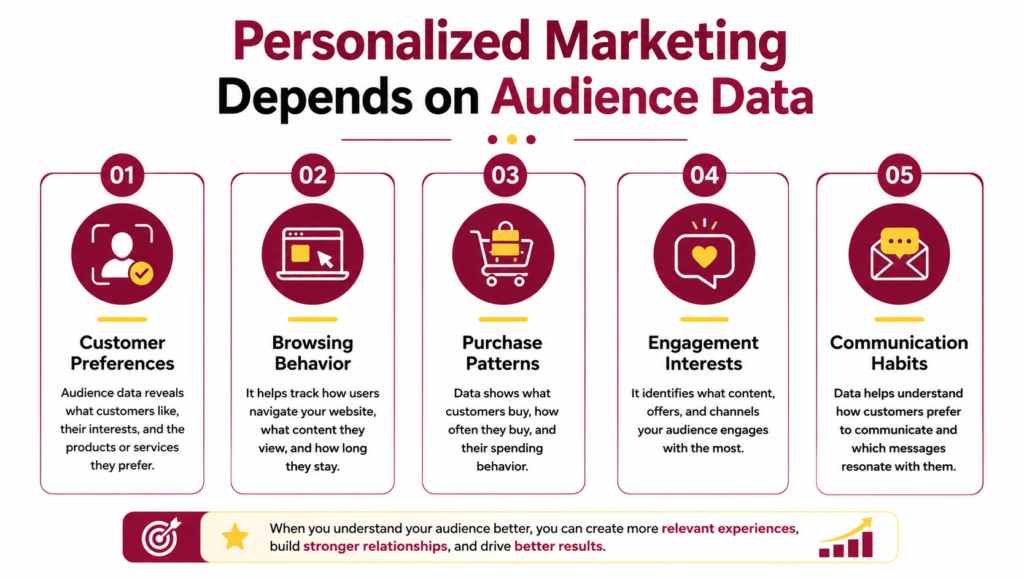
Personalized marketing has become a major part of first-party data marketing because customers expect brands to deliver relevant content, recommendations, and communication based on their interests and behavior. In 2026, businesses use first-party data to create more targeted and meaningful customer experiences instead of relying on generic digital marketing campaigns. Privacy-focused marketing strategies also help companies improve customer engagement, build trust, and increase long-term brand loyalty.
Audience data helps businesses understand:
- Customer preferences
- Browsing behavior
- Purchase patterns
- Engagement interests
- Communication habits
These insights allow marketers to create campaigns that feel more relevant and customer-focused.
Personalization improves multiple areas of marketing, including:
- Email campaigns
- Product recommendations
- Content delivery
- Retargeting strategies
- Customer engagement workflows
When businesses understand their audiences better, they can improve both engagement and customer satisfaction.
Data Type vs Marketing Advantage
| Data Type | Marketing Advantage |
|---|---|
| First-Party Data | Better personalization and trust |
| Second-Party Data | Expanded audience collaboration |
| Third-Party Data | Broad audience reach |
| Zero-Party Data | Direct customer preferences |
Another important advantage of audience segmentation is improved communication efficiency. Businesses can group audiences based on:
- Interests
- Demographics
- Purchase behavior
- Engagement levels
- Customer journey stages
This helps marketers send more relevant messages to the right audience at the right time.
Personalized experiences also help improve:
- Customer loyalty
- Retention rates
- Brand trust
- Conversion opportunities
- Long-term engagement
For businesses and marketers exploring modern data strategies, understanding audience segmentation and personalized communication is becoming essential for effective digital marketing in 2026.
AI-Powered Analytics Improve Customer Understanding
AI-powered analytics are helping businesses improve first-party data marketing by understanding customer behavior more effectively through the processing of large amounts of audience data quickly and accurately. In 2026, marketers use AI-assisted systems to identify patterns, predict customer interests, and improve decision-making across digital marketing campaigns. These AI-powered first-party data marketing strategies also help businesses create personalized customer experiences, improve audience targeting, and build stronger privacy-focused marketing approaches.
Traditional analytics mainly focused on reporting past performance, but AI-powered systems now help businesses:
- Predict audience behavior
- Identify engagement trends
- Improve customer segmentation
- Optimize campaign timing
- Personalize communication strategies
This allows marketers to make smarter and faster marketing decisions.
AI-assisted audience analysis also improves customer understanding by tracking:
- Website interactions
- Content engagement
- Purchase behavior
- Email activity
- User journey patterns
These insights help businesses create more relevant experiences for different audience groups.
Another major advantage of AI-powered analytics is automation. Businesses can now automate:
- Customer segmentation
- Recommendation systems
- Engagement tracking
- Campaign reporting
- Marketing workflows
This improves efficiency while reducing manual analysis work.
AI-driven insights also support:
- Better audience targeting
- Higher customer retention
- Personalized marketing campaigns
- Predictive customer analysis
- Data-driven optimization
Companies that use audience data effectively often improve customer satisfaction and long-term engagement.
For marketers exploring real-world success stories, understanding AI-powered analytics and customer behavior strategies can help improve practical digital marketing knowledge and campaign performance.
Cookie less Marketing Is Reshaping Digital Advertising
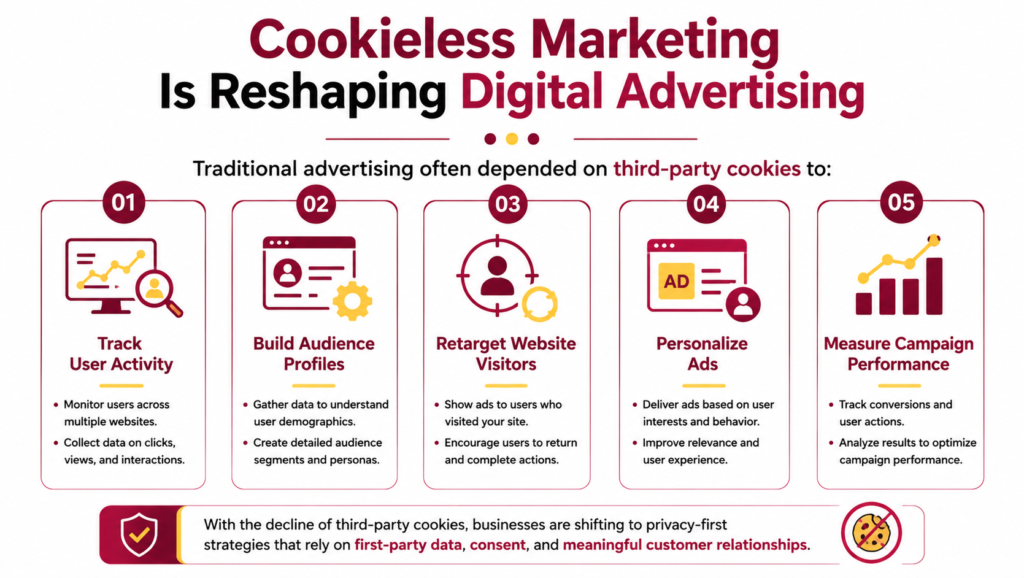
Digital advertising is moving toward a cookieless future as browsers and privacy regulations reduce the use of third-party cookies for tracking users across websites. In 2026, businesses are adapting by using first-party data marketing strategies that rely more on direct customer relationships and consent-based data collection. Privacy-focused digital marketing approaches also help companies improve customer trust, audience targeting, and personalized marketing experiences without depending heavily on third-party tracking methods.
Traditional advertising often depended on third-party cookies to:
- Track user activity
- Build audience profiles
- Retarget website visitors
- Personalize ads
- Measure campaign performance
As these tracking methods become limited, marketers are shifting toward more transparent and ethical approaches.
Cookieless marketing focuses more on:
- First-party data collection
- Customer consent
- Audience trust
- Contextual advertising
- Direct engagement strategies
This helps businesses build sustainable marketing systems without depending heavily on external tracking technologies.
Another important trend is contextual advertising, where ads are shown based on:
- Website content
- Search context
- Audience interests
- User intent
- Topic relevance
Instead of tracking users across platforms, advertisers focus more on matching ads with relevant content environments.
Which Data Marketing Skills Will Be Important in 2026?
Students and marketers preparing for future digital marketing roles should focus on skills that combine analytics, personalization, and privacy-focused marketing practices.
Important data marketing skills include:
- Audience analytics
- Data interpretation
- Privacy-focused marketing
- AI-assisted marketing workflows
- Personalization strategies
- Customer engagement analysis
Professionals who understand both customer privacy expectations and data-driven marketing strategies are likely to remain highly valuable in evolving digital industries.
First-Party Data Helps Businesses Improve Long-Term Customer Relationships
Building strong customer relationships is becoming more important than achieving only short-term marketing results, and first-party data marketing helps businesses improve those relationships more effectively. Since the data is collected directly from customer interactions, companies can better understand audience preferences and deliver more personalized customer experiences. In 2026, businesses using first-party data marketing strategies can improve customer trust, strengthen audience engagement, and create privacy-focused digital marketing campaigns that support long-term brand loyalty.
Businesses collect first-party data through:
- Email subscriptions
- Website interactions
- Purchase history
- Customer feedback
- Loyalty programs
These touchpoints help companies understand what customers actually want and how they engage with a brand over time.
One of the biggest advantages of first-party data is improved personalization. Businesses can use audience insights to:
- Recommend relevant products
- Send targeted email campaigns
- Create customized offers
- Improve customer support
- Deliver relevant content
This creates a more engaging and customer-focused experience.
First-Party Data Strategy vs Business Benefit
| First-Party Data Strategy | Business Benefit |
|---|---|
| Email Subscriber Collection | Better audience retention |
| Website Behavior Tracking | Improved personalization |
| Customer Surveys | Better audience insights |
| Loyalty Programs | Stronger customer relationships |
Another important benefit is customer trust. When brands collect data transparently and use it responsibly, customers are more likely to:
- Stay engaged
- Return for future purchases
- Interact with campaigns
- Share feedback
- Build long-term loyalty
Relationship-based marketing is becoming increasingly valuable because retaining customers is often more cost-effective than constantly acquiring new audiences.
For marketers exploring the future of data, first-party data strategies are becoming essential for improving personalization, customer retention, and sustainable business growth.
Common Data Collection Mistakes Businesses Should Avoid
Collecting customer data can improve first-party data marketing performance, but poor data practices can damage customer trust, reduce audience engagement, and create privacy concerns. In 2026, customers expect businesses to handle personal information responsibly, making ethical first-party data marketing an important part of digital marketing. Companies that use transparent and privacy-focused marketing strategies can build stronger customer relationships, improve brand loyalty, and create more effective personalized marketing campaigns.
One common mistake is poor transparency. Some businesses collect data without clearly explaining:
- What information is collected
- Why it is needed
- How it will be used
- How customer privacy is protected
- How users can manage permissions
Lack of clarity can reduce customer trust and engagement.
Another issue is collecting excessive or unnecessary data. Businesses sometimes gather more information than required, which can:
- Complicate data management
- Reduce data quality
- Increase privacy concerns
- Create compliance risks
- Confuse marketing strategies
Effective marketing depends more on relevant and meaningful data rather than large volumes of information.
Weak audience segmentation is another major problem. Businesses that fail to organize customer data properly may struggle with:
- Poor personalization
- Irrelevant campaigns
- Low engagement rates
- Weak targeting strategies
- Inefficient communication
Accurate segmentation helps marketers deliver more relevant experiences.
Some businesses also ignore customer consent and preference management. Modern consumers expect control over:
- Marketing permissions
- Email preferences
- Data sharing choices
- Notification settings
- Privacy options
Respecting these preferences helps improve customer relationships and long-term trust.
For businesses exploring customer experiences and brand credibility, these google reviews highlight the importance of trust, transparency, and audience-focused engagement in digital marketing.
How Students and Marketers Can Learn Modern Data-Driven Marketing
Modern digital marketing relies heavily on data, analytics, and customer insights, which means students and marketers need to understand how audience information influences campaign performance and business decisions. In 2026, learning data-driven marketing is becoming essential for anyone planning a career in digital marketing, performance marketing, or customer engagement.
One of the best ways to start learning is by understanding how customer data is collected and used across platforms such as:
- Websites
- Email campaigns
- CRM systems
- Social media platforms
- Marketing automation tools
This helps learners understand how businesses build audience-focused strategies.
Students should also practice analyzing marketing data to improve:
- Audience segmentation
- Campaign performance
- Customer retention
- Engagement tracking
- Personalization strategies
Practical analysis helps marketers make smarter decisions instead of relying only on assumptions.
Another important area is learning AI-powered marketing workflows. Modern businesses increasingly use tools for:
- Predictive analytics
- Automated segmentation
- Personalized recommendations
- Campaign reporting
- Audience behavior analysis
Understanding these systems can improve both productivity and marketing efficiency.
Ethical marketing practices are equally important because customers now expect:
- Transparency
- Consent-based communication
- Privacy protection
- Relevant engagement
- Responsible data usage
Marketers who combine analytical skills with ethical customer engagement strategies are often more successful in building long-term audience trust.
Students and professionals who continuously practice analytics, audience research, and customer-focused marketing strategies are generally better prepared for future digital marketing opportunities and evolving privacy-focused industries.
Final Thoughts
First-party data is becoming one of the most important foundations of digital marketing as businesses move toward privacy-focused and customer-centric strategies. With the decline of third-party cookies and increasing awareness around data privacy, companies are relying more on direct audience relationships and consent-based data collection to improve marketing performance.
In 2026, personalized experiences, audience segmentation, AI-powered analytics, and ethical marketing practices will continue influencing how brands engage with customers. Businesses that use first-party data responsibly can improve customer trust, create more relevant communication, and build stronger long-term relationships.
As digital marketing continues evolving, students and marketers must understand how data, privacy, and personalization work together in modern campaigns. Professionals who combine analytical thinking, customer understanding, and ethical marketing strategies will be better prepared for future opportunities in data-driven digital marketing.
Build Future-Ready Data-Driven Marketing Skills
Digital marketing is entering a privacy-focused era where first-party data, audience insights, and personalized customer experiences are becoming essential for business growth. Companies now prefer marketers who can understand customer behavior, use analytics effectively, and create ethical, data-driven marketing strategies that improve engagement and trust.
Building expertise in modern digital marketing requires more than basic campaign knowledge. Students and professionals need practical exposure to audience analytics, customer segmentation, AI-powered marketing workflows, and privacy-focused communication strategies to stay competitive in evolving digital industries.
To improve data-driven marketing skills in 2026, learners should focus on:
- Audience analytics
- First-party data strategies
- Personalized marketing
- Customer engagement optimization
- AI-powered marketing workflows
- Ethical data practices
If you want to build industry-ready expertise with practical learning exposure and future-focused marketing preparation, this AI marketing certification can help support your journey toward long-term success in data-driven digital marketing.