





Table of Contents
- 1.
- 2.
- 3.
- 4.
- 5.
Many data analysts learn SQL by practicing queries, but during interviews, recruiters rarely focus on syntax alone. What they actually want to see is how you use SQL to solve real business problems. This is why practicing SQL case studies has become one of the most effective ways to build job-ready analytical skills.
In real analytics roles, SQL is used to answer practical questions - Why are customers leaving? Which products drive revenue? Where are operational inefficiencies occurring? Recruiters evaluate whether candidates can break down problems, write logical queries, and explain results in a way that supports decisions. Knowing commands is helpful, but understanding why the query matters is what sets strong candidates apart.
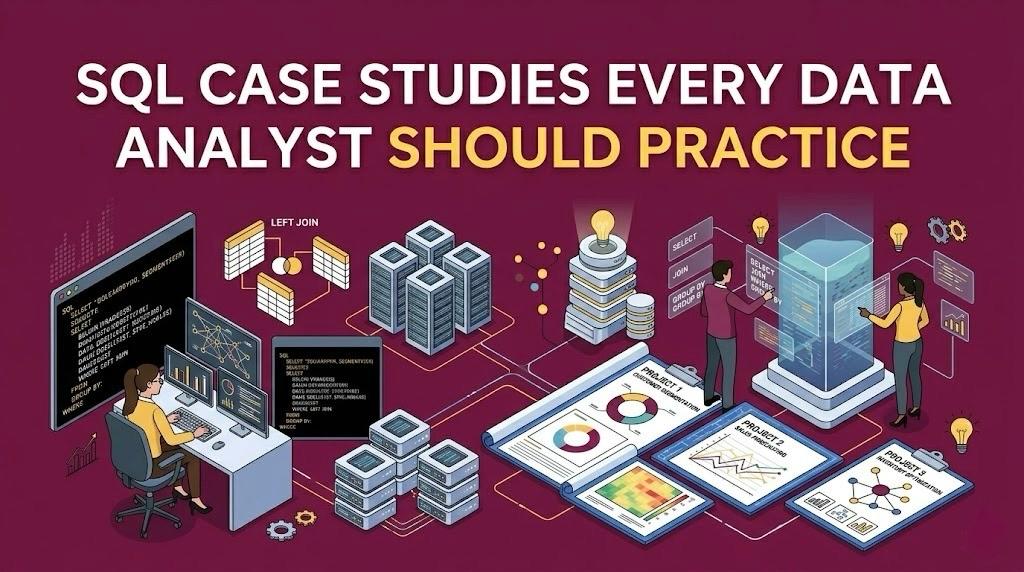
SQL case studies help bridge the gap between learning and real-world application. They simulate workplace scenarios, improve structured thinking, and strengthen communication of insights. In the sections below, we will see a brief overview of the SQL case studies every data analyst should practice, the common mistakes to avoid, and practical strategies to turn SQL practice into interview-ready experience.
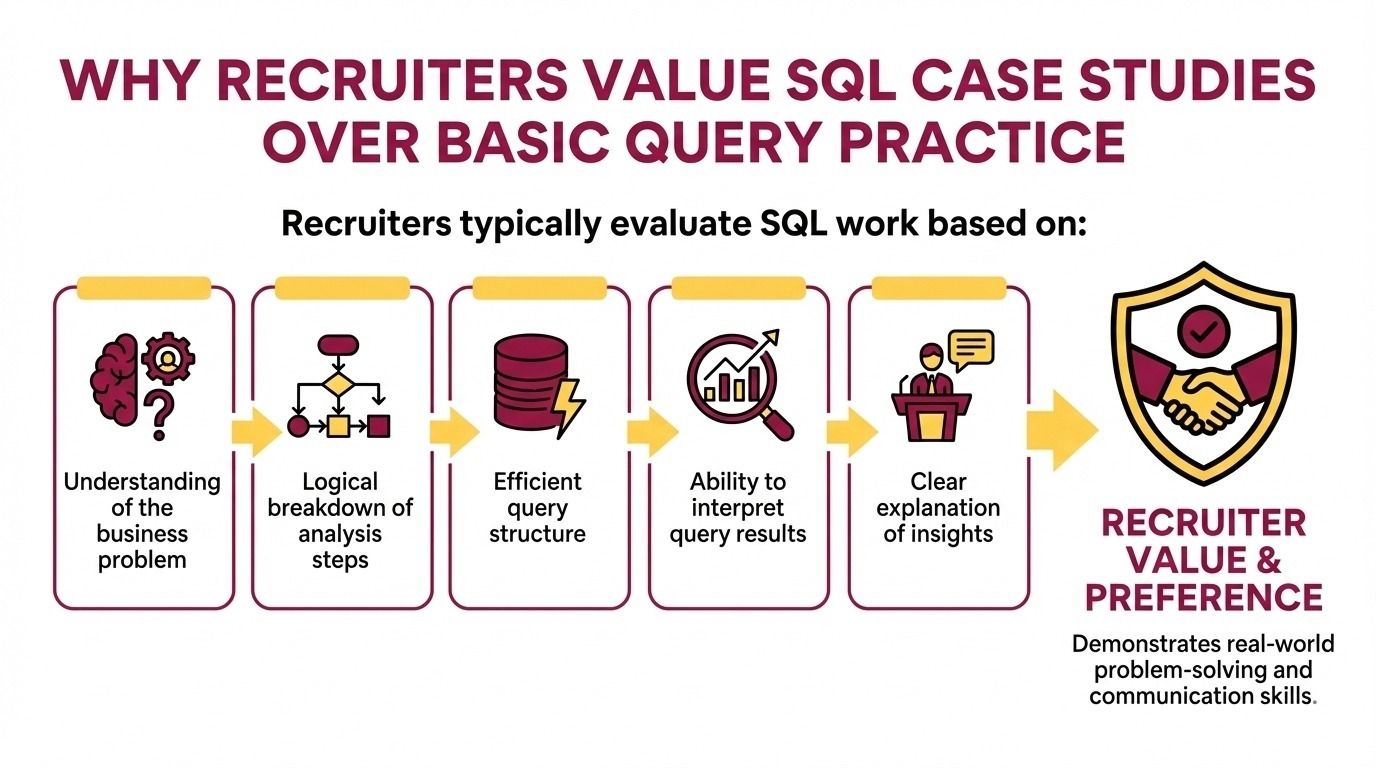
Why Recruiters Value SQL Case Studies Over Basic Query Practice
Many candidates practice SQL by solving isolated questions, but recruiters evaluate something very different during hiring. They are less interested in whether you know specific commands and more focused on how you approach problems using data. Well-structured SQL case studies help recruiters understand your analytical thinking, decision-making ability, and readiness for real business scenarios.
Basic query practice usually tests syntax - writing joins, filters, or aggregations correctly. While these skills are important, they do not show how an analyst interprets business requirements. Case studies, on the other hand, simulate real workplace situations where data must answer meaningful questions. This shift from “writing queries” to “solving problems” is what hiring managers look for.
Recruiters typically evaluate SQL work based on:
- Understanding of the business problem
- Logical breakdown of analysis steps
- Efficient query structure
- Ability to interpret query results
- Clear explanation of insights
Exploring structured SQL project ideas helps analysts understand how practical scenarios strengthen portfolio credibility. Case studies demonstrate how queries connect directly to outcomes such as revenue analysis, customer behavior insights, or performance tracking.
When candidates present SQL work through case studies, they reduce hiring uncertainty. Recruiters can clearly see how technical skills translate into analytical reasoning, making it easier to assess job readiness. In the next section, we’ll look at common mistakes analysts make while practicing SQL and how to avoid them.
Common Mistakes Analysts Make While Practicing SQL
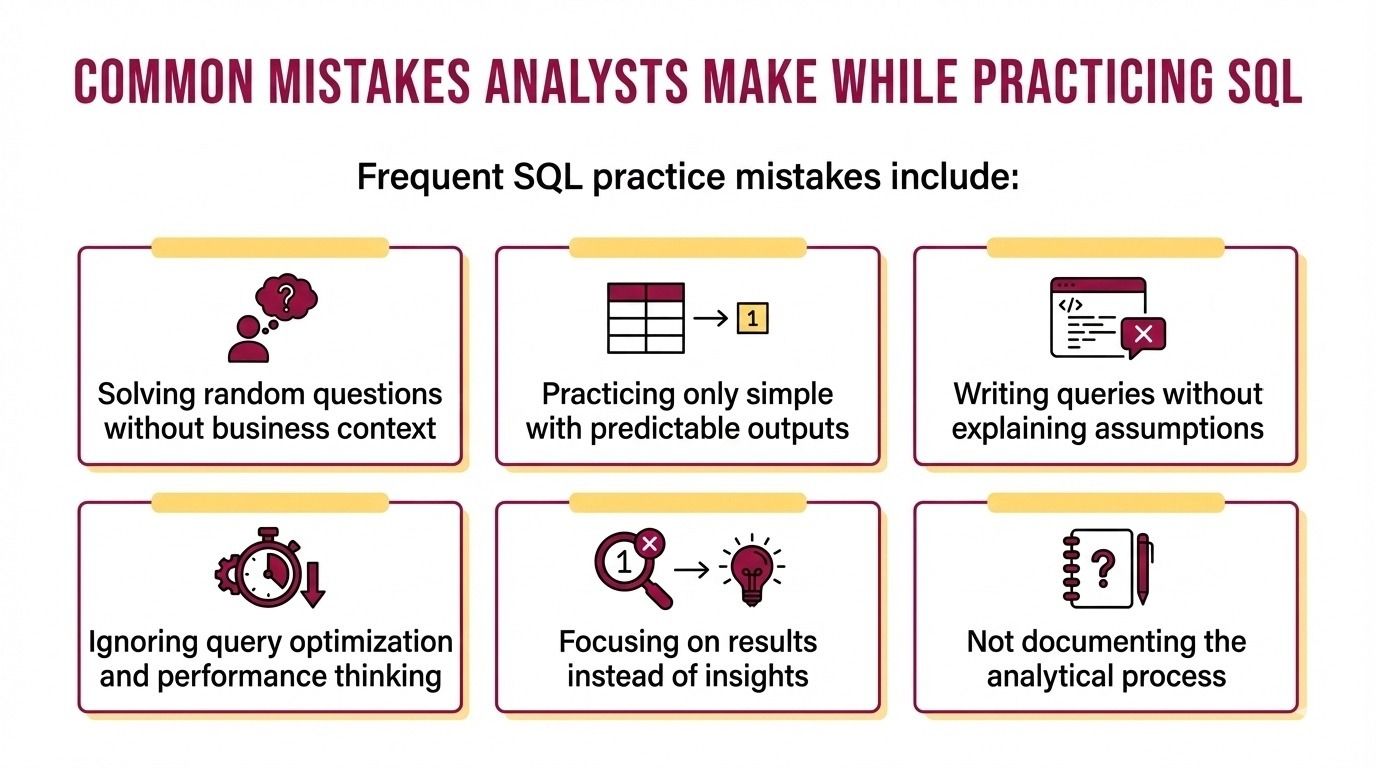
Many learners spend hours practicing SQL but still struggle during interviews because their preparation focuses on syntax instead of analytical thinking. Recruiters reviewing SQL case studies expect candidates to demonstrate reasoning, problem understanding, and insight generation - not just correct queries. When practice lacks real-world context, SQL skills appear incomplete.
One common mistake is memorizing query patterns without understanding why they are used. Candidates may know joins or window functions but fail to apply them when solving business problems. Recruiters quickly notice when answers feel mechanical rather than analytical.
Frequent SQL practice mistakes include:
- Solving random questions without business context
- Practicing only simple datasets with predictable outputs
- Writing queries without explaining assumptions
- Ignoring query optimization and performance thinking
- Focusing on results instead of insights
- Not documenting the analytical process
Another issue is treating SQL as a technical exercise rather than a decision-support tool. In real analytics roles, SQL queries are written to answer questions such as customer retention trends or revenue performance changes. Without practicing these scenarios, candidates struggle to explain the value of their analysis.
Improving SQL practice means shifting focus from “getting the correct output” to “understanding what the output means.” When analysts practice structured scenarios instead of isolated queries, they build stronger reasoning skills and interview confidence. Next, we’ll explore SQL case studies that help develop real data analyst thinking and attract recruiter attention.
SQL Case Studies That Build Real Data Analyst Thinking
Practicing SQL becomes far more effective when learning is tied to realistic business scenarios. Recruiters reviewing SQL case studies look for evidence that candidates can translate data into insights, not just retrieve information from databases. Case studies simulate workplace challenges, helping analysts develop structured thinking and problem-solving skills that mirror real job responsibilities.
Instead of solving disconnected exercises, analysts should focus on scenarios where SQL answers meaningful business questions. These projects demonstrate how data analysis supports decisions, improves performance, or identifies opportunities. When portfolios include practical case studies, recruiters can quickly understand how a candidate approaches analytical problems.
Business Scenarios Recruiters Recognize Immediately
Certain case study types consistently stand out because they reflect common analytics tasks across industries. Reviewing structured analyst project examples helps identify scenarios that build job-ready skills.
High-impact SQL case study examples include:
- Customer retention analysis - Identifying churn patterns and user behavior trends
- Sales performance analysis - Evaluating revenue growth across regions or products
- Product usage analysis - Understanding feature adoption and engagement levels
- Marketing campaign analysis - Measuring conversion performance using query insights
- Operational efficiency studies - Analyzing delays, costs, or workflow bottlenecks
Each case study should clearly define the business question, queries used, and insights derived from results. Recruiters value clarity and reasoning more than complex query logic. Next, we’ll explore how to structure SQL case studies so they create a strong portfolio and interview impact.
Structuring SQL Case Studies for Portfolio and Interview Impact
A strong SQL case study is not defined by complex queries alone but by how clearly the analysis is structured and communicated. Recruiters reviewing SQL case studies want to understand your thinking process - from identifying a problem to delivering insights. A clear structure helps hiring managers quickly evaluate analytical maturity without needing to interpret raw queries.
Well-organized case studies follow a logical workflow that mirrors real analytics tasks. Instead of presenting only SQL scripts, candidates should guide reviewers through the analytical journey. This approach makes projects easier to understand and demonstrates professional problem-solving skills.
An effective SQL case study structure includes:
- Problem definition: What business question is being solved?
- Dataset overview: Source and relevance of the data
- Query approach: Steps taken to analyze the problem
- Key findings: Important patterns discovered
- Business insights: What the results actually mean
Following a structured format also improves interview performance. Reviewing an interview preparation guide helps analysts connect SQL explanations with common recruiter questions, making responses clearer and more confident.
Practice SQL vs Case Study Approach - Recruiter Evaluation
| Practice SQL Approach | Case Study Approach | Recruiter Impact |
|---|---|---|
| Random queries | Problem-driven analysis | Shows reasoning |
| Output-focused | Insight-focused | Demonstrates thinking |
| No explanation | Structured workflow | Easier evaluation |
| Syntax emphasis | Business context | Job readiness signal |
When SQL work follows a clear structure, recruiters spend less effort interpreting queries and more time recognizing analytical capability. Next, we’ll see how to turn SQL query results into meaningful business insights.
Turning SQL Queries Into Business Insights (Not Just Answers)
Writing correct queries is only the first step in analytics. Recruiters reviewing SQL case studies want to see how candidates interpret results and connect them to business decisions. A query output shows data, but insights explain what the data means and why it matters. This ability separates technical learners from job-ready analysts.
Many candidates stop after generating results such as totals, averages, or rankings. However, recruiters expect analysts to go further by identifying patterns, explaining trends, and suggesting possible actions. Turning query outputs into insights demonstrates critical thinking and communication skills - both essential in real analytics roles.
To transform SQL results into meaningful insights, focus on:
- Explaining what the numbers indicate instead of listing results
- Comparing trends across time, regions, or customer segments
- Highlighting anomalies or unexpected patterns
- Connecting findings to business goals or performance metrics
- Suggesting recommendations based on analysis
Watching structured explanations through a SQL learning video can help understand how analysts translate technical outputs into clear narratives.
Query Output vs Business Insight Transformation
| Query Output | Business Insight | Recruiter Interpretation |
|---|---|---|
| Revenue decreased | Seasonal demand drop identified | Analytical reasoning |
| Revenue decreased | Retention issue detected | Business awareness |
| Top-selling product | Market preference insight | Decision support |
| Slow processing time | Operational bottleneck | Problem-solving ability |
Reading broader perspectives from leadership insights blog also helps analysts understand how data insights influence strategic decisions. In the next section, we’ll explore final strategies to make your SQL portfolio interview-ready.
Final Strategy to Make Your SQL Portfolio Interview-Ready
After practicing meaningful scenarios, the final step is presenting your work in a way that recruiters can easily evaluate. Strong SQL case studies become valuable only when they are structured, documented, and positioned strategically within your portfolio. Recruiters typically review portfolios quickly, so clarity and consistency play a major role in creating a strong impression.
Start by organizing your case studies as complete analytical stories rather than collections of queries. Each project should clearly show the problem, analytical approach, and final insight. When recruiters can follow your reasoning without effort, they are more likely to recognize your readiness for real analytics roles.
Key strategies to make your SQL portfolio interview-ready include:
- Selecting 3–5 high-quality case studies instead of many small exercises
- Writing short summaries explaining the business objective
- Adding comments within queries to show logical thinking
- Including insight explanations alongside results
- Maintaining consistent formatting across projects
- Practicing verbal explanations of your analysis for interviews
Consistency between your portfolio and interview responses also builds credibility. When candidates explain projects confidently using structured reasoning, recruiters gain confidence in their analytical ability.
The goal is simple: reduce recruiter effort. A portfolio that clearly communicates problem-solving skills allows hiring managers to focus on your insights rather than interpreting raw queries. In the next section, we’ll summarize the key takeaways and how structured SQL case study practice strengthens long-term career growth.
Final Thoughts
Practicing SQL effectively is not about writing more queries but about solving meaningful problems. Well-structured SQL case studies help recruiters understand how you think, analyze data, and translate results into actionable insights. Throughout this guide, we explored why recruiters value case-study-based practice, the common mistakes analysts make, and how structured scenarios improve both portfolio quality and interview performance.
The biggest shift comes from moving beyond syntax-focused learning toward business-oriented analysis. When SQL projects clearly define problems, explain query logic,and present insights in simple language, they demonstrate real analytical maturity. Recruiters are more confident hiring candidates who can connect data outputs with decision-making rather than those who only show technical execution.
Consistency also strengthens portfolio impact. Organized case studies, clear explanations, and insight-driven storytelling make it easier for hiring managers to evaluate your skills quickly. Instead of practicing random exercises, focusing on realistic scenarios helps build confidence, reasoning ability, and communication skills that directly support career growth.
By applying these principles, SQL practice becomes more than preparation - it becomes proof of job readiness. A structured approach to SQL case studies can significantly improve how your skills are perceived during interviews and help position you as a problem-solving data analyst.
Ready to Turn SQL Practice Into Real Interview Confidence?
Learning SQL becomes far more effective when practice is aligned with real hiring expectations. Instead of solving isolated questions, working on structured case studies helps you understand how businesses use data to make decisions. Strong SQL case studies demonstrate analytical thinking, problem-solving ability, and clear communication - the exact qualities recruiters look for during interviews.
If you want guided support while building portfolio-ready SQL projects, the AI-Powered Data Analytics Certification offers hands-on learning focused on real-world analytics scenarios. With practical case studies, mentorship, and structured project guidance, you can strengthen both your SQL skills and your portfolio while preparing confidently for data analyst roles.