

Table of Contents
- 1.
- 2.
- 3.
- 4.
- 5.
- 6.
- 7.
- 8.
- 8.1
- 9.
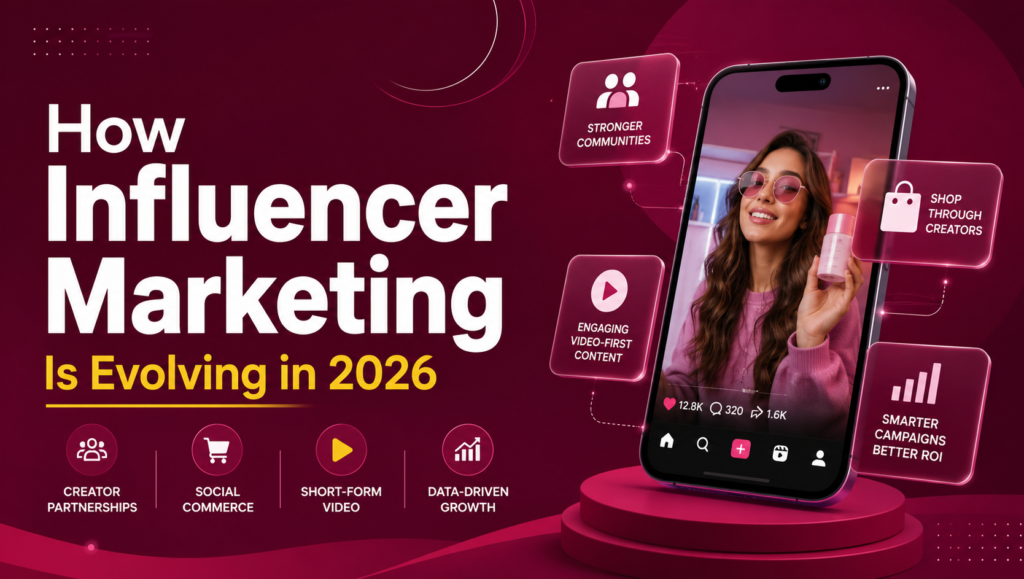
Influencer Marketing 2026 is evolving rapidly as brands focus more on authentic audience engagement and community-driven content strategies. Instead of relying only on celebrity endorsements, businesses are increasingly collaborating with social media influencers and content creators who have niche audiences, stronger engagement rates, and better audience trust across platforms like Instagram, YouTube, LinkedIn, and TikTok.
The rise of short-form videos, live streaming content, and social commerce marketing is also changing how influencer marketing campaigns work. Modern audiences prefer relatable creators, interactive content, and genuine product recommendations over highly promotional advertisements. Because of this shift, micro influencer marketing, creator partnerships, and influencer branding strategies are becoming more valuable for businesses trying to improve online reach, customer engagement, and brand visibility.
Another major influencer marketing trend in 2026 is the growth of AI-assisted creator marketing and virtual influencers. Brands now use analytics, automation, and AI-powered marketing tools to manage influencer campaigns more efficiently while improving audience targeting and content performance. In the upcoming sections, we will discuss how influencer marketing trends in 2026 are shaping authentic creator partnerships, audience engagement, social commerce growth, and modern digital branding strategies.
Why Influencer Marketing Continues Growing in 2026
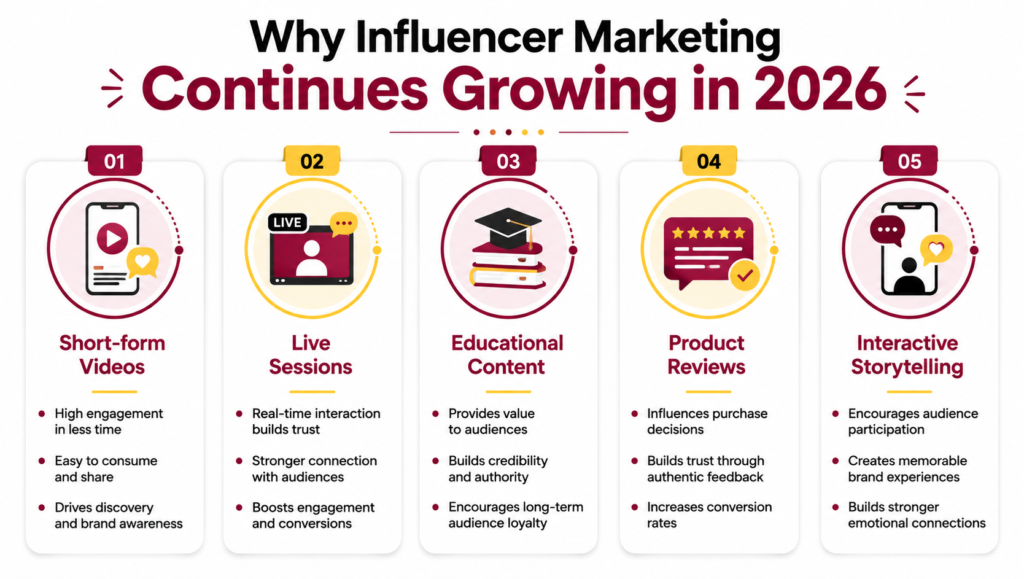
Influencer Marketing 2026 continues growing because audiences trust social media influencers more than traditional advertising methods. People increasingly follow content creators for product recommendations, educational videos, entertainment content, and purchasing decisions, making influencer partnerships highly valuable for brands and digital marketing strategies.
One major reason for this growth is the rise of the creator economy. Social media platforms now allow creators to build strong communities through:
- Short-form videos
- Live sessions
- Educational content
- Product reviews
- Interactive storytelling
These formats help influencers maintain direct audience engagement.
Brands also benefit from influencer collaborations because creators often understand their audiences better than traditional advertising systems. Influencer campaigns can improve:
- Brand visibility
- Customer trust
- Audience engagement
- Product awareness
- Social media reach
This makes influencer marketing highly effective for both small and large businesses.
Another important factor is community-driven marketing. Modern consumers prefer:
- Authentic recommendations
- Relatable content
- Real experiences
- Transparent partnerships
- Personalized communication
Influencers who create genuine connections with followers often achieve stronger engagement and conversion rates.
Video-first platforms, short-form content, and social commerce features are also supporting Influencer Marketing 2026 by making it easier for audiences to discover products, engage with creator content, and purchase directly through influencer marketing campaigns.
For brands exploring modern influencer marketing strategies, understanding creator-driven engagement and audience trust is becoming essential for digital marketing success in 2026.
Micro Influencers Are Becoming More Valuable for Brands
Micro influencer marketing is becoming increasingly valuable in Influencer Marketing 2026 because smaller creators often have stronger audience engagement, higher trust levels, and more authentic community relationships compared to larger influencers. Instead of focusing only on follower count, brands now prioritize niche content creators who can build meaningful interactions, improve brand trust, and connect effectively with targeted audiences.
Micro influencers usually create content around specific interests such as:
- Fitness
- Technology
- Fashion
- Education
- Digital marketing
This niche focus helps businesses reach highly targeted audiences more effectively.
Another advantage is higher engagement quality. Smaller creators often maintain closer communication with followers through:
- Comment interactions
- Direct replies
- Community discussions
- Personalized recommendations
- Consistent audience engagement
These interactions improve trust and influence purchasing decisions more naturally.
Influencer Type vs Marketing Benefit
| Influencer Type | Marketing Benefit |
|---|---|
| Micro Influencers | Higher audience engagement |
| Macro Influencers | Wider audience reach |
| Industry Experts | Strong niche credibility |
| AI Influencers | Scalable digital campaigns |
Micro influencer collaborations are also more cost-effective for many brands. Businesses can partner with multiple niche creators instead of depending only on expensive celebrity campaigns. This often improves:
- Audience targeting
- Campaign flexibility
- Content variety
- Community reach
- Brand authenticity
For marketers exploring modern creator economy trends, understanding micro influencer strategies can help improve audience engagement and community-driven marketing performance.
Video-First Content and Social Commerce Are Reshaping Campaigns
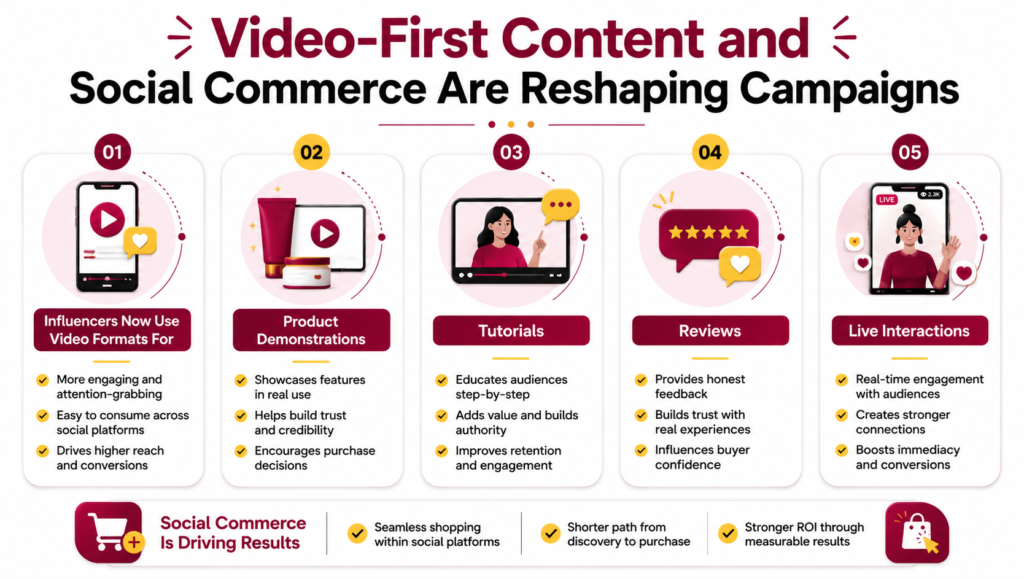
Video-first content is becoming one of the biggest drivers of Influencer Marketing 2026. Platforms like Instagram Reels, YouTube Shorts, and TikTok continue shaping audience behavior as users increasingly prefer short-form videos, engaging creator content, and interactive social media experiences over traditional promotional posts.
Influencers now use video formats for:
- Product demonstrations
- Tutorials
- Reviews
- Live interactions
- Behind-the-scenes content
These formats help brands create more engaging and relatable campaigns.
Another major trend is social commerce, where users can discover and purchase products directly through social media platforms. Influencer campaigns now often include:
- Product tagging
- Live shopping sessions
- Affiliate links
- Interactive product showcases
- In-app purchasing experiences
This shortens the customer journey and improves conversion opportunities.
Video-first campaigns also improve:
- Audience retention
- Content reach
- Brand visibility
- Community interaction
- Engagement rates
Because videos are easier to consume and share, brands increasingly prioritize creator partnerships focused on short-form visual storytelling.
Interactive and platform-native content is also becoming important because audiences prefer content that feels:
- Authentic
- Fast-paced
- Educational
- Entertaining
- Community-driven
For marketers exploring emerging social media trends, understanding video-first marketing and social commerce strategies is becoming essential for successful influencer campaigns in 2026.
AI Influencers and Virtual Creators Are Changing Brand Collaborations
AI influencers and virtual creators are becoming a growing part of Influencer Marketing 2026. Brands are increasingly experimenting with AI-generated personalities, virtual influencers, and digital ambassadors to create scalable, consistent, and data-driven influencer marketing campaigns across major social media platforms.
Unlike traditional influencers, AI creators can be designed to:
- Match brand identity
- Create consistent content
- Operate across multiple campaigns
- Support multilingual engagement
- Maintain continuous activity
This gives businesses greater flexibility in campaign management.
Another reason AI influencers are gaining attention is automation. Brands can use AI-assisted systems for:
- Content generation
- Audience analysis
- Campaign optimization
- Virtual storytelling
- Engagement tracking
These technologies help improve efficiency and scalability in influencer campaigns.
However, authenticity still remains highly important. Many audiences continue preferring creators who provide:
- Real experiences
- Human interaction
- Genuine recommendations
- Personal storytelling
- Emotional connection
Because of this, brands often combine AI-powered workflows with human creator collaborations.
Which Influencer Marketing Skills Will Be Important in 2026?
Students and marketers interested in influencer marketing should focus on both creative and analytical skills.
Important influencer marketing skills include:
- Content strategy
- Community engagement
- Influencer analytics
- Brand collaboration management
- Social commerce understanding
- AI-assisted marketing workflows
Professionals who understand creator engagement, audience behavior, and AI-assisted campaign management are often better prepared for future influencer marketing opportunities.
Authenticity and Audience Trust Influence Influencer Success
Authenticity has become one of the most important factors in Influencer Marketing 2026 success. Modern audiences are more selective about the content creators they follow and the brands they support across social media platforms. Influencers who build genuine audience relationships, create transparent sponsored content, and maintain community trust often achieve higher engagement rates and stronger long-term brand loyalty.
Modern audiences usually prefer creators who share:
- Honest opinions
- Real experiences
- Educational insights
- Relatable storytelling
- Consistent communication
This type of content feels more trustworthy compared to overly promotional campaigns.
Brands are also focusing more on long-term creator partnerships instead of one-time promotions. Consistent collaborations help improve:
- Brand credibility
- Audience familiarity
- Community engagement
- Customer trust
- Campaign effectiveness
Long-term partnerships often create more natural brand integration.
Influencer Marketing Trend vs Business Impact
| Influencer Marketing Trend | Business Impact |
|---|---|
| Short-Form Videos | Higher audience engagement |
| Social Commerce | Faster purchase decisions |
| Micro Influencer Partnerships | Stronger community trust |
| AI-Assisted Campaigns | Improved scalability |
Another important trend is transparency in sponsored content. Audiences expect creators and brands to clearly communicate:
- Paid partnerships
- Product collaborations
- Affiliate promotions
- Sponsored campaigns
- Brand relationships
Transparent communication helps maintain credibility and audience confidence.
For businesses exploring the future influencer marketing landscape, authenticity and audience trust are becoming essential for successful creator partnerships and long-term digital branding.
Common Influencer Marketing Mistakes Brands Should Avoid
Many brands invest in influencer marketing but fail to achieve strong results because of poor campaign planning and weak audience alignment. In 2026, successful influencer campaigns depend more on engagement quality and audience trust than simply choosing creators with large follower counts.
One common mistake is selecting influencers only based on popularity. Large follower numbers do not always guarantee:
- Strong engagement
- Audience trust
- Relevant targeting
- Conversion potential
- Brand alignment
Brands should focus more on audience relevance and community connection.
Another issue is overpromotional content. Campaigns that feel too sales-focused often reduce:
- Audience interest
- Content authenticity
- Engagement quality
- Brand trust
- Creator credibility
Modern audiences usually prefer educational, relatable, and story-driven content instead of aggressive advertising.
Poor campaign tracking is another major mistake. Some brands fail to analyze:
- Engagement metrics
- Audience behavior
- Click-through rates
- Conversion performance
- ROI indicators
Without proper analysis, it becomes difficult to improve future influencer strategies.
Brands should also avoid:
- Weak communication with creators
- Ignoring audience feedback
- Short-term collaboration thinking
- Generic campaign messaging
- Lack of creative flexibility
Successful influencer marketing requires collaboration, trust, and audience-focused storytelling.
For businesses exploring customer trust and brand reputation through google reviews, maintaining authenticity and audience alignment can significantly improve influencer campaign effectiveness.
How Students and Marketers Can Learn Influencer Marketing Strategies
Learning Influencer Marketing 2026 requires understanding content creation strategies, audience behavior, social media trends, and creator-brand collaboration techniques. Since influencer marketing continues evolving rapidly, students, marketers, and content creators should focus on both creative storytelling, audience engagement, and performance analysis to build successful digital marketing campaigns.
One of the best ways to start learning is by observing how creators build audience engagement through:
- Short-form videos
- Community interaction
- Brand collaborations
- Educational content
- Consistent storytelling
Analyzing successful campaigns helps learners understand modern creator marketing strategies.
Students should also practice:
- Content planning
- Influencer outreach
- Social media analytics
- Audience engagement tracking
- Campaign reporting
Practical implementation improves understanding of how influencer campaigns perform in real situations.
Another important area is understanding platform behavior because influencer marketing strategies differ across:
- YouTube
- TikTok
- Emerging creator platforms
Each platform requires different content styles and engagement methods.
Marketers should also stay updated with trends such as:
- Social commerce
- AI-assisted creator workflows
- Community-driven branding
- Live content marketing
- Video-first engagement
Students and professionals who combine creativity, analytics, and audience-focused communication are generally better prepared for future opportunities in influencer marketing and creator economy roles.
Final Thoughts
Influencer Marketing 2026 is becoming more community-driven, engagement-focused, and authenticity-centered as brands increasingly work with content creators who can build genuine audience trust, create relatable social media content, and improve meaningful customer engagement instead of simply delivering large follower counts.
Short-form videos, social commerce marketing, micro influencer collaborations, and AI-assisted creator workflows are reshaping how influencer marketing campaigns operate across digital platforms like Instagram, TikTok, YouTube, and LinkedIn. Businesses that focus on long-term creator partnerships, audience-focused storytelling, and brand authenticity often achieve stronger brand visibility and deeper customer connections.
As the creator economy continues growing, Influencer Marketing 2026 will remain an important part of digital branding, audience engagement, and social media marketing strategies. Students, marketers, and businesses that understand content strategy, audience behavior, analytics, and creator collaboration workflows will be better prepared for future opportunities in influencer marketing and digital marketing industries.
Build Future-Ready Influencer and Social Media Marketing Skills
Influencer Marketing 2026 is becoming one of the most powerful digital marketing strategies for brands that want to improve audience engagement, social media visibility, and community-driven business growth. Businesses now prefer marketers who understand creator partnerships, content strategy, audience behavior, influencer campaigns, and social commerce trends across modern social media platforms.
Building expertise in Influencer Marketing 2026 requires more than understanding social media trends. Students, marketers, and content creators should develop practical skills in content planning, community engagement, analytics, creator collaboration, and AI-assisted marketing workflows to stay competitive in the rapidly evolving digital marketing industry.
To improve influencer marketing skills in 2026, learners should focus on:
- Content strategy
- Audience engagement
- Influencer collaboration
- Social media analytics
- Video-first marketing
- Social commerce understanding
If you want to build industry-ready expertise with practical learning exposure and future-focused marketing preparation, this AI marketing certification can help support your journey toward long-term success in influencer and social media marketing.