





Table of Contents
- 1.
- 2.
- 2.1
- 3.
- 4.
- 5.
- 6.
- 7.
- 7.1
- 8.
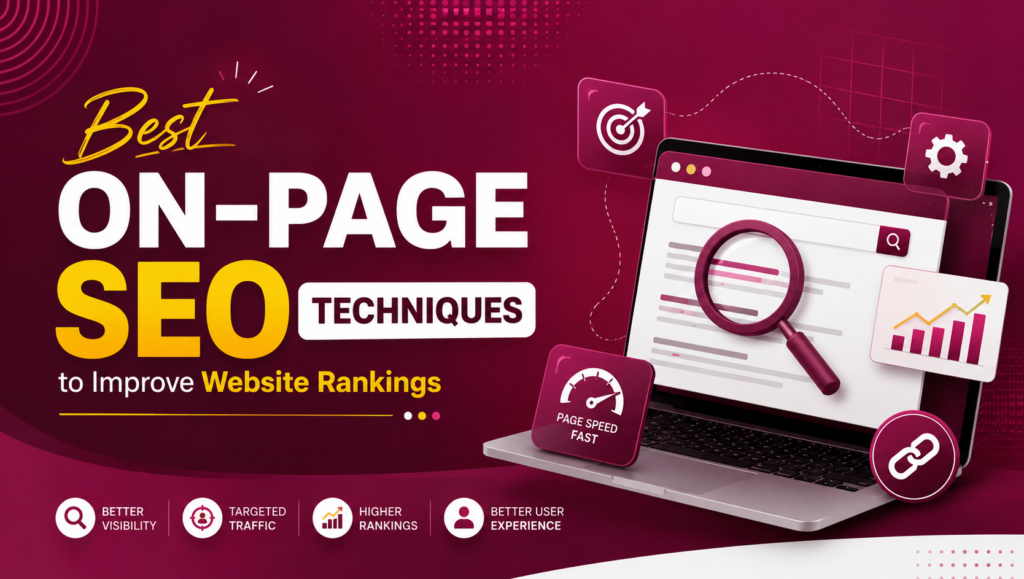
Ranking higher on search engines is no longer just about publishing content regularly. In 2026, businesses need websites that are optimized for both search engines and user experience. This is where on-page SEO techniques become one of the most important factors in improving online visibility and long-term organic growth.
Search engines now evaluate websites based on content quality, keyword relevance, page structure, mobile experience, and overall usability. Even strong content may struggle to rank if these on-page SEO techniques are poorly optimized. Because of this, businesses increasingly focus on implementing effective on-page SEO techniques to improve website rankings and attract targeted traffic.
From keyword placement and content structure to page speed and internal linking, on-page SEO techniques directly impact how search engines understand and rank webpages. It also influences user engagement, bounce rates, and overall website performance.
As competition for search visibility continues to grow, businesses that consistently optimize their webpages using on-page SEO techniques often achieve better website rankings, stronger organic traffic, and improved credibility online. In this blog, we’ll explore the best on-page SEO techniques, common optimization mistakes, and practical strategies businesses can use to improve website rankings in 2026.
Why On-Page SEO Still Matters in 2026
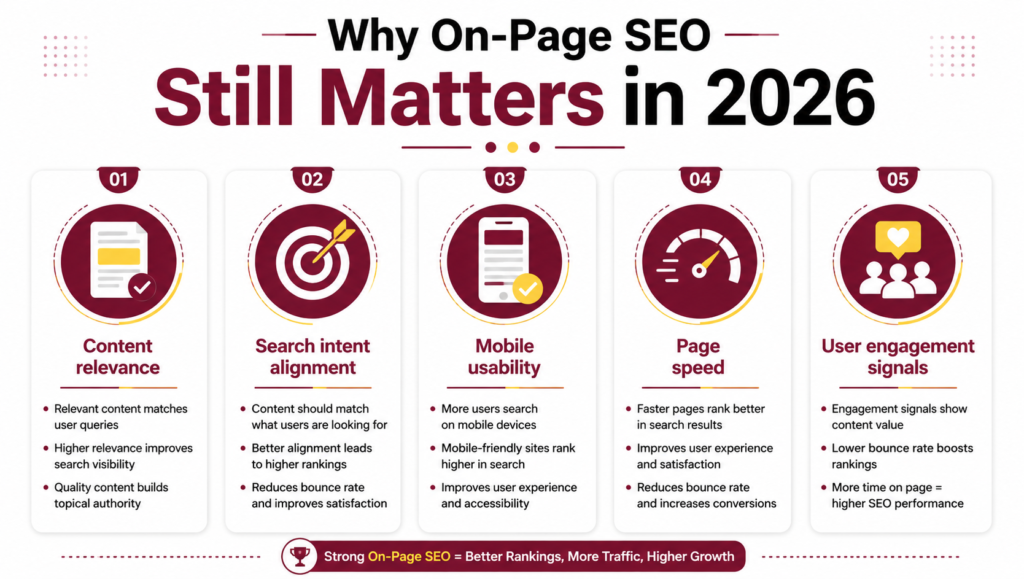
Another major reason on-page SEO techniques still matter is the growing importance of user experience. Search engines now evaluate how users interact with webpages, including bounce rates, readability, navigation, and loading speed. Poorly optimized pages without proper on-page SEO techniques often struggle to retain visitors, which can negatively affect website rankings.
Modern search engines now analyze:
- Content relevance
- Search intent alignment
- Mobile usability
- Page speed
- User engagement signals
This makes proper on-page optimization essential for businesses that want long-term organic visibility.
Following a structured on-page SEO checklist also helps businesses improve crawlability, indexing, and overall website performance. Search engines can better understand optimized webpages, which improves the chances of ranking for relevant keywords.
Another major reason on-page SEO still matters is the growing importance of user experience. Search engines now evaluate how users interact with webpages, including bounce rates, readability, navigation, and loading speed. Poorly optimized pages often struggle to retain visitors, which can negatively affect rankings.
On-page SEO also supports:
- Better keyword targeting
- Improved content discoverability
- Higher engagement rates
- Increased organic traffic
- Stronger search visibility
As competition for search rankings increases across industries, businesses that consistently apply on-page SEO techniques to optimize their webpages gain a stronger advantage in search results. On-page SEO techniques are no longer just a technical process-it is directly connected to content quality, usability, and overall digital performance.
In the next section, we’ll explore keyword optimization techniques that help improve website rankings more effectively.
Keyword Optimization Techniques That Improve Rankings
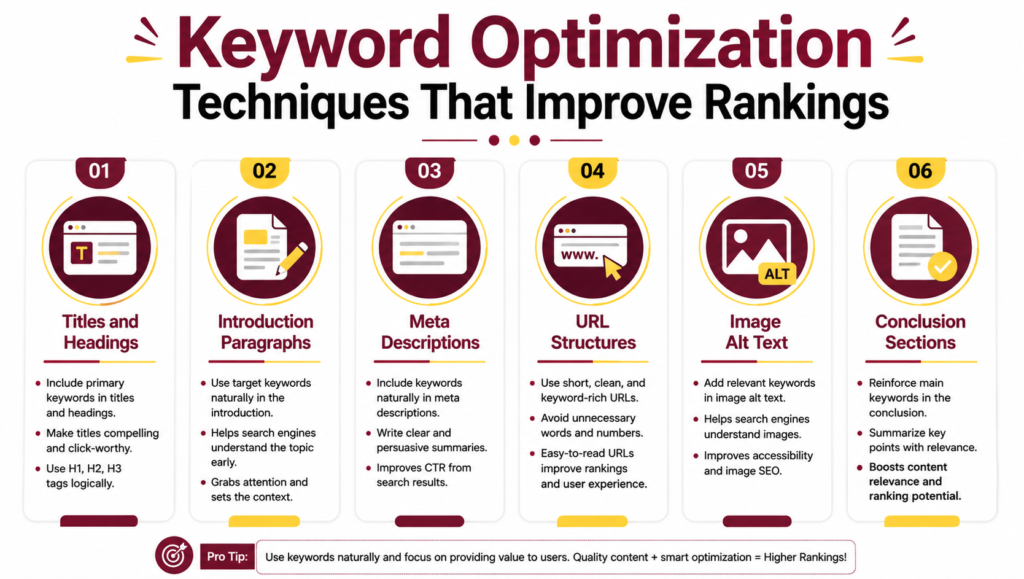
Keyword optimization remains one of the most important parts of on-page SEO techniques. Search engines rely on keywords to understand webpage topics, relevance, and user intent. However, modern on-page SEO techniques are no longer about repeating keywords excessively. Instead, they focus on strategic placement and content relevance.
The first step is identifying a clear primary keyword and supporting secondary keywords that align with user searches. These keywords should appear naturally within:
- Titles and headings
- Introduction paragraphs
- Meta descriptions
- URL structures
- Image alt text
- Conclusion sections
Proper keyword placement helps search engines understand the main focus of a webpage without affecting readability.
How Search Intent Impacts On-Page SEO Performance
Search intent plays a major role in ranking performance because search engines prioritize content that best matches what users are looking for through effective on-page SEO techniques. For example, informational searches require educational content, while commercial searches need solution-focused pages optimized with on-page SEO techniques.
When content aligns with user intent:
- Engagement improves
- Bounce rates decrease
- Ranking potential increases
- User satisfaction becomes stronger
Another important factor is avoiding keyword stuffing in on-page SEO techniques. Overusing keywords can reduce readability and negatively affect SEO performance. Search engines now favor natural language, contextual relevance, and user-focused content as part of effective on-page SEO techniques instead of repetitive optimization practices.
Businesses should also focus on semantic keywords and related search phrases within on-page SEO techniques to improve topic depth and relevance. This helps webpages rank for multiple variations of search queries while maintaining natural readability.
Strong keyword optimization within on-page SEO techniques improves both search engine visibility and user experience, making it one of the most valuable long-term SEO strategies.
In the next section, we’ll explore content optimization strategies that help improve visibility, readability, and overall website performance using on-page SEO techniques.
Content Optimization Strategies for Better Visibility
Content optimization is one of the most important parts of on-page SEO because search engines prioritize webpages that provide clear, valuable, and well-structured information. Even high-quality content may struggle to rank if it is poorly organized or difficult to read.
One of the most effective on-page SEO tips is using SEO-friendly headings and structured formatting. Clear headings help search engines understand content hierarchy while improving readability for users.
Businesses should also focus on:
- Short paragraphs for better readability
- Proper keyword placement
- Relevant internal linking
- Optimized images and media
- Clear content flow and structure
Another important strategy is improving content depth. Search engines prefer webpages that fully answer user queries instead of providing shallow or incomplete information. Detailed, informative content often performs better in organic search results.
Internal linking also plays a major role in content optimization. Linking relevant pages together helps:
- Improve website navigation
- Increase crawlability
- Distribute SEO value across pages
- Keep users engaged longer
Optimized media usage is equally important. Images should include descriptive alt text, compressed file sizes, and contextual relevance to improve both accessibility and page performance.
Readability is another critical ranking factor. Content that is easy to scan and understand generally creates better user engagement and lower bounce rates.
Businesses that consistently optimize content for both search engines and users often achieve stronger visibility, better engagement, and long-term ranking improvements.
In the next section, we’ll explore the technical on-page SEO elements businesses should never ignore.
Technical On-Page SEO Elements Businesses Should Not Ignore
Technical on-page SEO plays a major role in how search engines crawl, understand, and rank webpages. Even strong content can struggle to perform if technical optimization is weak. Businesses that focus on both content quality and technical SEO usually achieve better long-term ranking stability.
One of the most important elements is optimizing meta titles and meta descriptions. These help search engines understand page relevance while also influencing click-through rates from search results.
Another critical factor is URL structure. Clean and keyword-focused URLs improve readability for both users and search engines. Simple URLs are easier to crawl and help improve content organization across websites.
Modern SEO techniques 2026 also place strong importance on mobile responsiveness. Since most users now browse through mobile devices, search engines prioritize websites that provide smooth mobile experiences.
Businesses should also optimize:
- Page loading speed
- Image compression
- Website navigation
- Structured heading hierarchy
- Secure HTTPS connections
Page speed is especially important because slow-loading websites often experience:
- Higher bounce rates
- Lower engagement
- Reduced user satisfaction
- Weaker search visibility
Another important aspect is technical consistency. Duplicate meta tags, broken links, and poor site structure can reduce crawl efficiency and negatively affect rankings.
Search engines increasingly reward websites that provide fast, accessible, and user-friendly experiences. Businesses that consistently maintain technical SEO standards often see stronger organic performance and improved ranking potential.
In the next section, we’ll compare optimized webpages with poorly optimized webpages to understand how on-page SEO directly impacts search performance.
Optimized Pages vs Poorly Optimized Pages
The difference between well-optimized webpages and poorly optimized pages can significantly affect search visibility, user engagement, and organic traffic growth. Businesses that consistently apply strong on-page SEO strategies usually achieve better rankings and stronger website performance over time.
SEO Performance Comparison Table
| Factor | Optimized Pages | Poorly Optimized Pages | SEO Impact |
|---|---|---|---|
| Keyword Placement | Strategic | Random | Better relevance |
| Page Speed | Fast | Slow | Improved rankings |
| Content Structure | Clear | Cluttered | Better readability |
| Mobile Experience | Responsive | Weak | Lower bounce rate |
Optimized webpages make it easier for search engines to understand content relevance and user value. They also create better experiences for visitors, which improves engagement metrics and ranking potential.
Poorly optimized pages, on the other hand, often struggle with:
- Weak search visibility
- High bounce rates
- Lower engagement
- Reduced crawl efficiency
- Poor mobile usability
Another major advantage of optimized pages is scalability. Businesses with strong on-page SEO foundations can improve long-term organic growth more efficiently because their content structure, technical setup, and keyword strategies are already aligned with search engine expectations.
As search algorithms continue evolving, businesses that focus on usability, relevance, and optimization are more likely to maintain stable rankings and stronger organic traffic performance.
In the next section, we’ll explore the common on-page SEO mistakes that often hurt website rankings and overall visibility.
Common On-Page SEO Mistakes That Hurt Rankings
Many websites fail to achieve strong search rankings not because of weak content, but because of avoidable on-page SEO mistakes. Even small optimization issues can reduce crawlability, weaken user experience, and negatively affect organic visibility over time.
One of the most common mistakes is keyword stuffing. Repeating keywords excessively may reduce readability and make content appear unnatural to both users and search engines.
Mistake vs SEO Impact Table
| Mistake | Negative SEO Impact | Better Approach |
|---|---|---|
| Keyword stuffing | Ranking drops | Natural optimization |
| Weak internal links | Poor crawlability | Strategic linking |
| Duplicate meta tags | Reduced relevance | Unique optimization |
| Slow page speed | High bounce rate | Performance optimization |
Another major issue is poor internal linking. Without proper linking structures, search engines may struggle to understand website hierarchy and page relationships.
Duplicate meta titles and descriptions also create SEO problems because search engines prefer unique metadata that clearly explains page relevance.
Businesses often ignore page speed optimization as well. Slow-loading pages reduce user satisfaction and increase bounce rates, which can affect rankings negatively.
Other common mistakes include:
- Weak heading structure
- Unoptimized images
- Poor mobile responsiveness
- Thin or outdated content
- Broken internal links
Avoiding these mistakes helps businesses improve crawl efficiency, user engagement, and long-term ranking performance. Strong on-page SEO is not just about optimization-it is about creating a better overall experience for both users and search engines.
In the next section, we’ll explore how businesses can build sustainable SEO growth through long-term on-page optimization strategies.
How Businesses Can Build Long-Term SEO Growth with On-Page Optimization
Long-term SEO growth requires more than one-time optimization. Search engine algorithms, user behavior, and industry competition continue to evolve, which means businesses must consistently improve their webpages to maintain strong rankings and organic visibility.
One of the most effective strategies is creating user-focused content that aligns with search intent. Businesses that regularly update and optimize content are more likely to maintain relevance in search results.
Consistent on-page optimization also helps improve:
- Organic traffic stability
- User engagement
- Content discoverability
- Search engine trust
- Website authority
Another important factor is SEAT-focused optimization. Search engines increasingly prioritize content that demonstrates experience, expertise, authority, and trustworthiness. Businesses that publish valuable, accurate, and well-structured content often achieve stronger long-term performance.
Reading marketing success stories can help businesses understand how consistent optimization contributes to sustainable digital growth and improved online visibility.
Following industry leadership insights is also valuable because SEO strategies continue changing as search engines evolve. Businesses that stay updated with SEO trends can adapt more effectively and maintain competitive advantages.
Long-term SEO growth also depends on technical consistency. Businesses should regularly monitor:
- Page performance
- Internal linking structure
- Mobile usability
- Content quality
- Keyword relevance
On-page SEO works best when combined with continuous improvement and user-focused optimization strategies. Businesses that invest in long-term SEO practices often achieve stronger visibility, better engagement, and more sustainable organic growth over time.
Final Thoughts
On-page SEO remains one of the most important foundations of successful digital visibility in 2026. From keyword optimization and content structure to technical performance and user experience, every on-page element influences how search engines rank webpages.
Implementing effective on-page SEO techniques helps businesses improve search visibility, attract targeted traffic, and create better user experiences. More importantly, consistent optimization supports long-term organic growth and stronger online credibility.
As competition for search rankings continues increasing, businesses that focus on high-quality content, technical optimization, and user-focused strategies are more likely to achieve sustainable SEO success.
On-Page SEO Techniques to Improve Your Website Ranking
Building strong SEO performance today requires more than basic optimization techniques. Businesses need professionals who understand how search engines evaluate content, user experience, and technical website performance together. Learning modern SEO strategies can help improve both website visibility and long-term digital growth opportunities.
As search algorithms continue evolving, practical SEO knowledge has become an important skill for students, business owners, and marketing professionals. Understanding keyword optimization, content structure, technical SEO, and analytics can help create stronger online performance and better marketing outcomes.
Explore the digital marketing courses designed to help learners build practical SEO skills, understand modern optimization strategies, and gain real-world digital marketing knowledge aligned with current industry requirements.