






Table of Contents
- 1.
- 2.
- 3.
- 4.
- 4.1
- 5.
- 6.
- 7.
- 8.
- 9.
SEO in 2026 is no longer focused only on keywords and backlinks. Search engines are becoming smarter at understanding why users search, what type of information they expect, and how content satisfies their needs. Because of this shift, search intent has become one of the most important factors influencing rankings, visibility, and content performance.
Search intent refers to the purpose behind a user’s search query. Some users look for information, while others want to compare products, navigate to specific websites, or make purchasing decisions. Search engines now analyze:
- User behavior
- Content relevance
- Engagement signals
- Contextual meaning
- Conversational search patterns
to deliver more accurate and personalized search results.
Another major change in 2026 is the rise of AI-powered search systems and semantic SEO. Search engines increasingly understand natural language, conversational queries, and contextual relationships between topics instead of relying only on exact-match keywords. This means businesses and marketers must create user-focused content that answers real questions and improves search experience. In the upcoming sections, we will discuss how search intent is reshaping SEO strategies in 2026, how AI-powered search systems influence content rankings, and which SEO techniques help businesses and marketers create more relevant, user-focused, and search-friendly content.
Why Search Intent Is Becoming More Important in SEO
Search engines are becoming more focused on understanding user intent rather than simply matching keywords. In 2026, ranking content successfully depends on how well a page satisfies the reason behind a search query. This shift is changing how marketers plan content, optimize websites, and structure SEO strategies.
Earlier SEO strategies relied heavily on keyword repetition and exact-match optimization.
Today, search engines evaluate whether content actually helps users by analyzing:
- Search behavior
- Content relevance
- User engagement
- Contextual meaning
- Interaction patterns
This allows search platforms to deliver results that better match user expectations.
Search intent has also become important because online search behavior is evolving rapidly. Users now search using:
- Conversational phrases
- Long-tail queries
- Voice search commands
- AI-assisted search interactions
- Question-based searches
As a result, content must feel more natural, informative, and audience-focused.
Another reason intent-driven SEO matters is semantic search. Search engines now understand relationships between topics, keywords, and user context more effectively.
Instead of focusing only on exact phrases, modern SEO strategies prioritize:
- Topic relevance
- Content depth
- Search context
- User satisfaction
- Problem-solving information
Businesses that create useful and intent-focused content often improve both rankings and audience engagement.
Search intent optimization also helps improve:
- Organic visibility
- Click-through rates
- Audience retention
- Search relevance
- User experience
For marketers exploring modern search intent strategies, understanding user behavior and semantic SEO can significantly improve content performance and search rankings in 2026.
Informational, Navigational, and Transactional Intent Influence Rankings
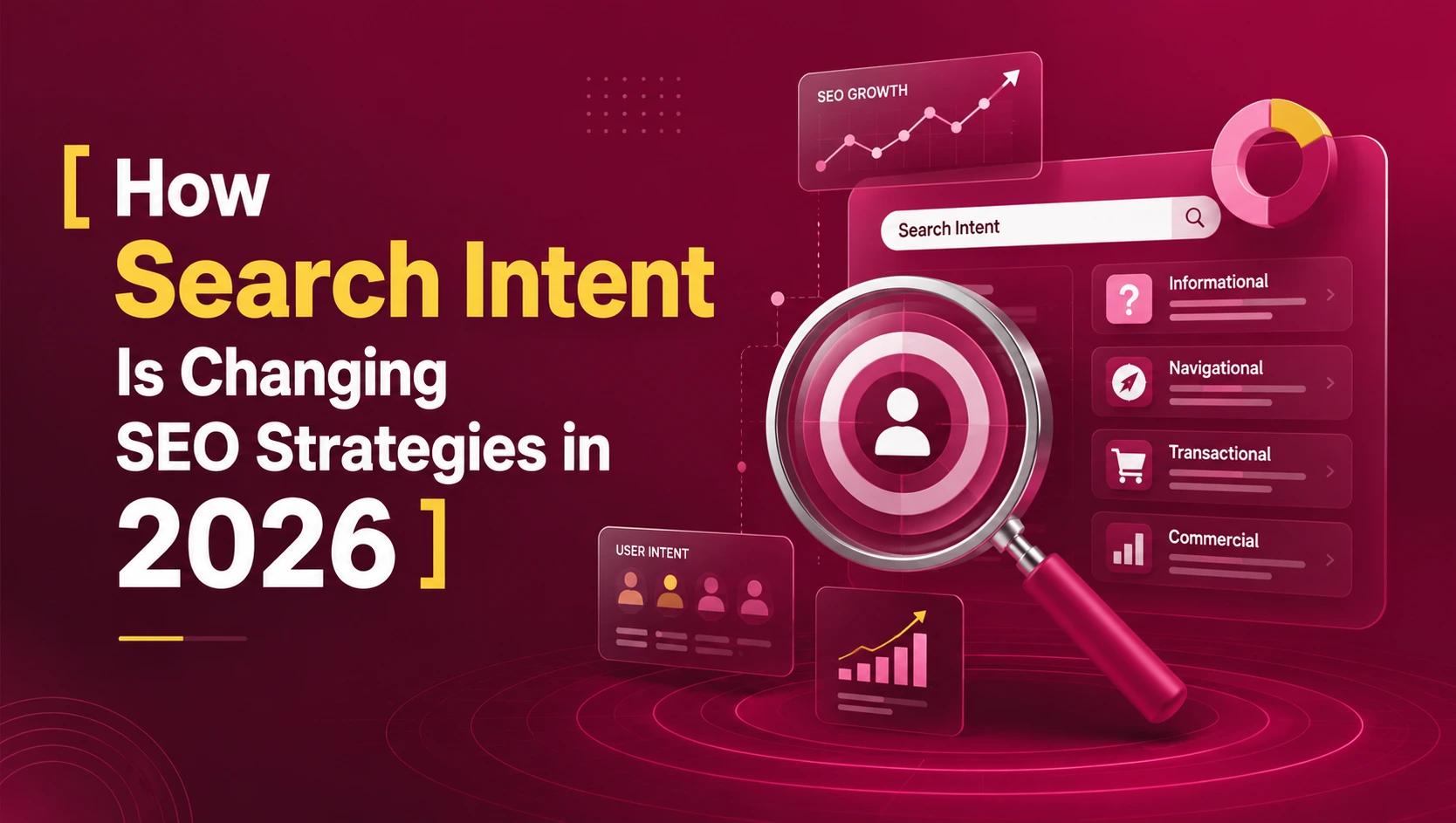
Not every search query has the same purpose. Some users want information, others are searching for a specific website, while some are ready to make a purchase or compare solutions. Search engines now categorize these behaviors to deliver more relevant results, which is why understanding different types of search intent has become essential in SEO.
Informational intent happens when users want to learn something. Searches like:
- “What is SEO?”
- “How does voice search work?”
- “Best content marketing tips”
usually require educational and detailed content. Blogs, guides, tutorials, and explainer articles perform well for this type of intent.
Navigational intent appears when users already know the brand or platform they want to visit. Examples include:
- “LinkedIn login”
- “Google Analytics dashboard”
- “WHY TAP courses”
For these searches, search engines prioritize official pages and brand-focused optimization.
Transactional intent is different because users are ready to take action, such as:
- Purchasing a product
- Booking a service
- Enrolling in a course
- Downloading software
Landing pages, service pages, and conversion-focused content are more effective for these queries.
Commercial intent sits between informational and transactional searches. Users often compare products, tools, or services before making decisions.
Content such as:
- Product comparisons
- Reviews
- Case studies
- “Best tools” articles
works well for this stage.
Search Intent Type vs SEO Strategy
| Search Intent Type | SEO Strategy |
|---|---|
| Informational Intent | Educational content creation |
| Navigational Intent | Brand-focused optimization |
| Transactional Intent | Conversion-focused pages |
| Commercial Intent | Comparison and review content |
Understanding these intent categories helps marketers create content that aligns more closely with user expectations and search behavior.
For businesses and marketers exploring modern SEO strategy approaches, intent-based optimization is becoming one of the most effective ways to improve rankings and content relevance.
AI-Powered Search Engines Are Changing SEO Content Strategies
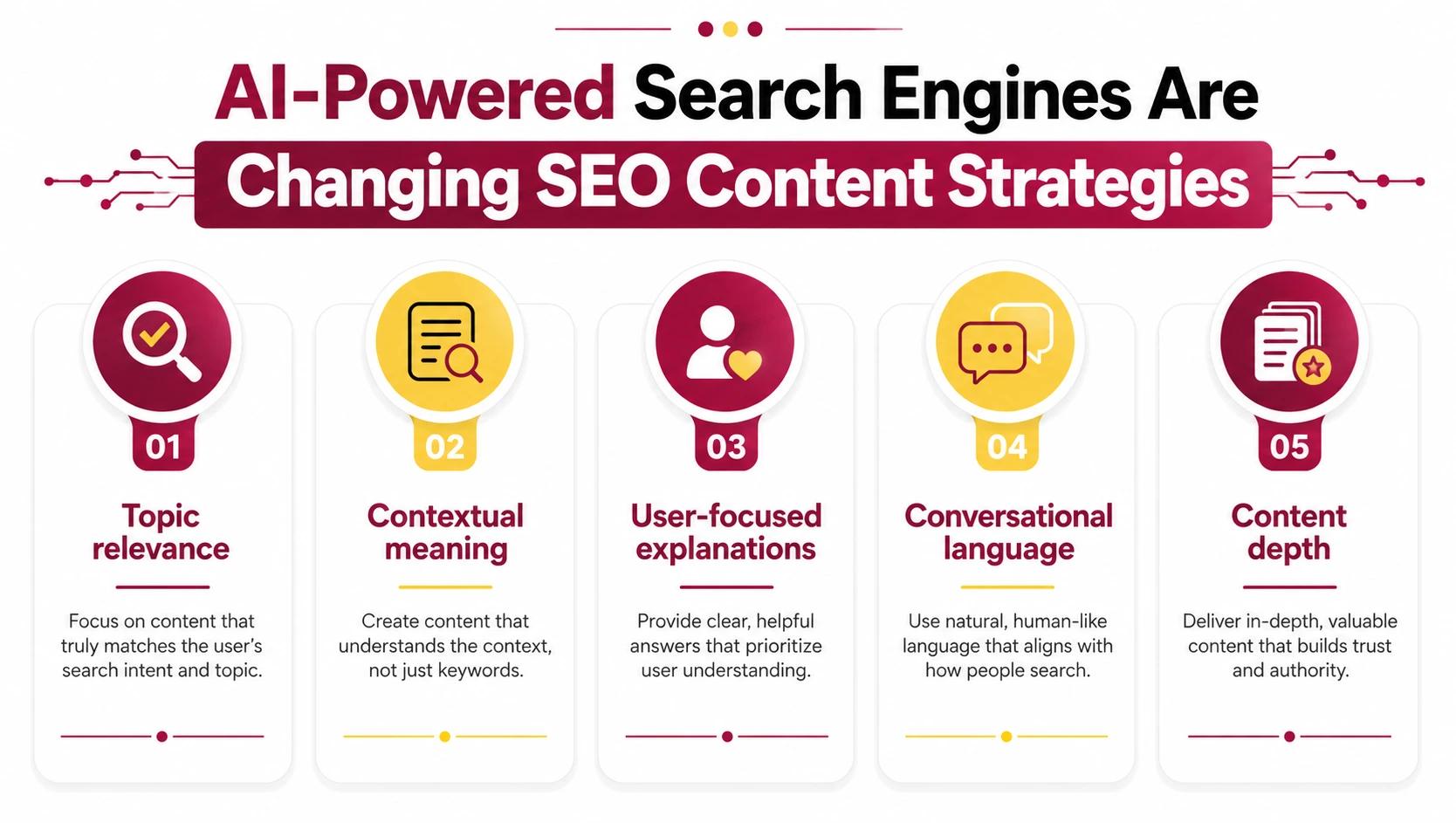
AI-powered search engines are transforming SEO by understanding content more contextually instead of relying only on traditional keyword matching. In 2026, search systems use machine learning, natural language processing, and semantic analysis to evaluate how well content answers user questions and satisfies search intent.
This shift is changing how marketers create SEO content. Instead of focusing only on keywords, modern SEO strategies now prioritize:
- Topic relevance
- Contextual meaning
- User-focused explanations
- Conversational language
- Content depth
Search engines are becoming better at recognizing whether content genuinely solves user problems.
AI-assisted search systems also understand conversational search queries more effectively. Users increasingly search using:
- Full questions
- Natural language phrases
- Voice search commands
- AI chatbot interactions
- Long-tail conversational queries
Because of this, content written in a natural and audience-friendly style often performs better than overly optimized keyword-heavy pages.
Another major change is semantic SEO. Search engines now analyze:
- Relationships between topics
- Contextual relevance
- User engagement signals
- Search behavior patterns
- Content structure
This allows platforms to connect related concepts and provide more accurate search results.
AI-powered search evaluation also emphasizes:
- Helpful content
- Readability
- User satisfaction
- Search experience
- Mobile-friendly optimization
Businesses that focus on genuine value and clear information are often more successful in improving organic visibility.
For students and marketers exploring SEO learning materials and practical insights, these resources can help improve understanding of modern search optimization and content strategy trends.
User Experience and Content Relevance Affect SEO Performance
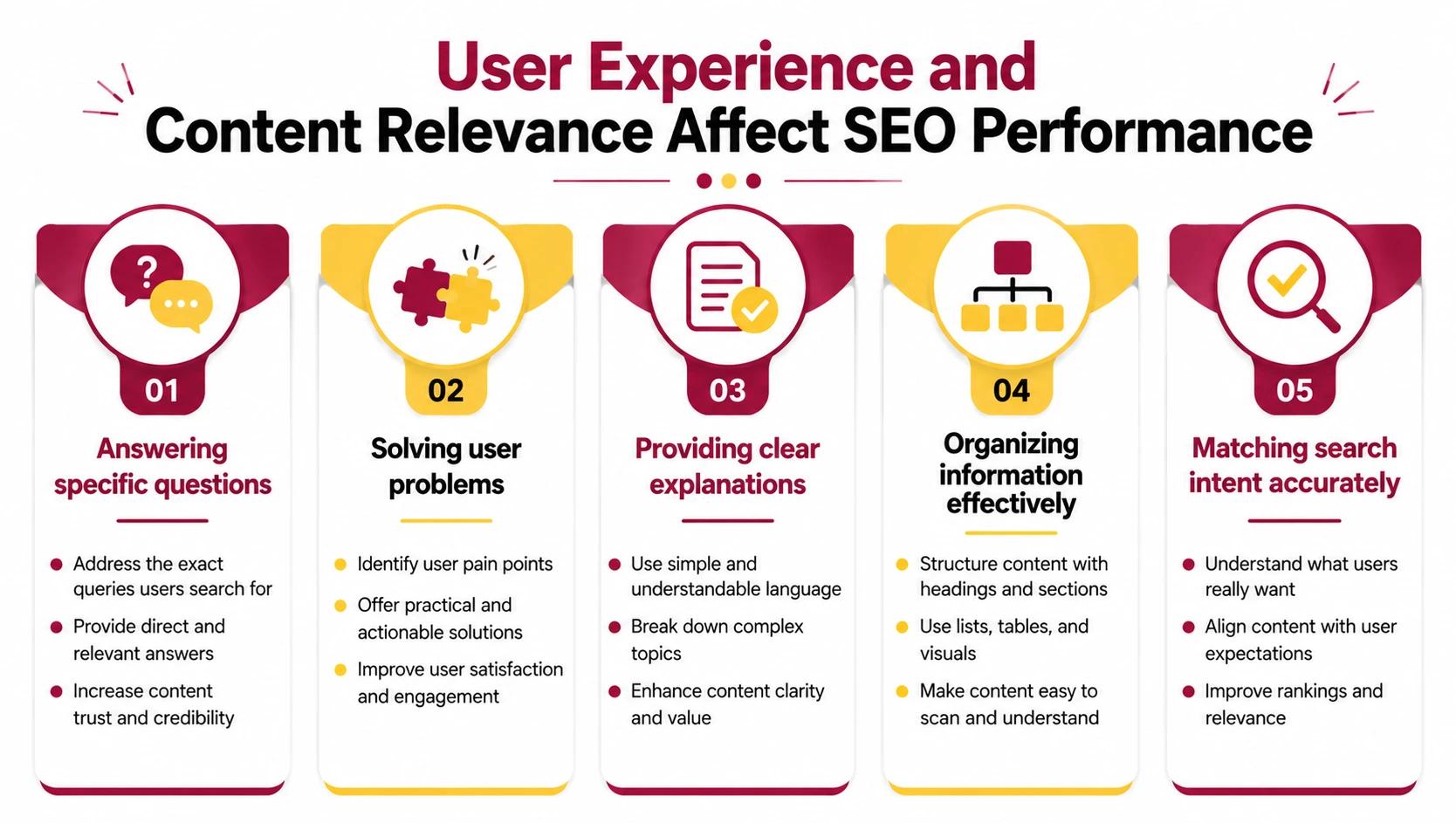
Search engines now evaluate not only what content says, but also how users interact with it. In 2026, user experience and content relevance play a major role in determining whether pages rank well in search results. Websites that provide clear, useful, and easy-to-navigate experiences often perform better than pages created only for keyword optimization.
Content relevance matters because search engines aim to match pages with user expectations. Strong SEO content usually focuses on:
- Answering specific questions
- Solving user problems
- Providing clear explanations
- Organizing information effectively
- Matching search intent accurately
When users quickly find useful information, engagement signals often improve.
User experience is equally important. Search engines now analyze factors such as:
- Mobile responsiveness
- Page speed
- Content readability
- Navigation structure
- Interaction quality
Poor user experience can increase bounce rates and reduce audience retention, which may affect SEO performance.
Another important trend is audience-focused content formatting. Readers now prefer content that is:
- Easy to scan
- Well-structured
- Visually organized
- Concise yet informative
- Accessible across devices
Using headings, bullet points, and readable formatting helps improve both usability and engagement.
Which SEO Skills Will Be Important in 2026?
combine technical understanding with audience-focused content strategy.
Important SEO skills include:
- Search intent optimization
- Semantic SEO
- Content strategy
- Audience analysis
- AI-assisted SEO workflows
- User experience optimization
Marketers who understand both search engine behavior and user expectations are often more successful in building sustainable organic visibility.
Conversational Search and Voice Queries Are Reshaping SEO
The way people search online is changing rapidly. Instead of typing short keywords, users now search using complete questions and conversational phrases through smartphones, voice assistants, and AI-powered search tools. This shift is reshaping SEO strategies in 2026 and pushing marketers to create more natural, intent-focused content.
Voice search and conversational queries often sound like:
- “What are the best SEO strategies for 2026?”
- “How can I improve website rankings?”
- “Which digital marketing skills are in demand?”
These searches are longer and more context-driven compared to traditional keyword searches.
Because of this trend, SEO strategies now focus more on:
- Natural language optimization
- Long-tail keywords
- Question-based content
- Conversational writing
- Audience-focused answers
Content that sounds human and directly answers user questions often performs better in conversational search environments.
Another major change is the growth of AI-powered search interactions. Search engines and AI assistants increasingly understand:
- Contextual meaning
- Search history
- User intent
- Topic relationships
- Conversational patterns
This allows search platforms to provide more personalized and relevant results.
SEO Factor vs Search Intent Impact
| SEO Factor | Search Intent Impact |
|---|---|
| Content Relevance | Better ranking alignment |
| User Experience | Improved engagement signals |
| Conversational Keywords | Higher voice-search visibility |
| Semantic SEO | Improved contextual understanding |
Voice search optimization also encourages marketers to improve:
- Mobile-friendly experiences
- Fast-loading pages
- Structured content
- Clear answers
- Local SEO strategies
For marketers exploring the future of search evolution, conversational SEO and voice-search optimization are becoming essential for improving visibility and adapting to changing search behavior.
Common SEO Mistakes Businesses Should Avoid in 2026
Many businesses still follow outdated SEO practices that focus more on search engines than real users. In 2026, search algorithms are much better at identifying low-value content, poor user experience, and manipulative optimization tactics. Because of this, several traditional SEO habits can now reduce rankings instead of improving them.
One common mistake is keyword stuffing. Repeating the same keywords unnaturally throughout a page often makes content:
- Difficult to read
- Less engaging
- Overoptimized
- Low quality
- Less trustworthy
Modern SEO performs better when keywords are used naturally within relevant and helpful content.
Another major issue is ignoring search intent. Some websites create content that targets keywords without understanding:
- What users actually want
- Which stage of the user journey they are in
- Whether the content solves a problem
- How users interact with the page
- Why people search for specific queries
Content that does not match intent usually struggles to maintain rankings and engagement.
Poor mobile optimization is another problem because a large percentage of searches now happen on mobile devices.
Slow-loading pages, difficult navigation, and cluttered layouts can negatively affect:
- User experience
- Bounce rates
- Audience retention
- Engagement signals
- Organic visibility
Low-quality AI-generated content is also becoming a growing concern. While AI tools can support content workflows, publishing generic or poorly edited content may reduce credibility and user trust.
Businesses should also avoid:
- Weak content structure
- Thin informational pages
- Ignoring semantic SEO
- Duplicate content
- Poor internal linking
For marketers and businesses exploring inspiring success stories, focusing on user-focused SEO and content quality can significantly improve long-term search performance and digital visibility.
How Students and Marketers Can Learn Modern SEO Strategies
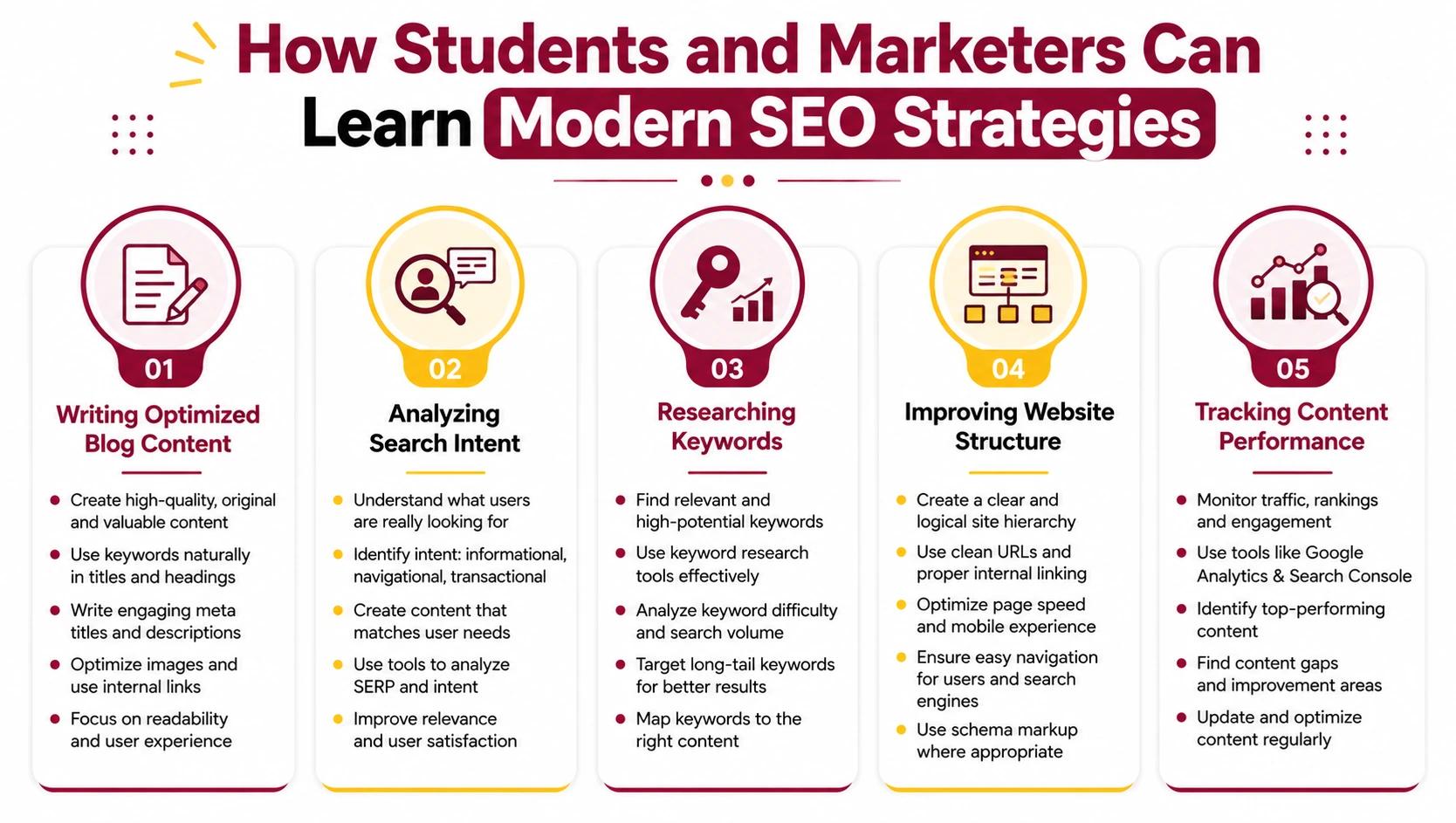
Learning SEO in 2026 requires a balance of technical understanding, content strategy, audience research, and adaptability to AI-powered search systems. Since search engines continue evolving rapidly, students and marketers need practical learning methods instead of depending only on outdated SEO theories.
One of the best ways to improve SEO skills is through hands-on practice. Learners can develop experience by:
- Writing optimized blog content
- Analyzing search intent
- Researching keywords
- Improving website structure
- Tracking content performance
Practical implementation helps build a deeper understanding of how search engines evaluate content.
Students should also focus on understanding audience behavior because modern SEO depends heavily on:
- User intent
- Search patterns
- Engagement metrics
- Conversational queries
- Content relevance
Marketers who understand user expectations are often better at creating high-performing content.
Another important area is learning AI-assisted SEO workflows. Modern SEO professionals increasingly use tools for:
- Content optimization
- Semantic keyword analysis
- Search trend tracking
- Technical SEO audits
- Performance reporting
These systems help improve efficiency and decision-making.
Continuous learning is equally important because SEO trends continue changing through:
- Search algorithm updates
- Voice-search growth
- AI-powered search experiences
- Mobile-first indexing
- Semantic SEO improvements
Students and marketers who consistently study search behavior, practice optimization techniques, and create user-focused content are usually better prepared for future SEO opportunities and long-term digital marketing growth.
Final Thoughts
SEO is becoming more user focused as search engines improve their ability to understand intent, context, and content relevance. In 2026, ranking successfully depends less on keyword repetition and more on how effectively content answers user questions and delivers meaningful search experiences.
AI-powered search systems, conversational queries, semantic SEO, and voice-search optimization are reshaping how businesses create content and structure digital strategies. Websites that focus on audience needs, content quality, readability, and user experience are more likely to improve visibility and maintain long-term search performance.
As search behavior continues evolving, marketers and students must adapt to modern SEO practices that prioritize relevance, engagement, and intent-driven optimization. Professionals who combine technical SEO knowledge with audience understanding and content strategy will be better prepared for future opportunities in digital marketing and organic search growth.
Build Future-Ready SEO and Digital Marketing Skills
Search engines are evolving rapidly, and modern SEO now depends on search intent, semantic optimization, user experience, and AI-powered content strategies. Businesses are looking for professionals who can create audience-focused content, understand search behavior, and adapt to changing SEO trends to improve organic visibility and digital growth.
Building strong SEO expertise in 2026 requires more than traditional keyword optimization. Students and marketers need practical experience in content strategy, search intent analysis, conversational SEO, and AI-assisted workflows to stay competitive in the digital industry.
To improve modern SEO skills, learners should focus on:
- Search intent optimization
- Semantic SEO
- Content strategy
- User experience improvement
- Conversational search optimization
- AI-assisted SEO workflows
If you want to build industry-ready expertise with practical learning exposure and future-focused marketing preparation, this AI marketing certification can help support your journey toward long-term success in SEO and digital marketing.