





Table of Contents
- 1.
- 2.
- 3.
- 4.
- 4.1
- 5.
- 6.
- 7.
- 8.
- 9.
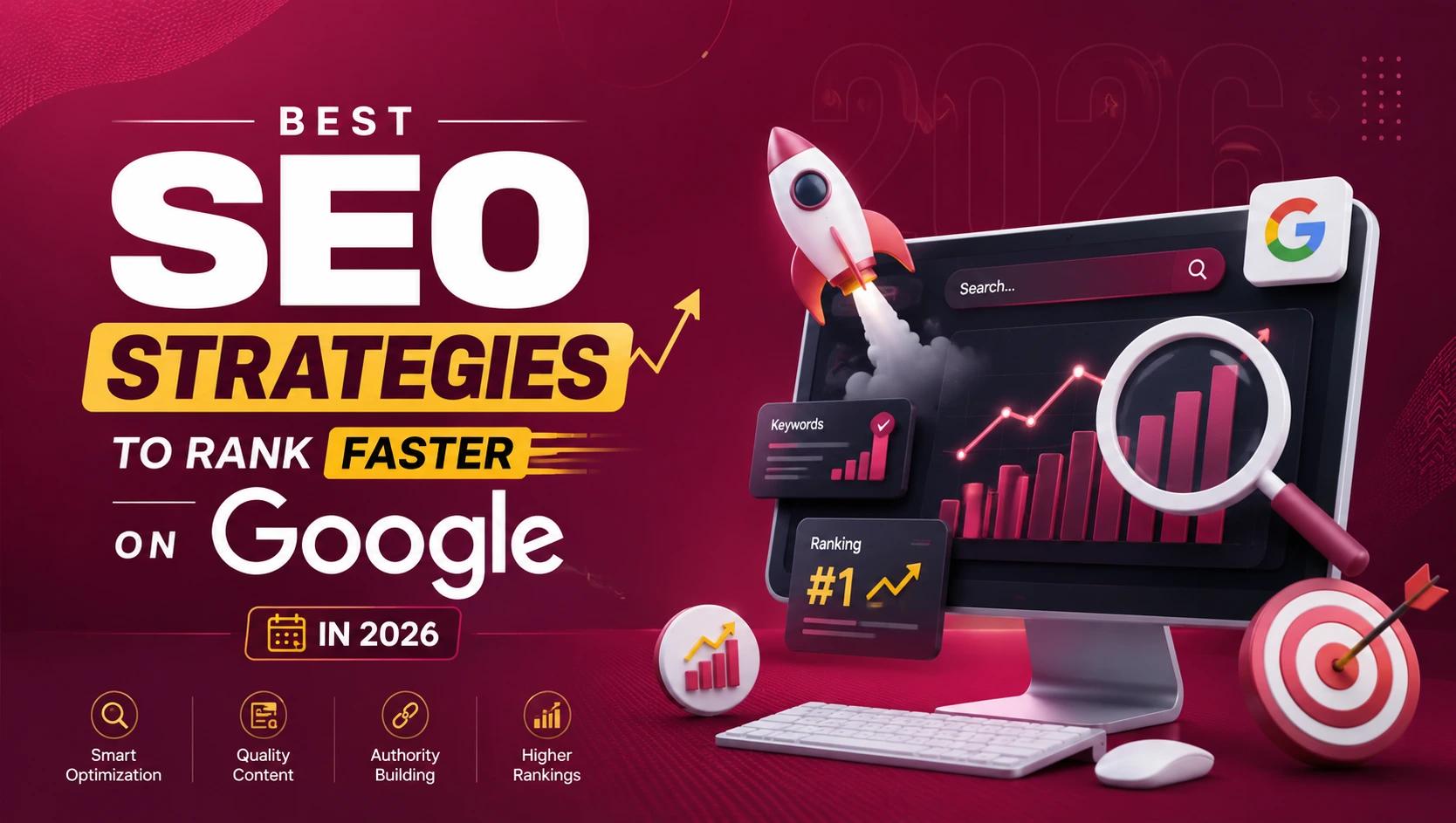
SEO Strategies is evolving rapidly in 2026 as Google increasingly uses AI-powered search systems, search-intent analysis, and user experience signals to determine website rankings and organic visibility. Businesses can no longer rely only on traditional keyword-focused strategies because modern search engines now prioritize high-quality content, technical optimization, audience engagement, and helpful user experiences.
At the same time, competition for organic visibility continues increasing across industries as businesses publish large volumes of digital content to attract online audiences. Search engines now evaluate multiple factors such as content relevance, mobile optimization, website speed, structured formatting, search intent matching, and overall user satisfaction before ranking websites on Google. Because of this shift, brands need future-ready SEO strategies that combine AI-assisted workflows with strong content quality and technical performance.
Another major trend in 2026 is the growing importance of AI-powered SEO tools and automation systems that support keyword research, content optimization, analytics, and workflow efficiency. However, human creativity, strategic planning, and audience-focused communication remain highly valuable for long-term ranking success and brand authority. In the upcoming sections, we will discuss the best SEO strategies to rank faster on Google in 2026, how AI-powered SEO strategies and search intent optimization are transforming search visibility, and which techniques can help businesses improve organic traffic and long-term digital growth.
Why SEO Strategies Are Changing Rapidly in 2026
SEO strategies are changing rapidly in 2026 because search engines increasingly use AI-powered ranking systems, search-intent analysis, and user experience signals to improve search result quality and relevance. Google now focuses more on understanding user behavior and delivering helpful content instead of relying only on traditional keyword-based ranking methods.
One major reason for this transformation is the growth of AI-powered search systems that analyze:
- Search intent
- User engagement
- Content relevance
- Website performance
- Audience behavior patterns
These systems help search engines provide faster, more personalized, and more accurate search experiences.
Another important factor is changing user behavior. Modern users increasingly expect:
- Faster search results
- Mobile-friendly experiences
- Helpful and structured content
- Personalized recommendations
- High-quality information
Websites that fail to meet these expectations may struggle to maintain strong search visibility and organic traffic.
Google algorithm updates are also becoming more focused on:
- Content quality
- User experience
- Technical website performance
- Mobile-first optimization
- Search-intent satisfaction
Businesses now need more advanced SEO strategies that combine content optimization, technical improvements, and audience-focused communication.
Competition for organic visibility is also increasing across industries because businesses publish large volumes of digital content daily. Companies that continuously adapt to changing SEO trends are more likely to improve rankings and long-term digital growth.
For businesses exploring future-focused best SEO strategy 2026 techniques, understanding AI-powered search evolution and changing user behavior can significantly improve organic visibility and ranking performance in 2026.
Search Intent Optimization Helps Websites Rank Faster
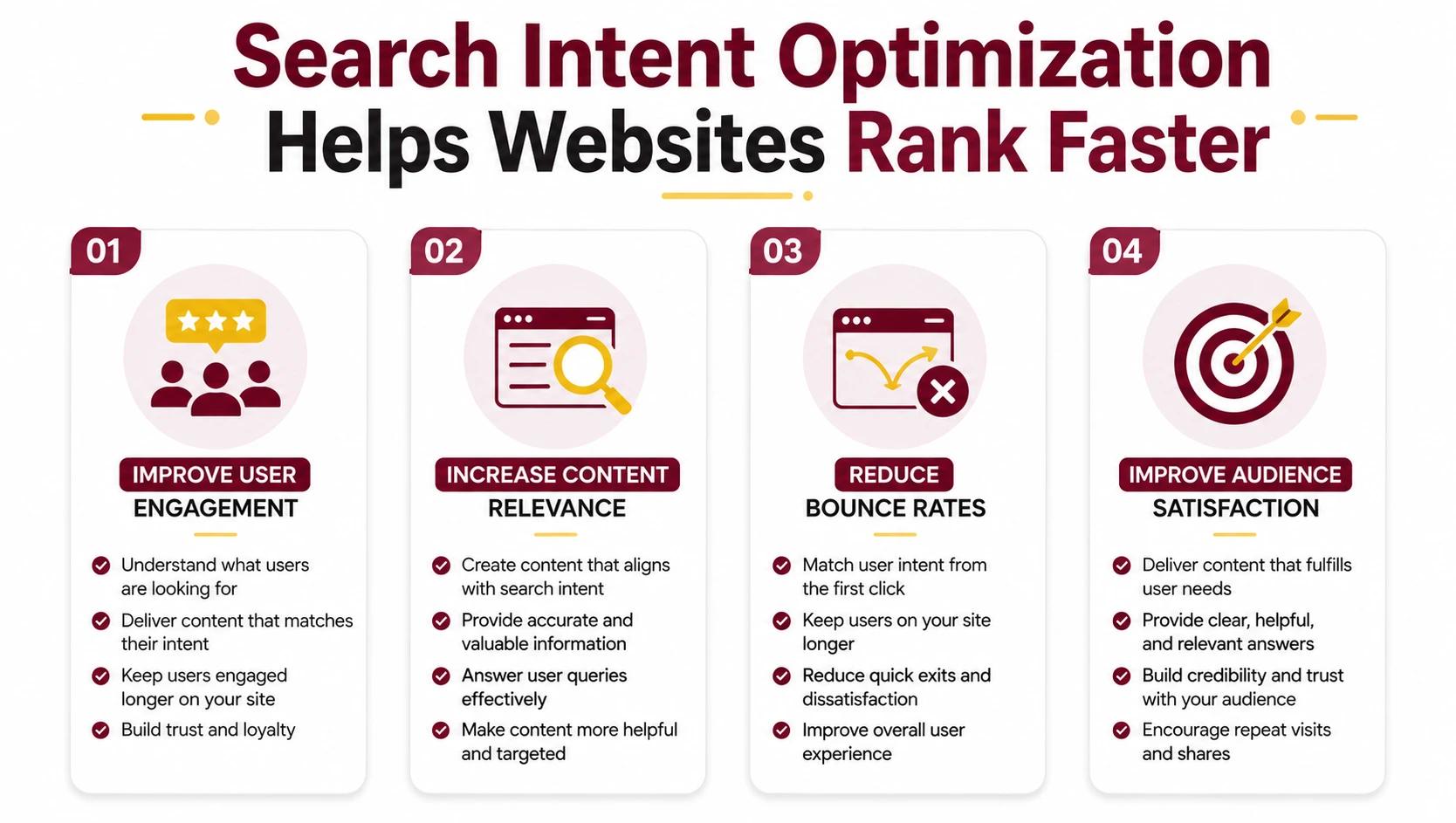
Search intent optimization helps websites rank faster because modern search engines increasingly prioritize content that directly answers user queries and provides meaningful, relevant, and helpful information. In 2026, Google focuses heavily on understanding why users search for specific topics and whether websites satisfy those search expectations effectively.
Search intent optimization helps businesses:
- Improve user engagement
- Increase content relevance
- Reduce bounce rates
- Improve audience satisfaction
- Strengthen organic visibility
Websites that create content aligned with user needs are more likely to achieve better rankings and stronger long-term SEO performance.
Another important factor is audience-focused content creation. Modern SEO strategies increasingly require businesses to:
- Understand user search behavior
- Create problem-solving content
- Improve readability and structure
- Provide accurate information
- Maintain strong user experience
Search engines now evaluate whether content genuinely helps users instead of only focusing on keyword placement.
SEO Strategy vs Ranking Benefit
| SEO Strategy | Ranking Benefit |
|---|---|
| Search Intent Optimization | Better user engagement |
| AI-Assisted Keyword Research | Faster ranking opportunities |
| Technical SEO Improvements | Better crawlability and indexing |
| High-Quality Content Creation | Improved authority and trust |
Search intent optimization also supports:
- Better content discoverability
- Improved audience retention
- Higher engagement signals
- Stronger ranking relevance
- Long-term organic traffic growth
Businesses that combine search-intent-focused content with technical optimization and high-quality communication are often more successful in improving Google rankings.
For businesses exploring advanced SEO techniques in 2026, understanding search intent and audience-focused optimization can significantly improve ranking speed and search visibility.
AI-Powered SEO and Content Optimization Improve Visibility
highly important in 2026 because businesses increasingly use automation systems and AI-assisted tools to improve search visibility, optimize workflows, and support long-term organic growth. Modern SEO strategies now depends heavily on data-driven strategies, content relevance, and user-focused optimization instead of traditional keyword-focused methods alone.
Businesses increasingly use AI-powered SEO systems for:
- Keyword research automation
- Content optimization
- Search intent analysis
- Competitor research
- Performance tracking
These technologies help brands improve efficiency and make faster SEO strategies decisions based on real-time analytics and search behavior patterns.
Another major advantage of AI-powered SEO is content optimization. AI-assisted workflows help businesses:
- Improve content structure
- Identify ranking opportunities
- Optimize readability
- Analyze audience behavior
- Support organic traffic growth
However, AI-assisted optimization works best when combined with human creativity and strategic planning.
Businesses that effectively combine AI-powered workflows with audience-focused communication are often more successful in improving:
- Search visibility
- Organic traffic
- User engagement
- Content quality
- Long-term ranking performance
AI-powered SEO also supports continuous optimization because search engines and user behavior continue evolving rapidly in digital environments.
For businesses exploring inspiring Google reviews, practical SEO strategies and audience-focused digital optimization play a major role in improving online visibility and long-term business growth.
Technical SEO and Mobile Optimization Are More Important Than Ever
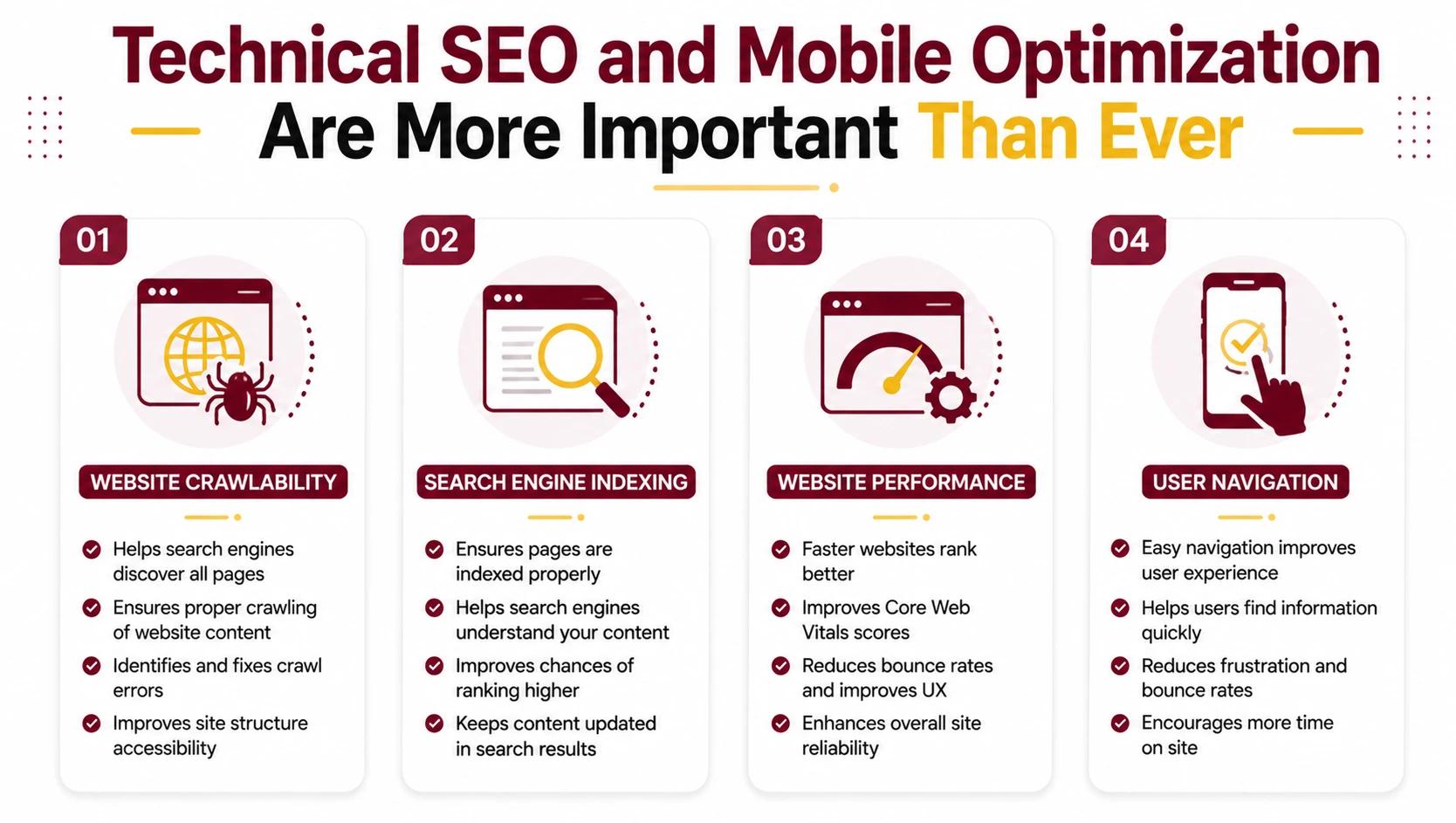
Technical SEO strategies and mobile optimization are becoming more important than ever in 2026 because search engines increasingly prioritize website performance, user experience, and mobile-first accessibility while determining search rankings. Businesses now need technically optimized websites that load quickly, function smoothly across devices, and provide seamless user experiences.
Technical SEO helps businesses improve:
- Website crawlability
- Search engine indexing
- Website performance
- User navigation
- Organic visibility
Modern search engines evaluate multiple technical factors before ranking websites, making technical optimization essential for long-term SEO growth.
Another major factor is mobile-first indexing. Since most users now access websites through smartphones and mobile devices, Google increasingly prioritizes:
- Mobile-friendly website design
- Fast page loading speed
- Responsive layouts
- Smooth mobile navigation
- User-friendly interfaces
Websites with poor mobile performance may struggle to maintain strong search visibility and engagement.
Core Web Vitals are also highly important because they measure:
- Page loading performance
- Visual stability
- User interaction speed
- Overall website experience
Businesses that improve these performance metrics are more likely to achieve better rankings and audience retention.
Which SEO Skills Will Be Important in 2026?
Professionals preparing for future SEO strategies and digital marketing careers should focus on practical and industry-relevant skills aligned with evolving search technologies and AI-powered workflows.
Some important SEO skills include:
- Search intent analysis
- AI-assisted SEO tools
- Technical SEO basics
- Keyword strategy
- Data analytics understanding
- Content optimization skills
Businesses increasingly prefer professionals who can combine technical understanding, analytical thinking, SEO strategy, and audience-focused optimization to improve long-term search performance and digital visibility.
Content Quality and User Experience Drive Long-Term SEO Growth
SEO strategies growth because search engines increasingly prioritize helpful, audience-focused, and easy-to-navigate websites when determining rankings and organic visibility. In 2026, Google continues focusing on delivering the best possible experience for users by rewarding websites that provide valuable information and smooth digital interactions.
High-quality content helps businesses:
- Improve audience trust
- Increase engagement
- Strengthen brand authority
- Improve ranking stability
- Support long-term organic traffic growth
Search engines now evaluate whether content:
- Answers user queries clearly
- Provides accurate information
- Maintains originality
- Improves readability
- Supports positive user experience
Businesses that publish low-quality or repetitive content may struggle to maintain strong ranking performance.
SEO Optimization Factor vs Organic Growth Impact
| SEO Optimization Factor | Organic Growth Impact |
|---|---|
| Content Quality | Stronger ranking stability |
| Mobile Optimization | Better user experience |
| Technical SEO | Faster indexing and crawlability |
| Search Intent Matching | Improved engagement and visibility |
User experience is equally important because search engines increasingly analyze:
- Website navigation
- Page loading speed
- Mobile responsiveness
- Content readability
- Audience interaction behavior
Websites that provide seamless experiences are often more successful in improving engagement and long-term organic visibility.
Human + AI collaboration is also becoming highly valuable because AI-powered workflows improve efficiency while human expertise improves storytelling, originality, and audience understanding.
For businesses exploring evolving SEO best practices 2026, improving content quality and user experience can significantly support long-term SEO success and organic growth.
Common SEO Mistakes Businesses Should Avoid in 2026
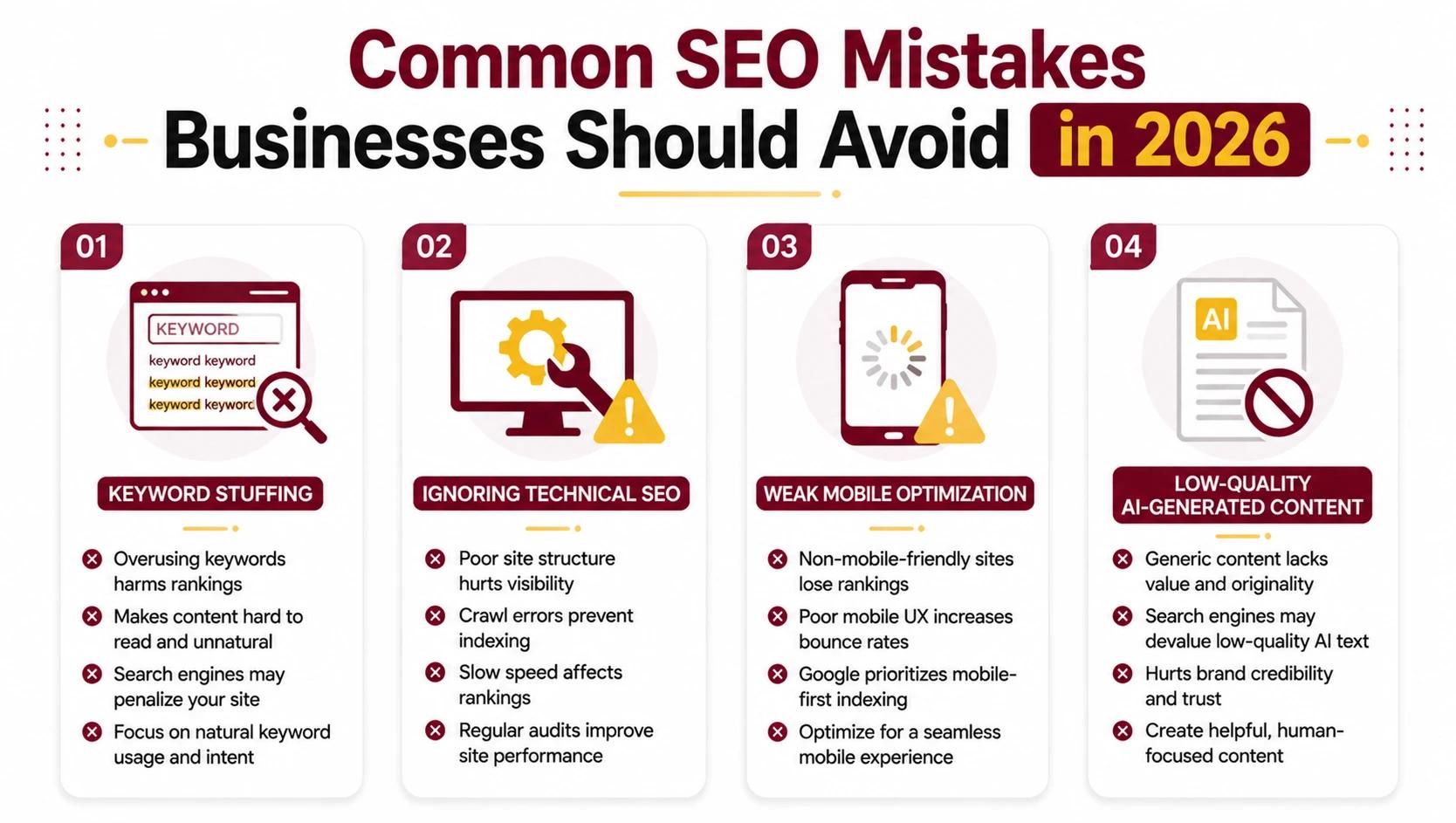
Many businesses make avoidable SEO mistakes because they focus mainly on rankings and keyword usage without understanding user experience, search intent, and technical optimization. As search engines continue evolving through AI-powered systems and user-focused ranking signals, outdated SEO practices can negatively impact organic visibility and long-term growth.
Some common SEO mistakes businesses make include:
- Keyword stuffing
- Ignoring technical SEO
- Weak mobile optimization
- Low-quality AI-generated content
- Ignoring search intent and user experience
- Poor website structure and navigation
Another major issue is focusing only on search engines instead of real users. Modern SEO increasingly depends on:
- Helpful and relevant content
- Fast-loading websites
- Audience engagement
- Mobile-friendly experiences
- Clear content formatting
Businesses that fail to prioritize these factors may struggle to maintain strong rankings and audience retention.
Companies also underestimate the importance of continuous SEO adaptation. Search engine algorithms continue changing rapidly through:
- AI-powered ranking updates
- Search behavior evolution
- Mobile-first indexing improvements
- User experience optimization
- Search-intent-focused ranking systems
Businesses that regularly update and optimize their SEO strategies are often more successful in maintaining organic visibility and digital competitiveness.
For businesses and professionals who want to evaluate and improve digital marketing readiness, this skill assessment can help identify strengths and improvement areas related to SEO, analytics, and digital growth strategies.
How Businesses Can Build Future-Ready SEO Strategies
Businesses can build future-ready SEO strategies by combining AI-powered optimization, search-intent-focused content planning, technical SEO improvements, and audience-focused digital experiences. Since search engines continue evolving rapidly through AI-assisted ranking systems and changing user behavior, businesses need adaptable and data-driven SEO approaches to remain competitive.
Some effective ways businesses can improve future SEO performance include:
- Using AI-assisted keyword research
- Optimizing content for search intent
- Improving technical SEO performance
- Enhancing mobile-first user experiences
- Analyzing audience behavior and engagement
- Continuously updating SEO strategies
Search-intent-focused optimization is especially important because modern search engines increasingly prioritize:
- Helpful content
- Relevant information
- User satisfaction
- Engagement quality
- Content readability and structure
Businesses that align content with audience expectations are often more successful in improving rankings and organic visibility.
Another important factor is continuous SEO adaptation. Companies increasingly need to adjust strategies based on:
- AI-powered search evolution
- Google algorithm updates
- User behavior changes
- Mobile search trends
- Emerging digital marketing technologies
Human + AI collaboration also plays a major role in long-term SEO success because AI-powered systems improve workflow efficiency while human expertise improves creativity, communication, and strategic optimization.
Businesses that combine technical performance, high-quality content, audience-focused communication, and AI-assisted SEO workflows are often more successful in achieving long-term organic growth and digital competitiveness.
Final Thoughts
SEO is evolving rapidly as search engines increasingly use AI-powered systems, search-intent analysis, and user experience signals to determine rankings and organic visibility. Businesses across industries now need advanced SEO strategies that focus on content quality, technical optimization, mobile performance, and audience-focused communication instead of relying only on traditional keyword-focused methods.
In 2026, search intent optimization, AI-assisted SEO workflows, mobile-first experiences, and high-quality content are expected to play a major role in ranking performance and long-term organic growth. Search engines continue prioritizing websites that provide valuable information, seamless digital experiences, and strong audience engagement.
For businesses and professionals preparing for future SEO opportunities, continuous adaptation and strategic optimization will remain highly important. Understanding evolving search behavior, improving technical SEO performance, optimizing user experience, and combining AI-powered workflows with human creativity can help businesses remain competitive and achieve long-term digital growth in future-focused search environments.
Build Future-Ready SEO Skills for Digital Growth
SEO is becoming increasingly advanced as businesses adopt AI-powered search optimization, search-intent-focused content strategies, technical SEO improvements, and data-driven digital marketing workflows to improve rankings and organic visibility. Companies now prefer professionals who can combine SEO expertise, analytical thinking, audience understanding, and AI-assisted optimization skills to support long-term digital growth.
Preparing for future SEO and digital marketing careers requires more than traditional keyword optimization alone. Professionals and students need practical exposure, technical SEO understanding, content strategy knowledge, and continuous learning to remain competitive in evolving search environments and AI-powered digital industries.
To improve SEO expertise in 2026, learners should focus on:
- Search intent optimization
- Technical SEO and mobile performance
- AI-assisted SEO workflows
- Content quality improvement
- Keyword research and analytics
- Continuous SEO strategy adaptation
If you want to build industry-ready expertise with practical learning exposure and future-focused SEO preparation, this AI-powered digital marketing certification can help support your journey toward long-term success in SEO and digital marketing.