



Table of Contents
- 1.
- 1.1
- 2.
- 2.1
- 3.
- 3.1
- 3.2
- 4.
- 5.
- 5.1
- 6.
- 6.1
- 7.
Community-based marketing is becoming one of the fastest-growing digital marketing strategies in 2026 because brands are focusing more on long-term audience relationships instead of only short-term sales. Businesses now understand that building strong communities helps improve customer trust, engagement, loyalty, and brand retention in highly competitive digital environments.
Online communities across platforms like Instagram, LinkedIn, Discord, Facebook Groups, and creator-led platforms are changing how businesses interact with audiences.
Instead of one-way advertising, brands now encourage the following:
- Community discussions
- User participation
- Educational engagement
- Feedback sharing
- Interactive communication
These strategies help businesses create stronger emotional connections with their audiences.
Another major reason for this growth is changing customer behavior. Modern consumers prefer brands that provide value, transparency, and authentic engagement rather than aggressive promotions. Community-driven marketing helps businesses build trust through conversations, shared experiences, and relationship-focused communication. In the upcoming sections, we will discuss why community-based marketing is growing rapidly in 2026, how brands build stronger customer relationships through communities, and which engagement strategies help businesses improve loyalty, trust, and long-term digital growth.
Why Community-Based Marketing Is Becoming Important for Brands
Community-based marketing is becoming important because businesses are shifting from transactional marketing to relationship-focused engagement. In 2026, customers expect brands to create meaningful interactions instead of only promoting products and services through advertisements.
Modern audiences prefer brands that encourage the following:
- Conversations
- Community participation
- Educational value
- Customer interaction
- Personalized engagement
This helps businesses create stronger emotional connections with customers.
One major advantage of community-driven marketing is improved customer loyalty.
When audiences feel connected to a brand community, they are more likely to:
- Engage consistently
- Recommend the brand
- Participate in discussions
- Share experiences
- Remain long-term customers
These interactions improve both trust and customer retention.
Another reason community marketing is growing is because trust-based communication performs better than traditional advertising in many digital spaces.
Audiences increasingly rely on the following:
- Peer recommendations
- Community discussions
- User-generated content
- Shared experiences
- Creator-led conversations
- Before making decisions.
Community-based marketing also helps businesses gather valuable insights through direct audience interaction.
Brands can better understand:
- Customer interests
- Feedback patterns
- Audience preferences
- Engagement behavior
- Market expectations
This supports stronger long-term marketing strategies.
For businesses exploring modern community-based marketing strategies, building audience relationships and trust-driven engagement is becoming highly important for sustainable digital growth in 2026.
Online Communities Help Businesses Improve Customer Loyalty
Online communities help businesses build stronger customer loyalty by creating spaces where audiences can interact, learn, and engage regularly with brands. In 2026, companies increasingly focus on community-driven engagement because loyal customers often contribute to long-term business growth and stronger brand trust.
Businesses create online communities through:
- Private groups
- Discussion forums
- Creator communities
- Educational platforms
- Social media groups
These spaces encourage continuous interaction instead of one-time customer communication.
One major advantage of community engagement is customer retention. Communities help businesses maintain stronger relationships through:
- Regular discussions
- Personalized interaction
- Exclusive content
- Early updates
- Shared experiences
This makes customers feel more connected to the brand.
Community Strategy vs Business Benefit
| Community Strategy | Business Benefit |
|---|---|
| Exclusive Online Groups | Stronger customer loyalty |
| Interactive Engagement | Higher audience retention |
| Creator-Led Communities | Better brand trust |
| Educational Communities | Improved audience value |
Communities also improve trust because audiences often value:
- Real conversations
- Peer recommendations
- Helpful discussions
- Shared learning
- Transparent communication
These factors influence customer perception and long-term engagement.
Another important benefit is audience feedback. Businesses can understand customer needs more effectively through active community participation and conversations.
For marketers exploring modern community marketing strategies, building online communities can significantly improve customer loyalty, engagement, and long-term relationship marketing success.
Social Media Communities Are Changing Digital Marketing
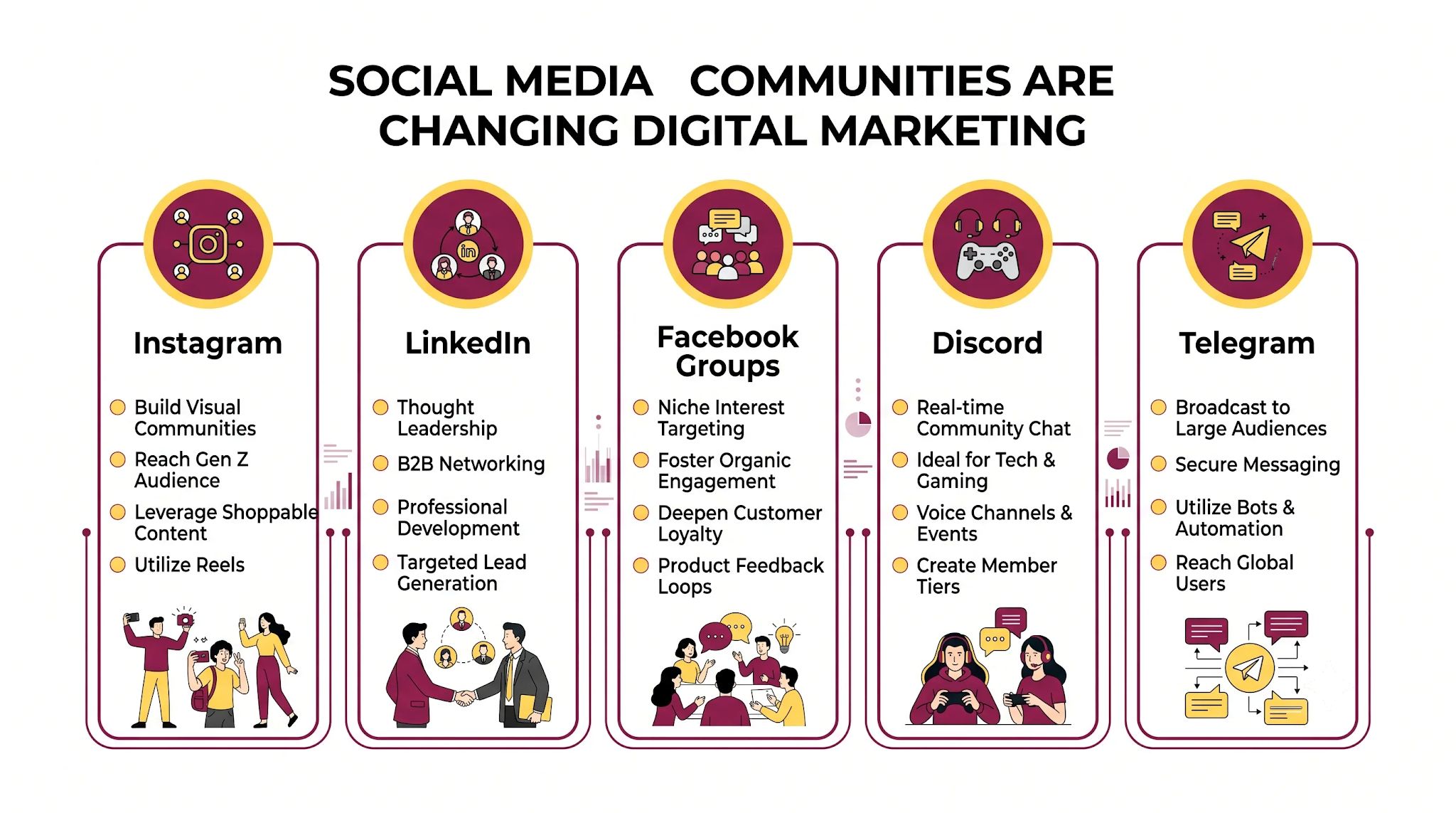
Social media communities are changing digital marketing by making audience interaction more collaborative and engagement focused. In 2026, brands no longer depend only on promotional posts because customers increasingly prefer participating in conversations, discussions, and community-driven content experiences.
Platforms like
- Facebook Groups
- Discord
- Telegram
are helping businesses create stronger digital communities around shared interests and audience engagement.
One major advantage of social communities is direct communication. Brands can interact with audiences through:
- Live discussions
- Polls and feedback
- Community posts
- Educational content
- Interactive conversations
This improves customer relationships and audience participation.
Creator-led communities are also becoming more influential because audiences often trust creators and niche communities more than traditional advertisements.
These communities help businesses improve:
- Brand awareness
- Audience retention
- Customer trust
- Engagement consistency
- Community-driven growth
Another important trend is user-generated engagement. Businesses encourage audiences to
- Share experiences
- Participate in discussions
- Create community content
- Give suggestions
- Support other members
This strengthens community activity and long-term loyalty.
For businesses exploring inspiring success stories, understanding social community engagement strategies can help improve audience relationships and long-term digital marketing growth.
Authentic Engagement Matters More Than Traditional Advertising
Authentic engagement is becoming more valuable than traditional advertising because modern audiences prefer meaningful interactions over highly promotional marketing. In 2026, customers are more likely to trust brands that communicate openly, respond to feedback, and build genuine relationships through communities and interactive engagement.
Brands now focus more on:
- Personalized communication
- Community conversations
- Educational content
- Audience participation
- Transparent engagement
These strategies help businesses create stronger emotional connections with customers.
Another major reason authentic engagement matters is customer trust.
Audiences increasingly pay attention to the following:
- Real experiences
- Honest recommendations
- Community discussions
- User-generated content
- Creator interactions
before making purchasing decisions.
Community-driven branding also improves long-term customer relationships because audiences feel more connected when brands actively engage instead of only promoting products.
Which Community Marketing Skills Will Be Important in 2026?
Students and marketers interested in community-based marketing should focus on communication, engagement, and relationship-building skills.
Important community marketing skills include:
- Community management
- Audience engagement
- Content moderation
- Social listening
- Relationship marketing
- Community analytics
Professionals who understand audience behavior and interactive communication strategies are often better prepared for future community marketing opportunities.
Educational and Creator Communities Are Growing Rapidly
Educational and creator communities are growing rapidly in 2026 because audiences increasingly prefer learning, networking, and engaging through value-driven digital spaces. Instead of only consuming promotional content, users now join communities that provide knowledge, interaction, and shared experiences.
Educational communities often focus on:
- Skill development
- Industry discussions
- Career guidance
- Knowledge sharing
- Practical learning
These communities help brands build authority while providing useful value to audiences.
Creator-led communities are also becoming highly influential because creators often build strong audience trust through:
- Consistent engagement
- Relatable communication
- Niche-focused content
- Interactive discussions
- Personalized experiences
This creates stronger community participation and long-term audience loyalty.
Community Marketing Trend vs Customer Impact
| Community Marketing Trend | Customer Impact |
|---|---|
| Creator Communities | Higher audience trust |
| Educational Content Groups | Better engagement value |
| Interactive Discussions | Stronger community participation |
| Personalized Engagement | Improved customer loyalty |
Another major advantage of educational and creator communities is audience retention.
People are more likely to stay active in communities that provide the following:
- Useful insights
- Networking opportunities
- Peer support
- Learning resources
- Consistent interaction
These factors improve long-term brand engagement.
For businesses exploring modern digital community strategies, educational and creator-led engagement models are becoming highly effective for building loyal and value-driven audiences.
Common Mistakes Brands Make in Community Marketing
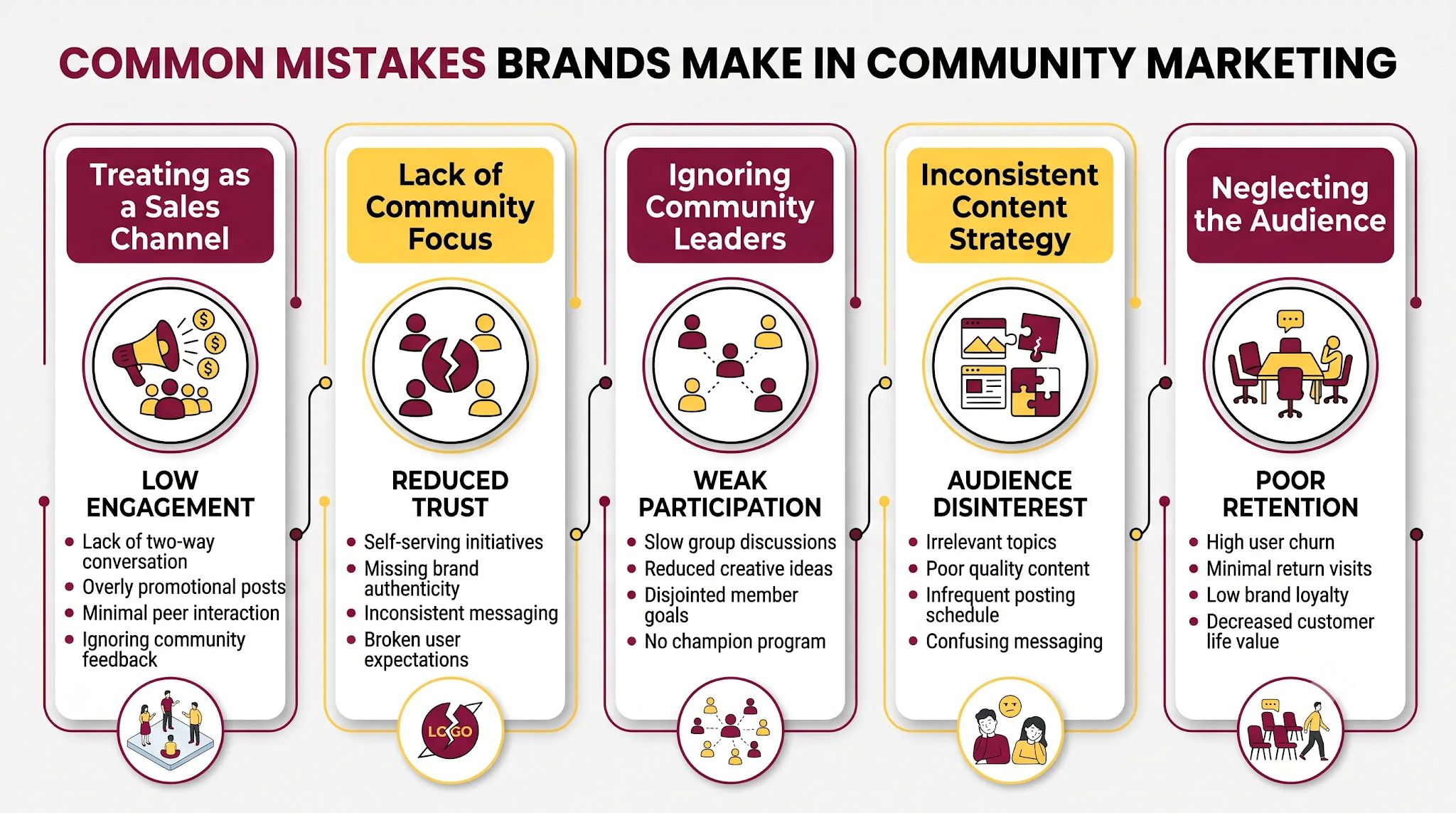
Many brands invest in community marketing but fail to build strong engagement because they focus more on promotion than meaningful interaction. In 2026, successful communities depend heavily on trust, consistency, and audience participation rather than aggressive marketing.
One common mistake is over promotional communication. Communities created only for selling products often experience:
- Low engagement
- Reduced trust
- Weak participation
- Audience disinterest
- Poor retention
Modern audiences prefer communities that provide value and interaction.
Another issue is ignoring audience feedback. Brands that fail to respond to questions, discussions, or suggestions may weaken:
- Community trust
- Customer relationships
- Audience loyalty
- Participation levels
- Engagement quality
Active communication is essential for healthy community growth.
Weak moderation is another major challenge. Poorly managed communities may face:
- Spam content
- Negative interactions
- Low-quality discussions
- Reduced participation
- Audience dissatisfaction
Consistent moderation helps maintain positive engagement environments.
Brands should also avoid:
- Inconsistent posting
- Generic communication
- Ignoring community insights
- Lack of engagement strategy
- One-way communication styles
Strong communities require continuous interaction and audience-focused relationship building.
For students preparing for digital marketing careers, these interview questions can help improve understanding of customer engagement, communication strategies, and modern community-based marketing concepts.
How Students and Marketers Can Learn Community-Based Marketing
Learning community-based marketing in 2026 requires understanding audience engagement, relationship building, and interactive communication strategies. Since brands increasingly focus on customer loyalty and trust-driven engagement, students and marketers should learn how communities influence digital marketing growth.
One of the best ways to start learning is by observing how successful communities operate through the following:
- Discussions
- Audience interaction
- Educational content
- Feedback sharing
- Creator engagement
Analyzing active communities helps learners understand audience behavior and participation patterns.
Students should also practice:
- Community moderation
- Social listening
- Content engagement
- Audience communication
- Interactive discussion management
Hands-on involvement improves real-world understanding of community-driven marketing workflows.
Another important area is understanding platform-specific engagement because communities behave differently across the following:
- Discord
- Facebook Groups
- Telegram
Each platform requires different communication and engagement strategies.
Marketers should also focus on:
- Relationship marketing
- Customer retention strategies
- Community analytics
- Brand communication
- Audience trust building
Professionals who combine communication skills with audience understanding and engagement strategy are generally better prepared for future opportunities in community marketing and digital branding.
Final Thoughts
Community-based marketing is becoming one of the most effective strategies for improving customer loyalty, audience trust, and long-term engagement. In 2026, businesses increasingly focus on relationship-driven communication because audiences prefer meaningful interaction and value-focused communities over traditional promotional marketing.
Online communities, creator-led engagement, educational discussions, and interactive communication are reshaping how brands connect with customers across digital platforms. Businesses that encourage conversations, audience participation, and trust-based engagement often achieve stronger retention and community-driven growth.
As digital marketing continues evolving, community-driven branding will remain highly important for businesses and creators. Students and marketers who understand audience engagement, relationship marketing, and community management strategies will be better prepared for future opportunities in digital marketing and brand growth.
Build Future-Ready Community and Digital Marketing Skills
Community-based marketing is transforming how brands connect with audiences through trust, engagement, and long-term relationship building. Businesses now look for marketers who can manage online communities, improve audience participation, and create interactive engagement strategies across modern digital platforms.
Learning community-driven marketing requires more than understanding social media posting. Students and marketers should develop practical skills in audience communication, community management, social listening, and relationship-focused branding to stay competitive in evolving digital industries.
To improve community marketing skills in 2026, learners should focus on:
- Audience engagement
- Community management
- Social listening
- Interactive communication
- Relationship marketing
- Community analytics
If you want to build industry-ready expertise with practical learning exposure and future-focused marketing preparation, this AI marketing certification can help support your journey toward long-term success in community-based marketing and digital branding.