Search engine optimization (SEO) has always revolved around one thing and getting clicks. Rank higher, attract visitors, drive conversions. But over the past few years, a new challenge has reshaped the SEO landscape: Zero-Click Searches.
Today, millions of searches end without a single click. Google and other search engines now serve direct answers, snippets, and AI-generated overviews right on the search page and leaving businesses wondering where their traffic went.
So, what exactly are zero-click searches, why are they transforming SEO, and how can you adapt? Let’s dive deep.
A zero-click search is when users find their answers directly on the Search Engine Results Page (SERP) without visiting any website.
Examples include:
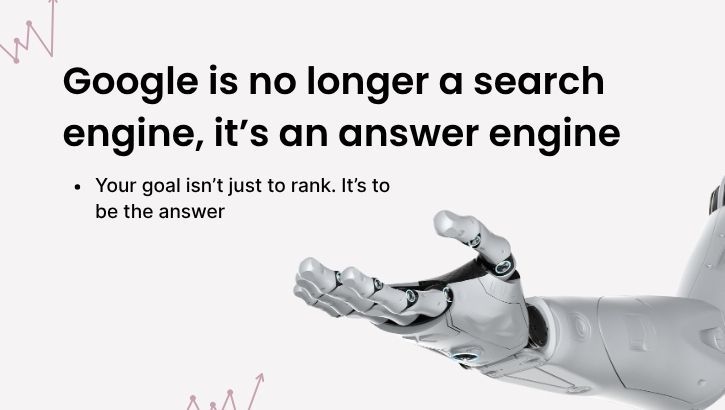
Essentially, Google has evolved from being just a “search engine” to an answer engine.
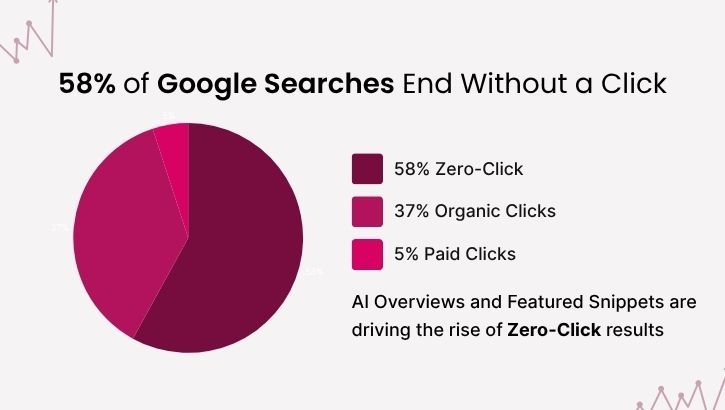
Recent stats show that over 58% of all Google searches end without a click. With AI summaries gaining popularity, that number is only growing.
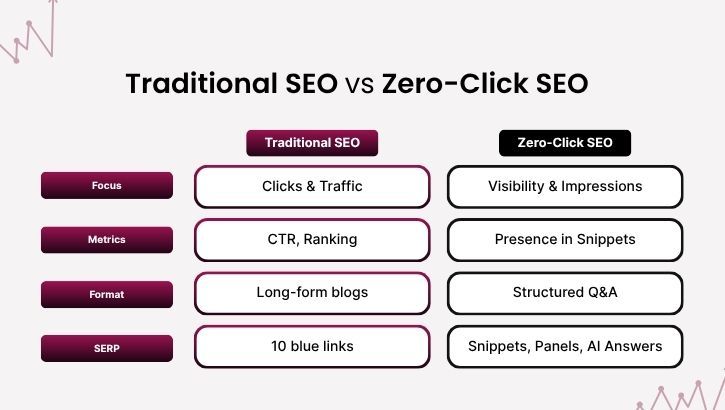
To understand how the SEO game is changing, let’s compare Traditional SEO vs Zero-Click SEO:
| Aspect | Traditional SEO | Zero-Click SEO |
|---|---|---|
| Goal | Drive users to click and visit the website | Provide direct answers or appear on SERP features |
| Success Metric | Organic clicks and traffic | Impressions, visibility, and brand recall |
| Content Format | Long-form content, keyword targeting | Concise, structured answers, question-based format |
| SERP Layout | 10 blue links (classic) | Snippets, panels, maps, AI overviews |
| Ranking Focus | Keywords and backlinks | Relevance, structure, and semantic content |
| Tools Used | Google Analytics, Search Console | Schema markup, structured data, entity optimization |
| Brand Impact | Depends on click-throughs | Builds visibility even without clicks |
This comparison highlights a major shift, SEO success no longer depends solely on clicks, but on visibility and authority in SERPs.
High rankings don’t always bring traffic anymore. Even ranking #1 might get fewer clicks if a snippet already answers the query.
Now, impression share and SERP presence are more meaningful.
Being in “Position 0” (the top featured snippet) is now more valuable than being rank #1. That’s where most zero-click attention goes.
Google’s AI Overviews extract and rewrite content into short summaries, crediting sources, but often without the need to visit them. To benefit, your content must be well-structured, trustworthy, and optimized for AI comprehension.
Appearing frequently in snippets builds brand recognition. Even if users don’t click, they remember your name for future searches or direct visits.
Zero-click doesn’t always mean lost value. Users who see your brand repeatedly are more likely to search for you directly later, improving long-term conversions.
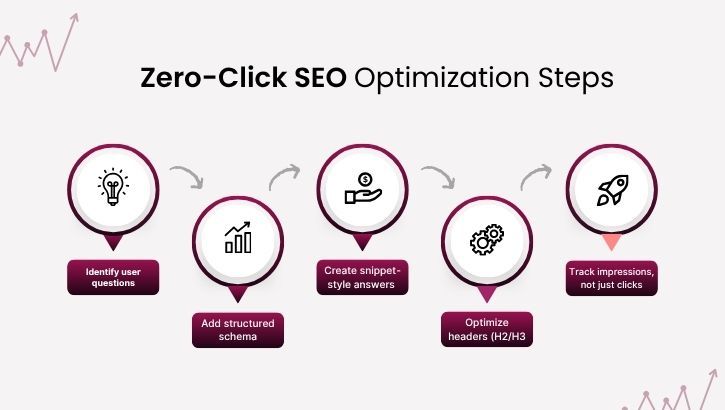
Google often pulls snippets from well-structured content. To win them:
Schema helps Google understand your content better and display it as:
Tip: Implement JSON-LD schema for your key pages to increase snippet eligibility.
PAA boxes are perfect for zero-click visibility.
Find common questions using tools like:
Answer those questions directly in your content to increase chances of being featured.
Structure your content with:
Search engines prefer snippable content and make it easy for them to extract your answers.
Zero-click visibility = branding power.
Even if clicks drop, being visible for industry terms builds trust.
Combine SEO with:
That way, users recognize your brand beyond the search page.
For local businesses, map packs and business listings dominate.
To stand out:
Don’t just track clicks, track visibility:
As AI continues to evolve, Google is moving toward intent-based search, not keyword-based.
Instead of just “ranking,” your goal should be to become the most credible answer provider.
✅ Good news: High-quality content will always win.
❌ Bad news: Shallow, keyword-stuffed blogs will disappear faster than ever.
Zero-click searches are not the end of SEO, they’re a wake-up call to adapt.
Final Thoughts
Zero-click searches are redefining how SEO works. The focus is shifting from getting clicks to earning visibility, authority, and trust.
Instead of fighting the trend, adapt your strategy:
The brands that succeed in this new SEO landscape won’t just chase clicks and they’ll own the conversation before the click even happens.