






Table of Contents
- 1.
- 2.
- 2.1
- 3.
- 4.
- 4.1
- 4.2
- 4.3
- 5.
- 5.1
- 5.2
- 5.3
- 5.4
- 6.
- 6.1
- 6.2
- 6.3
- 7.
- 7.1
- 7.2
- 7.3
- 7.4
- 8.
- 8.1
- 8.2
- 8.3
- 9.
- 9.1
- 9.2
- 9.3
- 10.
- 10.1
- 10.2
- 10.3
- 11.
- 11.1
- 11.2
- 11.3
- 12.
- 12.1
- 12.2
- 12.3
- 13.
- 13.1
- 13.2
- 13.3
- 14.
- 15.
- 16.
Introduction: Why Tech Skills Will Decide Fresher Careers in 2026
India’s IT job market is undergoing one of its biggest transformations in decades. By 2026, companies will no longer evaluate freshers based only on degrees or academic scores. Instead, hiring decisions will depend on job-ready capabilities, practical exposure, and future-focused skills. This shift has made understanding the most in-demand tech skills for freshers in India 2026 critical for students planning long-term careers.
According to industry hiring forecasts, India is expected to see strong growth in roles related to artificial intelligence, cloud computing, cybersecurity, and data analytics. Global technology investments and the rise of automation have created a clear demand for professionals who can adapt quickly and work with emerging technologies. As a result, students who build relevant skills early gain access to high-paying tech jobs for freshers in India, faster placements, and better career stability.
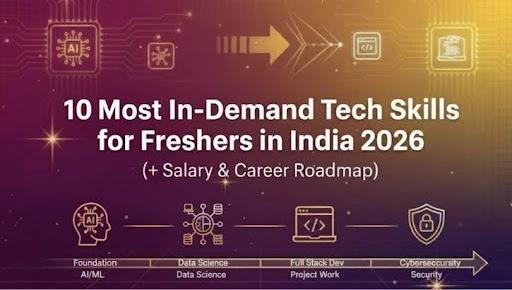
This blog provides a structured overview of the best tech skills to learn in 2026, including salary ranges, real-world applicability, and a practical tech career roadmap for students. Whether you are from an engineering or non-technical background, this guide will help you align with the future IT skills in India that employers actively seek.
India’s Tech Job Market Outlook for 2026
India’s technology sector is expected to remain one of the strongest employment drivers through 2026. With the expansion of Global Capability Centers (GCCs), SaaS startups, and digital transformation projects across enterprises, demand for skilled professionals continues to rise. Industry estimates indicate that technology-led hiring in India will grow steadily as companies invest in automation, artificial intelligence, and cloud-first infrastructure.
What makes this shift important for freshers is the change in hiring priorities. Employers are no longer looking for generalists alone. Instead, they are actively recruiting candidates with specialized, job-ready capabilities aligned with business needs. This is why understanding the most in-demand tech skills for freshers in India 2026 has become essential for career planning.
Additionally, sectors such as fintech, health tech, EdTech, and e-commerce are accelerating their technology adoption. These industries rely heavily on data analytics, cybersecurity, and scalable cloud systems, creating sustained demand for skilled entry-level professionals. For students who align early with these trends, the Indian tech job market in 2026 offers long-term stability and global career exposure.
Why Skills Matter More Than Degrees for IT Jobs in 2026
Recruitment trends across India show a clear preference for skill-based hiring. Employers increasingly focus on hands-on abilities, project experience, and tool proficiency rather than theoretical knowledge alone.
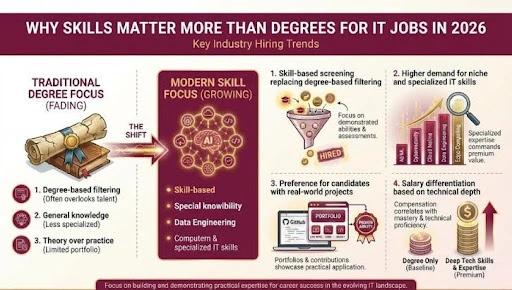
Key Industry Hiring Trends
- Skill-based screening replacing degree-based filtering
- Higher demand for niche and specialized IT skills
- Preference for candidates with real-world projects
- Salary differentiation based on technical depth
For freshers, this makes choosing the right skills required for IT jobs in 2026 far more important than chasing multiple certifications without direction.
How Recruiters Evaluate Freshers Today
Recruiter evaluation methods for freshers have evolved significantly over the last few years. In 2026, most hiring managers assess candidates based on practical competence rather than academic theory. This includes hands-on project experience, familiarity with industry tools, and the ability to solve real-world problems.
Technical interviews increasingly focus on scenario-based questions instead of textbook definitions. For example, data analytics candidates may be asked to interpret datasets, while cloud or DevOps aspirants are evaluated on deployment workflows. This approach ensures that candidates can contribute immediately after onboarding.
Another important factor is portfolio strength. GitHub repositories, dashboards, design prototypes, and capstone projects often carry more weight than marksheets. As competition for high-paying tech jobs for freshers in India increases, recruiters naturally prefer candidates who demonstrate initiative and applied learning. This makes structured training and guided project work a critical component of career preparation.
Artificial Intelligence and Machine Learning
Why AI and ML Are Future-Proof Skills
Artificial Intelligence has moved beyond experimentation and is now embedded in enterprise software, automation systems, and customer-facing platforms. This makes AI one of the most in-demand tech skills for freshers in India 2026.
Core Skills to Learn
- Python programming
- Machine learning algorithms
- Deep learning frameworks
- Natural language processing
Salary Range for Freshers
₹6 LPA – ₹12 LPA
Data Analytics and Data Science
Why Data Skills Are in High Demand
Organizations rely on data to drive decisions, optimize performance, and predict outcomes. Data roles continue to dominate the list of future IT skills in India.
Essential Tools and Skills
- SQL and advanced Excel
- Power BI or Tableau
- Python for analysis
- Statistics and data interpretation
Salary Range for Freshers
₹5 LPA – ₹10 LPA
Industries Actively Hiring Data and AI Freshers
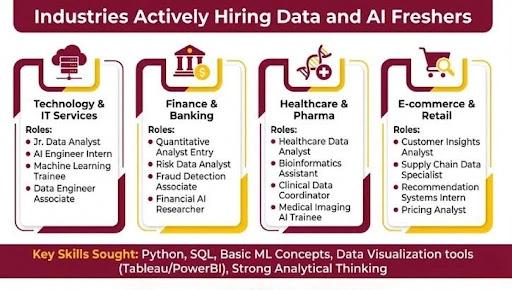
Several industries in India are driving the rapid adoption of data analytics and artificial intelligence, creating consistent hiring opportunities for freshers. The BFSI sector uses data-driven models for fraud detection, credit scoring, and risk assessment. Similarly, e-commerce companies rely on analytics to optimize supply chains, personalize customer experiences, and forecast demand.
Healthcare and pharmaceutical organizations increasingly use data science for diagnostics, patient data management, and clinical research. Meanwhile, EdTech platforms leverage analytics to improve learning outcomes and personalize content delivery. These sectors collectively contribute to the rising demand for future IT skills in India.
For freshers, this industry-wide adoption means broader job opportunities beyond traditional IT services firms. Candidates with relevant analytics or AI skills can explore roles across multiple domains, increasing both career flexibility and earning potential. This diversification makes data-centric roles some of the most resilient and scalable career paths for 2026.
Full Stack Web Development
Why Full Stack Development Remains Relevant
Companies prefer developers who can manage both frontend and backend systems efficiently, making this one of the most reliable job-oriented tech courses for freshers.
Key Technologies
- HTML, CSS, JavaScript
- React or Angular
- Node.js or Django
- Databases and APIs
Salary Range for Freshers
₹4.5 LPA – ₹9 LPA
Cloud Computing (AWS, Azure, Google Cloud)
Why Cloud Skills Are Essential
Cloud infrastructure underpins modern digital systems. Cloud expertise directly aligns with the most in-demand tech skills for freshers in India 2026 [Akamai]
Skills to Focus On
- Cloud fundamentals
- Linux basics
- DevOps integration
- Cloud security principles
Salary Range for Freshers
₹6 LPA – ₹11 LPA
Why Cloud and DevOps Skills Are Often Combined
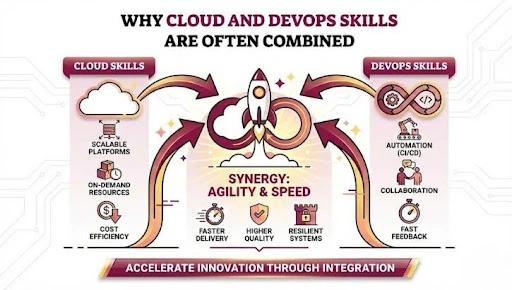
In modern IT environments, cloud computing and DevOps are closely interconnected. Organizations rarely hire cloud professionals without expecting some level of DevOps understanding. This is because cloud platforms are most effective when combined with automation, continuous integration, and continuous deployment practices.
Freshers who understand both cloud fundamentals and DevOps workflows gain a strong advantage in the job market. Employers value candidates who can manage infrastructure, automate deployments, and ensure system reliability. This combination directly aligns with the skills required for IT jobs in 2026.
Additionally, cloud and DevOps roles often serve as gateways to advanced positions such as cloud architect or site reliability engineer. For students aiming for long-term growth and leadership roles, building expertise in both areas creates a scalable and future-proof career path.
Cybersecurity and Ethical Hacking
Why Security Skills Are Business-Critical
With rising cyber threats, organizations prioritize security professionals who can protect systems and data.
Key Learning Areas
- Networking fundamentals
- Ethical hacking techniques
- Security monitoring tools
- Risk management
Salary Range for Freshers
₹5.5 LPA – ₹10 LPA
DevOps Engineering
Why DevOps Is a High-Growth Role
DevOps ensures faster software delivery and stable systems, making it one of the best tech skills to learn in 2026.
Tools and Skills
- Git and version control
- Docker and Kubernetes
- CI/CD pipelines
- Automation scripting
Salary Range for Freshers
₹6 LPA – ₹12 LPA
UI and UX Design
Why Design Skills Matter
User experience directly impacts product success, making UI/UX a valuable non-coding career path.
Core Design Skills
- Figma or Adobe XD
- User research
- Wireframing and prototyping
Salary Range for Freshers
₹4 LPA – ₹8 LPA
Blockchain Development
Why Blockchain Is Emerging
Beyond cryptocurrency, blockchain is used in finance, supply chains, and identity systems.
Key Skills
- Solidity programming
- Smart contracts
- Web3 development
Salary Range for Freshers
₹7 LPA – ₹15 LPA
Internet of Things (IoT)
Why IoT Skills Are Growing
IoT connects physical devices with software systems, creating opportunities in manufacturing and healthcare.
Skills to Learn
- Embedded systems
- Sensors and controllers
- Cloud integration
Salary Range for Freshers
₹5 LPA – ₹9 LPA
Digital Marketing with AI Tools
Why Tech-Driven Marketing Is Valuable
Digital marketing now depends heavily on analytics, automation, and AI-powered tools.
Core Skills
- SEO and paid advertising
- Marketing analytics
- AI content tools
Salary Range for Freshers
₹4 LPA – ₹8 LPA
How Freshers Can Build a Strong Tech Career Roadmap
Choosing the right skill requires understanding your interests, strengths, and long-term goals. Focus on one domain, build projects, and align learning with industry needs. Training institutes that emphasize hands-on experience, internships, and placement support, such as WHY Global Services, help bridge the gap between education and employment.
How Freshers Should Choose the Right Tech Skill Path
Choosing the right technology skill is a strategic decision that should be based on individual strengths, career goals, and market demand. Students who enjoy logical problem-solving may thrive in roles such as software development, data analytics, or DevOps. Those with creative interests may find success in UI/UX design or digital marketing with AI tools.
It is equally important to consider long-term relevance. Skills aligned with automation, data-driven systems, and cloud platforms tend to offer better stability and growth. Rather than learning multiple technologies at a surface level, freshers should focus on mastering one domain deeply.
Structured learning environments, mentorship, and project-based training play a critical role in this process. Institutes like WHY Global Services focus on job-oriented tech courses for freshers, helping students bridge the gap between academic learning and real industry expectations. This approach significantly improves placement readiness and confidence during interviews.
Conclusion: Preparing for the Future IT Job Market
The most in-demand tech skills for freshers in India 2026 are shaped by automation, data-driven systems, and digital transformation. Students who invest in relevant, practical skills position themselves for higher salaries, better job security, and long-term growth. Instead of following trends blindly, choose a focused path, master the fundamentals, and stay adaptable. Your success in the evolving IT landscape will depend on how well your skills match the future needs of the industry.