






Table of Contents
- 1.
- 2.
- 3.
- 4.
- 5.
- 6.
- 7.
- 8.
- 9.
AI-powered workplaces are rapidly transforming how businesses operate across industries. Companies are increasingly using AI-assisted systems, automation tools, data-driven workflows, and digital collaboration platforms to improve productivity, decision-making, and operational efficiency. As a result, workplace expectations are changing, and students now need more adaptable and future-ready skills to succeed in modern careers.
In 2026, businesses are expected to prioritize professionals who can work effectively alongside AI technologies while also contributing through communication, analytical thinking, creativity, and problem-solving abilities. Technical expertise alone is no longer enough in many industries. Companies now value candidates who can combine practical implementation skills with the ability to adapt quickly to evolving workplace technologies and AI-assisted workflows.
As AI adoption continues growing globally, students need to prepare for future workplaces by focusing on continuous learning, practical projects, portfolio development, and industry-relevant skills. Understanding how AI-driven systems influence business operations will become increasingly important for long-term career growth and employability. In the upcoming sections, we will discuss how AI-powered workplaces are changing industries in 2026, the skills students need to stay future-ready, and how learners can prepare for technology-driven career opportunities.
Why AI-Powered Workplaces Are Growing Rapidly
AI-powered workplaces are growing rapidly because businesses across industries are increasingly adopting automation, AI-assisted decision-making, and digital workflows to improve efficiency and productivity. Organizations now use AI technologies to streamline operations, reduce repetitive tasks, and support faster business processes.
Some major reasons companies are adopting AI-powered systems include:
- Improved productivity
- Faster data analysis
- Workflow automation
- Better customer engagement
- Reduced operational costs
AI is also helping businesses improve scalability by automating repetitive processes while allowing employees to focus more on strategic thinking and creative problem-solving.
Industries such as:
- Healthcare
- Finance
- E-commerce
- Digital marketing
- Education
- Technology services
are increasingly integrating AI-powered systems into everyday operations. This transformation is creating new career opportunities while also changing the skills companies expect from employees.
Another important factor is the rise of AI-assisted collaboration tools and analytics platforms that support remote work, digital communication, and performance optimization. Businesses now want professionals who can work effectively with AI-driven systems and adapt quickly to evolving workplace technologies.
For students exploring future-focused AI workforce skills, understanding how AI is reshaping workplaces can help improve long-term career preparation and industry readiness in 2026.
Students Need More Than Technical Skills in AI Workplaces
In AI-powered workplaces, technical knowledge alone is no longer enough for long-term career success. Companies now expect employees to combine technical expertise with communication, collaboration, adaptability, and problem-solving abilities while working alongside AI-assisted systems and automation workflows.
Businesses increasingly value professionals who can:
- Communicate ideas clearly
- Collaborate effectively in teams
- Adapt to changing technologies
- Solve problems strategically
- Make analytical decisions
- Work efficiently with AI tools
One major reason these skills are important is because AI systems can automate repetitive technical tasks, but human creativity, strategic thinking, and communication still remain essential in professional environments.
Traditional Workplace Skills vs AI-Powered Workplace Skills
| Traditional Workplace Skills | AI-Powered Workplace Skills |
|---|---|
| Manual workflows | AI-assisted workflows |
| Basic technical knowledge | AI tool familiarity |
| Routine task execution | Analytical decision-making |
| Fixed-role specialization | Adaptable multi-skill capability |
Adaptability is becoming especially important because workplace technologies continue evolving rapidly. Companies now prefer professionals who can learn continuously and adjust quickly to new systems, workflows, and digital tools.
Students who focus on both technical and human-centric skills are more likely to remain competitive and valuable in AI-driven industries and future workplace environments.
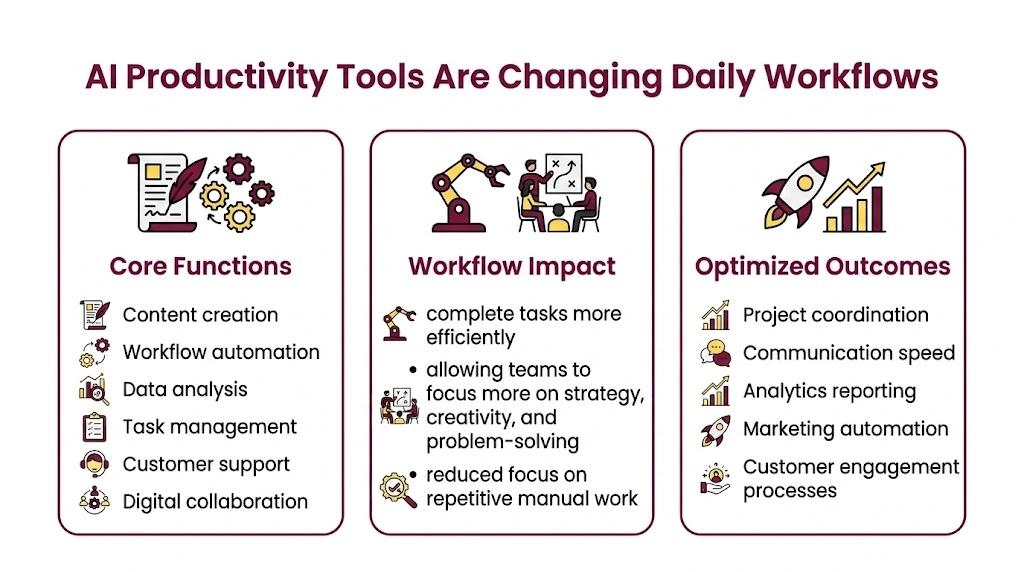
AI Productivity Tools Are Changing Daily Workflows
AI productivity tools are changing daily workplace workflows by helping businesses automate repetitive tasks, improve efficiency, and support faster decision-making. Companies now use AI-assisted systems across departments to simplify operations, enhance collaboration, and increase overall productivity.
Some commonly used AI-powered workplace tools support:
- Content creation
- Workflow automation
- Data analysis
- Task management
- Customer support
- Digital collaboration
These tools help employees complete tasks more efficiently while allowing teams to focus more on strategy, creativity, and problem-solving rather than repetitive manual work.
AI-assisted workflows are also improving:
- Project coordination
- Communication speed
- Analytics reporting
- Marketing automation
- Customer engagement processes
Another important change is the increasing use of AI-powered analytics and recommendation systems that help businesses make data-driven decisions more effectively. Employees who understand how to work with these systems are becoming more valuable across industries.
For students exploring modern AI-first workplaces, understanding AI productivity tools and automation workflows can help improve future workplace readiness and long-term career adaptability.
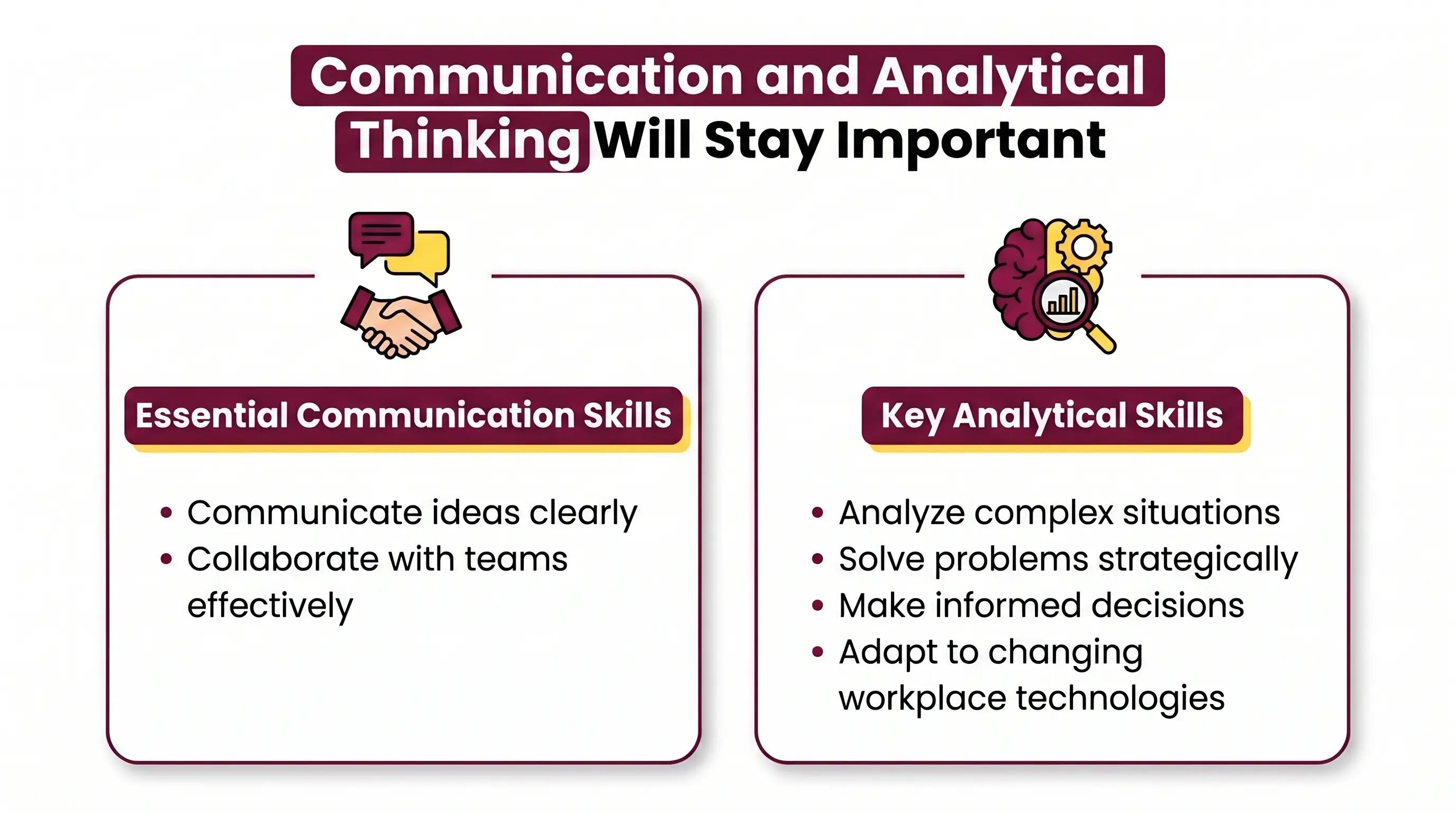
Communication and Analytical Thinking Will Stay Important
Even in AI-powered workplaces, communication and analytical thinking will continue to remain highly valuable because businesses still depend on human collaboration, creativity, strategic planning, and decision-making. While AI can automate repetitive tasks and process large amounts of data, human judgment and communication remain essential in professional environments.
Companies increasingly look for professionals who can:
- Communicate ideas clearly
- Collaborate with teams effectively
- Analyze complex situations
- Solve problems strategically
- Make informed decisions
- Adapt to changing workplace technologies
Strong communication skills help employees work more efficiently with both people and AI-assisted systems. Businesses value professionals who can explain technical concepts, manage teamwork, and support customer interactions in clear and effective ways.
Which Skills Will Be Most Valuable in AI-Powered Workplaces?
As industries continue adopting AI technologies, companies are expected to prioritize a balance of technical and human-centric skills. Professionals who can combine AI familiarity with strategic thinking and adaptability are likely to remain highly valuable.
Some of the most important future-ready skills include:
- AI tool familiarity
- Communication and collaboration
- Analytical thinking
- Adaptability and continuous learning
- Problem-solving ability
- Practical implementation skills
Employees who continuously improve both technical expertise and interpersonal abilities are more likely to succeed in AI-driven workplaces and future-focused career environments.
Practical Learning and Projects Improve Career Readiness
Practical learning and project-based experience are becoming increasingly important because companies want candidates who can demonstrate real-world implementation skills instead of relying only on theoretical knowledge. In AI-powered workplaces, businesses now prioritize professionals who understand how to apply technology and workflows in practical situations.
Practical learning helps students:
- Understand workplace processes
- Improve technical implementation
- Build confidence through real-time experience
- Develop analytical thinking
- Gain exposure to AI-assisted workflows
Projects and portfolios also help students showcase measurable skills during hiring processes. Companies often evaluate:
- Project quality
- Problem-solving approach
- Technical implementation
- Workflow understanding
- Collaboration ability
Skill Area vs Importance in AI-Powered Workplaces
| Skill Area | Importance in AI-Powered Workplaces |
|---|---|
| AI Tool Familiarity | Very High |
| Communication Skills | High |
| Problem-Solving Ability | High |
| Practical Experience | Very High |
Another major advantage of practical learning is faster workplace adaptability. Students who work on projects and internships usually understand business workflows more effectively and contribute more quickly in professional environments.
For learners exploring modern AI-driven workplace demands, practical implementation and hands-on learning are becoming major factors influencing career readiness and long-term employability in 2026.
Common Mistakes Students Make While Preparing for Future Workplaces
Many students make the mistake of focusing only on academic qualifications without developing the practical and adaptable skills required in AI-powered workplaces. As industries continue evolving rapidly with automation and digital transformation, relying only on theoretical learning can reduce long-term career readiness.
Some common mistakes students make include:
- Ignoring AI tools and automation workflows
- Depending only on degrees and certifications
- Avoiding practical projects
- Weak communication skill development
- Lack of portfolio building
- Inconsistent upskilling
Another major issue is underestimating the importance of adaptability. AI-powered workplaces continue changing quickly, and businesses now expect employees to learn continuously and adjust to new technologies, systems, and workflows.
Students also often overlook the importance of communication and analytical thinking. Even in highly technical industries, companies still value professionals who can collaborate effectively, solve problems strategically, and contribute to team-based decision-making.
For learners exploring changing future workforce models, understanding these common preparation mistakes can help improve long-term career readiness and adaptability in AI-driven industries.
How Students Can Build Industry-Ready Skills for AI Workplaces
Students can build industry-ready skills for AI-powered workplaces by combining practical learning, continuous upskilling, and technology-focused skill development. Since businesses increasingly rely on AI-assisted systems and automation workflows, learners need to develop both technical expertise and adaptable workplace abilities.
Some effective ways students can prepare for AI-driven careers include:
- Working on real-time projects
- Learning AI-assisted workflows
- Building portfolios and case studies
- Improving communication and analytical skills
- Practicing problem-solving
- Staying updated with industry trends
Continuous learning is becoming especially important because AI technologies and workplace systems evolve rapidly. Students who regularly improve their skills are more likely to remain competitive and adaptable in future work environments.
Another important factor is industry-focused learning. Instead of learning randomly, students should focus on practical skills aligned with growing industries such as:
- AI and automation
- Digital marketing
- Data analytics
- Cybersecurity
- Cloud computing
Hands-on implementation and project-based learning also help students understand workplace expectations and improve confidence during interviews and recruitment processes.
For learners exploring useful learning resources, continuous skill development and practical implementation can significantly improve future workplace readiness and long-term career growth in AI-powered industries.
Final Thoughts
AI-powered workplaces are transforming industries by changing how businesses operate, collaborate, and manage workflows. Companies increasingly depend on AI-assisted systems, automation tools, and digital technologies to improve productivity and support data-driven decision-making across multiple sectors.
As workplace expectations continue evolving in 2026, students need more than technical knowledge alone. Businesses now value professionals who can combine AI familiarity with communication skills, analytical thinking, adaptability, and practical implementation abilities. Human creativity, collaboration, and strategic problem-solving will continue to remain important even in highly automated work environments.
For students preparing for future careers, continuous learning and practical experience will play a major role in long-term employability. Building portfolios, working on projects, learning AI-assisted workflows, and staying updated with industry trends can help learners become more industry-ready and adaptable in AI-driven workplaces.
Build Skills That Match the Future of AI-Powered Workplaces
AI-powered workplaces are creating new career opportunities for students who are ready to adapt, learn continuously, and work effectively with modern technologies. Companies today are not just looking for technical knowledge — they want professionals who can combine AI familiarity with communication, analytical thinking, creativity, and practical problem-solving abilities.
Preparing for future workplaces starts with building industry-relevant skills step by step through practical learning and real-world implementation. Students who focus on adaptability and continuous upskilling are more likely to stay competitive as industries continue evolving with AI and automation.
To prepare for AI-driven career opportunities, students should focus on:
- AI-assisted workflow understanding
- Practical project experience
- Communication and collaboration skills
- Analytical thinking and problem-solving
- Portfolio and profile development
- Continuous learning and adaptability
If you want to build future-ready expertise with practical learning exposure and industry-focused training, these career-focused courses can help you prepare for AI-powered workplaces and long-term career opportunities beyond 2026.