Imagine walking into your office in 2030. The tools you use, the projects you handle, even the job title on your offer letter could look completely different from what you expect today. And that’s exactly why you can’t treat your digital marketing career like something predictable or fixed.
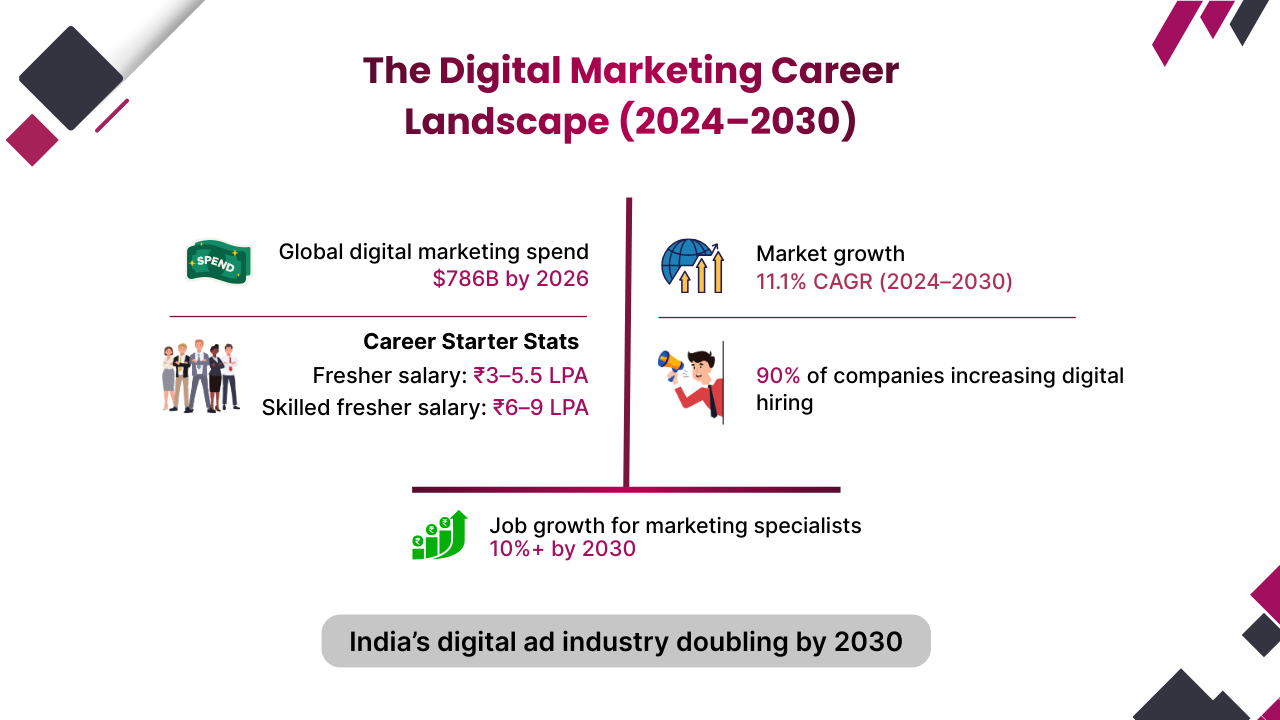
Here’s the thing: global digital marketing spend is heading toward $786 billion by 2026, and the need for skilled marketers is rising, not slowing. Students, freshers, and career switchers entering the field are stepping into an industry full of opportunity but also full of rapid shifts.
If you want your digital marketing career to stand out in the next five years, you need foresight. Not motivational talk. Not vague predictions. You need the real direction that helps you grow your salary, skillset, and confidence.
That’s what these seven powerful insights give you.
If you’re entering the industry between 2024 and 2030, you’re stepping into a job market that values ability far more than academic background. Companies have already shifted toward skill-based hiring, and that trend will accelerate.
You’ll still find familiar starting roles like:
But here’s the reality: everyone is competing for these roles. The difference will be what you can actually do, not what certification you have.
A fresher with only course knowledge may earn ₹3–4 LPA.
A fresher with at least 2–3 real projects often earns ₹5–7 LPA.
Someone who shows specialization early can jump to ₹8–10 LPA in under 3 years.
A Google hiring lead once said, “Skills are the new currency of the modern workforce.”
And that’s exactly the mindset shaping the next generation of marketing careers.
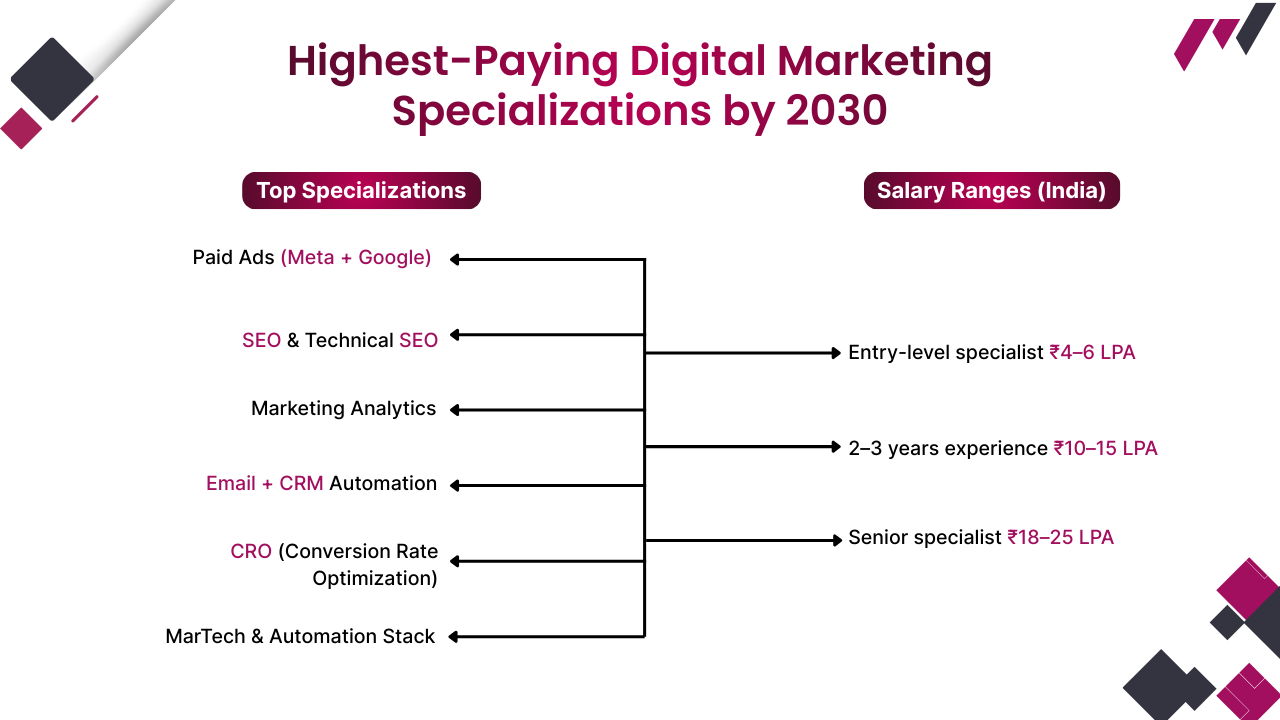
Generalists will always have space in digital marketing. But specialists will grow faster, earn more, and stand out sooner, especially for students and career jumpers who want quick traction.
The highest-growth specializations by 2030 include:
Someone who chooses a niche early and builds proof of work often sees salary jumps of 80-120% in just 3-4 years, while generalists grow slower.
HubSpot’s learning lead said it best:
“Becoming great at one thing will move your career farther than being average at ten things.”
This is one of the strongest levers available to anyone building a digital marketing career.
AI has already changed the way digital marketers work, but the fear of “AI replacing jobs” is exaggerated. What’s actually happening is this: AI is replacing repetitive tasks, not skilled people.
Between 2024-2030, AI will support your work in:
IBM published a study stating: “AI will not eliminate jobs, but it will eliminate tasks.”
This means AI will make you more productive, not irrelevant.
If you know how to use the tools, you will outperform people who don’t.
For students and new professionals, AI literacy is one of the biggest advantages you can build in the next five years.
Most companies are tired of seeing applicants who list ten courses but can’t show a single real example of their work. Courses give you theory. Projects prove you can execute.
If you want a stronger digital marketing career, focus on building:
A fresher with projects often gets hired ten times faster than one who only shows certificates.
This simple formula always wins:
Learn → Practice → Build Proof → Present
Your portfolio becomes your strongest weapon.
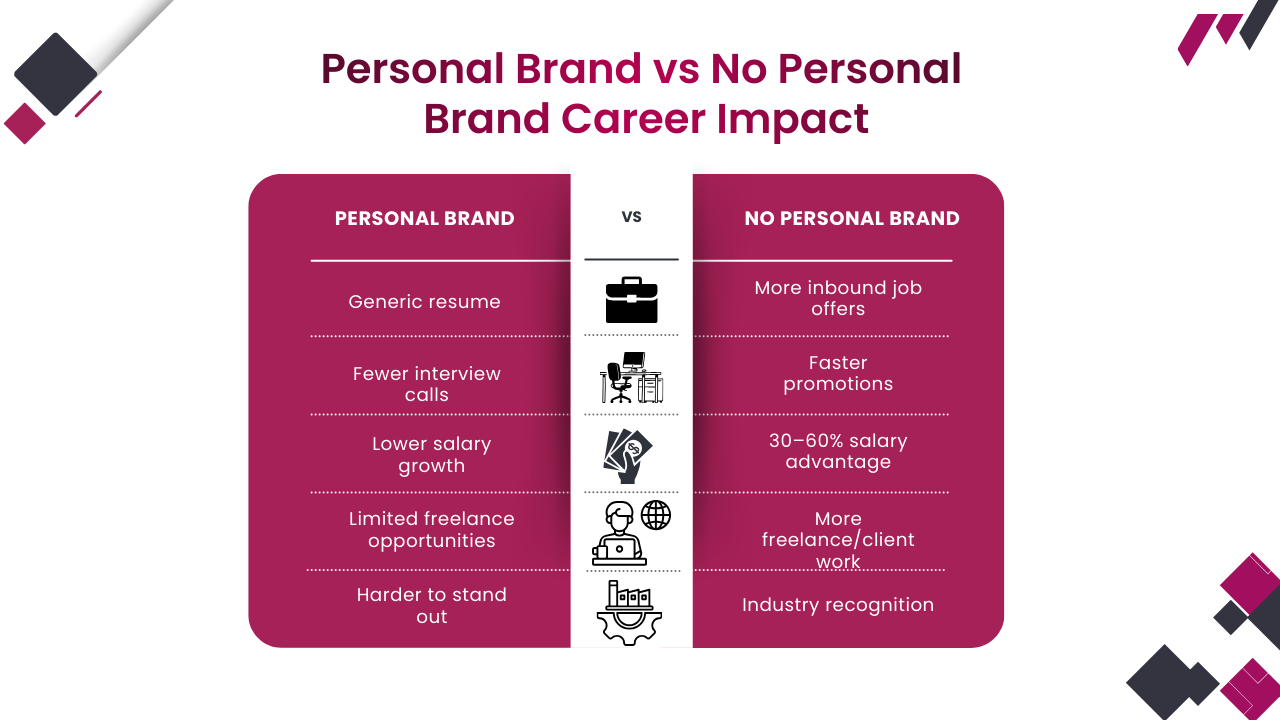
By 2030, your personal online presence will matter as much as your resume. The job market is shifting toward visibility. Recruiters look you up online. Companies want marketers who can think, communicate, and build an audience.
You don’t need to be an influencer. You just need to be consistent and valuable.
A strong personal brand helps you:
Jeff Bezos said it clearly:
“Your brand is what people say about you when you’re not in the room.”
Start with small posts, insights, or breakdowns of what you’re learning. Over time, your body of work becomes a career asset.
Digital marketing is not just creative anymore. It’s heavily driven by numbers.
Whether you specialise in SEO, ads, content, email or strategy, analytics is at the center of everything. And marketers who understand numbers grow faster.
Key metrics you must learn to interpret:
Candidates who can measure performance and explain the “why” behind outcomes often see 30–60% faster salary growth.
Data-literate marketers don’t just execute, they guide decisions.
That’s the biggest reason they rise to leadership roles sooner.
One of the biggest changes coming by 2030 is how career growth happens. You don’t need to follow a traditional path. By 2030, digital marketing will offer multiple flexible routes.
You can build your digital marketing career through:
There is no single way. You can shift, pivot, combine, experiment, and build a custom journey. This flexibility is what makes digital marketing one of the most exciting careers for young professionals today.
Reports from IMARC Group confirm long-term market expansion through 2024–2033, with the market hitting $1.18 trillion by 2033 (IMARC Group)
This ensures long-term stability and career growth across all role types.
The next few years will redefine what it means to grow a digital marketing career. The roles, skills, and expectations are shifting, but the opportunity is bigger than ever for students, freshers, and career changers. If you focus on real projects, pick a specialization, learn to use AI, and build a visible personal brand, you’ll stay ahead of the curve.
What this really means is simple: the marketers who stay curious, adaptable, and consistent will enter 2030 with stronger skills, higher salaries, and far more control over their career path.