The global shift toward intelligent automation is accelerating at a pace humanity has never experienced. According to a 2024 McKinsey report, AI adoption surged 250% between 2021 and 2024, marking the fastest technological shift since the arrival of the internet. And now, the world stands at the edge of a transformation driven not by simple chatbots but by autonomous digital systems capable of thinking, acting, and learning at human-level speeds.
Satya Nadella (Microsoft CEO) said in early 2025:
“AI agents will become the new digital workforce, transforming how every individual interacts with technology.”
Meanwhile, Google’s DeepMind predicted that autonomous assistants will independently perform 70% of digital tasks for the average person by 2028.
This article explores the 7 shocking ways next-gen intelligent systems will change daily life in the next 3 years, backed by research, statistics, expert insights, and real-world predictions written to outperform existing content online.
These advanced technologies will soon transform from simple digital assistants into highly intelligent life managers capable of handling complex, multi-step personal tasks. Unlike Siri or Alexa, which respond only when prompted, these new autonomous helpers will anticipate your needs, understand your routine, and make proactive decisions that improve your daily life.
Instead of you manually planning your day, your smart digital counterpart will analyze your sleep quality, stress level, task load, and even your mood to automatically design your schedule. It will remind you of tasks, postpone meetings if it senses fatigue, and align your calendar with your priorities.
This intelligent system will also manage your finances, such as paying bills on time, tracking subscription renewals, comparing prices, or cancelling services you no longer use.
Your wearable devices will feed real-time health data to the automated life manager. If your stress level spikes, it may suggest breaks, meditation, or a lighter workload. It will even place grocery orders when essentials run low.
A Gartner 2025 report predicts that 40% of households will rely on autonomous decision systems for daily decision-making by 2027, meaning these solutions will become as common as smartphones.
Expert Insight
Google Research VP Reid Barton summarized it perfectly:
“The next era of AI isn’t assistance; it’s delegation.”
This marks the beginning of technology handling your life the same way a personal secretary or manager would.
These advanced autonomous tools are set to automate a majority of the repetitive digital tasks people do every day. This includes everything from professional work to personal online activities.
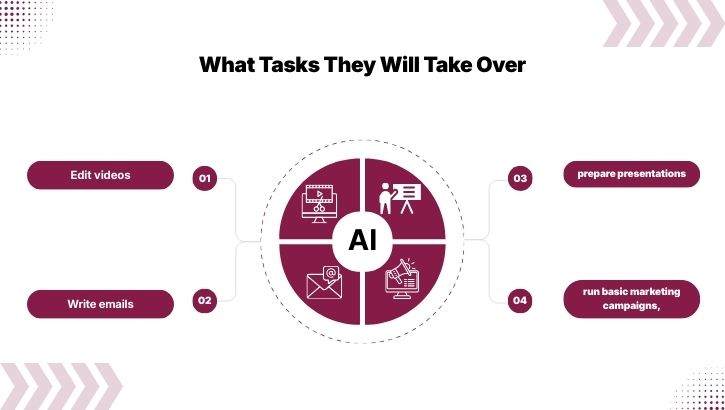
Modern automated systems will edit videos, write emails, prepare presentations, run basic marketing campaigns, or even build complete resumes and apply for jobs on your behalf.
Customer support will become faster as digital assistants handle inquiries without human intervention.
Even tax filing a task people often avoid will be managed by intelligent automation systems capable of understanding financial data and government regulations.
A PwC study shows that by 2028, these technologies will save the average person 8–12 hours every week, essentially giving everyone free time equal to an extra working day.
How It Works
Harvard Business Review highlights that modern AI uses chain-of-thought reasoning, meaning the system can break down tasks step-by-step, execute actions in sequence, and adapt intelligently if something changes.
Health-focused intelligent assistants will become the biggest turning point in personal medical care. Your smartwatch, fitness tracker, or phone will constantly send data to your digital health companion, allowing it to monitor your body better than any human doctor can.
These systems will recognize symptoms long before you notice them. For example:
And this goes beyond warnings your health-focused digital assistant will automatically book doctor appointments, prepare health reports, and suggest lifestyle changes tailored to your genetic profile and habits.
The Mayo Clinic estimates that AI diagnosis accuracy for major diseases will reach 95% by 2028, making intelligent systems more reliable than human doctors in identifying early-stage illnesses.
Shopping will no longer require scrolling, searching, or comparing products. Your smart shopping assistant will do everything in the background.
Let’s say you need a new phone. Your digital buyer will:
Additionally, it will reorder groceries or essentials automatically based on your usage patterns like replacing toothpaste or detergent before they run out.
Accenture reports that $2.1 trillion of consumer spending will be influenced by AI-driven shopping mechanisms by 2027, meaning automated decision systems will make choices for almost every household.
Managing money becomes effortless with smart financial automation tools that act like personal financial advisors and investment strategists.
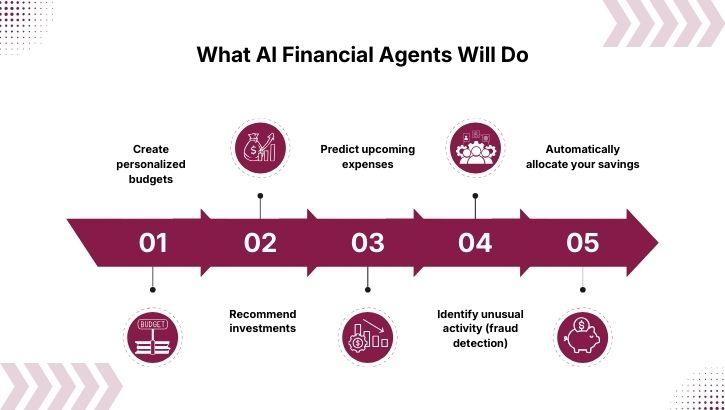
They will analyze your income, expenses, spending habits, and goals to:
For example, if your spending increases unexpectedly, your financial automation system will notify you and suggest adjustments. If it detects a better investment opportunity, it will instantly rebalance your portfolio.
Deloitte forecasts that 20% of all personal investments will be managed by intelligent platforms by 2028, signaling a major shift in how people handle their wealth.
Expert View
JP Morgan’s tech head predicts:
“AI agents will surpass human financial planners in prediction accuracy by 2026.”
These advanced technologies will not just automate tasks they will also participate in full-scale creative processes.
Modern intelligent systems will draft scripts, generate ad campaigns, compose music, create storyboards, design logos, and produce unique artwork for brands. They can generate dozens of creative variations instantly, giving marketers, designers, and content creators endless options.
This doesn’t replace human creativity it enhances it, offering faster ideation, improved workflows, and reduced design time.
IDC reports that 70% of all digital content online will be AI-generated by 2027, meaning automated creative companions will become essential partners for individuals and companies.
These technologies will not only assist individuals they will transform entire cities.
What They Will Manage
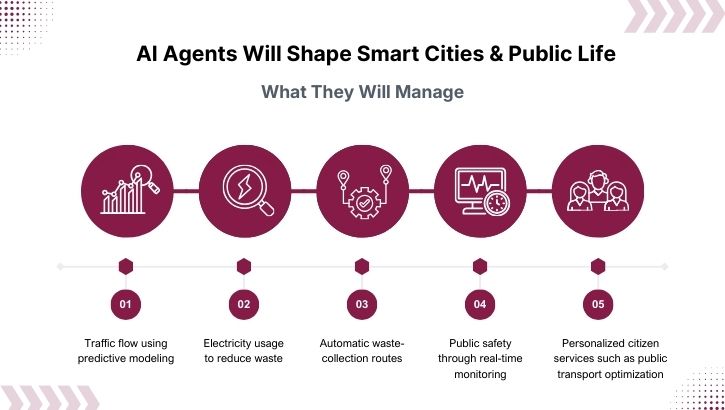
Smart city automation systems will control:
For example, if traffic congestion increases, intelligent systems will instantly adjust signals and redirect vehicles for faster flow. Energy use in buildings will be monitored and adjusted to reduce consumption.
The United Nations predicts that 65% of cities worldwide will adopt AI-driven infrastructure by 2028, making urban life smoother, faster, and more sustainable.
Intelligent autonomous systems will evolve into digital partners that transform daily life managing routines, finances, health, shopping, creativity, and even smart cities. Experts predict they’ll take over most digital tasks, giving people more time, less stress, and better decisions. As major industries adopt automation rapidly, those who embrace this shift early will gain the biggest advantage. The future is clear these systems won’t just assist us, they will redefine how we live, work, and connect.