7 Social media trends are about to experience their biggest transformation since the rise of short-form video. In 2026, everything we know about algorithms, influencers, and engagement is about to change because the power is shifting from platforms to people.
For more than a decade, brands have played by the rules of algorithms, chasing trends, timing posts, and optimizing for reach. But as audiences grow weary of recycled content and platforms evolve under the pressure of AI and user control, a new era of social media is beginning.
This shift will redefine how businesses grow, how creators build influence, and how consumers interact with brands. Whether you’re a marketer, entrepreneur, or student learning digital marketing at WHY TAP, understanding these trends early will help you stay ahead of the curve.
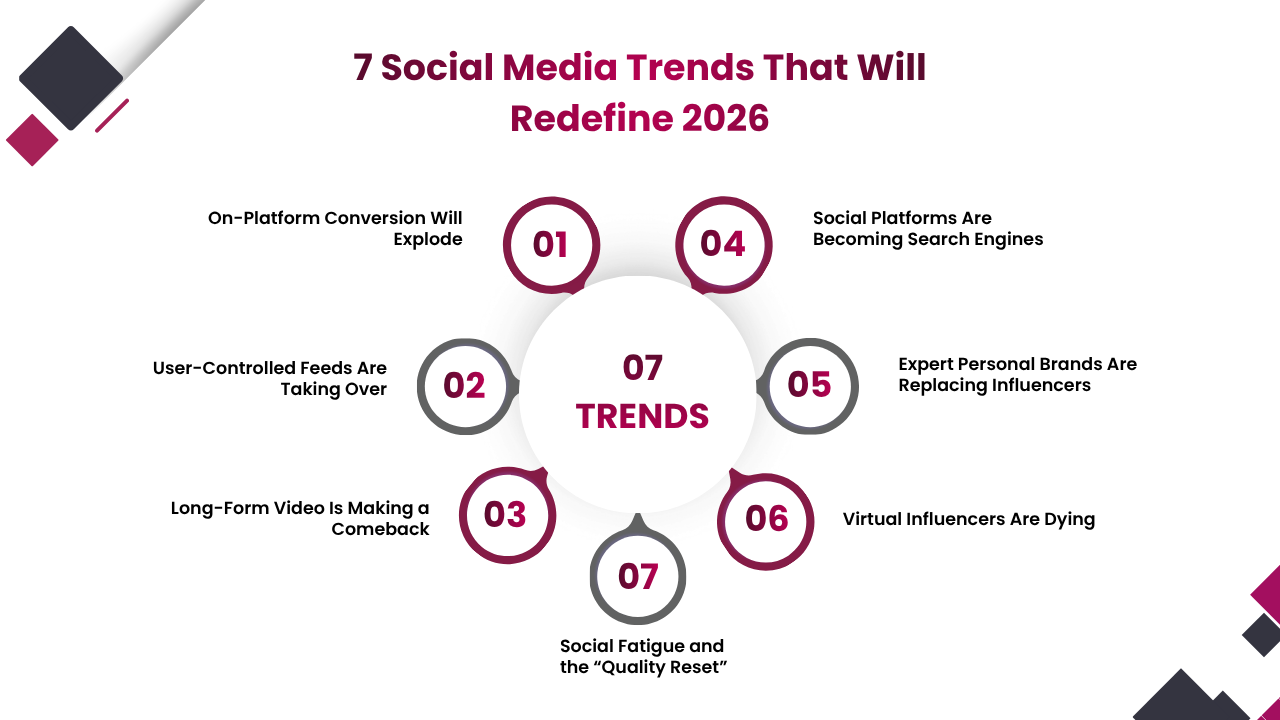
Let’s break down the seven biggest social media trends that will redefine 2026 and how you can adapt before your competitors do.
For years, marketers have used social media as a traffic source; the goal was to send users to a website, landing page, or store. That model doesn’t exist anymore.
Platforms like Instagram, TikTok, and YouTube are rapidly evolving into commerce ecosystems. Instead of driving users away, they’re now enabling users to discover, evaluate, and purchase all without leaving the app.
Why It Matters:
Example: A Chennai-based clothing brand running an Instagram Reel campaign with shoppable tags can now convert viewers directly from the Reel, without needing them to open a browser.
Action Step for Brands: Start building social storefronts. Integrate your e-commerce catalog with Instagram and TikTok. Enable direct checkout and one-tap payment experiences.
Pro Tip for Students: Learn how to design and run shoppable ad campaigns. Understanding in-platform conversions will be one of the most in-demand skills for digital marketers in 2026.
For over a decade, algorithms have dictated what we see. But platforms are now giving that power back to users.
The next evolution of social media will center on user choice, where individuals control what appears in their feed through “Following,” “Favorites,” and “Topic” filters.
Why It Matters:
What It Means for Marketers:
Example: A WHY TAP Digital Marketing student sharing project insights on LinkedIn can attract consistent visibility from peers who add them to “Favorite Creators” lists, making relevance the new reach.
Action Step: Create content that people choose to follow that is educational, story-driven, and emotionally authentic.
After years of dominance by short-form content, long-form video is returning stronger than ever. Audiences are showing clear fatigue toward fast, superficial clips and craving deeper, more meaningful storytelling.
Why It’s Happening:
Example: A 10-minute YouTube video on “How to Build a Portfolio as a Full Stack Developer” outperforms multiple Reels when it offers real education and value.
Why This Matters for Marketers:
Action Step: Combine both formats. Use short-form video to attract new users and long-form content to convert and educate them.
Google is no longer the first stop for product discovery social media search is.
In 2026, users will rely on TikTok, Instagram, YouTube, and LinkedIn as their primary search engines for answers, reviews, and how-to content.
Why It Matters:
Example: If someone types “best digital marketing course in Chennai” on Instagram, a WHY TAP carousel or student testimonial reel optimized with that phrase could appear as the top search result.
Action Step: Treat every post like SEO content. Use searchable titles, keywords in captions, and alt text for videos. You’re not just posting for followers; you're posting for discoverability.
The influencer era is shifting. Audiences no longer trust scripted sponsorships or lifestyle aesthetics. They want expertise, authenticity, and insight.
The rise of expert personal brand creators who share knowledge and experience, not just endorsements, is redefining social influence.
Why It Matters:
Example: A digital marketer sharing breakdowns of real campaigns gains more authority and followers than a celebrity promoting random products.
What This Means for Students and Professionals:
Action Step: If you’re a WHY TAP student, start posting about your projects, challenges, and learnings and become a micro-expert in your niche.
AI-generated avatars and digital humans once promised to revolutionize influencer marketing, but audiences have grown tired of them.
The novelty of virtual influencers is fading because people are craving real connection and emotion, not perfection.
Why It Matters:
Example: Brands that replaced CGI models with real customer stories saw up to a 50% increase in engagement.
Action Step: Choose authentic creators who represent your brand values. Focus on long-term partnerships with real people who inspire trust.
Audiences are overwhelmed. Between short-form overload, repetitive trends, and algorithmic noise, users are disengaging from social platforms.
The next phase of social media will be a “quality reset,” a shift from volume-driven posting to meaningful, story-led content.
Why It Matters:
What It Means for Marketers: Instead of flooding feeds, invest in fewer but more powerful pieces of content that move people emotionally.
Example: A well-scripted founder story video on LinkedIn can outperform ten product posts. WHY TAP’s “Student Journey” campaign videos are a perfect example of combining storytelling with impact.
Action Step: Focus on substance. Create content that informs, inspires, or transforms, not just fills space.
Social media is evolving again. The platforms are becoming ecosystems, not just distribution channels. Users are demanding control, depth, and authenticity.
In 2026, brands that understand people, not just platforms, will win. Marketers who adapt early will own the conversation while others play catch-up.
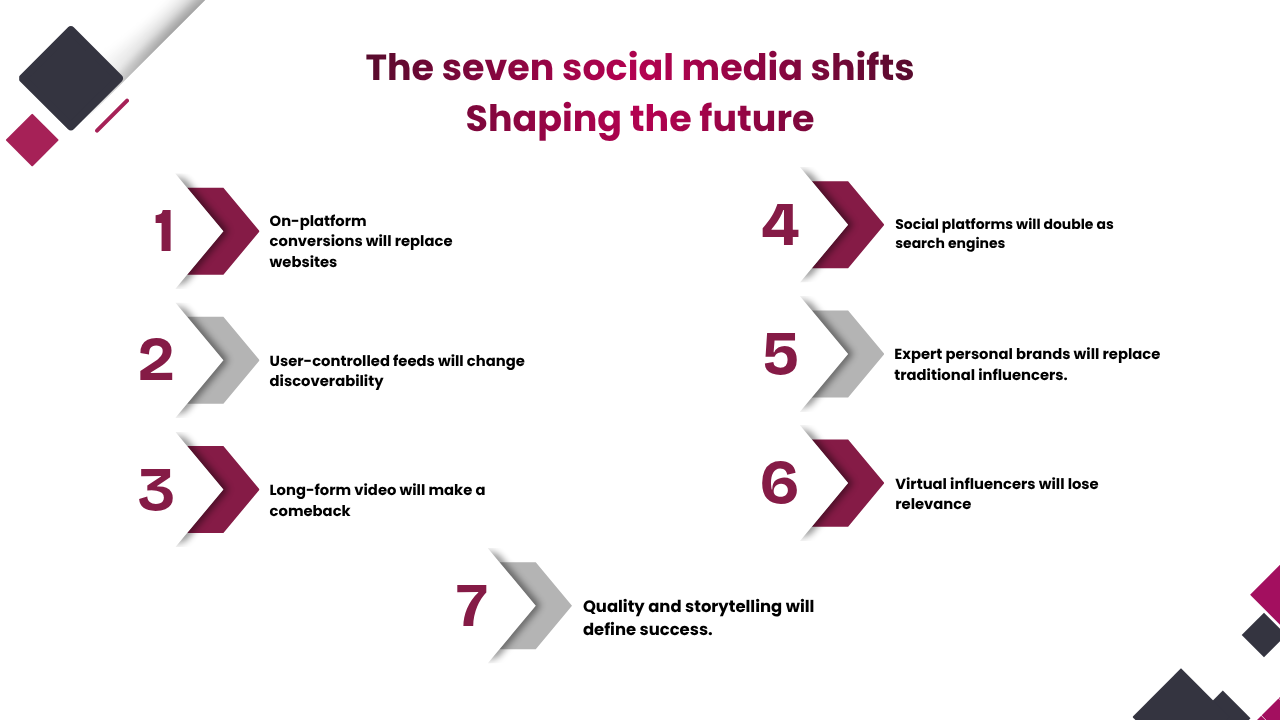
Let’s recap the seven social media shifts shaping the future:
At WHY TAP, we don’t just teach trends; we train tomorrow’s digital leaders. Our AI-Powered Digital Marketing Program helps you master modern marketing tools, real-world campaigns, and the science of social media growth.
Join the next generation of social media professionals shaping India’s digital future.
📞 Call +91-8270099991 or visit WHY TAP to enroll.