





Table of Contents
- 1.
- 2.
- 3.
- 3.1
- 4.
- 5.
- 5.1
- 6.
- 6.1
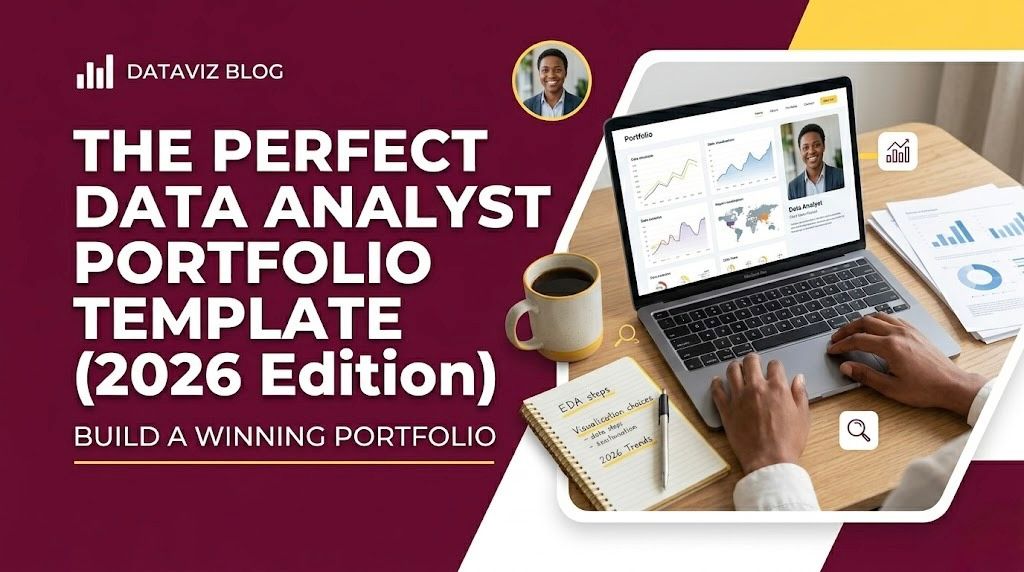
In today’s competitive hiring market, having certifications and technical skills alone is not enough. Recruiters want proof of what you can actually do with data, and that proof comes from a strong portfolio. A well-structured Data Analyst Portfolio Template helps you showcase real projects, business understanding, and problem-solving ability in a way that resumes cannot.
Many students build portfolios that only display dashboards or random datasets without context. While these may look visually appealing, they often fail to demonstrate business impact or analytical thinking. In 2026, hiring managers are looking for candidates who can present end-to-end projects from problem definition to insights and recommendations. A portfolio that clearly shows this journey significantly increases your chances of getting shortlisted.
Understanding how to structure a job-ready analytics portfolio is essential for landing interviews and placement opportunities. In the sections below, we break down what recruiters expect, the perfect portfolio template to follow, and how you can build projects that stand out in a competitive data analytics job market.
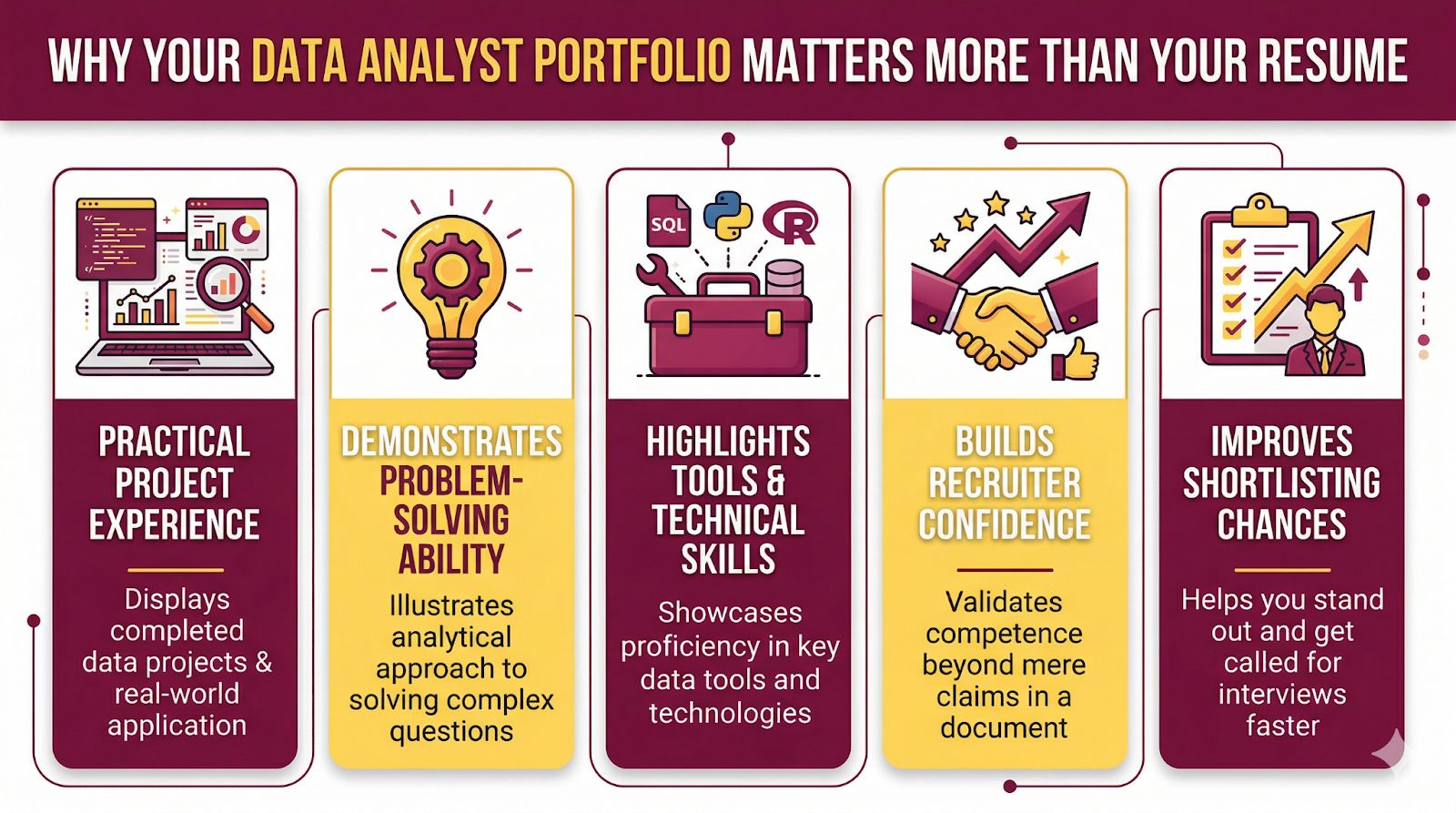
Why Your Data Analyst Portfolio Matters More Than Your Resume
A resume tells recruiters what you claim to know, but a portfolio shows what you can actually do. In today’s hiring environment, recruiters spend only a few seconds scanning resumes before deciding whether to shortlist a candidate. A strong portfolio helps you stand out by providing proof of your technical skills, analytical thinking, and business understanding.
Hiring managers prefer candidates who can demonstrate real project experience rather than just listing tools and certifications. A well-built portfolio shows how you approach business problems, clean data, generate insights, and present recommendations. This practical evidence builds credibility and increases your chances of interview calls.
According to insights on portfolio importance, recruiters are more likely to shortlist candidates who showcase structured analytics projects and measurable outcomes. A portfolio acts as a visual proof of your skills and helps employers understand your real capabilities.
Key reasons your portfolio matters more than your resume:
- Shows practical project experience
- Demonstrates problem-solving ability
- Highlights tools and technical skills
- Builds recruiter confidence
- Improves interview shortlisting chances
In 2026, a strong portfolio is not optional; it is essential for securing data analyst roles.
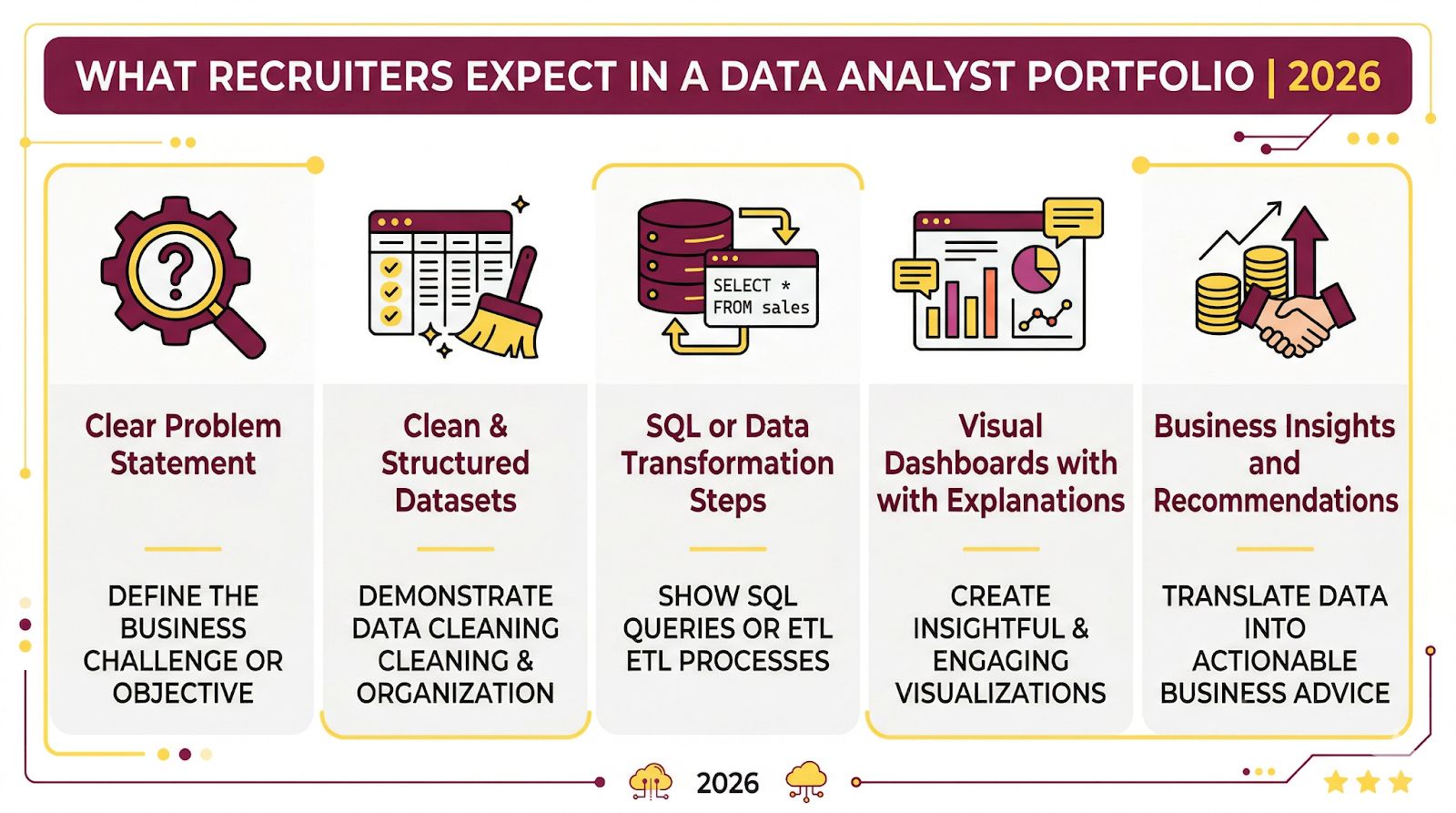
What Recruiters Expect in a Data Analyst Portfolio in 2026
Recruiters in 2026 are no longer impressed by dashboards alone. They look for structured projects that demonstrate business thinking, technical depth, and measurable impact. A strong portfolio should clearly show the problem you solved, the tools you used, and the insights you generated. Simply uploading visualizations without explanation is not enough.
Modern hiring trends, highlighted in these portfolio examples, show that recruiters prefer portfolios that tell a complete story. They want to see how you approached a dataset, what decisions you made, and how your analysis could influence business outcomes.
Recruiters typically expect:
- A clear problem statement
- Clean and structured datasets
- SQL or data transformation steps
- Visual dashboards with explanations
- Business insights and recommendations
Weak Portfolio vs Strong Portfolio
| Weak Portfolio | Strong Portfolio |
|---|---|
| Only dashboards shown | Clear problem → analysis → insight flow |
| No business explanation | Business-focused storytelling |
| Tool list without depth | Demonstrated technical application |
| Random datasets | Realistic business scenarios |
| No measurable impact | Clear insights and actionable recommendations |
A recruiter should understand your thinking within minutes of reviewing your portfolio. That clarity is what increases your chances of getting shortlisted.
The Perfect Data Analyst Portfolio Template (Section-by-Section)
A strong portfolio is not about uploading multiple random projects - it is about presenting structured, business-focused work. The perfect Data Analyst Portfolio Template should guide recruiters through your thinking process, technical execution, and final insights. Each project must clearly show how you solved a real problem using data.
Your portfolio should focus on quality over quantity. Even 3–4 well-structured projects can create a stronger impression than 10 unorganized dashboards. Recruiters want clarity, storytelling, and measurable outcomes. When your projects follow a consistent structure, it becomes easier for hiring managers to evaluate your skills quickly.
Essential sections to include in your portfolio:
- Project title and business problem
- Dataset source and objective
- Tools and technologies used
- Data cleaning and transformation steps
- Visualizations and dashboards
- Insights and business recommendations
- Final outcome or impact
Must-Have Sections Inside Every Project
Examples from project inspiration show that top portfolios clearly document the entire workflow from raw data to final business insights.
Portfolio Section → What to Show → Recruiter Value
| Portfolio Section | What to Show | Recruiter Value |
|---|---|---|
| Problem statement | Business context and objective | Analytical thinking |
| Data cleaning | Transformation and preparation steps | Technical ability |
| Insights | Key findings | Business understanding |
| Recommendations | Actionable suggestions | Decision-making ability |
| Tools used | SQL, Power BI, Python | Technical stack clarity |
A structured template helps recruiters quickly understand your capabilities and increases your chances of selection.
Best Portfolio Projects That Get You Interview Calls
Not all portfolio projects attract recruiter attention. Projects that focus only on basic charts or simple datasets often fail to demonstrate real analytical ability. To get interview calls, your portfolio must include projects that reflect real business scenarios and decision-making insights. Recruiters seek employment that shows how you use data to solve meaningful problems.
Strong portfolio projects usually involve data cleaning, analysis, visualization, and business recommendations. They should demonstrate your ability to work with tools like SQL, Excel, Power BI, or Python while also highlighting your analytical thinking. Projects that simulate real company use cases create a stronger impression during shortlisting.
Portfolio project ideas that attract recruiters:
- Sales performance and revenue analysis
- Customer segmentation and behavior analysis
- Marketing campaign performance dashboard
- Financial trend and profit analysis
- Operations or inventory analysis project
Preparing for technical discussions using this interview prep guide helps you confidently explain your portfolio projects during interviews.
Well-structured projects that show both technical execution and business insights significantly increase your chances of receiving interview calls and progressing in the hiring process.
How to Present Your Portfolio for Maximum Impact
Building a strong portfolio is only half the work - presenting it correctly is what gets recruiter attention. Even well-structured projects can be ignored if they are not displayed professionally. Recruiters should be able to understand your skills, tools, and project outcomes within a few minutes of viewing your portfolio.
Your portfolio should be accessible, organized, and easy to navigate. Use platforms like GitHub, personal websites, or portfolio dashboards to showcase your work clearly. Each project must include a brief explanation, visuals, and key insights so recruiters can quickly evaluate your capabilities.
Best ways to present your portfolio:
- Host projects on GitHub or portfolio website
- Add clear project descriptions and outcomes
- Include screenshots and dashboard links
- Keep navigation simple and structured
- Link portfolio in resume and LinkedIn
- Highlight 3–4 best projects only
Seeing real placement results shows how structured portfolios and strong project presentation improve interview opportunities.
A well-presented portfolio increases credibility, improves shortlisting chances, and helps recruiters quickly understand your real analytical capabilities.
Common Portfolio Mistakes That Kill Shortlisting
Many students create portfolios but still struggle to get interview calls. The main reason is not lack of effort, but avoidable mistakes that reduce recruiter interest. A poorly structured or unclear portfolio can make even good projects look weak. Understanding these common errors helps you build a portfolio that actually improves your chances of selection.
One major mistake is uploading dashboards without explaining the business problem or insights. Recruiters want to see your thinking process, not just visuals. Another common issue is including too many small or incomplete projects, which makes the portfolio look unorganized and unfocused. Quality and clarity matter far more than quantity.
Common portfolio mistakes to avoid:
- Only showing dashboards without insights
- Using random datasets with no business context
- Writing long, unclear project explanations
- Not mentioning tools and steps used
- Including too many basic projects
- Poor project organization and navigation
A strong portfolio should clearly demonstrate how you approach a problem, analyze data, and deliver insights. Avoiding these mistakes can significantly improve recruiter confidence and increase your chances of getting shortlisted for data analyst roles.
Final Thoughts
In 2026, a data analyst portfolio is no longer optional - it is your strongest proof of skill. While resumes list tools and certifications, portfolios demonstrate how you actually apply those tools to solve real business problems. Recruiters want evidence of analytical thinking, structured workflows, and meaningful insights, not just theoretical knowledge.
A well-built portfolio shows your ability to define a problem, clean and analyze data, create visualizations, and deliver actionable recommendations. It reflects your technical skills, business understanding, and communication clarity - all of which influence shortlisting decisions. Even with strong academic credentials, candidates without structured portfolios often struggle to stand out.
Focusing on quality projects, clear storytelling, and professional presentation can significantly improve your interview opportunities. A portfolio is not just a collection of dashboards - it is your professional identity as a data analyst. Build it strategically, and it can become the most powerful asset in your job search journey.
Build a Job-Ready Portfolio That Gets You Interview Calls
A strong portfolio can be the difference between getting ignored and getting shortlisted. In 2026, recruiters want proof of skills - structured projects, clear insights, and real business thinking. If you want consistent interview calls, your portfolio must reflect industry expectations, not just classroom assignments.
Instead of guessing what to include, focus on building end-to-end analytics projects that showcase SQL, visualization tools, automation, and business recommendations. With the right structure and mentorship, you can build a portfolio that stands out in competitive hiring environments.
If you're serious about creating a recruiter-ready portfolio and becoming placement-ready in data analytics, explore the Certification in AI Powered Data Analytics and start building projects that align with real industry hiring standards.