Logo

Digital Marketing for Beginners: The Ultimate Step-by-Step Guide (2025 Edition)

Digital Marketing: The Ultimate Guide for Beginners
Digital Marketing
Digital Marketing

Digital Marketing for Beginners: The Ultimate Step-by-Step Guide (2025 Edition)

Praveen N
03/11/2025
Egmore, Chennai
10 Min Read
1548

Table of Contents

  • 1.
  • 2.
  • 2.1
  • 2.2
  • 2.3
  • 3.
  • 3.1
  • 3.2
  • 4.
  • 5.
  • 6.
  • 6.1
  • 6.2
  • 6.3
  • 6.4
  • 6.5
  • 6.6
  • 6.7
  • 6.8
  • 6.9
  • 7.
  • 7.1
  • 7.2
  • 7.3
  • 8.
  • 8.1
  • 8.2
  • 9.
  • 9.1
  • 9.2
  • 9.3
  • 9.4
  • 9.5
  • 9.6
  • 9.7
  • 9.8
  • 9.9
  • 9.10
  • 9.11
  • 9.12
  • 9.13
  • 9.14
  • 9.15
  • 10.
  • 10.1
  • 10.2
  • 10.3
  • 10.4
  • 10.5
  • 10.6
  • 10.7
  • 10.8
  • 11.
  • 11.1

In today’s fast-paced, tech-driven world, digital marketing has become the backbone of every successful business. It helps brands connect with their audience, expand globally, and measure results with precision. This guide will walk you through the essentials, from strategy to execution, to help you thrive in the digital space.

What is Digital Marketing?

Digital marketing, also known as online marketing, involves promoting brands and engaging with potential customers through the internet and various digital communication channels. This encompasses:

  • Search engines (Google, Bing, Yahoo)
  • Social media platforms (Facebook, Instagram, LinkedIn, Twitter, TikTok)
  • Email campaigns and newsletters
  • Web-based advertising and display networks
  • Video platforms (YouTube, Vimeo)
  • Text messages and mobile apps
  • Multimedia content and interactive experiences

Unlike traditional marketing (TV, radio, print, billboards), digital marketing allows you to reach audiences in real-time, target specific demographics, and measure results instantly.

Benefits of Digital Marketing

Global Reach and Cost-Effectiveness

Digital marketing allows businesses to connect with audiences worldwide at a fraction of the cost of traditional methods. Whether you're a solopreneur or a large enterprise, digital marketing scales to fit your budget:

  • Small businesses can start with minimal investment (organic social media, content marketing)
  • Mid-sized companies can leverage paid ads for targeted growth
  • Enterprise-level businesses can run sophisticated, multi-channel campaigns

This democratization of marketing means that any business can compete globally, regardless of size.

Enhanced Targeting and Personalization

Traditional marketing relies on broad, mass-audience approaches. Digital marketing enables precise targeting based on:

  • Demographics: Age, gender, location, income level
  • Behavior: Browsing history, purchase patterns, engagement
  • Interests: Hobbies, preferences, content consumption
  • Psychographics: Values, lifestyles, beliefs

Advanced tools allow you to create buyer personas and deliver personalized messages that resonate deeply with each segment. This increases engagement, builds loyalty, and drives higher conversion rates.

Measurable Results Through Analytics

One of digital marketing's greatest advantages is real-time measurement and tracking. Using analytics platforms, you can monitor:

  • Website traffic and user behavior
  • Click-through rates (CTR) and conversion rates
  • Return on investment (ROI) for each campaign
  • Customer acquisition cost (CAC)
  • Lifetime customer value (LTV)

This data-driven approach ensures better decision-making and allows you to optimize strategies continuously.

How Digital Marketing Works

Digital marketing leverages online platforms to promote products, engage customers, and drive measurable growth. The process involves several interconnected elements:

Key Elements of Digital Marketing

1. Marketing Automation


Streamline repetitive tasks like social media scheduling, email sequences, and lead nurturing. Tools like HubSpot, Mailchimp, and Active Campaign automate workflows, saving time and improving consistency.

2. Inbound Marketing


Rather than interrupting audiences with ads, inbound marketing attracts potential customers through valuable, relevant content. This builds trust and positions your brand as a thought leader.

3. Conversion Rate Optimization (CRO)


The practice of improving your website or landing page to increase the percentage of visitors who take desired actions (signup, purchase, download). This involves A/B testing, user experience improvements, and strategic CTAs.

4. Brand Management


Building, protecting, and sustaining your brand's reputation and value across all digital channels. This includes consistent messaging, visual identity, and customer service excellence.

5. Search Engine Visibility


Ensuring your content ranks high in search engine results through both organic (SEO) and paid (PPC) methods. Higher visibility drives qualified traffic to your website.

Steps to Digital Marketing Success

Follow this proven roadmap to succeed in digital marketing:

  1. Set Clear, Measurable Goals - Define what success looks like (revenue, leads, brand awareness, traffic)
  2. Define Your Audience - Create detailed buyer personas based on research and data
  3. Analyze Your Competitors - Understand what strategies work in your industry
  4. Choose Strategic Channels - Select platforms where your audience spends time
  5. Create Compelling Content – Develop valuable content tailored to each stage of the buyer's journey
  6. Implement SEO - Optimize for search engines to drive organic traffic
  7. Monitor and Measure - Track KPIs and adjust strategies based on data
  8. Iterate and Improve - Continuously test, learn, and refine your approach

In today's online-driven world, following these steps ensures your brand maintains visibility, relevance, and competitive advantage.

The Buyer's Journey

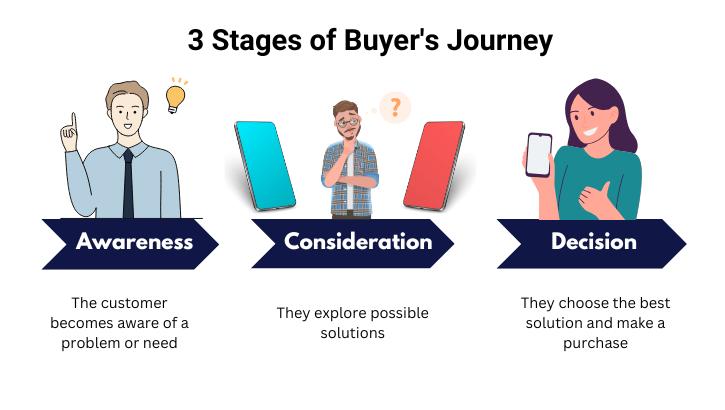
Understanding the customer's decision-making process is crucial for crafting effective marketing strategies. The buyer's journey consists of three key stages:

3 Stages of Buyer's Journey

Stage 1: Awareness

What happens: The customer recognizes a problem, need, or opportunity.

Customer mindset: Searching for information, exploring solutions, learning about the market.

Your role: Provide educational content that addresses their pain points without being salesy. Use blog posts, infographics, webinars, and videos to establish authority.

Best channels: SEO, social media, content marketing, paid search.

Stage 2: Consideration

What happens: The customer evaluates multiple solutions and compares options.

Customer mindset: Actively researching competitors, reading reviews, comparing features and pricing.

Your role: Showcase your unique value proposition. Provide detailed product/service comparisons, case studies, customer testimonials, and free trials or demos.

Best channels: Email marketing, retargeting ads, webinars, product comparison guides, landing pages.

Stage 3: Decision

What happens: The customer chooses the best solution and makes a purchase.

Customer mindset: Ready to commit, seeking reassurance, comparing final details.

Your role: Remove friction from the buying process. Offer limited-time promotions, guarantee programs, clear pricing, easy checkout, and excellent customer support.

Best channels: Email, direct sales, retargeting ads, testimonials, special offers.

Pro Tip: Different customers move through these stages at different speeds. Use marketing automation to nurture leads intelligently and guide them toward conversion.

Traditional Marketing vs. Digital Marketing

AspectTraditional MarketingDigital Marketing
DefinitionUses offline channels like TV, radio, print, and billboards to reach audiences.Utilizes online platforms like websites, social media, and email for promotions.
ReachLimited to specific geographic areas.Global reach with targeted audience options.
CostOften expensive due to high production and distribution costs.More cost-effective with options for small and large budgets.
TargetingBroad and less specific; it relies on mass communication.Highly targeted based on demographics, behavior, and preferences.
EngagementMostly one-way communication with limited audience interaction.Two-way interaction allows real-time feedback and engagement.
MeasurabilityDifficult to measure ROI; depends on surveys and indirect tracking.Easily measurable with analytics tools showing precise performance metrics.
Speed of ResultsSlower; campaigns take time to execute and yield results.Faster; campaigns can go live instantly and generate quick results.
FlexibilityLess flexible; changes require more time and resources.Highly flexible; campaigns can be adjusted in real time.
Content FormatStatic content like flyers, posters, and commercials.Dynamic content like videos, blogs, and interactive media.
Customer InteractionMinimal; relies on indirect communication channels.High; enables direct interaction through comments, chats, and social media.
ExamplesNewspaper ads, TV commercials, radio jingles, and billboards.SEO, PPC ads, social media posts, email campaigns, and influencer collaborations.

Key Takeaway: While traditional marketing still has a role, digital marketing offers superior targeting, measurability, flexibility, and cost-effectiveness, making it essential for modern businesses.

Core Digital Marketing Strategies

Digital marketing encompasses multiple powerful strategies. Here's a detailed breakdown of each:

1. Search Engine Optimization (SEO)

Definition:

The process of optimizing a website's content, structure, and authority to appear higher in organic search engine results.

Primary Goal:

Attract non-paid (organic) traffic from search engines like Google, Bing, and Yahoo.

Key Components:

  • Keyword Research: Identifying search terms your audience uses
  • On-Page SEO: Optimizing titles, meta descriptions, headings, content, and internal links
  • Off-Page SEO: Building backlinks, citations, and domain authority
  • Technical SEO: Improving site speed, mobile usability, structured data, and crawlability

Why It Matters:

  • Ranking higher increases visibility and attracts qualified leads
  • SEO builds long-term credibility and authority
  • Organic traffic has higher conversion rates than most paid channels
  • It provides sustainable, long-term results

Time to Results:

3-6 months for competitive keywords; 1-3 months for less competitive terms.

S: NODigital Marketing Strategy
1Search Engine Optimization(SEO)
2Search Engine Marketing(SEM)
3Social Media Marketing(SMM)
4Content Marketing
5Email Marketing
6Affiliate Marketing
7Influencer Marketing
8Video Marketing
9Analytics and Data Insights

2. Search Engine Marketing (SEM)

Definition:

Paid strategies, such as Pay-Per-Click (PPC) advertising, to promote your website on search engines.

How It Works:

  • You bid on relevant keywords
  • Your ad displays in search results when users search those keywords
  • You pay only when someone clicks your ad (hence, "Pay-Per-Click")

Advantages:

  • Immediate visibility for competitive keywords
  • Highly targeted (you control who sees your ads)
  • Easy to measure ROI and optimize in real-time
  • Scalable based on budget

Popular Platforms:

  • Google Ads (search, display, shopping)
  • Microsoft Bing Ads
  • Amazon Advertising

When to Use:

SEM works best for time-sensitive offers, competitive keywords, or when you need immediate traffic.

3. Social Media Marketing (SMM)

Definition:

Using platforms like Facebook, Instagram, LinkedIn, Twitter, and TikTok to reach, engage, and build relationships with your audience.

Core Activities:

  • Content Creation: Sharing text posts, images, videos, carousels, reels, and stories
  • Community Engagement: Responding to comments, messages, and building conversations
  • Audience Building: Growing followers and building a loyal community
  • Paid Social Ads: Running targeted ads to expand reach and drive conversions

Benefits:

  • Direct access to customer feedback and real-time insights
  • Build brand awareness and loyalty
  • Generate leads and drive sales (especially through shoppable posts)
  • Cost-effective audience targeting
  • Establish thought leadership and industry authority

Platform Selection Tips:

  • Facebook/Instagram: Broad demographics, excellent targeting, e-commerce friendly
  • LinkedIn: B2B, professional services, thought leadership
  • TikTok: Younger audiences, trend-driven, creative content
  • Twitter/X: News, real-time conversations, B2B insights
  • YouTube: Video content, tutorials, vlogs, product demonstrations.

4. Content Marketing

Definition:

Creating and distributing valuable, relevant, and consistent content to attract and retain a clearly defined audience.

Content Types:

  • Blog articles and long-form guides
  • Infographics and data visualizations
  • Videos and video tutorials
  • Podcasts and audio content
  • Whitepapers and case studies
  • E-books and downloadable resources
  • Webinars and online workshops
  • Email newsletters and autoresponders

How It Works:

  • Identify customer pain points and questions
  • Create content that answers those questions and provides solutions
  • Distribute through organic and paid channels
  • Build trust and position your brand as an expert
  • Drive traffic, leads, and eventually customers

Why It's Powerful:

  • Content marketing costs 62% less than traditional marketing but generates 3x more leads
  • Builds trust before the sales pitch
  • Improves SEO and organic visibility
  • Provides long-term value and ongoing traffic

5. Email Marketing

Definition:

Reaching and nurturing customers through targeted email campaigns.

Email Marketing Strategies:

  • Welcome Series: Introduce new subscribers to your brand
  • Newsletter: Regular updates, tips, and valuable content
  • Promotional Campaigns: Special offers, discounts, product launches
  • Drip Campaigns: Automated sequences that nurture leads over time
  • Re-engagement Campaigns: Win back inactive subscribers
  • Abandoned Cart Emails: Recover lost sales

Why It's Effective:

  • Email has the highest ROI of any digital marketing channel ($36 return for every $1 spent)
  • Highly personalized and targeted
  • Direct communication channel you own (unlike social media)
  • Easy to segment and test different messages
  • Measurable with detailed analytics

Best Practices:

  • Segment your list by demographics, behavior, and interests
  • Personalize subject lines and content
  • Test different send times and subject lines (A/B testing)
  • Keep emails mobile-friendly
  • Include clear calls-to-action (CTAs)
  • Monitor unsubscribe rates and engagement metrics

6. Affiliate Marketing

Definition:

A performance-based marketing model where affiliates earn commissions by promoting someone else's products or services.

How It Works:

  • Affiliates receive unique tracking links or promo codes
  • They promote these links to their audience (blog, social media, email list)
  • When someone clicks and makes a purchase through that link, the affiliate earns a commission (usually 5-30% of sale value)

Benefits:

  • For brands: Expand reach without upfront costs; only pay for results
  • For affiliates: Earn passive income by recommending products they believe in
  • Low risk for both parties
  • Access to new customer segments

Best Practices:

  • Partner with affiliates whose audience aligns with your products
  • Provide marketing materials and support
  • Track performance and commission accurately
  • Build long-term relationships with top affiliates

7. Influencer Marketing

Definition:

Collaborating with individuals who have a large, engaged online following to promote your products or services.

How It Works:

  • Identify influencers in your niche with an engaged audience
  • Partner with them to create authentic content featuring your brand
  • They share this content with their followers, building trust and awareness

Benefits:

  • Builds trust through third-party credibility
  • Reaches new, relevant audiences
  • Creates authentic, relatable content
  • Drives higher engagement and conversion rates
  • More cost-effective than traditional celebrity endorsements

Influencer Tiers:

  • Mega Influencers (1M+ followers): Broad reach but lower engagement
  • Macro Influencers (100K-1M): Good reach and engagement balance
  • Micro Influencers (10K-100K): Highly engaged, niche audiences
  • Nano Influencers (1K-10K): Extremely engaged, authentic communities

Pro Tip:

Micro and nano influencers often deliver better ROI for smaller budgets and niche markets.

8. Video Marketing

Definition:

Using video content to promote, educate, entertain, and sell products or services.

Why Video is Powerful:

  • Videos are 1200% more likely to be shared than text and images combined
  • 80% of consumers prefer learning about products through video
  • Video increases time on page and boosts SEO rankings
  • Videos drive higher conversion rates and engagement

Video Types:

  • Explainer Videos: How your product/service works
  • Product Demonstrations: Showing features and benefits
  • Customer Testimonials: Real customers sharing their success
  • Educational Tutorials: Teaching your audience valuable skills
  • Behind-the-Scenes: Building authentic connections with your brand
  • Live Videos: Real-time interactions and Q&A sessions
  • Short-Form Videos: Reels, TikToks, YouTube Shorts for social media

Where to Publish:

  • YouTube (longest-form, SEO-friendly)
  • TikTok and Instagram Reels (short-form, trend-driven)
  • Facebook and LinkedIn (varied formats, algorithm-boosted)
  • Your website (embedded for SEO benefits)
  • Email (video thumbnails increase click-through rates)

9. Analytics and Data Insights

Definition:

Collecting, measuring, and analyzing data to understand user behavior and optimize marketing strategies.

What You Track:

  • Traffic Metrics: Visitors, page views, bounce rate, time on site
  • Conversion Metrics: Leads generated, sales made, conversion rate
  • Engagement Metrics: Clicks, shares, comments, email opens
  • Audience Metrics: Demographics, interests, behavior patterns
  • ROI Metrics: Revenue generated, cost per acquisition, lifetime customer value

Tools for Analysis:

  • Google Analytics 4 (comprehensive web analytics)
  • Google Search Console (search performance)
  • Social media analytics (platform-specific insights)
  • Email marketing analytics (open rates, click rates)
  • Heatmaps and session recording (user behavior)

Why It Matters:

  • Data-driven decisions lead to better results
  • Identify what's working and what's not
  • Optimize campaigns in real-time
  • Reduce wasted spending and maximize ROI
  • Predict future trends and customer behavior

Why Digital Marketing is the Future

why digital marketing is the future

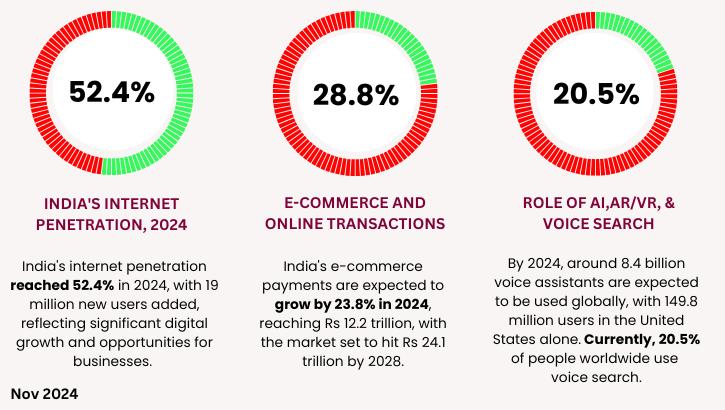
1. Rising Internet Penetration and Mobile Usage

As internet access expands globally and mobile usage continues to surge, more people are engaging online than ever before:

  • Over 5.3 billion people use the internet worldwide (over 67% of the global population)
  • Mobile accounts for over 60% of all web traffic
  • Smartphones are the primary internet access device for billions
  • Digital-first generations (Gen Z, Gen Alpha) prefer online interactions

Implication: Businesses that don't embrace digital marketing risk being invisible to their customers. Your audience is online—you need to meet them there.

2. Growth of E-Commerce and Online Transactions

The e-commerce market continues explosive growth:

  • Global e-commerce sales exceeded $5.8 trillion in 2024
  • Online shopping is now the norm rather than the exception
  • Social commerce and in-app shopping are revolutionizing retail
  • Cross-border e-commerce is expanding opportunities globally

Implication: Traditional retail alone is no longer sufficient. Digital marketing is essential to drive online sales, remain competitive, and reach customers wherever they shop.

3. Technological Advancements (AI, AR, VR, Voice Search)

Emerging technologies are revolutionizing digital marketing:

Artificial Intelligence (AI):

  • Predictive analytics for customer behavior
  • Chatbots for 24/7 customer service
  • Content recommendation engines
  • Automated campaign optimization

Augmented Reality (AR) and Virtual Reality (VR):

  • Virtual try-ons for products
  • Immersive brand experiences
  • Interactive product demonstrations
  • Deeper emotional connections with customers

Voice Search Optimization:

  • Rise of smart speakers (Alexa, Google Home)
  • Voice-based queries require different SEO optimization
  • Conversational keywords and natural language processing
  • Future of search is voice-activated

Blockchain and Web3:

  • Decentralized marketing and direct creator-to-consumer relationships
  • NFTs and digital collectibles for brand loyalty
  • Transparent, verified customer data

Implications:

Brands that adopt these technologies early gain competitive advantages and create more engaging customer experiences.

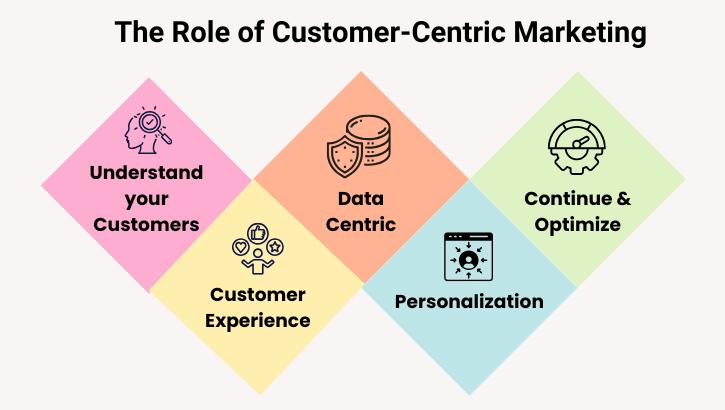
Customer-Centric Marketing

Customer-centric marketing means deeply understanding your audience's needs, preferences, and pain points-and building your entire strategy around solving their problems and creating value.

the role of customer-centric marketing

Importance of Understanding Your Audience

Knowing your audience helps you:

  • Craft relevant, resonant messages that drive action
  • Choose the right channels where they spend time
  • Create content that addresses their specific pain points
  • Build trust and loyalty through personalized experiences
  • Reduce wasted marketing spend by targeting the right people
  • Anticipate needs before customers even ask
  • Build long-term relationships, not just one-time transactions

How to Understand Your Audience

1. Market Research

  • Surveys and questionnaires
  • Focus groups and interviews
  • Social listening and sentiment analysis
  • Customer feedback and reviews

2. Data Analysis

  • Website analytics and user behavior
  • Purchase history and patterns
  • Demographic and psychographic data
  • Customer lifetime value analysis

3. Create Buyer Personas


Document detailed profiles of your ideal customers including:

  • Demographics (age, location, income, education)
  • Job titles and industry
  • Goals and aspirations
  • Pain points and challenges
  • Preferred communication channels
  • Buying process and decision criteria

4. Segmentation and Personalization

Use segmentation tools to divide your audience into groups and deliver tailored experiences:

Segmentation Criteria:

  • Demographic: Age, gender, location, income
  • Behavioral: Purchase history, browsing patterns, engagement level
  • Psychographic: Values, lifestyle, interests
  • Technographic: Devices used, technology adoption level
  • Customer Lifecycle: New customers, repeat buyers, at-risk, loyal

Personalization Tactics:

  • Customize website content based on user behavior
  • Send personalized email recommendations
  • Show targeted ads based on interests
  • Recommend products based on purchase history
  • Address customers by name in communications
  • Provide exclusive offers tailored to their preferences
tools for segmentation and creating personalized experiences

Essential Digital Marketing Tools

SEO and Website Performance Tools

1. SEMrush

  • Best for: Comprehensive SEO management and competitive analysis
  • Key Features: Keyword research, competitor analysis, site audits, backlink tracking, Google Ads optimization
  • Who should use: Beginners to advanced marketers, agencies
  • Price: Paid (starter to enterprise plans)

2. SEOptimer

  • Best for: Quick, actionable SEO audits
  • Key Features: Website reviews, competitor insights, white-label reports, lead generation tools
  • Who should use: Beginners, small businesses, freelancers
  • Price: Free and paid plans

3. Google Search Console (Free)

  • Best for: Understanding how Google sees your site
  • Key Features: Search performance data, indexing status, backlinks, technical issues
  • Who should use: Everyone with a website
  • Price: Free

4. Google Analytics 4 (Free)

  • Best for: Comprehensive website analytics and user behavior
  • Key Features: Traffic sources, user behavior, conversion tracking, audience demographics
  • Who should use: Beginners to advanced
  • Price: Free

5. Ahrefs

  • Best for: Backlink analysis and competitive research
  • Key Features: Keyword research, rank tracking, competitor analysis, site auditing, content research
  • Who should use: Intermediate to advanced SEOs
  • Price: Paid (mid to high-cost)

6. Moz Pro

  • Best for: All-in-one SEO platform
  • Key Features: Keyword research, link building, site crawling, rank tracking, local SEO
  • Who should use: Beginners to advanced
  • Price: Paid

7. Ubersuggest

  • Best for: Budget-friendly SEO tool for beginners
  • Key Features: Keyword suggestions, domain analysis, backlink tracking, content ideas, SEO audits
  • Who should use: Beginners, small businesses
  • Price: Free browser extension, paid for full version

Keyword Research Tools

8. Google Keyword Planner (Free)

  • Best for: Free keyword research and search volume analysis
  • Key Features: Keyword suggestions, search volume, competition levels, bid estimates
  • Who should use: Beginners, PPC advertisers, content creators
  • Price: Free

9. Spy Fu

  • Best for: Competitor keyword and ad research
  • Key Features: Competitor SEO keywords, paid ad history, combining strategies
  • Who should use: Competitive analysis focused marketers
  • Price: Paid

On-Page Optimization Tools

10. Yoast SEO (WordPress Plugin)

  • Best for: On-page SEO optimization for WordPress sites
  • Key Features: Content analysis, keyword optimization, metadata, XML sitemaps, readability checks
  • Who should use: WordPress users, content creators
  • Price: Free and Premium

Social Media and Content Management

11. Hootsuite

  • Best for: Social media scheduling and management
  • Key Features: Multi-platform scheduling, analytics, team collaboration, content calendar
  • Who should use: Social media managers, small to large teams
  • Price: Paid plans

12. Buffer

  • Best for: Simplified social media scheduling
  • Key Features: Easy scheduling, analytics, engagement tools, team collaboration
  • Who should use: Beginners to intermediate social media marketers
  • Price: Free and paid plans

13. Canva

  • Best for: Creating professional visuals without design skills
  • Key Features: Templates, stock images, easy drag-and-drop editing
  • Who should use: Everyone creating social media graphics, infographics, presentations
  • Price: Free and paid (Canva Pro)

Email Marketing Platforms

14. Mailchimp (Free and Paid)

  • Best for: Email marketing automation for small to medium businesses
  • Key Features: Email builder, automation, segmentation, analytics
  • Who should use: Beginners, small businesses, freelancers
  • Price: Free for up to 500 contacts

15. HubSpot

  • Best for: All-in-one inbound marketing platform
  • Key Features: CRM, email marketing, landing pages, forms, analytics
  • Who should use: Growing companies, agencies
  • Price: Free CRM, paid for advanced features

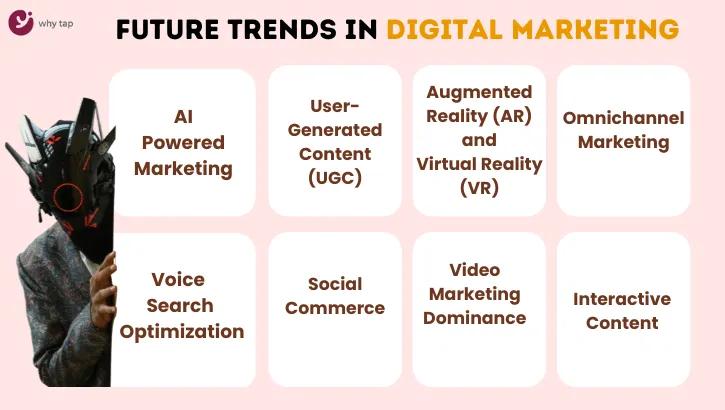
Future Trends in Digital Marketing

future trends in digital marketing

1. AI-Powered Marketing

Artificial Intelligence will revolutionize marketing through:

  • Predictive Analytics: Anticipate customer behavior and churn
  • Campaign Automation: AI optimizes bids, budgets, and targeting automatically
  • Personalization at Scale: Deliver unique experiences to millions of users
  • Chatbots and Conversational AI: 24/7 customer service and lead qualification
  • Content Generation: AI assists with writing copy, creating graphics, and generating ideas
  • Customer Service: AI-powered support that understands context and intent

2. Voice Search Optimization

As smart speakers and voice assistants (Alexa, Google Assistant, Siri) become ubiquitous:

  • Conversational Keywords: Optimize for how people speak, not just how they type
  • Long-Tail Keywords: Voice searches are typically longer and more specific
  • Question-Based Content: Create content that answers common voice queries
  • Featured Snippets: Optimize for position zero to capture voice search results
  • Local SEO: Most voice searches have local intent ("near me" searches)

3. Social Commerce

Social media platforms are evolving into full shopping destinations:

  • In-App Checkout: Buy without leaving the app
  • Shoppable Posts: Direct purchase from product photos
  • Live Shopping: Real-time product demonstrations with instant purchasing
  • Influencer Storefronts: Creators sell directly to their audience
  • Social Proof Integration: User-generated content drives purchases

4. Augmented Reality (AR) and Virtual Reality (VR)

Immersive technologies create deeper customer connections:

  • Virtual Try-Ons: See how products look before buying (makeup, clothes, furniture)
  • AR Product Visualizations: Place products in your space before purchasing
  • Virtual Showrooms: Explore products in immersive, 3D environments
  • Interactive Brand Experiences: Beyond traditional advertising

5. Omnichannel Marketing

Customers expect seamless experiences across all touchpoints:

  • Consistent Messaging: Same brand voice across all channels
  • Unified Customer Data: Understand customers across channels
  • Cross-Channel Attribution: Know which touchpoints drive conversions
  • Integrated Campaigns: Coordinated efforts across email, social, web, mobile, in-store
  • Flexible Customer Journey: Customers move between channels seamlessly

6. Interactive Content

Engagement-focused formats drive participation and data collection:

  • Quizzes: Entertaining, data-rich, highly shareable
  • Polls and Surveys: Gather feedback and insights
  • Interactive Videos: Choose-your-own-adventure style content
  • Calculators: Personalized value demonstrations
  • Assessments: Personalized recommendations

7. Video Marketing Dominance

Video continues to reign as the most engaging format:

  • Short-Form Video: TikTok, Reels, YouTube Shorts dominate consumer attention
  • Live Streaming: Real-time engagement with audiences
  • Vertical Video: Mobile-optimized formats
  • Interactive Video: Clickable elements within videos
  • Video SEO: Video content ranks well in search and gets featured in results

8. User-Generated Content (UGC)

Customer reviews, photos, and testimonials become marketing gold:

  • Trust Building: 92% of consumers trust peer recommendations over brands
  • Authenticity: Real customer experiences outperform polished ads
  • Social Proof: Showcase customer success stories and testimonials
  • Community Building: Encourage customers to share their experiences
  • SEO Benefits: UGC provides fresh, authentic content

9. Marketing Ethics and Privacy

As regulations tighten (GDPR, CCPA), privacy-first marketing becomes essential:

  • Data Privacy: Respect user privacy and comply with regulations
  • Transparent Data Usage: Be clear about how you collect and use data
  • First-Party Data: Build owned audiences rather than relying on third-party data
  • Ethical AI: Use technology responsibly without manipulation
  • Brand Trust: Build long-term relationships based on transparency and value

Getting Started: Your Action Plan

Step 1: Define Clear, Measurable Goals

Before launching any campaigns, establish what success looks like for your business:

Goal Examples:

  • Increase website traffic by 50% in 6 months
  • Generate 100 qualified leads per month
  • Improve email open rates from 15% to 25%
  • Increase social media followers from 1K to 10K
  • Increase online sales by 30%
  • Build brand awareness in a new market

Use SMART Criteria:

  • Specific: Clearly defined outcomes
  • Measurable: Quantifiable metrics
  • Achievable: Realistic within your resources
  • Relevant: Aligned with business objectives
  • Time-bound: Set deadlines

Step 2: Identify and Research Your Target Audience

Understand who you're trying to reach:

Audience Research Steps:

  • Collect data: Surveys, interviews, analytics, social listening
  • Identify patterns: Common demographics, behaviors, pain points
  • Create buyer personas: Detailed profiles of ideal customers
  • Map their journey: Where do they search? What problems do they solve?
  • Identify their preferences: Preferred channels, content types, messaging

Key Questions to Answer:

  • Who is your ideal customer?
  • What problems do they face?
  • Where do they spend time online?
  • What content do they consume?
  • What messaging resonates with them?
  • Where are they in the buying journey?

Step 3: Analyze Your Competitors

Understand what's working in your industry:

Competitor Analysis Checklist:

  • Which channels are they using? (organic, paid, email, social, etc.)
  • What keywords are they ranking for?
  • What content performs best for them?
  • How do they engage their audience?
  • What's their unique value proposition?
  • What pricing and offers do they promote?
  • Where are the gaps you can fill?

Competitive Advantages:

  • What can you do better?
  • What's underserved in your market?
  • How can you differentiate?

Step 4: Choose Your Digital Marketing Mix

Select the strategies and channels that align with your goals and audience:

Channel Selection Matrix:

GoalBest Channels
Drive website trafficSEO, content marketing, paid search
Build brand awarenessSocial media, display ads, influencer marketing, video
Generate leadsEmail marketing, landing pages, content downloads, retargeting
Drive salesE-commerce SEO, product ads, email, retargeting
Build communitySocial media, email, forums, groups
Establish authorityContent marketing, thought leadership, speaking, media

Resource Allocation:

  • Start with 1-2 core channels based on your audience
  • Test different approaches
  • Double down on what works
  • Gradually expand to additional channels

Step 5: Create a Content Calendar

Plan your content 4-12 weeks in advance:

Content Calendar Elements:

  • Publishing dates and times
  • Content topics aligned with buyer journey stages
  • Content format (blog, video, infographic, email, social)
  • Keywords and SEO focus
  • Calls-to-action (CTAs)
  • Distribution channels
  • Responsible team member
  • Performance metrics

Content Ideas by Stage:

  • Awareness: Educational content, industry news, how-to guides
  • Consideration: Comparisons, case studies, webinars
  • Decision: Testimonials, free trials, pricing information

Step 6: Develop Your Content Strategy

Create high-quality, valuable content:

Content Strategy Framework:

  • Define your unique angle: What makes your perspective different?
  • Address customer pain points: Solve real problems your audience faces
  • Use diverse formats: Mix blogs, videos, infographics, podcasts
  • Optimize for search: Research keywords and optimize for SEO
  • Make it actionable: Provide real, implementable advice
  • Tell stories: Use narratives and examples to make content relatable
  • Include CTAs: Guide readers to the next step

Content Pillars (main topics you focus on):

  • Identify 3-5 core topics relevant to your business
  • Create multiple pieces of content for each pillar
  • Build topical authority in your niche

Step 7: Launch Your Campaigns

Execute your strategies across your chosen channels:

Campaign Checklist:

  • Content created and optimized
  • Landing pages set up
  • Tracking and analytics configured
  • A/B testing setup for paid campaigns
  • Team members trained on tools and processes
  • Budget allocated and campaigns funded
  • Launch date confirmed
  • Monitoring dashboard set up

Step 8: Measure Performance and Iterate

Track metrics and continuously improve:

Key Performance Indicators (KPIs) by Goal:

GoalKey Metrics
TrafficSessions, users, bounce rate, time on page
LeadsLead volume, cost per lead, lead quality
SalesRevenue, conversion rate, average order value
EngagementShares, comments, click-through rate
EmailOpen rate, click rate, unsubscribe rate
SocialFollowers, engagement rate, reach

Monthly Review Process:

  • Analyze data: Review all KPIs
  • Identify wins: What strategies and content performed best?
  • Find problems: What underperformed and why?
  • Test hypotheses: Form theories about improvements
  • Implement changes: Update strategies based on learnings
  • Document learnings: Create a knowledge base for your team
  • Plan next month: Update your content calendar and tactics

Optimization Tips:

  • Test everything: headlines, visuals, CTAs, timing, messaging
  • Start with small tests, scale winners
  • Focus on conversion rate optimization (CRO) not just traffic
  • Use A/B testing to make data-backed decisions
  • Monitor competitor activities and industry trends

Frequently Asked Questions - Digital Marketing for Beginners

How long does it take to see results from digital marketing?
What is the best digital marketing strategy for beginners?
Is digital marketing suitable for small businesses?
Which is the easiest digital marketing channel to start with?
What are the main types of digital marketing?
How much should a beginner spend on digital marketing?
How can I learn digital marketing as a beginner?
What are the benefits of digital marketing for beginners?
Can digital marketing really help me get a job?
How do I choose the right digital marketing platform for my business?
What are common mistakes beginners make in digital marketing?
How do I measure success in digital marketing?

Learning Digital Marketing at WHY TAP

Why Choose WHY TAP?

WHY TAP is dedicated to helping students and professionals build successful, profitable careers through practical, real-world training in digital marketing and technology.

What We Offer

Comprehensive Digital Marketing Course

  • Expert instructors with 10+ years of industry experience
  • Hands-on projects and real-world case studies
  • Training in all digital marketing specializations:
    • Search Engine Optimization (SEO)
    • Pay-Per-Click (PPC) Advertising
    • Social Media Marketing
    • Email Marketing
    • Content Marketing
    • Analytics and Data Insights
  • Latest tools and technologies
  • Industry certifications

Hands-On Learning

  • Build real campaigns from start to finish
  • Work with live data and real business scenarios
  • Portfolio projects you can showcase to employers
  • Mentorship from practicing digital marketers

Career Support

  • Strong placement assistance and job connections
  • Interview preparation and resume coaching
  • Ongoing support after course completion
  • Access to WHY TAP alumni network

Why We're Different

  • Focus on practical skills over theory
  • Current, relevant curriculum updated with industry trends
  • Affordable, flexible learning options
  • Supportive community of learners and professionals
  • Commitment to your success and career growth

Get Started Today

Whether you're looking to launch a new career in digital marketing, upskill existing abilities, or master advanced strategies, WHY TAP provides the training, mentorship, and support you need to succeed.

Take the first step toward a rewarding career in digital marketing.

Join WHY TAP today and transform your future.

Conclusion

Digital marketing is no longer optional, it's essential for business growth and career success. The landscape evolves constantly, but the fundamentals remain the same: understand your audience, provide value, measure results, and continuously improve.

By mastering the strategies and tactics outlined in this guide, you'll be equipped to:

  • Build brand awareness and loyalty
  • Generate qualified leads and drive sales
  • Establish yourself as an industry expert
  • Create lasting customer relationships
  • Achieve measurable business results

The best time to start is now. Begin with one strategy, learn deeply, and expand gradually. With dedication and smart execution, digital marketing can transform your business or launch an exciting new career.

Your digital marketing journey starts here. Make it count.

Ready to master digital marketing? Enroll in WHY TAP's comprehensive Digital Marketing course today and join thousands of successful graduates building thriving careers in the digital world.


First advertisementSecond advertisementThird advertisementFourth advertisement

Talk to an Expert