Digital marketing has become a dominant force in today’s business world, and working on digital marketing projects is one of the best ways for students to gain practical experience. Globally, companies are shifting their budgets online; digital channels now account for about 72.7% of worldwide ad spending (over $790 billion in 2024).
India, in particular, is experiencing a digital boom: the country is poised to have over 900 million internet users by 2025, and In short, digital marketing is everywhere, and there’s never been a better time to dive in.
For students in India aiming for a marketing career, getting hands-on with digital marketing projects can be a game-changer. This comprehensive guide will walk you through why these projects matter, showcase key project areas with examples, suggest 10 project ideas, and provide tips and resources.
Students who want to gain structured learning along with real-world project experience can also explore training programs offered by WHY TAP. These programs focus on practical learning, industry tools, and real marketing projects that help students become job-ready.
By the end, you’ll know exactly how to start your own digital marketing projects to build skills, confidence, and a portfolio that stands out.
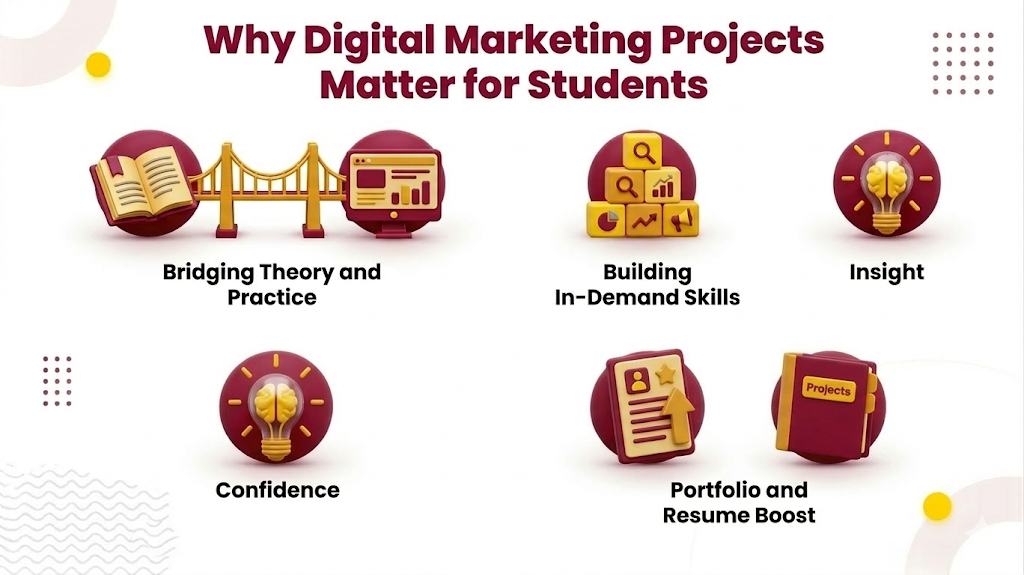
Why Digital Marketing Projects Matter for Students
Textbook knowledge and certificates are great, but real-world experience is even better. Employers today are not just looking for candidates with certificates but those who can bring real value through problem-solving abilities and technical knowledge.
In the fast-evolving marketing landscape, being able to demonstrate that you’ve actually run campaigns, analyzed data, or driven engagement can set you apart from the crowd.
Here are a few reasons why working on digital marketing projects is so beneficial for students:
Bridging Theory and Practice
You might learn about SEO or social media strategies in class, but running a campaign yourself shows how theory translates into practice. It’s a chance to experiment, make mistakes, and learn by doing.
Building In-Demand Skills
Digital marketing skills are in high demand. The field is growing rapidly millions of professionals now work in digital marketing roles in India, and the sector continues to expand alongside the country’s digital economy.
By doing projects, you’ll pick up practical skills in:
content creation
analytics
SEO
campaign management
marketing strategies
Students who want to build these skills professionally can also explore programs such as the AI-Powered Digital Marketing Course, which provides practical training and real project experience.
Portfolio and Resume Boost
Each project you complete can become a portfolio piece. Whether you launch a successful social media campaign or improve a website’s Google ranking, these accomplishments are concrete evidence of your abilities.
Showing a recruiter a campaign report or a blog you grew demonstrates initiative and experience far better than just claiming a skill.
Confidence & Insight
Completing projects gives you confidence to tackle bigger challenges. You also gain insight into what area of digital marketing you enjoy most; maybe you discover you love digging into Google Analytics, or perhaps creating engaging Instagram content is your forte.
These insights can guide your career path.
In summary, digital marketing projects allow you to prove your expertise through experience. They show potential employers that you not only understand marketing concepts but have also applied them to achieve results.
Key Areas and Examples of Digital Marketing Projects
Digital marketing is a broad field. When planning your project, it helps to focus on a particular area or campaign type. Here are some key areas of digital marketing and examples of projects students can undertake in each:
Skills gained: Keyword research, on-page SEO, content writing, CMS usage (like WordPress), link building basics, and Google Analytics for tracking views and engagement.
Skills gained: Content creation, basic graphic design for posts, community management, understanding social media algorithms, use of insights/analytics (Instagram Insights, Facebook Page Insights), and possibly influencer outreach if you collaborate with others.
Email Marketing Projects
Email might sound old-school to some students, but it remains one of the highest ROI channels in marketing. In fact, for B2C brands, email marketing is the #1 channel for ROI, and it boasts strong conversion rates (around 2.5% on average).
Skills gained: Copywriting (since writing a compelling email is an art), list building strategies, familiarity with email platforms (Mailchimp, Sendinblue, etc.), A/B testing subject lines, and understanding of metrics like open rate, CTR, and conversion rate.
PPC Advertising Projects
Pay-Per-Click (PPC) advertising involves platforms like Google Ads or social media ads. It’s a more advanced area for a student project (and can involve budget), but even a small experiment can teach a lot.
Skills gained: Keyword research for ads (different from SEO keyword focus), understanding Quality Score and ad rankings, basics of targeting and segmentation, budgeting, and familiarity with advertising platforms.
Analytics and SEO Audit Projects
Data analytics underpins all successful marketing. If numbers and data interest you, analytics-focused projects are extremely valuable.
Skills gained: Data analysis and interpretation, familiarity with Google Analytics (or alternative analytics tools), understanding user behavior metrics (bounce rate, session duration, conversion rate), and the ability to make data-driven recommendations.
These examples just scratch the surface. Digital marketing projects can be as creative or as analytical as you want them to be. The key is to choose an area that excites you. If you love writing and creativity, try content or social projects.
If you love tech and data, SEO and analytics might be your zone. Often, a good project will touch multiple areas (e.g., a blog project will involve content, SEO, and social sharing).
Up next, we’ll list 10 specific project ideas that you can consider, many of which combine the areas above.
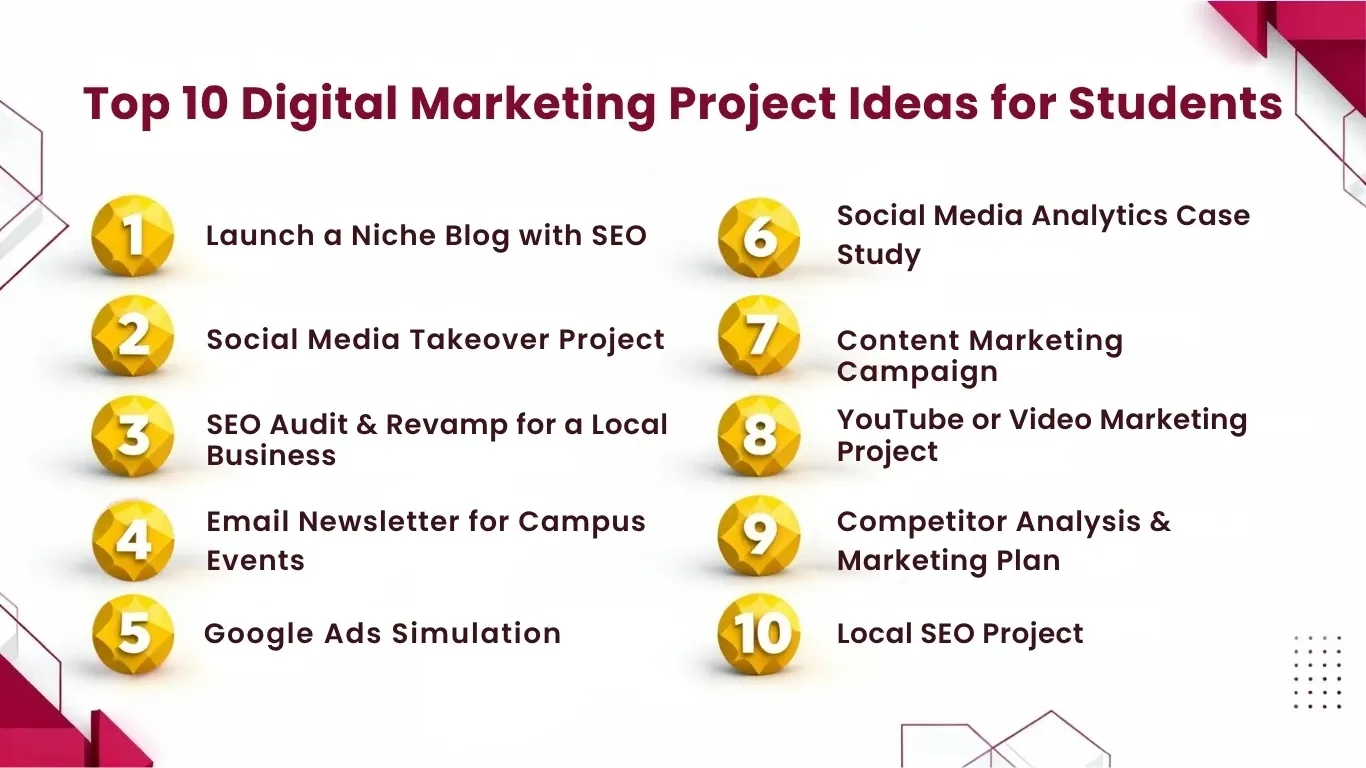
Top 10 Digital Marketing Project Ideas for Students
Ready to get started? Here are ten project ideas that are perfect for students looking to get practical experience in digital marketing. You can choose one or try a mix, depending on your interests and the time you have. Each idea is achievable with minimal resources – mostly your time and creativity:
Launch a Niche Blog with SEO: Start a blog on a topic you love (food, travel, gadgets, etc.). Write at least 5-10 posts. Optimize each post for specific keywords and follow SEO best practices. Over a few months, track your traffic (using Google Analytics) and see which posts perform best on search engines. Outcome: Learn content writing, SEO optimization, and analytics interpretation.
Social Media Takeover Project: Create a fresh Instagram or Facebook page dedicated to a theme (e.g., “Study Hacks Daily” for students).Post consistently for one month with engaging content (images, short videos, stories). Use relevant hashtags and interact with followers. Aim to reach a milestone like 500 followers. Outcome: Understand content scheduling, community management, and how to grow an audience organically.
SEO Audit & Revamp for a Local Business: Identify a small local business or a college club that has a website (or use your own site).Conduct an SEO audit: check page titles, descriptions, heading structure, site speed, mobile friendliness, etc. Then implement improvements: rewrite some titles/descriptions to include keywords, compress images for speed, add internal links, etc. Outcome: Gain experience in technical and on-page SEO, and potentially help a real organization improve their web presence.
Email Newsletter for Campus Events: Assume the role of an email marketer by creating a weekly or monthly newsletter that curates upcoming campus events, workshops, or popular news among students. Build an email list by getting friends or classmates to subscribe. Focus on improving your email open rate and click-through rate each issue by experimenting with catchy subject lines and valuable content. Outcome: Learn how to use email marketing tools, manage a mailing list, and craft content that keeps an audience engaged.
Google Ads Simulation: Design a Google Ads search campaign for a hypothetical product or service. You don’t need to run it if budget is an issue; instead, use Google’s Keyword Planner to pick keywords and create a campaign plan. Write sample ad copies (headlines & descriptions) and note the suggested bid prices. If possible, use a small promo credit to run the campaign for a few days and collect data on impressions and clicks. Outcome: Understand keyword bidding, Quality Score, and how ad copy and targeting work together in PPC.
Social Media Analytics Case Study: Pick a brand or public figure that’s active on social media. Track their posts over a period (say, 2 weeks) and note down metrics for each post (likes, comments, shares).Identify patterns, Do videos perform better than images? Does posting time matter? Compile your findings and insights on what seems to work for them. Outcome: Develop an analytical eye for social media strategies and learn to use social media analytics (many platforms have an Insights section, or you can use tools like Social Blade for basic data).
Content Marketing Campaign: Create a valuable piece of content such as a guide or an infographic on a topic (e.g., “Guide to Ace Online Interviews for Freshers”).Host it on a blog or Google Drive and promote this content through multiple channels: post snippets on LinkedIn, share in student WhatsApp/Telegram groups, and perhaps do a small email campaign. Monitor how many people access or download it. Outcome: Experience a multi-channel marketing push and learn how content can be repurposed and distributed to reach a wider audience.
YouTube or Video Marketing Project: If you’re comfortable on camera (or even making slideshows), try starting a short YouTube series.For example, three 5-minute videos explaining a marketing concept in simple terms. Optimize video titles, descriptions, and tags for YouTube SEO. Share the videos on social media and aim for a certain number of views or comments. Outcome: Learn video content creation, basic video SEO, and get insights into engagement on video platforms (which are hugely important as video content is surging in popularity).
Competitor Analysis & Marketing Plan: Choose two competing brands (perhaps two apparel brands, or two food delivery apps popular in India) and do a comparative digital analysis. How is each brand’s social media presence? What kind of content and tone do they use? How does their SEO traffic compare (use tools or basic Google searches)? From your findings, suggest a simple digital marketing plan for one of them to outperform the other. Outcome: Hone your research skills, understand market positioning, and practice crafting strategy recommendations based on real data.
Local SEO Project: If you can collaborate with a local business (even hypothetical), work on local digital marketing. For instance, imagine a new café in your town. Create a Google My Business listing (if possible) or a mock-up of one, gather a few “reviews” from friends for practice, and list the business in online directories. Additionally, devise a local SEO content idea like a blog titled “Best cafés in [Your City]” featuring the business. Outcome: Learn about local search, the importance of online reviews, and how small businesses can increase their digital visibility in their immediate community.
These project ideas are flexible. Feel free to scale them up or down. The goal is to have a tangible result or learning from each one. Even if something doesn’t go as expected (perhaps your social media page only got 100 followers, not 500 that’s okay!), you will learn why and can discuss that experience. Remember, marketing is often about testing, learning, and iterating.
Pick one or two ideas that excite you the most and give them a try. You’ll be surprised how much you can learn in the process. Next, let’s cover some tips to help ensure your digital marketing projects succeed.
Tips to Succeed in Your Digital Marketing Projects
Embarking on digital marketing projects is a learning experience. Here are some tips and best practices to maximize your success and growth:
Define Clear Goals: Before you start, define what success looks like for your project. Is it reaching 1,000 blog visitors in 3 months? A 5% conversion rate on your email sign-ups? Having a clear goal helps you stay focused and measure progress.
Know Your Audience: Even for a student project, identify your target audience. For example, if you run a social media page on exam tips, your audience is likely other students. Knowing this will guide your content style and the channels you use. Tailoring your message to your audience often yields better engagement.
Use the Right Tools: Take advantage of free or freemium tools. Google Analytics, Google Search Console, and Google Keyword Planner are invaluable for web projects. Social media business accounts give free analytics. Tools like Canva can help create professional-looking visuals. Using these tools not only makes your project more effective but also gives you experience that employers value.
Stay Consistent and Organized: Digital marketing often rewards consistency. Post regularly on your blog or social channel, a dormant project won’t yield results. Create a simple schedule (even a spreadsheet) to plan your activities. Being organized with content calendars or to-do lists will mimic real-world marketing work and reduce last-minute stress.
Monitor and Adapt: Once your project is running, keep an eye on the data. If a particular blog post is getting more traction, analyze why and consider writing similar content. If your email open rates are low, try different subject lines. Digital marketing is iterative, the best marketers continuously test and adjust their strategies based on performance metrics.
Learn from Experts: You don’t have to reinvent the wheel. Follow popular marketing blogs and resources to get ideas and tips (websites like HubSpot, Moz, or Neil Patel’s blog often share case studies and techniques).Seeing proven strategies can inspire how you execute your project. Just ensure you implement in your own way rather than copy exactly, so you truly learn.
Document Your Work: Maintain a record of what you did and the results. This could be a simple slide deck or document summarizing your project, including screenshots of analytics, examples of content you created, and key outcomes. Not only will this help you reflect, but it becomes an impressive piece to share in interviews or networking – essentially a case study of your own.
Time Management: Balance your project with studies. Since this is a self-driven project, it’s easy to procrastinate. Set aside dedicated time each week (say, every Saturday afternoon for 3 hours) to work on it. Treat it like a part-time job or an important assignment so that you give it regular attention.
Ethical and Authentic Approach: When doing projects, especially those involving public content (blogs, social media), ensure you maintain authenticity. Don’t buy fake followers or plagiarize content for the sake of quick results, it might boost numbers in the short term but won’t teach you anything meaningful. Focus on genuine engagement and original content.
Embrace Failure as Learning: Not every campaign or idea will work. You might send an email no one opens, or run an ad that gets zero clicks. Instead of seeing it as failure, treat it as feedback. Analyze what went wrong, maybe the timing was off or the message didn’t resonate. This mindset will help you iterate and ultimately succeed, which is exactly what happens in real marketing scenarios.
By following these tips, you’ll not only execute your digital marketing projects more smoothly, but you’ll also develop a professional approach to marketing tasks. Remember, the habits you build now – analytical thinking, consistency, adaptability – will serve you well in any marketing role in the future.
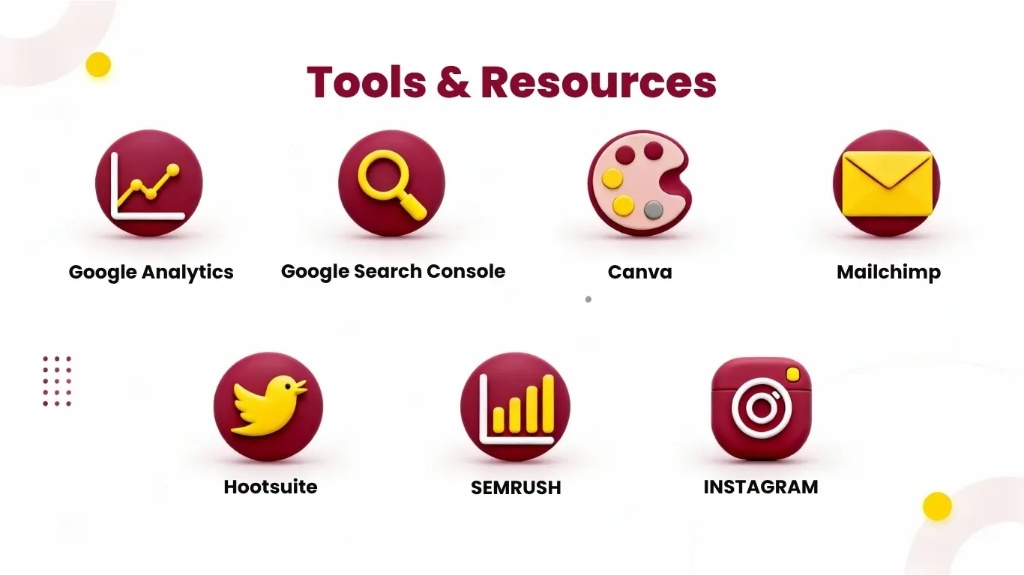
Useful Tools and Resources
When working on digital marketing projects, having the right toolbox can make your life a lot easier. Below is a list of popular (and mostly free) tools and resources that can help students execute projects efficiently and learn industry-standard practices:
Google Analytics & Google Search Console: Essential for any web-based project to track traffic, user behavior, and search performance. Google Analytics shows you who’s visiting your site and what they do, while Search Console reveals which queries bring you traffic and any website health issues.
Keyword Research Tools: For SEO or Google Ads projects, try Google Keyword Planner (free within Google Ads) to find search volumes and keyword ideas. Other options include Ubersuggest or AnswerThePublic for brainstorming content topics.
Canva: A user-friendly graphic design tool. Great for creating social media graphics, infographics, posters, etc., with lots of templates available. No design experience needed.
Mailchimp: For email marketing projects, Mailchimp’s free plan lets you manage up to 500 contacts (at the time of writing) and send campaigns, perfect for a small newsletter project. The drag-and-drop email designer makes it easy to create professional emails.
Social Media Management Tools: If you’re juggling multiple social accounts or just want scheduling convenience, tools like Buffer or Hootsuite have free plans for basic scheduling. These let you plan posts ahead of time and view all your scheduled content in one place.
SEO Audit Tools: Tools like Moz’s Free SEO Toolbar or Semrush’s site audit (free trial) can help identify SEO issues on a site. While the full features are paid, even the free reports often give useful insights like broken links or missing tags.
Content Inspiration and Learning: Websites like HubSpot (marketing blog and Academy), Moz Blog, and Neil Patel’s blog offer a wealth of guides and case studies. They often share step-by-step how-to on things like improving SEO, increasing email open rates, social media hacks, etc. These can be great learning material alongside your project.
Google Digital Garage & Other Free Courses: If you feel you need to brush up on fundamentals, Google’s Digital Garage offers free courses on digital marketing basics (with certificates).Similarly, HubSpot Academy has free courses on content marketing, email marketing, and more. While projects give you experience, courses can fill in knowledge gaps or provide structured learning.
Networking and Forums: Consider joining communities like Reddit’s r/marketing or LinkedIn groups for digital marketing. You can ask questions, read about others’ experiences, and even get feedback on your project. Sometimes, seeing real professionals discuss campaigns can provide insight you won’t find in textbooks.
Using these tools and resources will not only make your project outcomes better but will also get you familiar with the software and platforms marketers use daily. Employers love when candidates already know their way around Google Analytics or Canva, as it means less training needed on the job.
As you utilize these tools, note down what you learned from each. For example, mention in your portfolio that you used Google Analytics to discover which blog post was most popular or that you designed 10 social media graphics on Canva. It reinforces your hands-on experience.
With the projects, tips, and resources covered, you should be well-equipped to dive into the world of digital marketing and start creating your own success stories. Remember to stay curious and enjoy the process; the digital marketing realm is as fun as it is informative. Good luck, and now let’s address some common questions students often have about digital marketing projects.
Build Your Digital Marketing Skills with Practical Training
While personal projects are a great way to start learning digital marketing, structured training programs can help students learn faster and gain real industry exposure.
At WHY TAP, students learn digital marketing through hands-on projects, real-time tools, and practical training designed by industry experts. Instead of focusing only on theory, learners work on real marketing strategies, understand campaign performance, and develop job-ready skills that companies look for.
The programs cover important areas such as SEO, social media marketing, Google Ads, content marketing, and marketing analytics, helping students build a strong foundation in modern digital marketing.