Artificial Intelligence has advanced so rapidly that it no longer waits for your actions, it anticipates them. Today, AI predicts your behaviour with extraordinary accuracy by understanding your digital patterns, preferences, and habits. Whether it’s recommending the next show you’ll binge-watch or identifying suspicious transactions before they become fraud, AI’s predictive ability is now embedded in every major industry.
In 2025, businesses that don’t leverage predictive AI risk falling behind. Companies that do adopt it gain faster decision-making, better customer engagement, reduced operational costs, and significantly higher revenue.
This guide breaks down how AI predicts your behaviour, the technologies behind it, real-world examples, business use cases, ethical considerations, and how professionals can build careers in predictive AI.
When AI predicts your behaviour, it means it is forecasting your next actions based on past patterns. Instead of reacting to your clicks, searches, or purchases, it anticipates what you’re likely to do next.
Real-World Examples of Behaviour Prediction
These are not random guesses, they’re advanced predictions powered by machine learning models trained on millions of behaviour signals.
To understand how AI predicts your behaviour, you must understand the role of data. Every click, swipe, scroll, and pause becomes a data point.
AI uses behavioural analytics, which involves:
How Predictive AI Works (Step-by-Step)
AI doesn’t just process data, it learns from it continuously.
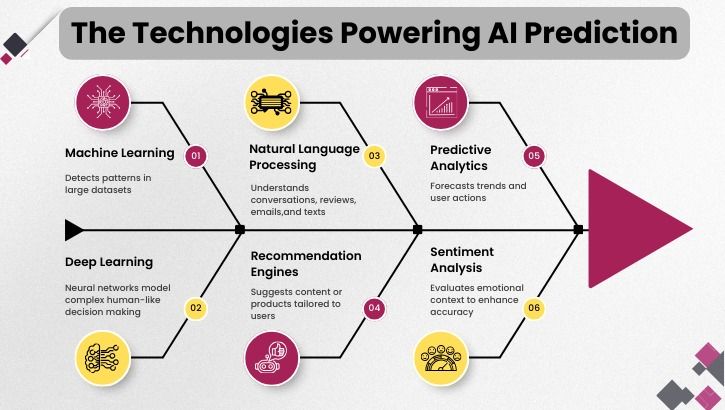
Behaviour forecasting relies on multiple advanced technologies:
Key Technologies
Predictive AI is now essential in every major business sector:
E-Commerce
Finance & Banking
Marketing & Advertising
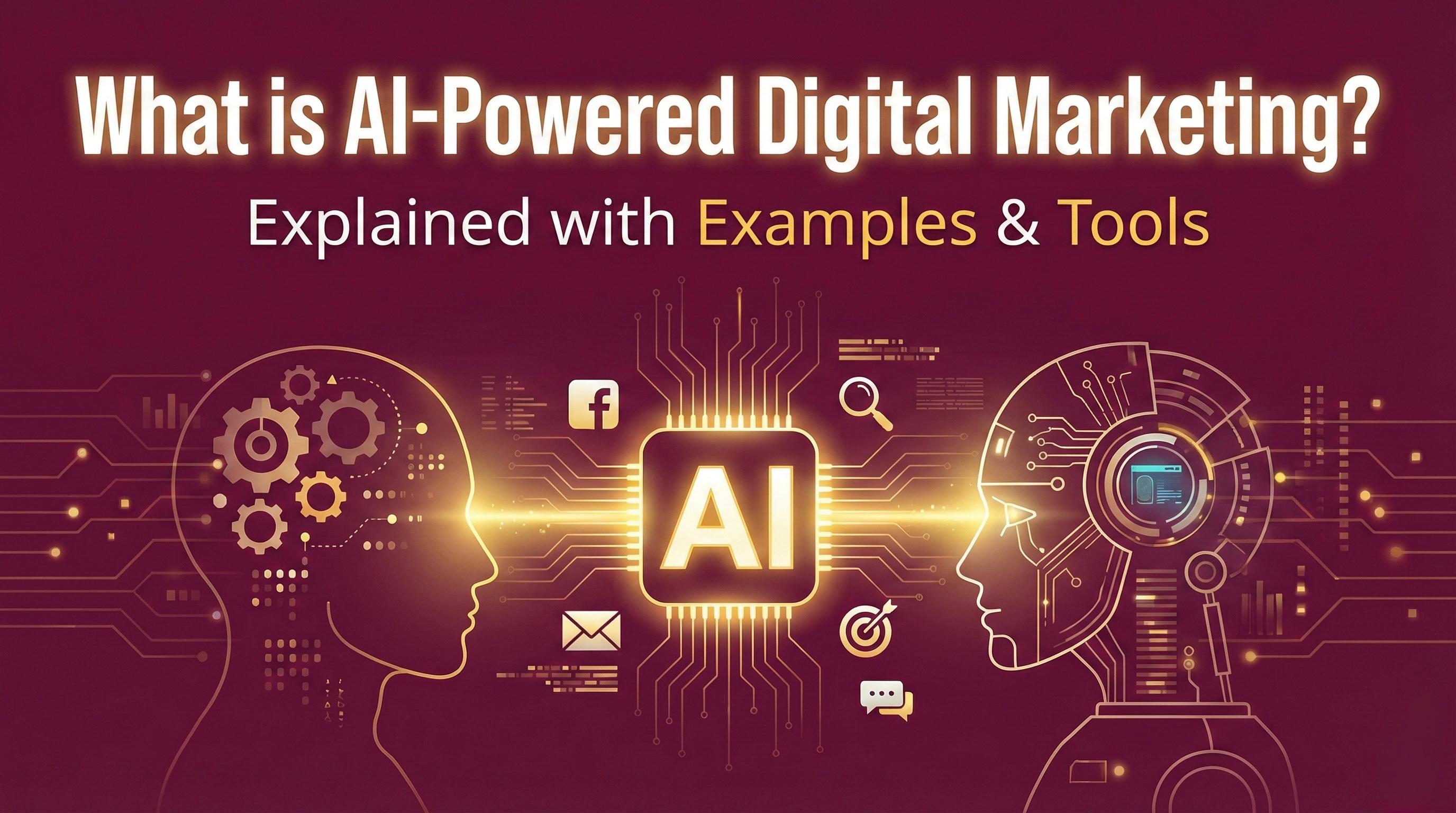
Explore how modern AI marketing works through WHY TAP's AI-powered digital marketing programs.
Healthcare
HR & Recruitment
Recent research from LiveScience and similar studies show AI can predict actions with extremely high accuracy when provided with clean, consistent data.
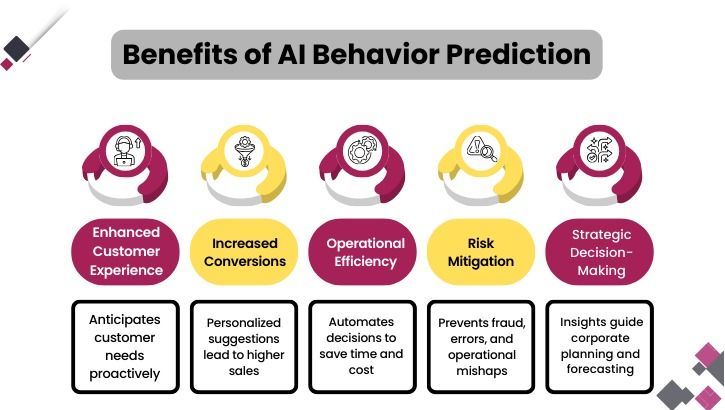
When AI predicts your behaviour, it becomes one of the most powerful competitive advantages for modern businesses. Predictive technology has moved far beyond simple automation it now enables organisations to understand customers deeply, make smarter decisions, and operate with unprecedented efficiency. In 2025, companies that successfully use behaviour prediction outperform their competitors across revenue growth, customer retention, and operational performance.
Below are the major benefits businesses gain when they adopt AI-driven behaviour prediction.
One of the most significant benefits of predictive AI comes from its ability to anticipate customer needs. When AI predicts your behaviour, it identifies subtle patterns in browsing activity, purchase decisions, online engagement, and micro-interactions. These insights allow businesses to offer timely, relevant experiences, often before a customer even knows what they want.
Examples
This proactive approach transforms customer experience by making every interaction feel intuitive and personalised. When organisations anticipate needs accurately, customers feel understood, valued, and emotionally connected to the brand increasing long-term loyalty.
Prediction directly improves conversion rates. When AI predicts your behaviour, it builds a personalised journey for each customer adjusting ads, recommendations, messages, pricing, and offers to match individual preferences.
How AI Improves Conversions
For example, an education brand like WHY TAP can identify which students are most interested in a particular course, what they click on, and when they engage, helping the marketing team optimise ads and communication.
This shifts businesses from generic marketing to precision marketing, where every action is customized, and conversion focused.
Operational efficiency is another major area where behaviour prediction delivers measurable value. When AI predicts your behaviour, it also predicts your operational requirements, internal workflows, and resource needs.
Operational advantages
Companies no longer rely on guesswork. Instead, they use data-backed predictions to manage operations smoothly, saving time, reducing costs, and improving productivity.
For organisations handling high volumes of customers such as e-commerce, fintech, education, logistics, and SaaS predictive optimisation becomes a game-changing capability.
One of the most valuable aspects of behaviour prediction is its ability to detect anomalies in real time. When AI predicts your behaviour, it also recognises when behaviour deviates from your normal patterns, a key indicator of fraud.
Applications in Fraud Prevention
Banks, insurance firms, fintechs, and payment gateways rely heavily on predictive AI to avoid losses. Instead of reacting after a breach, AI detects risk before it happens, allowing companies to intervene instantly.
This proactive risk management builds trust with customers and protects the business from potentially devastating financial losses.
When AI predicts your behaviour, it also forecasts broader market behaviour helping leaders make informed decisions for future growth.
Strategic advantages
Predictive analytics replaces intuition-based decision-making with data-driven strategy, ensuring leaders have a clear understanding of what will work and why.
Companies that harness predictive AI consistently outperform those relying on outdated decision-making models because they move faster, adapt quicker, and act with more confidence.
As AI predicts your behaviour more accurately, ethical concerns grow.
Key Issues
AI must be deployed responsibly.
Predictive AI has become a core part of business strategy. Companies use it to:
Roles expected to grow rapidly include:
✓ AI Analyst
✓ ML Engineer
✓ Predictive Analytics Specialist
✓ AI Product Manager
✓ Behavioural Data Scientist
These skills can be learned through WHY TAP’s AI programs, designed for 2025 job market needs.
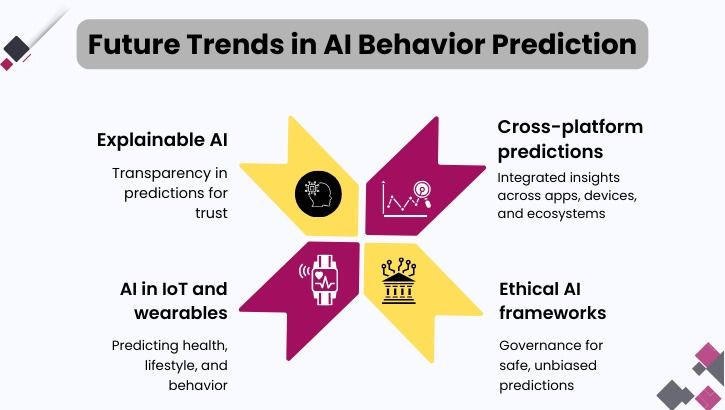
As technology accelerates, behaviour prediction is entering a new era. Between 2025 and 2030, the biggest advancements will focus on transparency, multi-device integration, health forecasting, and ethical governance. The way AI predicts your behaviour will become more accurate, more explainable, and far more integrated into daily life.
Below are the key trends shaping the future of predictive AI.
One of the biggest challenges today is that users don’t always understand how AI systems reach their conclusions. As AI predicts your behaviour with higher accuracy, the need for clarity grows.
Explainable AI (XAI) will:
By 2030, transparency will no longer be optional it will be a legal requirement in many industries.
Currently, behaviour prediction is often limited to one platform at a time. But the future lies in cross-platform and cross-device prediction, where AI predicts your behaviour across your entire digital ecosystem, phones, smart TVs, laptops, wearables, home devices, and even cars.
This unified behavioural graph will help businesses:
This will create highly cohesive, personalised experiences that follow the user seamlessly across devices.
Wearables and IoT health devices will dramatically expand the way AI predicts your behaviour, enabling forecasting not just of consumer choices but also health, lifestyle, and mental patterns.
Future predictions may include:
This will transform preventive healthcare, wellness apps, insurance models, and even workplace productivity management.
As AI predicts your behaviour with greater precision, global governments will enforce strict ethical frameworks to prevent misuse.
Future ethical standards will focus on:
Companies that adopt ethical AI early will have a significant advantage in compliance and user trust.
AI predicting your behaviour is no longer futuristic, it’s already shaping your online and offline decisions. Every major company now relies on predictive AI to stay competitive, increase efficiency, and enhance user experience.
For professionals, mastering AI behaviour prediction has become a career-defining skill. Institutes like WHY TAP offer hands-on, industry-ready AI programs that help students understand predictive analytics, machine learning, data ethics, and real-world implementation.
If you want to stay relevant in the next decade, predictive AI is the skill to learn.