Data is the backbone of modern marketing in 2025. But raw data alone isn’t enough. Marketers need Key Performance Indicators (KPIs) to understand performance, measure ROI, and optimize campaigns.
KPIs in digital marketing are measurable values that show whether marketing strategies, campaigns, and efforts are achieving business goals. Whether managing social media, email campaigns, PPC, SEO, or content marketing, KPIs provide actionable insights.
This blog explores 20 essentialKPIs in digital marketing, how to track them, examples, and tips for using them to drive results.
What Are KPIs in Digital Marketing?
A KPI (Key Performance Indicator) is a metric indicating how effectively a business achieves specific objectives. Unlike vanity metrics like likes or followers, KPIs in digital marketing are actionable and guide decision making.
Example: If a blog receives 10,000 visitors but only 150 convert into leads, your conversion rate is 1.5%, a critical metric for campaign assessment.
HubSpot emphasizes KPIs as a framework to align marketing strategies. with business outcomes: HubSpot Marketing KPIs Guide.
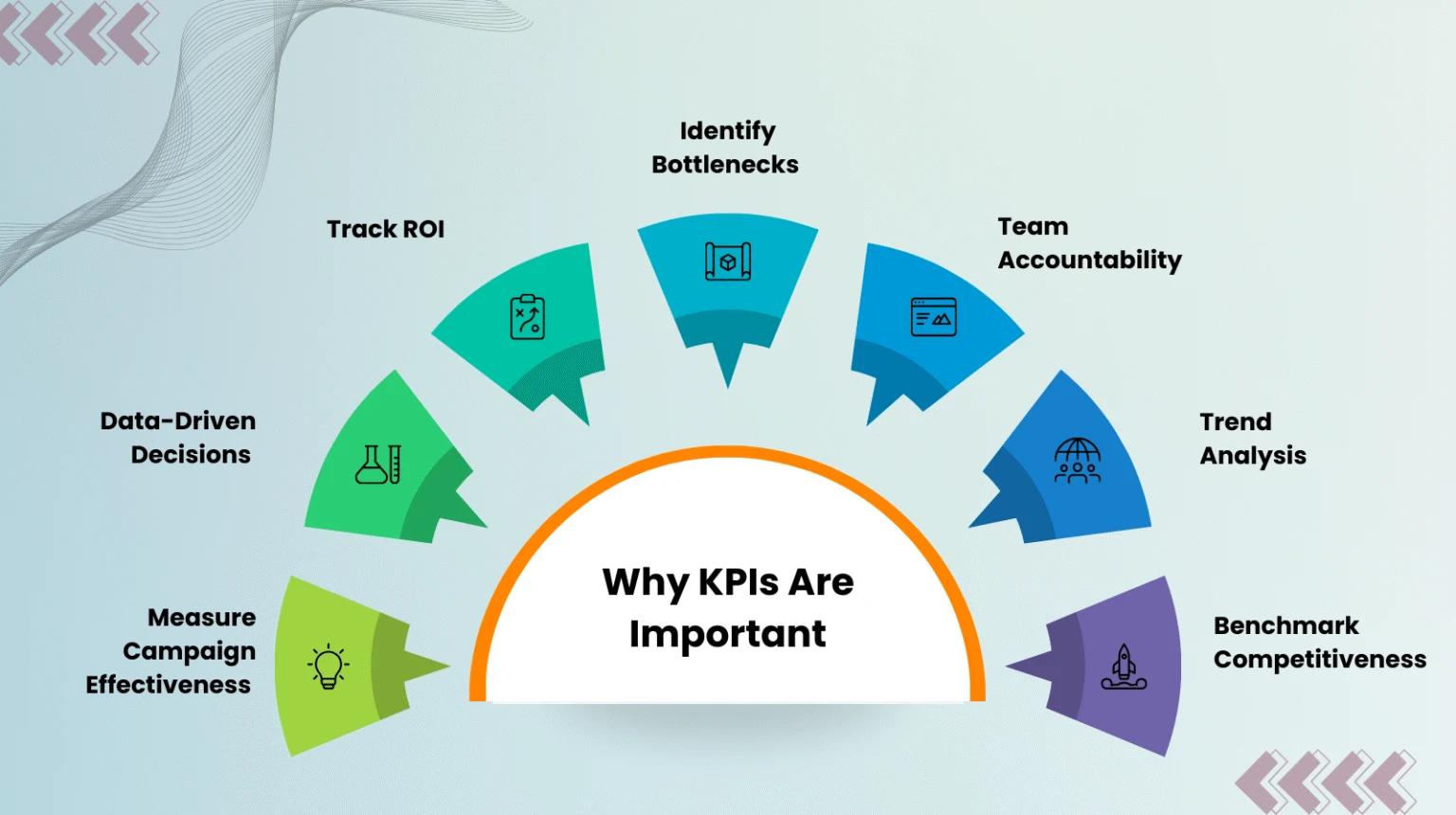
Why KPIs Are Important
Measure Campaign Effectiveness – Identify high-performing channels and ads.
Data-Driven Decisions – Allocate budgets based on real performance.
Track ROI – Assess profitability using CPA, ROAS, and CLV.
Identify Bottlenecks – Spot gaps in your marketing funnel.
Team Accountability – Clear KPIs align goals across teams.
Trend Analysis – Predict seasonal or market trends using KPI patterns.
Benchmark Competitiveness – Compare metrics against industry standards.
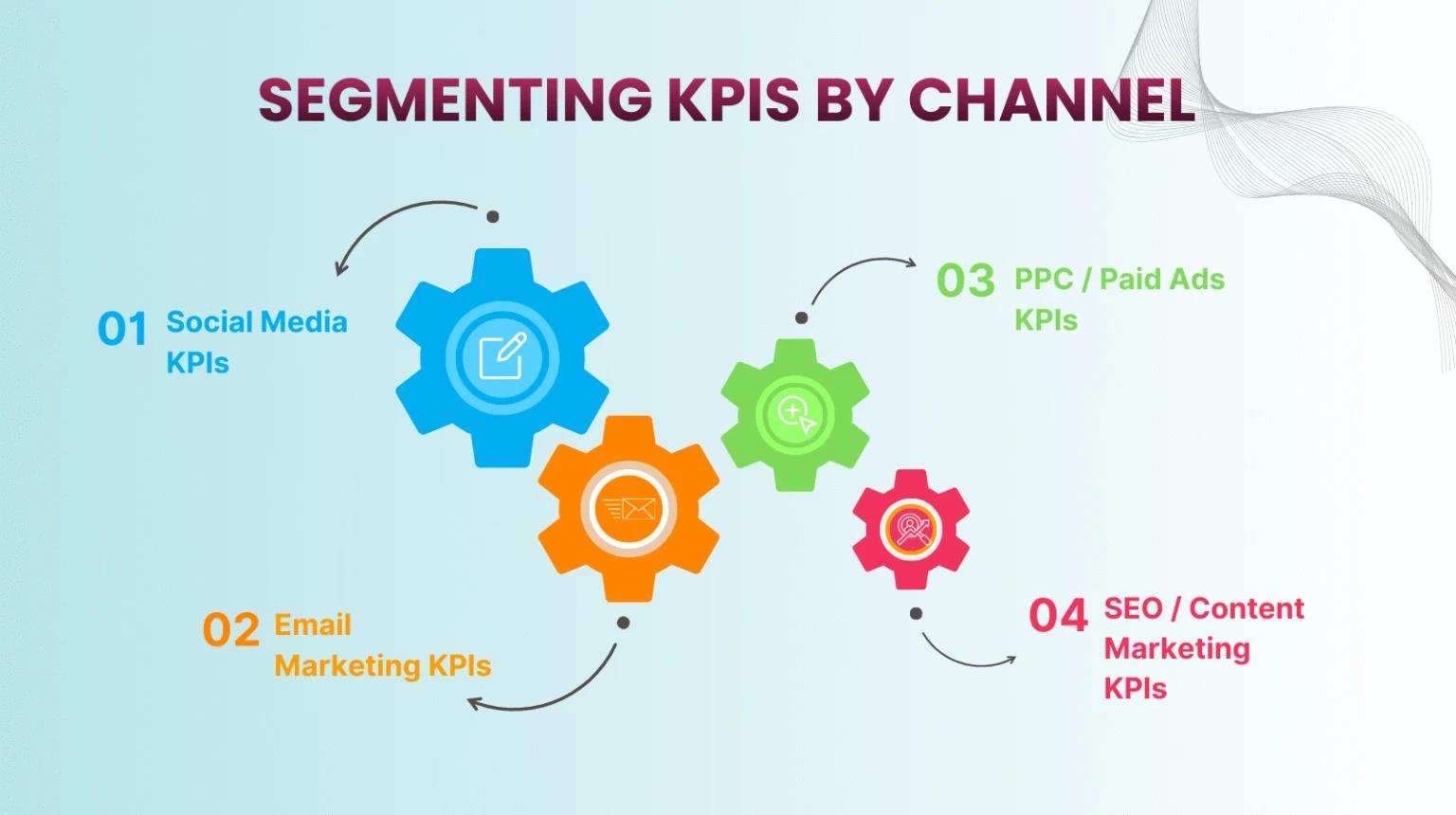
Segmenting KPIs by Channel
Different marketing channels require specific KPIs in digital marketing. Segmenting helps marketers prioritize metrics relevant to their goals.
Social Media KPIs
Engagement rate
Reach & impressions
CTR on social campaigns
Follower growth
Email Marketing KPIs
Open rate
Click-through rate
Conversion rate from campaigns
Bounce rate
PPC / Paid Ads KPIs
Cost per click (CPC)
CTR
CPA
ROAS
SEO / Content Marketing KPIs
Organic traffic
Keyword rankings
Backlinks acquired
Session duration
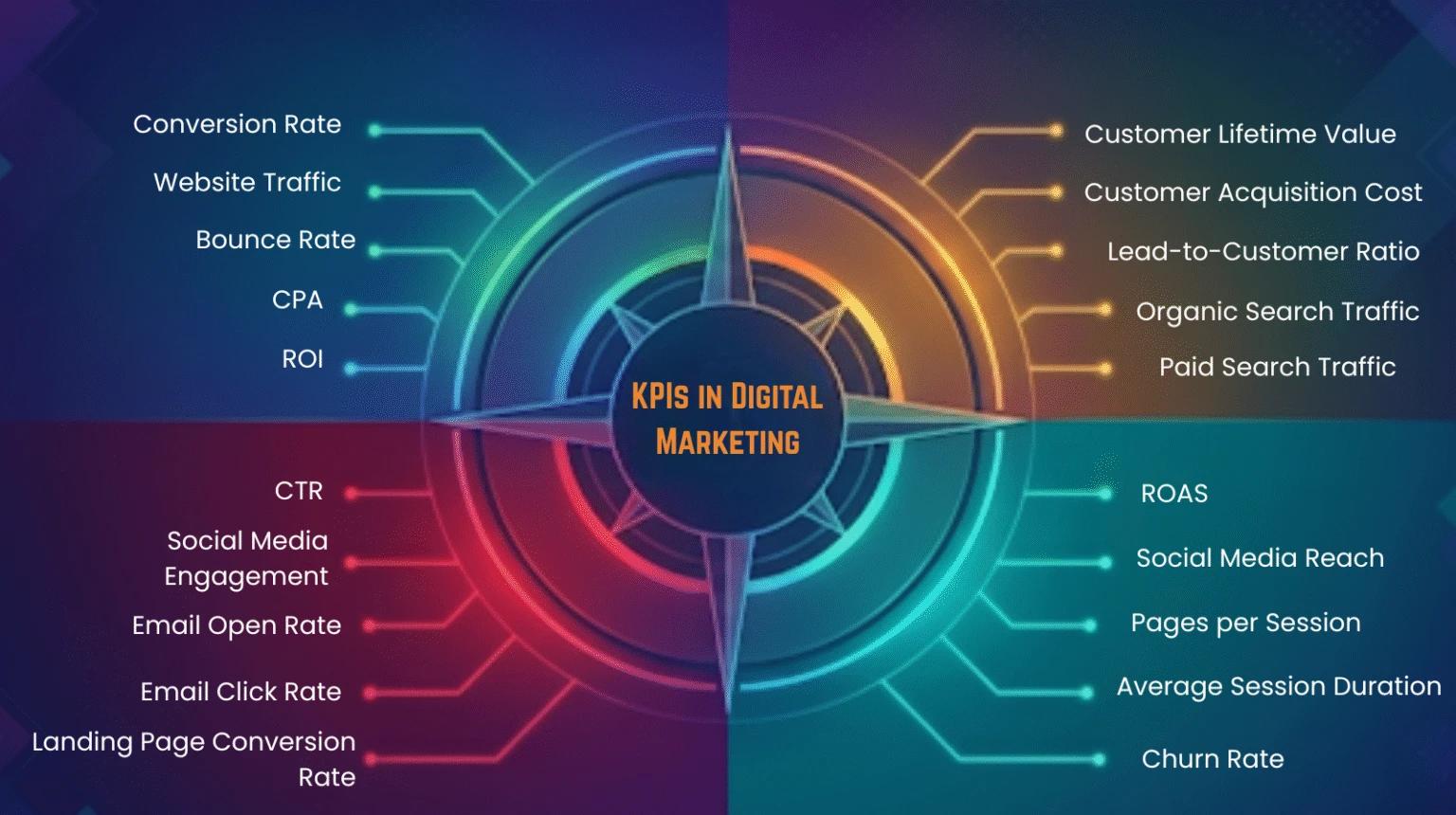
Top 20 KPIs Every Marketer Should Track
1. Conversion Rate
Percentage of visitors completing a desired action. Formula: Conversions ÷ Total Visitors × 100 Example: A landing page with 5000 visitors and 150 sign-ups has a 3% conversion rate.
2. Website Traffic
Total number of visitors measure of reach and brand awareness.
3. Bounce Rate
Percentage of visitors leaving without interacting. Lower bounce rates indicate better engagement.
4. Cost per Acquisition (CPA)
Cost to acquire a customer. Crucial for budgeting.
Percentage of users who clicked your ads or emails. Higher CTR indicates strong messaging.
7. Social Media Engagement
Likes, comments, shares measure audience interaction and content resonance.
8. Email Open Rate
Percentage of recipients opening emails. Industry benchmark ~20–25% for 2025.
9. Email Click Rate
Percentage of recipients clicking links in emails. Measures engagement.
10. Landing Page Conversion Rate
Shows effectiveness of specific landing pages. Optimize forms and CTAs for better results.
11. Customer Lifetime Value (CLV)
Total revenue expected from a customer over their relationship with your business. Helps evaluate marketing spend efficiency.
12. Customer Acquisition Cost (CAC)
The cost to acquire one new customer. Compare with CLV to assess profitability.
13. Lead-to-Customer Ratio
Percentage of leads that convert into customers. Indicates lead quality.
14. Organic Search Traffic
Visitors coming from SEO efforts measures content performance.
15. Paid Search Traffic
Traffic from PPC campaigns like Google Ads helps calculate CPC and ROAS.
16. ROAS (Return on Ad Spend)
Revenue generated per unit of ad spend. Critical for evaluating campaign ROI.
17. Social Media Reach
The number of unique users seeing content measures brand awareness.
18. Pages per Session
Average number of pages viewed indicates engagement depth.
19. Average Session Duration
Measures how long users spend on your site. Longer sessions often indicate quality content.
20. Churn Rate
Percentage of customers lost over a period crucial for subscription or recurring revenue businesses.
Benefits of Tracking KPIs
Improved marketing efficiency
Better budgeting and resource allocation
Clear visibility of campaign performance
Data-driven decisions and optimization
Team alignment and goal tracking
Benchmarking against competitors
Predict trends and adjust strategies proactively
Steps to Create a KPI Dashboard
Identify your business goals
Select relevant KPIs per channel
Use analytics tools like Google Analytics, Google Data Studio, Tableau, Power BI
Set benchmarks and targets
Monitor, analyze, and adjust campaigns regularly
Common Mistakes in KPI Tracking
Tracking too many KPIs at once
Ignoring channel-specific relevance
Using vanity metrics instead of actionable metrics
Not updating benchmarks over time
Failing to segment metrics by campaigns or channels
Optimizing Campaigns Using KPIs
Adjust budget allocation based on ROI and ROAS
Improve targeting using CTR and conversion rates
Enhance content strategy with engagement metrics
Refine email campaigns using open and click rates
Optimize landing pages based on conversion rate
Track churn rate to improve retention strategies
Conclusion
Understanding KPIs in digital marketing is crucial for any marketer aiming for measurable results. Tracking the right metrics from website traffic and conversion rate to ROI and social engagement allows teams to make data-driven decisions, optimize campaigns, and achieve measurable growth.
Marketers who actively monitor KPIs can confidently scale campaigns and improve performance. For those looking to master KPI tracking and analysis, explore WHY TAP’s Digital Marketing Programs for actionable insights and hands-on experience in modern marketing analytics.
FAQs
What are KPIs in digital marketing?
Why are KPIs important for marketers?
What is the difference between a KPI and a metric?
How do you measure conversion rate?
What is a good social media engagement rate?
How do I calculate ROI for marketing campaigns?
What are the most important KPIs for PPC campaigns?