





Table of Contents
- 1.
- 2.
- 2.1
- 3.
- 3.1
- 4.
- 5.
- 6.
- 6.1
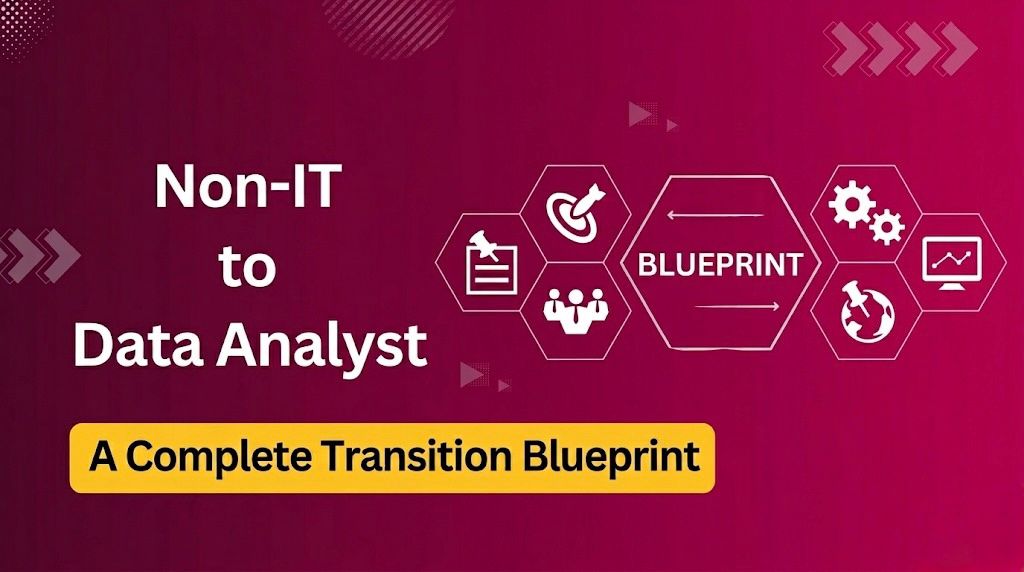
A Many professionals from non-IT backgrounds believe that a career in data analytics is only for programmers or engineers. This misconception often stops talented individuals from exploring one of the fastest-growing career fields today. The truth is, transitioning from Non-IT to Data Analyst is not only possible but increasingly common as companies focus more on skills and practical knowledge than formal technical degrees.
Organizations across industries are hiring analysts who can understand data, generate insights, and support decision-making. They value logical thinking, business understanding, and communication skills strengths that many non-IT professionals already possess. With the right technical training and structured roadmap, professionals from commerce, finance, marketing, and other non-technical backgrounds are successfully moving into analytics roles.
The key challenge is not whether you can transition but how to do it efficiently without wasting time or feeling overwhelmed. In the sections below, we will break down the realities of switching careers into data analytics, the skills you need, and the step-by-step approach that can help you move from a non-IT background into a job-ready data analyst role.
Can Non-IT Professionals Really Become Data Analysts?
One of the most common doubts among career switchers is whether a non-IT background limits entry into data analytics. The reality is that companies today focus more on practical skills and analytical thinking than formal technical degrees. As data-driven decision-making expands across industries, organizations are open to hiring candidates who can understand data and generate insights, regardless of their academic background.
Insights from this detailed career guide highlight that many successful data analysts come from commerce, finance, marketing, and even non-technical roles. What matters most is the ability to work with data, learn modern analytics tools, and apply insights to real business scenarios.
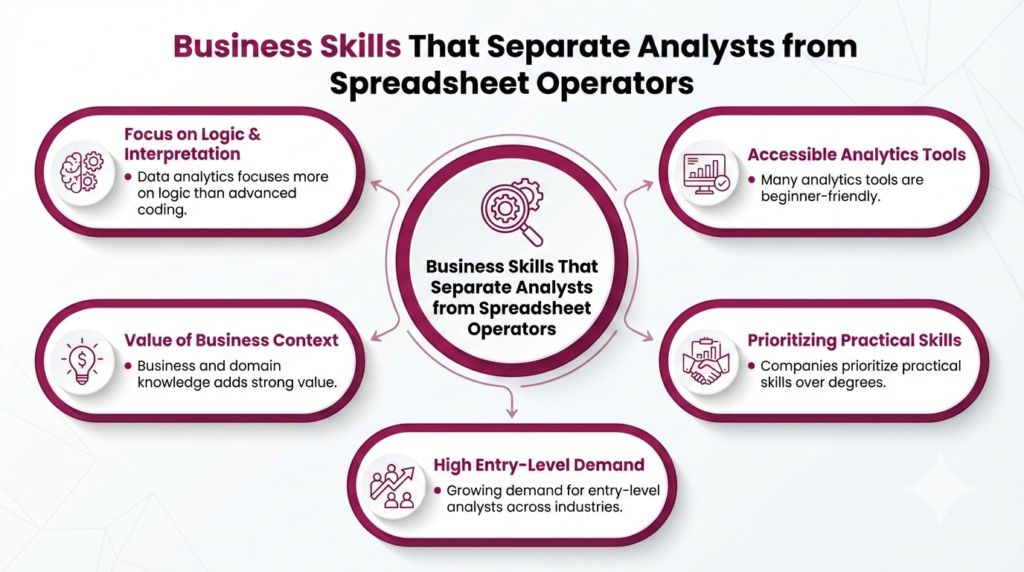
Reasons why non-IT professionals can transition successfully:
- Data analytics focuses more on logic than advanced coding
- Many analytics tools are beginner-friendly
- Business and domain knowledge adds strong value
- Companies prioritize practical skills over degrees
- Growing demand for entry-level analysts across industries
With the right roadmap and consistent learning, non-IT professionals can build job-ready skills and compete effectively in the analytics job market. The shift may seem challenging at first, but it is highly achievable with structured preparation.
Why Companies Hire Non-IT Candidates in Analytics
Companies are increasingly open to hiring non-IT professionals for data analyst roles because analytics is not only about coding - it is about understanding business problems and solving them using data. Many organizations value candidates who can interpret numbers, communicate insights clearly, and understand industry-specific challenges. These strengths are often found in professionals from non-technical backgrounds.
According to insights on career transition, non-IT candidates often bring domain expertise that helps companies make better decisions. For example, someone from finance understands financial metrics, while a marketing professional understands customer behavior. When combined with analytics skills, this domain knowledge becomes a strong competitive advantage.
IT vs Non-IT Strengths in Data Analytics
| Background | Strengths Brought to Analytics | Hiring Advantage |
|---|---|---|
| IT Background | Programming & technical depth | Faster tool learning |
| Non-IT Background | Business/domain understanding | Better decision insights |
| IT Background | System & database familiarity | Technical roles |
| Non-IT Background | Communication & business logic | Strategic roles |
Employers increasingly prefer well-rounded analysts who can combine technical skills with business understanding. Non-IT professionals who learn analytics tools and apply their domain knowledge often stand out during hiring and deliver strong performance in real-world roles.
Skills You Must Learn to Switch into Data Analytics
Transitioning from a non-IT background to data analytics requires a balanced mix of technical and analytical skills. The good news is that you do not need advanced programming knowledge to get started. Most entry-level data analyst roles require practical tool knowledge, logical thinking, and the ability to interpret business data effectively.
Professionals moving into analytics should focus on building a strong foundation first, then gradually move toward advanced tools and real-world projects. A structured approach helps avoid confusion and ensures that every skill you learn contributes directly to job readiness.
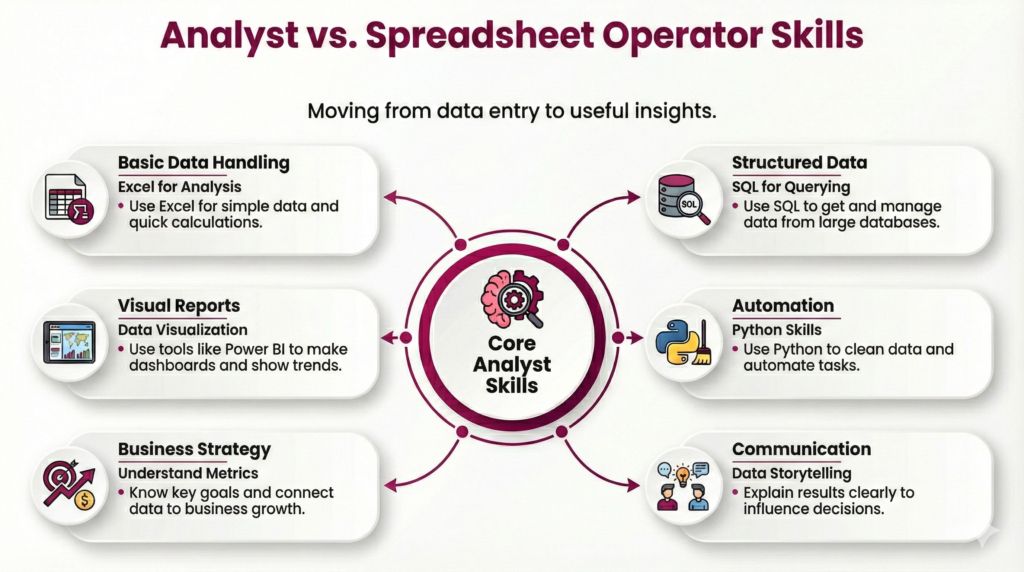
Essential skills to focus on include:
- Excel for basic data handling and analysis
- SQL for querying and managing structured data
- Data visualization tools like Power BI
- Basic Python for data cleaning and automation
- Understanding of business metrics and KPIs
- Data interpretation and communication skills
Technical vs Non-Technical Skills Needed
Career-switch insights shared in this career change resource emphasize that success in analytics comes from combining technical tools with problem-solving and communication abilities.
Skills Required for Non-IT to Data Analyst Transition
| Skill Type | Why It Matters | Difficulty Level |
|---|---|---|
| Excel | Data basics & reporting | Easy |
| SQL | Data extraction | Moderate |
| Power BI/Tableau | Visualization & dashboards | Moderate |
| Python basics | Automation & analysis | Moderate |
| Communication | Presenting insights | Easy |
Building these skills step by step creates a smooth transition into entry-level analytics roles.
Step-by-Step Transition Plan (0 to Job Ready)
Switching from a non-IT background to data analytics becomes manageable when broken into clear phases. Many career switchers fail because they try to learn everything at once. A structured roadmap reduces overwhelm and builds confidence steadily.
Phase 1 (Month 1–2):
FoundationStart with Excel and basic statistics. Understand data types, sorting, filtering, pivot tables, and simple KPIs. Focus on logical thinking rather than speed.
Phase 2 (Month 3–4):
Core Tools: Learn SQL for querying databases and Power BI for building dashboards. Begin working with real datasets and small projects.
Phase 3 (Month 5–6):
Advanced Edge introduces basic Python for data cleaning and automation. Build 2–3 portfolio projects that solve real business problems.
Phase 4:
Job Preparation Prepare for interviews using scenario-based practice from mock interviews. Practice explaining projects clearly and confidently.
To become job-ready:
- Build a portfolio with measurable outcomes
- Apply for internships and entry-level roles
- Practice communicating insights
- Keep improving weak areas
Following a phased plan helps most non-IT professionals transition within 6–8 months with consistent effort.
Biggest Mistakes Career Switchers Make
Many non-IT professionals start their transition into data analytics with enthusiasm but lose direction due to common mistakes. These mistakes often lead to slow progress, confusion, and loss of confidence. Avoiding them early can significantly speed up your transition and improve job readiness.
One major mistake is trying to learn too many tools at once without mastering the basics. Jumping between courses and tutorials creates fragmented knowledge that is difficult to apply in real-world scenarios. Another common issue is focusing only on theory without building practical projects. Employers look for proof of skills, not just course completion.
Common mistakes career switchers should avoid:
- Learning multiple tools without a structured roadmap
- Relying only on theory without practical projects
- Comparing progress with others and losing motivation
- Avoiding job applications due to lack of confidence
- Ignoring communication and business understanding
Reviewing real student stories can provide motivation and clarity on how others successfully transitioned from non-IT backgrounds into analytics roles. Professionals who stay consistent, build projects, and follow a focused plan are far more likely to achieve a successful career switch within months rather than years.
How Long It Really Takes to Switch Careers
One of the biggest concerns for professionals moving from a non-IT background is the timeline. The honest answer is that the transition speed depends on consistency, learning strategy, and practical application. For most dedicated learners, becoming job-ready typically takes 6 to 8 months with structured preparation and regular practice.
The first two months usually involve building foundational skills such as Excel and basic statistics. The next phase focuses on SQL, visualization tools, and project development. Adding basic Python and automation skills further strengthens your profile. The final stage involves portfolio refinement and interview preparation.
Factors that influence transition speed include:
Weekly study consistency (minimum 10–15 hours)
- Quality of projects built
- Interview practice and confidence
- Guidance and structured roadmap
- Willingness to apply for roles early
Some professionals secure internships within 4–5 months, while others take slightly longer depending on their learning pace. The key is avoiding perfectionism and focusing on steady improvement.
Switching careers is less about background and more about disciplined skill-building. With a focused plan and consistent effort, transitioning from non-IT to data analyst is a realistic and achievable goal within a year.
Final Thoughts
Transitioning from a non-IT background to data analytics may feel challenging at first, but it is far from impossible. Companies today care more about practical skills, problem-solving ability, and business understanding than academic background. Professionals from commerce, finance, marketing, and other non-technical fields are successfully moving into analytics roles by following structured learning paths and building strong portfolios.
The most important factor in a successful transition is consistency. Learning the right tools, working on real-world projects, and developing confidence through practice can gradually transform your profile into that of a job-ready analyst. Instead of worrying about your background, focus on building skills that demonstrate your ability to work with data and generate insights.
Career switching requires patience, but the opportunities in analytics make the effort worthwhile. With growing demand for skilled analysts and increasing adoption of data-driven decision-making across industries, professionals who commit to learning and improving continuously can build a stable and rewarding career in data analytics regardless of their starting point.
Start Your Transition with a Structured Blueprint
If you are serious about moving from non-IT to data analytics, the most important decision is choosing a structured path instead of random learning. Many career switchers spend months watching tutorials but struggle to connect skills into a job-ready profile. What truly accelerates the transition is guided learning, practical projects, and interview preparation aligned with industry expectations.
A well-designed roadmap helps you:
- Learn tools in the correct sequence
- Build real-world portfolio projects
- Gain confidence through mock interviews
- Understand hiring expectations
- Prepare for entry-level analytics roles
Instead of delaying your transition due to doubt or confusion, take action with the right support system. To build job-ready skills and follow a complete transition blueprint, explore the Certification in AI Powered Data Analytics and begin your journey toward a successful data analytics career.