








Table of Contents
- 1.
- 2.
- 3.
- 4.
- 4.1
- 5.
- 6.
- 7.
- 8.
Salary is one of the biggest reasons professionals choose data analytics as a career. With demand for skilled analysts rising across industries, understanding the Data Analyst Salary in India 2026 has become crucial for students, career switchers, and working professionals planning their next move. However, salary growth in this field is not just based on experience it is heavily influenced by skills, tools, and business understanding.
Many freshers enter the analytics field expecting high pay but quickly realize that basic Excel knowledge alone limits earning potential. At the same time, experienced analysts with strong technical and business skills often earn two to three times more than entry-level professionals. This widening salary gap is driven by industry demand for advanced analytics, automation, and AI-powered decision-making. Knowing current salary trends helps you make smarter learning and career decisions. In the sections
Whether you are starting your career or aiming for a higher-paying role below, we will break down fresher data analyst salary india vs experienced data analyst salary in India, the skills that influence compensation, and how professionals can position themselves for faster salary growth in 2026.
Data Analyst Salary in India 2026 - Market Overview
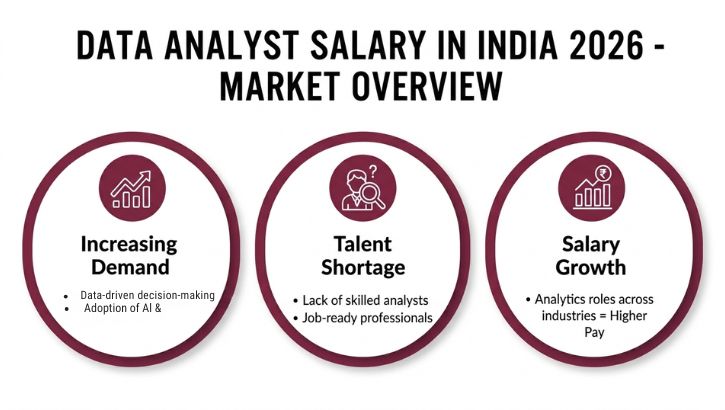
The demand for data analysts salary India continues to grow as companies across industries adopt data-driven decision-making. From startups to large enterprises, organizations are investing heavily in analytics teams to improve efficiency, understand customer behavior, and drive strategic growth. This rising demand is directly influencing salary trends in the analytics job market.
Recent Data Analyst Salary in India 2026 trends indicate that the experienced data analyst salary India range typically falls between ₹8 LPA and ₹18+ LPA.While entry-level roles offer moderate starting packages, professionals with strong technical and business skills often see rapid salary growth within a few years. Companies are willing to pay higher salaries to analysts who can work with modern analytics tools, automate workflows, and generate actionable insights.
Key factors shaping salary trends in 2026 include:
- Increasing demand for data-driven decision-making
- Adoption of AI and automation in analytics
- Shortage of skilled, job-ready analysts
- Growth of analytics roles across industries
- Higher pay for professionals with advanced skills
Overall, the Data Analyst Salary in India 2026 market remains strong, with consistent demand and competitive salary growth for professionals who align their skills with industry requirements.
Fresher Data Analyst Salary in India 2026
Experienced Data Analyst Salary in India 2026 While entry-level packages vary across cities and companies, candidates with practical project experience and strong technical skills often secure higher starting salaries than those with only theoretical knowledge. Employers prefer job-ready professionals who can contribute from day one.
According to recent salary insights, fresher data analysts in India typically earn between ₹3 LPA and ₹6 LPA. However, candidates skilled in SQL, Python, and visualization tools can secure offers on the higher end of this range. Location also plays a role, in Data Analyst Salary in India 2026 with metro cities generally offering better compensation than smaller cities.
Factors that influence fresher salaries include:
- Technical skill proficiency (SQL, Excel, Python, BI tools)
- Internship or project experience
- Portfolio quality and practical exposure
- Company size and industry domain
- Communication and business understanding
Fresher Data Analyst Salary Breakdown (2026)
| Skill Level | Typical Salary Range | Job Readiness Level | Hiring Demand |
|---|---|---|---|
| Basic Excel only | ₹2.5–3.5 LPA | Low | Limited |
| Excel + SQL | ₹3–5 LPA | Moderate | Good |
| SQL + Python + BI tools | ₹5–7 LPA | High | Strong |
| Advanced + Projects | ₹7+ LPA | Very High | Excellent |
Freshers data analyst salary who focus on building practical skills and strong portfolios often experience faster salary growth within their first two years.
Experienced Data Analyst Salary in India 2026 (2–8 Years)
As data analysts gain experience, their earning potential increases significantly. Professionals with two to eight years of experience often move into higher-paying roles such as senior data analyst, business analyst, or analytics consultant. Data Analyst at this stage depends heavily on advanced skills, domain expertise, and the ability to deliver business impact through data.
Recent salary trends indicate that experienced data analyst salaries in India typically earn between ₹8 LPA and ₹18+ LPA, with top performers earning even higher packages in product-based companies and global firms. Analysts who upgrade their skills and work on complex projects tend to see faster salary growth compared to those who remain in basic reporting roles.
Experienced Analyst Salary Growth (India 2026)
| Experience Level | Typical Salary Range | Key Skills Required | Growth Potential |
|---|---|---|---|
| 2–3 Years | ₹6–10 LPA | SQL, Python, BI tools | Strong growth |
| 4–5 Years | ₹10–15 LPA | Advanced analytics, dashboards | High growth |
| 6–8 Years | ₹15–20+ LPA | Business analytics, automation | Leadership path |
Experienced data analysts salary India who specialize in high-demand skills and contribute to strategic decisions often see the fastest career and salary progression.
Skills That Directly Increase Data Analyst Salary
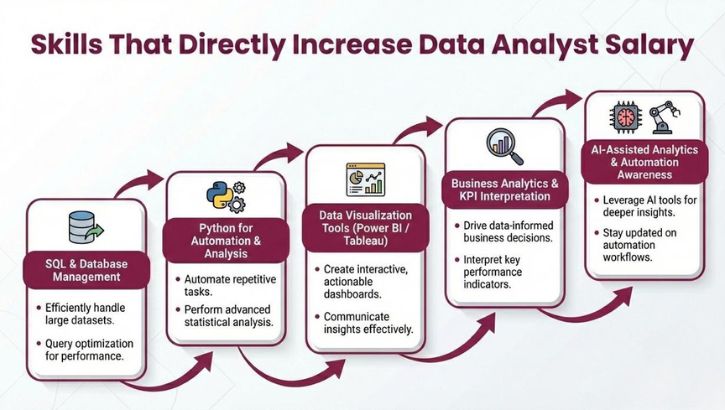
Data Analyst Salary in India 2026 is strongly linked to skill depth rather than years of experience alone. Two professionals with the same experience can earn vastly different salaries depending on the tools they use, the complexity of projects they handle, and their ability to deliver business insights. Companies consistently pay more to analysts who can automate workflows, handle large datasets, and support strategic decision-making.
To move beyond average salary brackets, analysts must focus on high-impact skills that align with modern hiring expectations. These skills not only increase earning potential but also open opportunities in product companies, consulting firms, and global organizations.
Key salary-boosting skills include:
- SQL and database management for large datasets
- Python for automation and advanced analysis
- Data visualization tools like Power BI or Tableau
- Business analytics and KPI interpretation
- AI-assisted analytics and automation awareness
High-Income Skills Companies Pay For
Not all technical skills carry the same salary weight. Companies pay premium compensation to analysts who can directly influence revenue, cost savings, and operational efficiency. High-income analysts are typically those who move beyond reporting and actively contribute to strategic decisions using data.
Professionals who invest time in structured learning resources often gain clarity on which advanced skills create measurable business impact. The difference in Data Analyst Salary in India 2026 often come from depth of expertise and business impact.
High-paying skills that significantly influence salary include:
- Advanced SQL for handling large-scale enterprise databases
- Python for automation, predictive analysis, and data modeling
- Dashboard development for executive-level reporting
- Business analytics for KPI tracking and performance optimization
- Understanding of AI-assisted tools and workflow automation
Recruiters look for analysts who can independently manage end-to-end projects from data extraction to executive presentation. Those who demonstrate ownership, automation capability, and business insight often negotiate stronger salary packages.
In 2026, income growth will favor professionals who continuously upgrade their technical stack and align their expertise with business strategy, rather than those who rely solely on basic reporting tools.
Why Some Analysts Earn 3x More Than Others
In the same job market, it’s common to see one data analyst earning ₹5 LPA while another earns ₹15 LPA or more. This gap in Data Analyst Salary in India 2026 is rarely due to experience alone. The real gap comes from skill depth, business impact, and the ability to solve complex problems using data. Companies reward professionals who deliver measurable outcomes, not just reports.
High-earning analysts usually focus on building strong portfolios, mastering advanced tools, and understanding how data supports business decisions. They position themselves as strategic contributors rather than support resources. This shift significantly improves both salary growth and career progression.
Key factors that create salary gaps include:
- Mastery of high-demand tools like SQL, Python, and BI platforms
- Ability to automate workflows and improve efficiency
- Strong portfolio with real-world project impact
- Understanding of business metrics and decision-making
- Confidence in interviews and salary negotiations
Exploring real student success stories shows how structured learning and practical experience help professionals move into higher-paying analytics roles. Analysts who continuously upgrade their skills and demonstrate measurable value often earn significantly more than peers with similar experience.
How to Reach ₹10 LPA+ as a Data Analyst Faster
Reaching ₹10 LPA or more as a fresher data analyst salary india is achievable within a few years - but only with a focused strategy. Professionals who grow faster typically avoid random learning and instead follow a structured skill roadmap aligned with market demand. Salary growth accelerates when you combine technical depth with business impact.
The first step is mastering core tools such as SQL, Python, and visualization platforms. Next, focus on working with real-world datasets and building portfolio projects that demonstrate measurable outcomes. Employers are more likely to offer higher packages to candidates who can prove their ability to solve business problems independently.
To accelerate salary growth:
- Upgrade from Excel-only skills to a modern analytics stack
- Build 3–5 strong portfolio projects with clear business results
- Learn automation and AI-assisted analytics tools
- Prepare for scenario-based interviews
- Target product-based and high-growth companies
Negotiation also plays a key role. Professionals who understand their market value and demonstrate impact during interviews are better positioned to secure higher compensation. With consistent upskilling and practical application, crossing ₹10 LPA becomes a realistic and achievable goal in the evolving analytics job market.
Final Thoughts
The Data Analyst Salary in India 2026 landscape clearly shows that income growth is closely tied to skill development and practical expertise. While freshers can start with moderate packages, experienced data analysts salary india with advanced technical and business skills often achieve significantly higher salaries within a few years. The difference lies in how strategically professionals build and upgrade their capabilities.
Relying only on basic tools or experience is no longer enough to secure high-paying roles. Companies are rewarding analysts who can work with modern analytics tools, automate processes, and deliver insights that directly impact business performance. Professionals who invest in continuous learning and real-world project experience are better positioned to move into high-growth roles.
Salary growth in data analytics salary india is not just about time spent in the industry - it is about the value you bring. Analysts who focus on skill depth, business understanding, and consistent upskilling can achieve faster promotions, better compensation, and long-term career stability in an increasingly competitive job market.
Build Skills That Lead to Higher Salary Growth
If your goal is to earn a higher Data Analyst Salary in India 2026 upgrading your skills strategically is essential. Companies are offering better compensation to professionals who can work with SQL, Python, visualization tools, and AI-assisted analytics. Analysts who demonstrate real-world project experience and business understanding often move faster into high-paying roles.
Instead of relying only on experience, focus on building job-ready skills that directly impact your earning potential. A structured learning path helps you avoid confusion, strengthen your portfolio, and prepare for interviews that test practical knowledge rather than theory. The right guidance can significantly reduce the time it takes to move from entry-level pay to high-growth salary brackets.
To accelerate your career and increase your earning potential, explore the Certification in AI Powered Data Analytics and start building the advanced skills companies are paying for in 2026.