Short-form video has completely transformed the digital marketing landscape over the past five years. What began as a trend has now become the core of online content consumption. Whether you open Instagram, YouTube, Facebook, or even Google Discover, one pattern is clear: people prefer watching short, snackable, highly engaging videos, especially with growing interest in Reels vs Shorts.
In 2025, two platforms dominate this short-form revolution:
Both are often compared in the reels vs shorts conversation.
These platforms collectively generate billions of daily views, power viral trends, shape pop culture, influence purchasing decisions, and serve as the main discovery engine for new creators and brands. For many businesses, reels vs shorts are no longer optional: they are essential tools for reach, engagement, and conversions, especially when understanding reels vs shorts performance differences
But here’s the truth most people don’t realise:
Reels and Shorts are fundamentally different.
They operate on different algorithms, attract different types of audiences, and serve different marketing objectives. A video that explodes on Reels might perform poorly on Shorts and the opposite is equally true.
If you want to succeed as:
…then you must understand how these two platforms work, how their algorithms behave, and how to tailor your content accordingly-especially in the context of reels vs shorts strategies.
This guide breaks down every important difference between Instagram reels vs shorts in 2025, including reach, engagement patterns, monetisation potential, lead generation capability, long-term authority building, SEO impact, and YouTube Reels vs Shorts platform-specific audience behavior all essential to the reels vs shorts comparison.
By the end, you will know exactly which platform is right for your goals-and how to use both together for maximum growth.
Learn Instagram Reels, YouTube Shorts, AI Tools, and Performance Marketing through WHY TAP’s industry-powered Digital Marketing Program.
Apply Now – WHY TAP
At first glance, reels vs shorts may look identical-they’re both vertical, short-form videos designed to capture attention in seconds. But for digital marketers, content creators, and businesses, the purpose, audience intent, and long-term impact of these two platforms, especially when comparing Reels vs Shorts, are fundamentally different. Understanding this difference is the key to building a winning content strategy in 2025.
Instagram Reels = Social Discovery + Trend Culture
Reels are built for instant discovery and fast-paced engagement. Instagram’s algorithm pushes Reels aggressively to users who don’t follow you, making it one of the best tools for rapid visibility and viral growth. This becomes even more important when analysing Reels vs Shorts, as the platform thrives on trends, visual storytelling, aesthetic appeal, and entertainment-driven content.
Reels work best for:
Reels are ideal when the goal is to gain followers fast, build brand recall, or ride trending audio formats. However, the downside is that reach can be unpredictable: high today, low tomorrow and engagement usually peaks within the first 48 hours.
YouTube Shorts = Search + Video Ecosystem
YouTube Shorts operate inside the world’s largest video search engine. Unlike Instagram, where users scroll for entertainment, YouTube users actively search for solutions, knowledge, and tutorials. This creates a deeper, more intentional viewing experience.
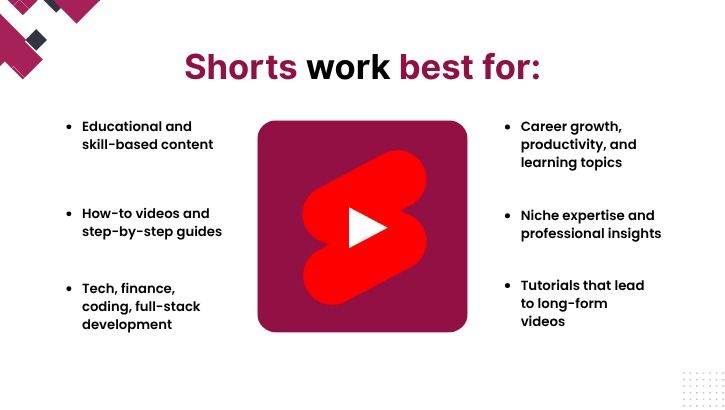
Because Shorts are part of YouTube’s bigger content ecosystem, they continue receiving views months after posting, making them ideal for evergreen growth and long-term authority.
The Simple Summary
Reels help you get attention.
Shorts help you build trust.
A smart digital marketer or creator knows how to leverage both: Reels for quick reach and Shorts for long-term brand impact, balancing the reels vs shorts advantages.
When it comes to short-form video success, two factors decide everything: reach and virality. Although both Instagram Reels and YouTube Shorts offer massive exposure, the mechanics behind how they distribute content are very different. Understanding these differences helps you choose the best platform to increase visibility and grow faster in 2025.
Instagram Reels Reach (2025)
Instagram continues to push Reels more than any other content format. Because it is a social networking platform, its algorithm prioritises fast engagement signals such as likes, saves, comments, shares, and watch time within the first few minutes or hours. If your Reel performs well early, Instagram amplifies it aggressively.
This is why creators often see 10x–50x their follower count in reach from a single Reel. Even small accounts can go viral overnight.
However, Reels come with a major drawback: reach is extremely unpredictable.
You may see results like
This inconsistency happens because Instagram feeds are heavily influenced by:
Reels give exceptional exposure, but the visibility is usually short-lived and varies widely from post to post.
YouTube Shorts Reach (2025)
YouTube Shorts follow a structured and predictable distribution model, which is very different from Instagram. Instead of relying solely on fast engagement, Shorts are pushed through phased waves of discovery:
YouTube shows your Short to a small audience to measure retention and relevance.
If the watch time is strong, YouTube introduces your video to viewers interested in similar topics or channels.
The biggest advantage: Shorts begin appearing in YouTube Search, “Suggested Videos,” and sometimes even on long-form content pages.
Because of this system, Shorts often continue to gain traction for weeks or even months, long after posting. This makes YouTube Shorts extremely powerful for:
Unlike Reels, Shorts don’t die out after 48 hours.
Final Verdict on Reach and Virality
A smart digital marketer uses Reels for quick attention and Shorts for long-term audience building.
Instagram Reels
Reels are made for quick likes, shares, saves, and DMs.
Instagram is a social app, so emotional, aspirational content works well.
Reels encourage:
Engagement is high but drops quickly after 48 hours.
YouTube Shorts
Shorts get:
Plus, users are in an “education + learning” mindset.
Engagement stays for months.
Winner: YouTube Shorts for meaningful engagement
Reels Audience Intent
Shorts Audience Intent
This matters for brands.
If you want serious leads, Shorts perform better.
If you want mass awareness, Reels perform better.
Instagram Reels Monetisation
Instagram shut down the Reels Bonus Program in many countries.Brands pay for collabs, but organic monetisation is limited.
Creators earn mainly through:
YouTube Shorts Monetisation
Shorts Monetisation increased in 2024–2025.
Creators earn through:
YouTube pays better consistently.
Winner: YouTube Shorts
Instagram Reels
Instagram search is limited.
Your video depends mostly on:
Reels disappear from the feed after a few days.
YouTube Shorts
Shorts rank on YouTube search.
This is a HUGE advantage.
You can rank for:
Shorts also lead audiences to long-form videos.
Winner: YouTube Shorts
Better for SEO, search ranking, and long-term traffic.
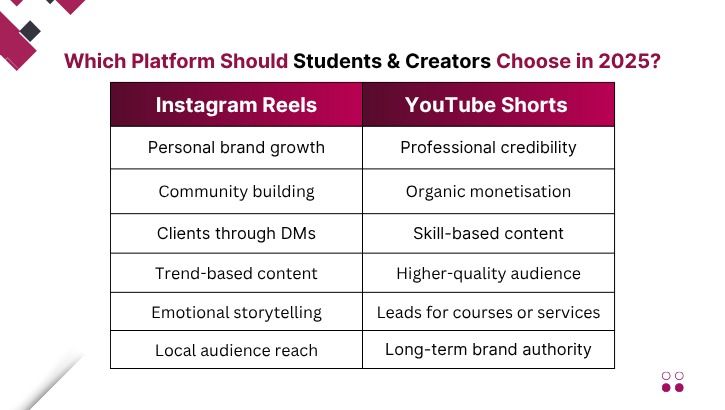
Choose Reels If You Want
Choose YouTube Shorts If You Want
Best Strategy: Use BOTH
Many top creators use this formula:
This gives maximum visibility across both ecosystems.
In 2025:
If you want to grow your career in social media, digital marketing, or content creation, mastering both platforms is essential.
Shorts build trust.
Reels build fame.
Together, they build a brand.
WHY TAP can help you become industry-ready with:
Become a Full-Stack Digital Marketer
Master SEO, SMM, Meta Ads, Google Ads, Analytics, Content Creation, and Short-Form
Video Strategy in one program.
Portfolio | Internship | Placement | Industry Projects
Enroll Today at WHY TAP – Chennai’s Top Training and Placement Company
Instagram Reels and YouTube Shorts may look similar, but in 2025 they serve two completely different goals, which becomes clear when analysing reels vs shorts. Reels give creators and brands explosive visibility, trend momentum, and personality-driven engagement. Shorts, on the other hand, provide long-term discoverability, authority, and revenue opportunities through YouTube’s powerful search engine.
If your goal is fast fame, choose Reels.
If your goal is long-term trust, choose Shorts.
If your goal is career growth, use both strategically.
The smartest creators and digital marketers in 2025 follow one principle:
Create once, distribute everywhere.
Reels bring people to you.
Shorts help them stay with you.
When combined with consistent posting, strong storytelling, and a data-driven content strategy, Reels and Shorts together can build a powerful online brand, attract clients, generate leads, and open high–income career opportunities — guided by the insights of reels vs shorts.
If you’re a student or aspiring digital marketer, mastering short-form video is no longer optional. It is a skill every employer wants, every brand needs, and every creator uses to grow, especially when understanding Reels vs Shorts and how each platform works. WHY TAP helps you build these skills from day one through real projects, AI tools, internships, and hands-on training.