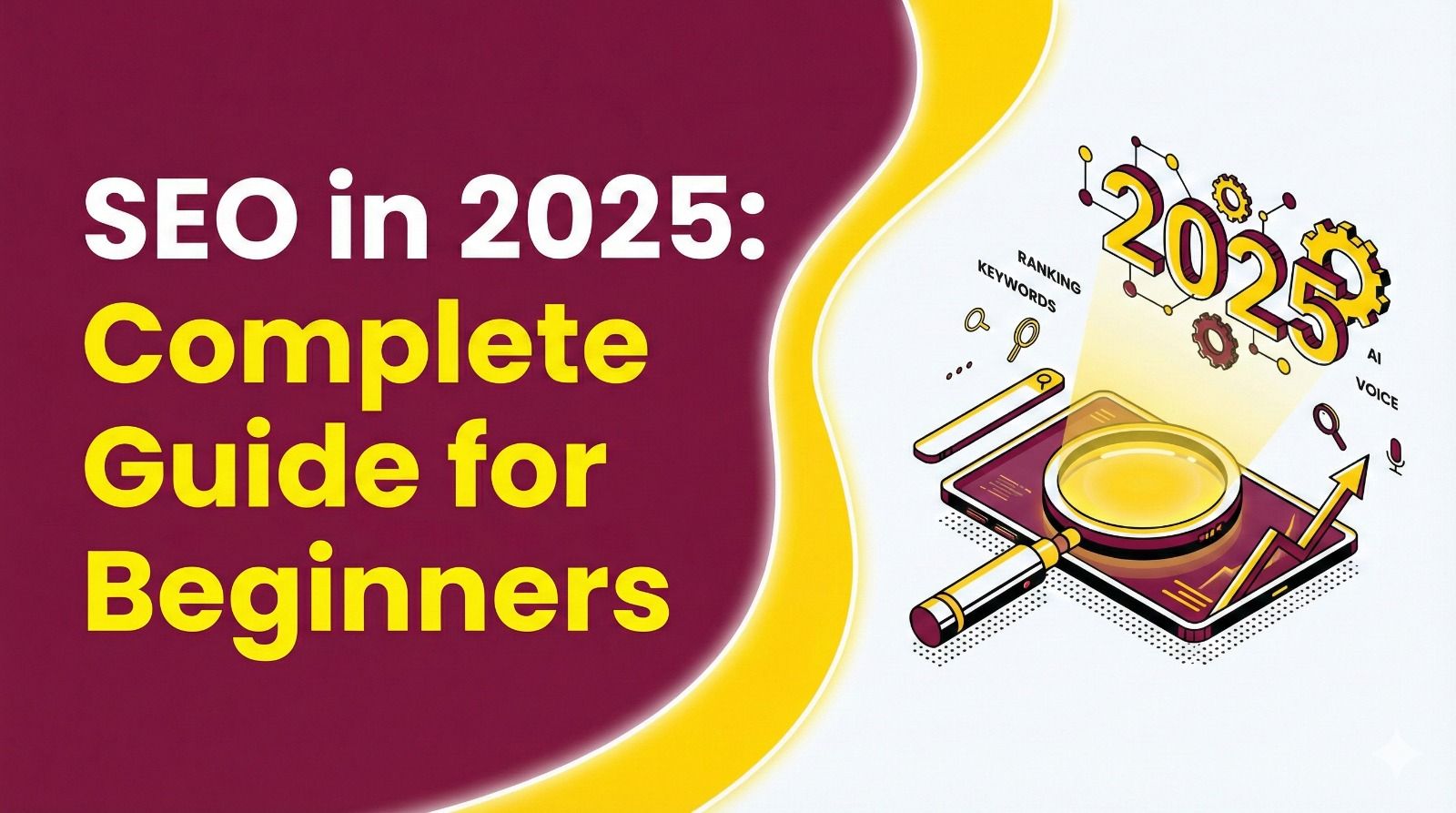
Search engine optimization has never evolved as rapidly as it is right now. With Google introducing hundreds of algorithm enhancements annually and AI rewriting the SEO playbook, understanding SEO in 2025 has become a must for every beginner entering the digital world.
According to BrightEdge, more than 68% of online experiences begin with a search engine, and SEO drives 1,000%+ more traffic than organic social media. Another report from HubSpot shows that 75% of users never scroll past the first page of Google.
These industry-shaking numbers prove one thing: if you don’t adapt to SEO in 2025, you will lose visibility, traffic, and conversions.
A powerful quote by Sundar Pichai (Google CEO) sets the tone:
“AI will be the biggest technology shift of our lifetime.”
This directly impacts SEO not next year, not next month, but already.
This beginner-friendly guide explains everything you need to succeed in SEO in 2025, from fundamentals to AI SEO tools, and ends with CTAs for professional Digital Marketing courses.
Let’s begin your ranking journey.
SEO (Search Engine Optimization) is the process of improving your website to increase visibility on Google for keywords related to your business. When someone searches for something, SEO helps your website appear in front of them organically (unpaid).
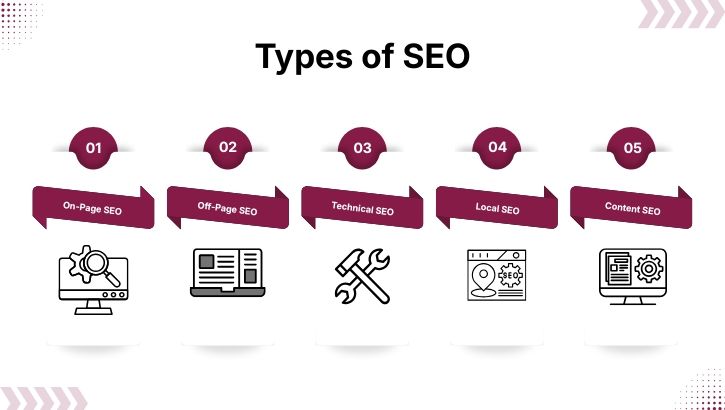
On-page SEO refers to optimizing elements on your website to help Google understand your content better.
On-Page SEO: Content, Keywords, Meta Tags
On-page SEO focuses on everything you optimize within your website. This includes using the right keywords, writing high-quality content, adding optimized meta titles and descriptions, improving internal linking, and ensuring proper header structure. Its goal is to help search engines clearly understand your page topic and rank it higher for relevant searches.
Key on-page factors
Actions taken outside your website to improve authority.
Off-Page SEO: Backlinks, PR, Social Signals
Off-Page SEO refers to the activities done outside your website to improve authority. The most important factor is backlinks from reputable sites, which tell Google your site is trustworthy. PR mentions, social media shares, influencer references, and brand signals also strengthen your site’s credibility and domain authority.
Main off-page activities
Backlinks remain the #1 off-page ranking signal, according to Ahrefs.
This ensures Google can properly crawl, render, and index your website.
Technical SEO: Speed, Structure, Schema
Technical SEO ensures your website is easy for search engines to crawl, index, and understand. It involves optimizing site speed, mobile-friendliness, URL structure, XML sitemaps, robots.txt, core web vitals, and adding schema markup. Strong technical SEO improves both performance and user experience.
Key technical SEO elements
Crucial for businesses targeting local customers (restaurants, gyms, salons).
Local SEO: Maps, Reviews, Citations
Local SEO helps businesses rank higher in location-based searches. It focuses on Google Business Profile optimization, customer reviews, local citations (directory listings), map visibility, and local keyword targeting. This is essential for businesses that operate in a specific city or region.
Key factors
Content is still the king but in 2025, it is "AI-powered king".
Content SEO: Topical Authority
Content SEO emphasizes creating in-depth, high-quality content that builds topical authority in your niche. It includes researching search intent, creating blog clusters, using LSI keywords, adding multimedia elements, and ensuring content is helpful and comprehensive. When Google sees you as an expert in a topic, your entire site ranks higher.
Content must be:
AI has redefined SEO from content creation to keyword research to SERP structure. Ranking in 2025 requires leveraging AI, not avoiding it.
Google’s Search Generative Experience provides summary answers directly in search results.
This means:
AI tools can:
AI helps create:
But human supervision is still mandatory to avoid inaccuracies.
AI tools can:
Optimize for Core Web Vitals
Here are the top AI-powered SEO tools you must use.
1. SurferSEO
Optimizes on-page content with AI insights.
2. SEMrush AI Writing Assistant
Content scoring, keyword suggestions, competitor insights.
3. Ahrefs Webmaster Tools
Best for backlinks, keyword difficulty, site audits.
4. Google Search Console + GA4
Free tools track performance, keywords, indexing.
5. Jasper AI / Writesonic
AI writing tools for content drafts and outlines.
6. RankMath SEO (WordPress)
AI assistant + schema + on-page optimization.
7. Screaming Frog
Crawl analysis & technical SEO insights.
8. ChatGPT (for SEO ideation)
Keyword clustering, topic research, content expansion.
Here is the exact roadmap beginners must follow.
Keyword research is the foundation of SEO. It helps you understand what people are searching for and how to structure your content.Use tools like Google Keyword Planner, SEMrush, and Ahrefs to find relevant keywords.
Focus On:
A beginner must master keyword selection before writing a single article.
On-page SEO helps Google understand your content clearly. This includes optimizing titles, headers, URLs, and on-page elements.
Key Actions:
Good on-page SEO ensures your content is both readable and search-engine friendly.
Google now prioritizes content that shows Experience, Expertise, Authority, and Trust.
How to Apply E-E-A-T:
High-quality content with E-E-A-T signals ranks faster and stays competitive long-term.
Technical SEO ensures search engines can crawl, index, and deliver your pages fast.
What to Fix:
A technically strong website improves both rankings and user experience.
Backlinks are still one of Google’s strongest ranking signals. Build links from relevant, trusted websites.
Effective Methods:
Backlinks increase your domain authority and help your content rank faster.
Google Search is shifting towards SGE (Search Generative Experience) and AI-powered answers. Your content must be ready for conversational search.
How to Optimize:
This ensures your brand appears inside AI summaries and answer boxes.
SEO is not a one-time activity. Continuously track performance and make improvements.
Use Tools Like:
Regular monitoring helps you refine your strategy and maintain growth over time.
Become an SEO & Digital Marketing Expert in Just 30 Days Learn:
Ready to Become a Digital Marketing Pro?
Join My Advanced Digital Marketing & SEO Course Includes:
Join Here: WHY TAP
SEO in 2025 marks a new era of AI-driven search, smarter algorithms, and user-focused content quality. For beginners, this is the perfect time to start—because tools, data, and resources have never been more accessible.
Whether you're building a personal brand, starting a business, or entering digital marketing, mastering these fundamentals will put you miles ahead of the competition.
With the right strategies, consistency, and learning path, you can dominate search results and grow your online presence dramatically.