A forward-looking, non-technical explanation for students, freshers, and professionals written by a seasoned tech writer with 10+ years of experience.
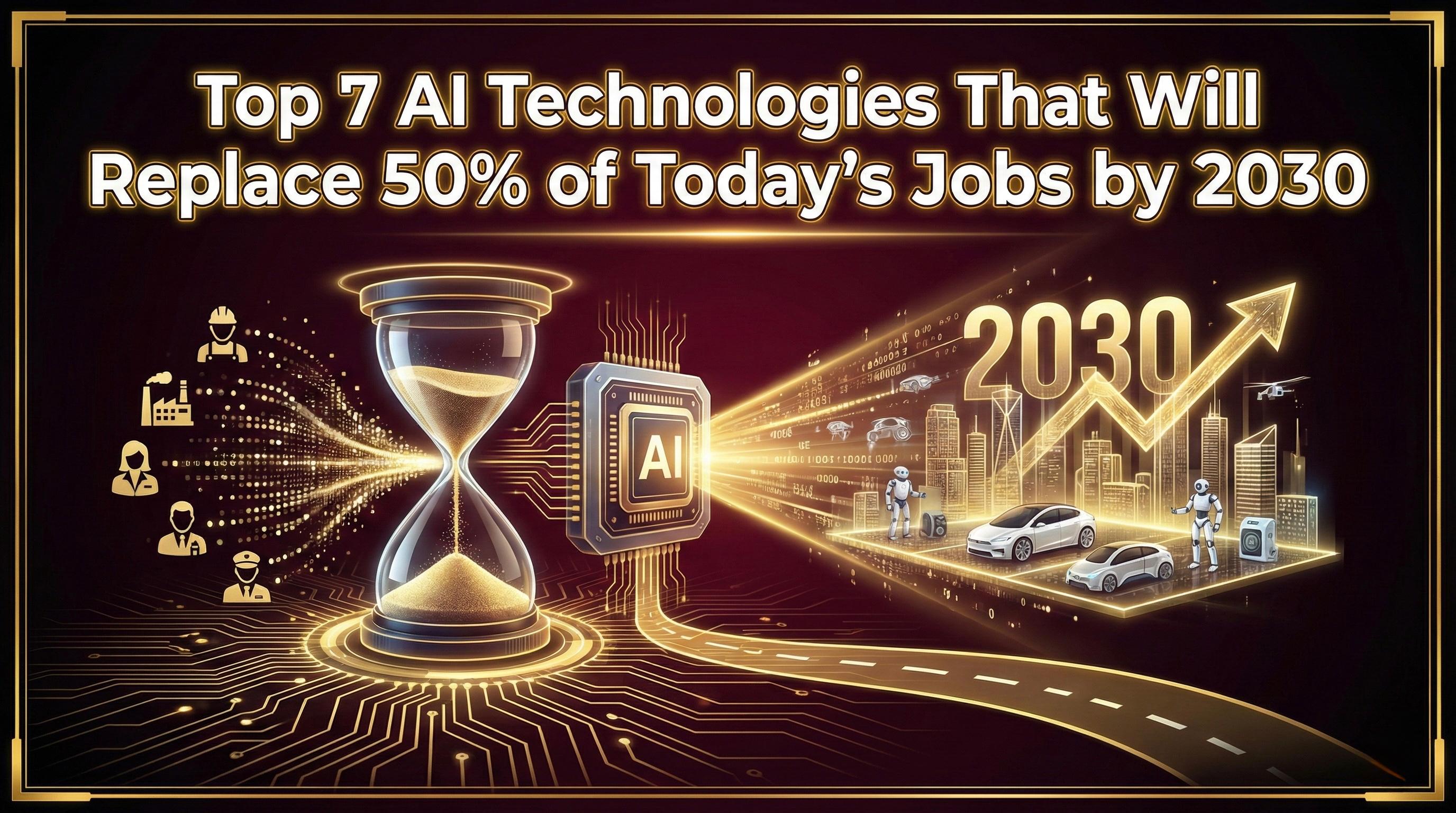
AI Technologies are transforming industries faster than any technology in history. The World Economic Forum’s Future of Jobs Report predicts that AI, automation, and digitalization will impact nearly 85 million jobs by 2025 and create 97 million new ones, with almost 50% of work tasks automated by 2030.
This doesn’t mean all jobs vanish, roles evolve. Those who upskill in time will lead the workforce shift.
Generative AI tools like ChatGPT, Midjourney, and RunwayML have become mainstream, powering writing, design, coding, and video creation.
According to McKinsey, Generative AI Technologies could automate up to 60–70% of tasks in today’s jobs and add up to $4.4 trillion annually to the global economy.
Real Example
AI now writes blogs, creates ads, generates product descriptions, and designs logos faster than multi-person teams could previously.
Robots automate physical tasks, while RPA automates digital workflows.
Deloitte reports that companies implementing RPA have seen 30–200% ROI in the first year, making it one of the fastest-growing automation fields.
Real Example
Banks use RPA bots that work 24/7 and process thousands of transactions with near-zero errors.
NLP powers AI chatbots and voice assistants.
Gartner predicts that AI chatbots will handle 70% of customer interactions by 2030.
Real Example
Companies now use AI to resolve FAQs, manage ticketing, and guide customers without human intervention.
AI-driven autonomous systems operate with minimal human involvement.
Amazon has more than 750,000 robots working with human employees in its fulfillment centers.
Real Example
Self-driving trucks in the U.S. are already doing cross-state deliveries, reducing driver workload and cost.
Predictive AI uses patterns to forecast future outcomes.
IDC reports that AI spending will reach $301 billion by 2026, largely driven by predictive analytics adoption.
Real Example
E-commerce companies like Amazon use ML to predict demand, shipping routes, and buying patterns.
Computer Vision enables machines to recognize images and make decisions.
The global computer vision market is projected to reach $41.1 billion by 2030 (Allied Market Research).
Real Example
Amazon Go stores allow customers to pick products and walk out cameras + AI charge them automatically.
Tools like Zapier, Bubble, and Notion AI allow people to automate workflows without programmers.
Gartner predicts that 70% of new business applications will be built using low-code or no-code platforms by 2025.
Real Example
A single Notion AI workspace can replace multiple admin roles and automate marketing, planning, recruitment and more.
World Economic Forum research shows that 50% of workers will need reskilling by 2025 due to tech disruption.
AI does not eliminate jobs, it eliminates outdated skillsets.
To become irreplaceable, learn:
Institutes like WHY TAP already include AI-powered learning approaches, real-time projects, and job-ready training, helping students stay ahead of the automation curve.
AI Will Replace Tasks Not Talent
By 2030, AI will automate nearly half of existing job activities, not half of the jobs.
The future belongs to those who can:
Your job is not to compete with AI Technologies but to learn how to work with it.
The earlier you upskill, the stronger your career becomes.
This is why future-focused learning programs like WHY TAP are so critical for the upcoming workforce.