Marketing today is no longer about simply “posting content.” It’s about orchestrating a strategic narrative that moves a brand forward. In a landscape where digital noise grows louder every month, sustainable visibility comes only from clarity, discipline, and structured content execution.
That is exactly why a content calendar for marketers has transitioned from a “good-to-have” tool to a fundamental success driver.
A content calendar gives a marketing team the one thing every brand craves but rarely achieves: control. Control over messaging. Control over timing. Control over campaigns. And most importantly control over the customer experience.
Think of it as a command centre that keeps your brand’s marketing engine operating at peak efficiency.
Many organisations rely on tools such as Hootsuite to execute this at scale from scheduling to analytics.
A content calendar helps marketing teams reduce operational stress, improve creative quality, and deliver consistent brand messaging without last-minute chaos.
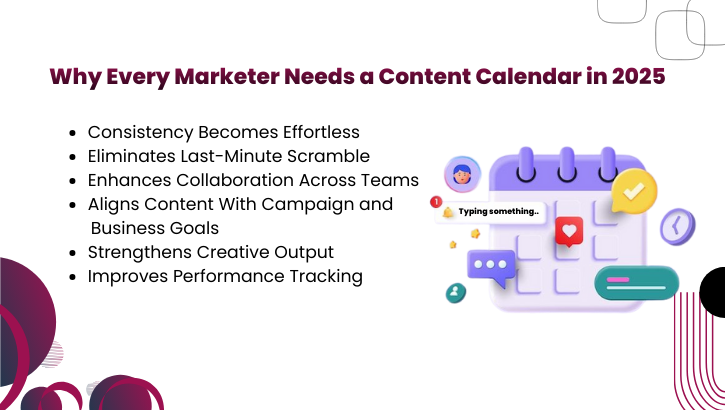
1. Consistency Becomes Effortless
Consistency is one of the strongest signals of credibility online. Whether you’re publishing blogs, reels, newsletters, or long-form content, regularity indicates reliability.
A content calendar ensures your brand never goes silent, never posts randomly, and never loses momentum.
2. Eliminates Last-Minute Scramble
Marketing without a calendar often looks like:
A calendar eliminates guesswork and panic.
It also makes trend adoption easier. By leveraging platforms like Google Trends, marketers can plug real-time content opportunities directly into their planning frameworks without disrupting existing schedules.
3. Enhances Collaboration Across Teams
Marketing is rarely a one-person show. Content moves through writers, designers, editors, strategists, and performance analysts.
A content calendar:
4. Aligns Content With Campaign and Business Goals
Your content should never “float.” Every post, video, email, or blog must serve a purpose.
A content calendar ensures your marketing assets support:
Customer intent research tools like AnswerThePublic help shape content that directly aligns with market expectations and searches.
5. Strengthens Creative Output
Creativity requires space. When you remove last-minute pressures, ideas improve, storytelling becomes sharper, and designs become more intentional.
A content calendar gives teams time to:
6. Improves Performance Tracking
A content calendar doesn’t just guide execution it guides evaluation.
When posting becomes consistent and organised, performance insights become more meaningful. Using platforms like Hootsuite, marketers can monitor:
Better insights → better decisions → better campaigns.
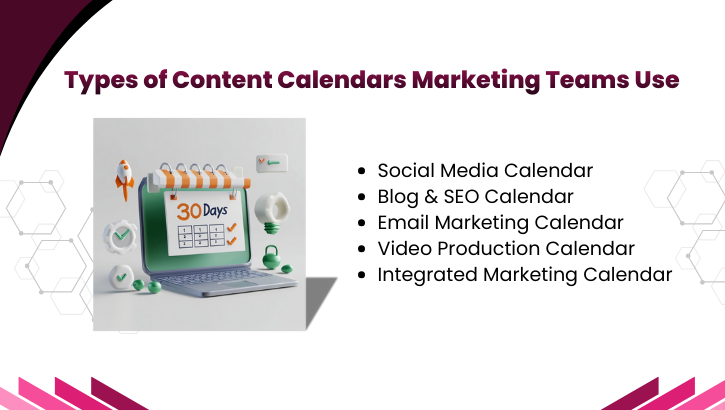
A high-value calendar must include:
These elements enable predictability and professional-level organisation.
Are you building awareness, improving engagement, generating leads, or supporting a product launch?
Analyse demographic data, psychographics, and behavioural patterns.
Tools like AnswerThePublic and Google Trends reveal real search intent and help shape relevant topics.
Include a blend of:
Options include Hootsuite, Notion, Excel, Google Sheets, Trello, Asana, and ClickUp.
Your calendar should visually highlight status labels, deadlines, ownership, CTAs, and asset links.
Platforms like Hootsuite streamline scheduling and reduce manual workload.
A calendar is a living document. It grows with your marketing strategy and adapts to market conditions.
A content calendar is not merely a tool it is a strategic discipline.
It transforms inconsistent posting into purposeful communication. It replaces guesswork with clarity. And it shifts marketing from reactive to proactive.
As digital landscapes evolve, brands that operate with structure outperform those running on improvisation. A content calendar is that structure a framework that supports creativity, strengthens collaboration, and drives long-term brand growth.
A strong content calendar doesn’t just organise your workflow.
It elevates your entire marketing function.