







Table of Contents
- 1.
- 2.
- 3.
- 4.
- 5.
- 6.
- 7.
- 8.
- 9.
- 10.
- 11.
- 12.
- 13.
Data science has quickly become one of the most popular career choices for students and fresh graduates. With the growing demand for data professionals across industries, many beginners are eager to enter the field and start building their careers. However, while the opportunities are exciting, many newcomers often make common data science mistakes that slow down their progress and make the learning process more difficult.
One of the biggest challenges freshers face is figuring out where to start. Data science includes a wide range of topics such as programming, statistics, machine learning, and data visualization. Without a clear roadmap, beginners sometimes try to learn too many tools at once or skip important fundamentals, which can lead to confusion and frustration.
The good news is that most of these mistakes are completely avoidable. By understanding the common challenges that beginners face, learners can take a smarter approach to building their skills and avoid wasting time on ineffective learning methods. In this blog, we’ll explore the biggest data science mistakes freshers make and how you can avoid them to build a stronger foundation for your data science career.
Why Many Freshers Struggle in Data Science
For many beginners, starting a career in data science feels exciting at first. The field promises strong career growth, high demand, and opportunities to work with advanced technologies like artificial intelligence and machine learning. However, after the initial enthusiasm fades, many freshers realize that learning data science can be more challenging than expected.
One major reason for this struggle is the vast number of tools and concepts involved in the field. Data science requires knowledge of programming languages, statistical analysis, machine learning algorithms, and data visualization techniques. Without proper guidance, beginners often feel overwhelmed by the amount of information they need to learn.
Another challenge is the lack of a structured learning path. Many learners jump from one tutorial to another without understanding how different concepts connect. This scattered learning approach can slow progress and lead to frustration.
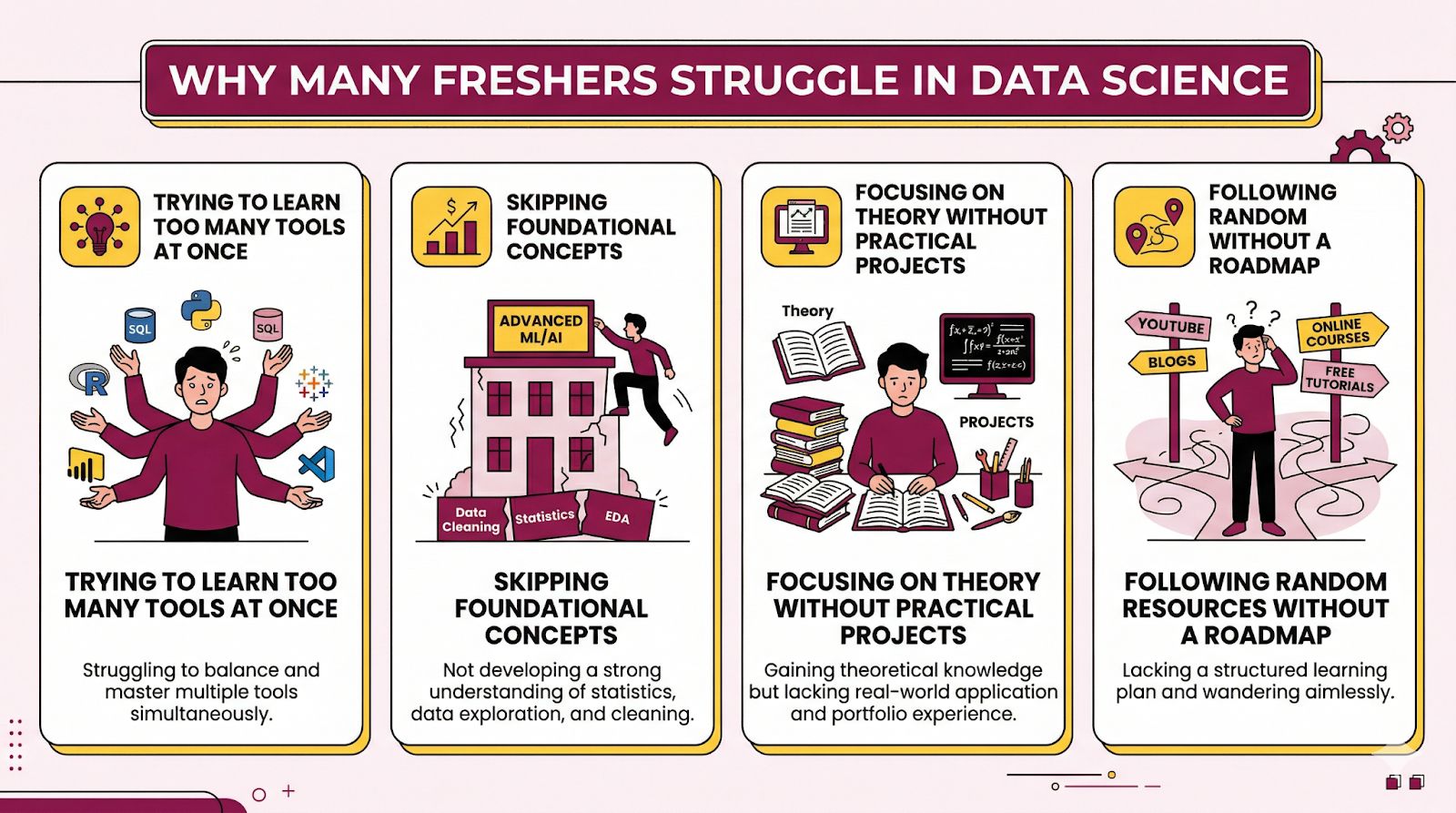
Freshers commonly face difficulties such as:
- Trying to learn too many tools at the same time
- Skipping foundational concepts like statistics and data cleaning
- Focusing on theory without practical projects
- Following random online resources without a clear roadmap
Many experts highlight these beginner mistakes as common challenges faced by new learners entering the data science field.
Recognizing these early challenges can help beginners take a more focused and structured approach to learning data science.
Mistake #1: Learning Too Many Tools at Once
One of the most common data science mistakes beginners make is trying to learn too many tools at the same time. Because data science involves a wide range of technologies-such as Python, R, SQL, machine learning libraries, and visualization tools-many freshers feel pressured to master everything quickly. This often leads to confusion and slow progress.
In reality, data science does not require learning every tool immediately. What matters more is understanding the core concepts behind data analysis and gradually building technical skills. Beginners who attempt to learn multiple programming languages or advanced machine learning frameworks simultaneously may struggle to build a strong foundation.
A better approach is to start with one primary tool, usually Python, and focus on learning how it is used for data analysis and basic machine learning tasks. Once the fundamentals are clear, learners can gradually expand their knowledge to include other tools and technologies.
Some tips for beginners include:
- Start with one programming language such as Python
- Learn basic libraries like Pandas and NumPy first
- Focus on understanding concepts rather than memorizing tools
- Gradually explore additional technologies as your skills improve
By concentrating on one tool at a time, beginners can avoid unnecessary confusion and build a stronger foundation in data science.
Mistake #2: Ignoring the Importance of Projects
Another major data science mistake many beginners make is focusing only on theory without working on practical projects. While learning concepts such as machine learning algorithms or statistical models is important, data science is ultimately a hands-on field. Employers expect candidates to demonstrate how they apply their knowledge to real datasets and business problems.
Freshers who spend most of their time watching tutorials or reading about algorithms often struggle during job interviews because they lack practical experience. Projects help bridge this gap by allowing learners to apply concepts in real-world scenarios, analyze datasets, and build solutions that showcase their skills.
Why Practical Projects Matter
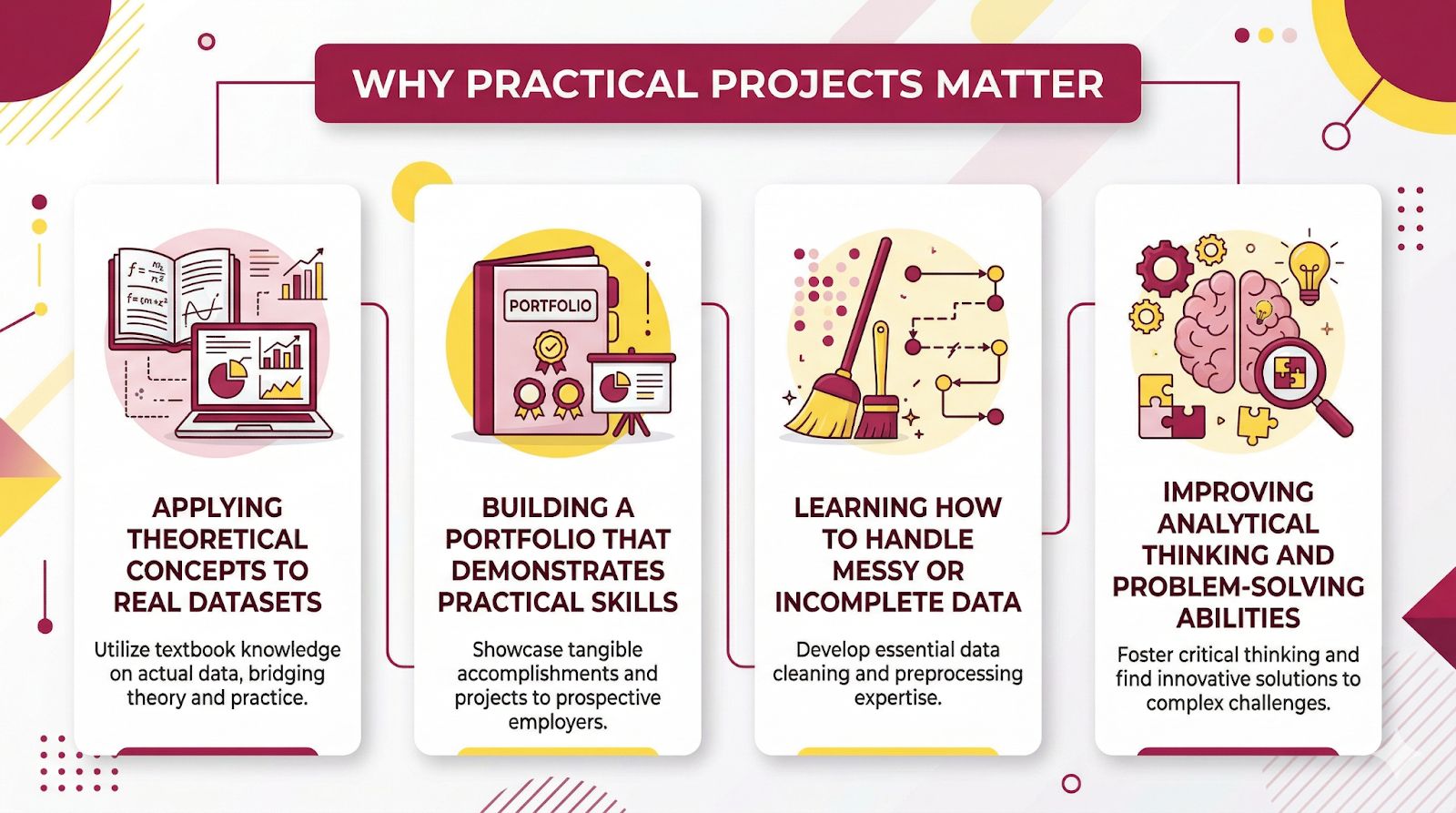
Practical projects are essential because they help learners develop real problem-solving abilities and build confidence with data tools.
Some key benefits of working on projects include:
- Applying theoretical concepts to real datasets
- Building a portfolio that demonstrates practical skills
- Learning how to handle messy or incomplete data
- Improving analytical thinking and problem-solving abilities
Experts often highlight these common mistakes when discussing why many beginners struggle to transition from learning concepts to performing real data science tasks.
By working on projects regularly, freshers can gain practical experience and build a portfolio that strengthens their job applications.
Mistake #3: Skipping Data Fundamentals
Another common data science mistake beginners make is jumping directly into advanced topics like machine learning or deep learning without first understanding the basic concepts of data analysis. While advanced tools and algorithms may seem exciting, they rely heavily on foundational knowledge such as statistics, data cleaning, and data visualization.
Freshers who skip these fundamentals often struggle to understand how models work or how to interpret their results. For example, without a basic understanding of statistics, it becomes difficult to evaluate whether a model is accurate or whether the insights generated from data are reliable.
Strong fundamentals help learners understand how data behaves and how analytical techniques are applied in real-world situations. These skills form the foundation of almost every data science task, from preparing datasets to interpreting model outputs.
Some important foundational areas beginners should focus on.
| Skill Area | Why It Matters |
|---|---|
| Statistics | Helps understand patterns and relationships in data |
| Data Cleaning | Ensures datasets are accurate and usabl |
| Data Visualization | Communicates insights clearly |
| Programming | Enables automation of data analysis tasks |
Many experts emphasize these beginner errors when explaining why some freshers struggle to progress in the field.
Building strong fundamentals first allows learners to understand advanced concepts more easily and avoid long-term learning challenges.
Mistake #4: Not Following a Structured Learning Path
A common data science mistake many freshers make is learning without a clear plan. With thousands of tutorials, online courses, and resources available, beginners often jump from one topic to another without understanding how each concept connects. This random learning approach can make the journey confusing and slow down progress.
Data science is a field that requires step-by-step learning. Beginners usually need to start with core concepts such as statistics, basic programming, and data analysis before moving toward advanced topics like machine learning or artificial intelligence. Without a structured path, learners may spend time on advanced algorithms without fully understanding the fundamentals.
Another challenge of unstructured learning is that it becomes difficult to measure progress. When beginners follow a clear roadmap, they can gradually build their skills and track how their knowledge improves over time. This structured approach helps maintain motivation and prevents frustration.
Some signs of an unstructured learning path include:
- Jumping between multiple tutorials without completing one topic
- Learning advanced concepts too early without fundamentals
- Lack of hands-on practice with datasets and projects
- Uncertainty about the next learning step
Beginners who want to stay updated with industry trends and insights can explore data science insights that discuss practical learning approaches and emerging topics in the data field.
For learners who prefer guided learning, structured data training programs can provide a clear roadmap, practical training, and mentorship that helps beginners build data science skills more efficiently.
How Freshers Can Avoid These Data Science Mistakes
While many beginners make common data science mistakes, the good news is that these challenges can be avoided with the right learning approach. Instead of trying to rush through advanced topics, freshers should focus on building a strong foundation and following a structured learning process.
One of the most effective ways to avoid mistakes is to start with fundamental skills such as statistics, data analysis, and programming basics. Once these concepts are clear, learners can gradually explore more advanced areas like machine learning and artificial intelligence.
Another important step is consistent project practice. Working with real datasets helps beginners understand how data science concepts are applied in real-world situations. Projects also help build a portfolio that can be useful during job interviews.
Common beginner mistakes and the better approaches that can help freshers learn data science more effectively.
| Mistake | Better Approach |
|---|---|
| Learning many tools at once | Focus on one tool and master the basics |
| Skipping projects | Work on small practical projects |
| Ignoring fundamentals | Learn statistics and data analysis first |
| Random learning | Follow a structured roadmap |
By focusing on the right learning strategy and avoiding these common mistakes, beginners can build stronger skills and progress more confidently in their data science journey.
Final Thoughts
Starting a career in data science can be exciting, but it’s also easy for beginners to make common data science mistakes during the learning process. Many freshers enter the field with high expectations and try to learn too many tools or advanced concepts too quickly. Without a clear learning path, this can lead to confusion and slow progress.
The key to success in data science is focusing on the fundamentals and building skills gradually. Understanding core concepts such as statistics, programming, and data analysis provides a strong foundation for learning more advanced topics like machine learning and artificial intelligence.
Key points to remember:
- Avoid learning too many tools at once and focus on fundamentals
- Work on practical projects to build real-world experience
- Develop strong data analysis and statistical skills
- Follow a structured learning roadmap to stay on track
By avoiding these common mistakes and adopting a structured approach to learning, freshers can build a solid foundation and move confidently toward a successful career in data science.
Learn Data Science the Right Way
If you want to build strong data science skills and avoid common beginner mistakes, structured training and guided learning can make a big difference.
Explore the AI data science program designed to help learners gain practical experience, work on real projects, and develop industry-ready data science skills.