






Table of Contents
- 1.
- 2.
- 3.
- 3.1
- 4.
- 5.
- 6.
- 7.
- 8.
- 9.
- 10.
- 11.
- 12.
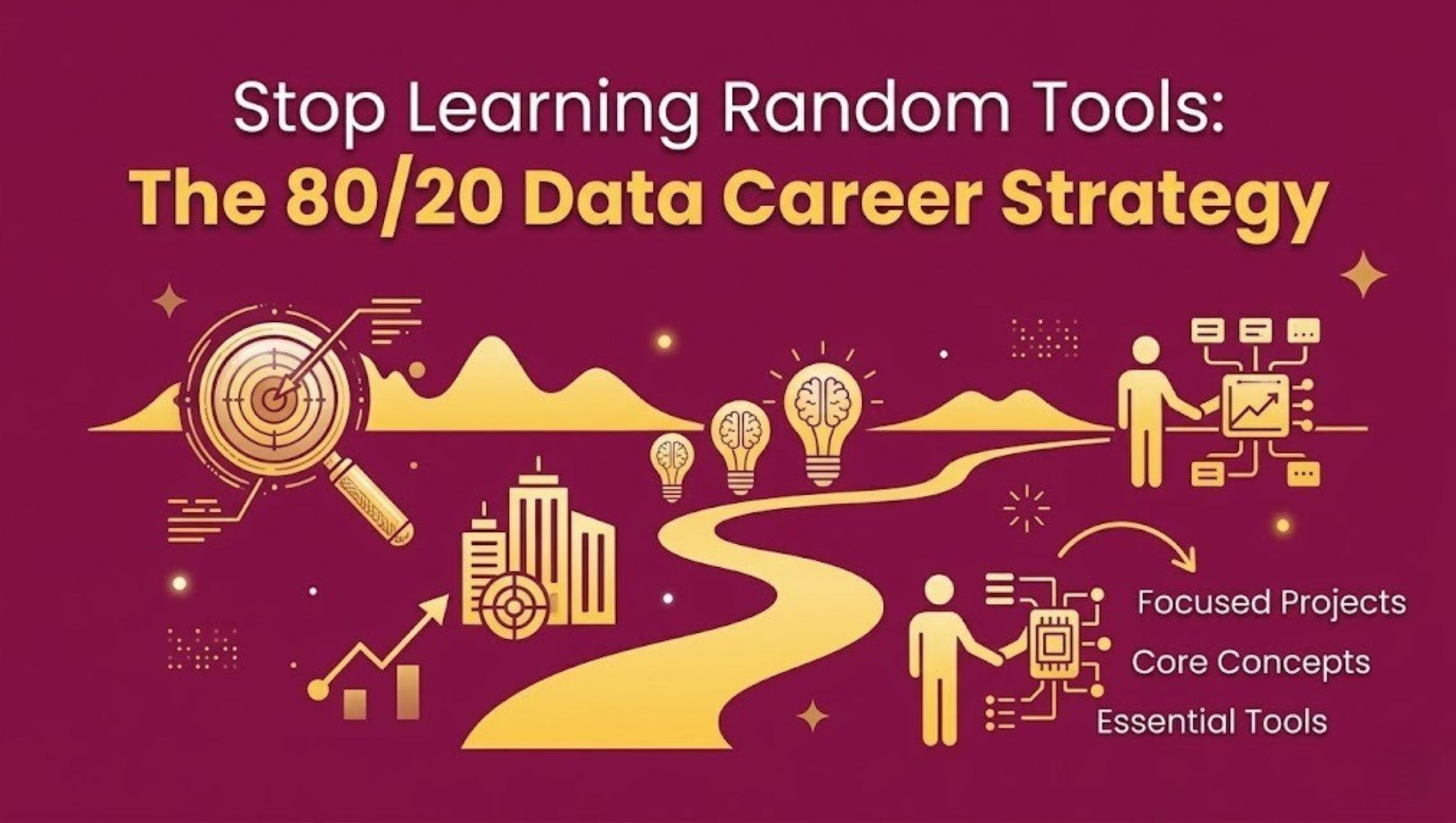
Focus on a few essential toolsMany beginners entering the data field fall into the same trap-they try to learn every tool they come across. From Python and SQL to Power BI, Tableau, and machine learning libraries, the list keeps growing. While this approach may seem productive, it often leads to confusion, shallow understanding, and slow progress. This is where the idea of an 80/20 data career strategy becomes important.
Instead of focusing on learning everything, successful data professionals prioritize the few skills that create the most impact. The reality is that a small set of core skills is responsible for most real-world results in data careers. However, without a clear learning strategy, beginners often spend time switching between tools instead of building depth in essential areas.
In this blog, we’ll break down how the 80/20 data career strategy can help you stop learning randomly and start focusing on what truly matters. By applying this approach, you can build stronger skills, gain practical experience faster, and move more efficiently toward real opportunities in the data industry.
Why Learning Too Many Tools Slows You Down
At the beginning of a data career, it’s easy to believe that learning more tools will increase your chances of success. Many beginners jump from one technology to another-starting with Excel, then moving to Python, SQL, Power BI, and even machine learning libraries-all within a short period. While this approach feels productive, it often leads to the opposite result.
One major issue is the lack of depth in understanding. When you constantly switch between tools, you don’t spend enough time mastering any one of them. As a result, it becomes difficult to apply these tools effectively in real-world scenarios. This slows down your ability to build projects or demonstrate practical skills.
Another problem is information overload. Each tool comes with its own concepts, syntax, and use cases. Trying to learn everything at once can make the learning process overwhelming and reduce motivation over time.
Common challenges caused by learning too many tools include:
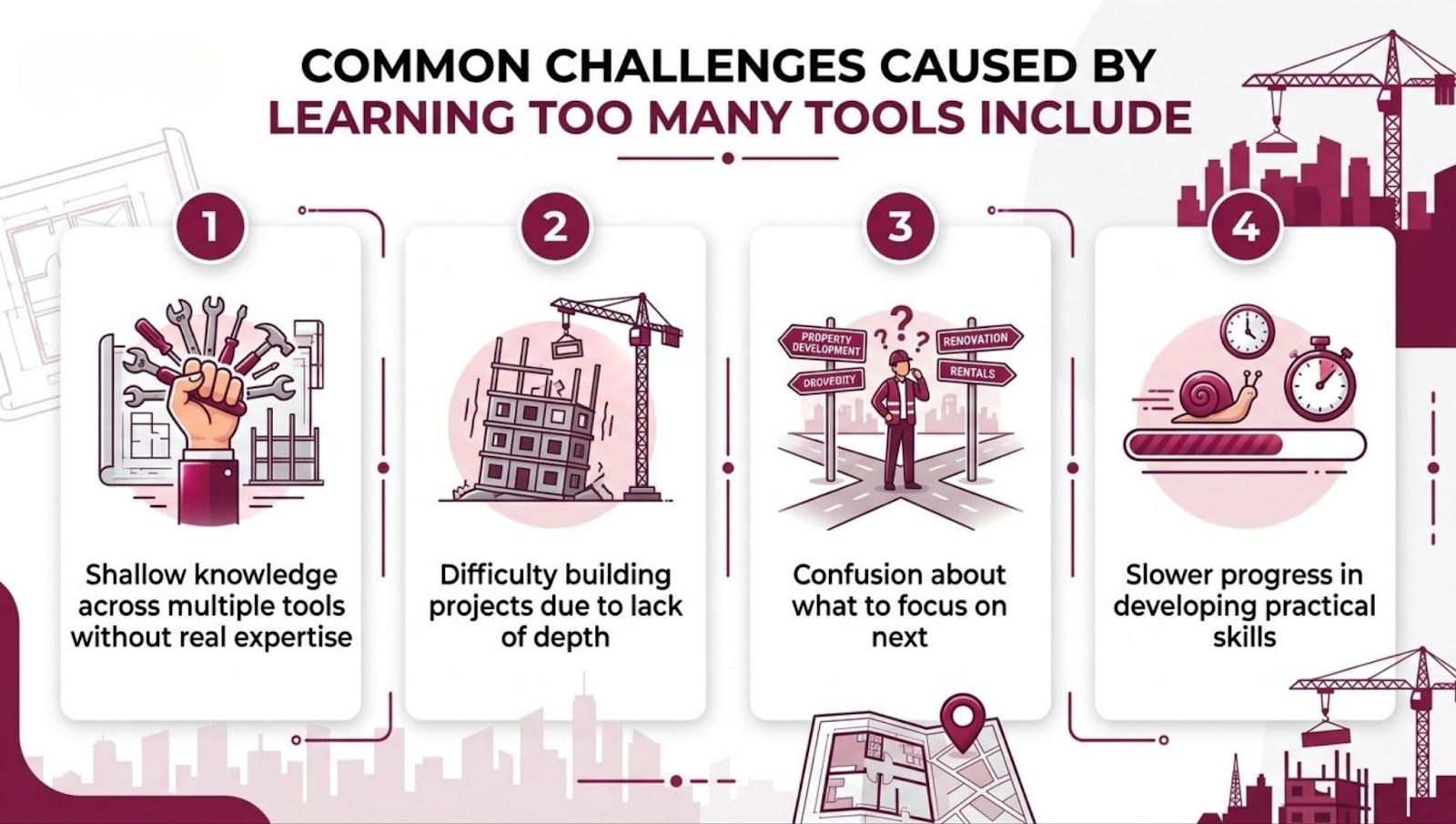
- Shallow knowledge across multiple tools without real expertise
- Difficulty building projects due to lack of depth
- Confusion about what to focus on next
- Slower progress in developing practical skills
Many discussions around strong data foundations and data analyst skill priorities highlight that focusing on core concepts and essential tools is far more effective than trying to learn everything at once.
By reducing tool overload and focusing on fewer, high-impact skills, beginners can build stronger expertise and make faster progress in their data careers.
What Is the 80/20 Data Career Strategy?
The 80/20 data career strategy is based on the Pareto Principle, which suggests that a small percentage of efforts often produces the majority of results. In the context of data careers, this means that a limited set of core skills and tools can deliver most of the value required to succeed in real-world roles.
Instead of trying to learn every available tool or technology, this strategy encourages learners to identify and focus on the most impactful skills first. These typically include data analysis, SQL, visualization tools, and problem-solving abilities. By mastering these areas, beginners can quickly become productive and start working on practical projects.
The key idea behind this approach is efficiency in learning. Rather than spreading your efforts across too many topics, you concentrate on building depth in a few essential areas. This not only improves understanding but also helps you apply your knowledge more effectively in real scenarios.
Some principles of the 80/20 approach in data careers include:
- Focus on high-impact skills instead of learning everything
- Build strong fundamentals before moving to advanced topics
- Prioritize practical application through projects
- Avoid unnecessary tools that don’t add immediate value
Experts discussing the pareto principle often highlight how focusing on the most valuable skills can significantly improve learning efficiency and career growth.
By applying this strategy, beginners can avoid overwhelm and make faster, more meaningful progress in their data career journey.
This approach also aligns closely with a structured data career roadmap for beginners, helping learners avoid confusion and focus on what truly matters.
The 20% Skills That Drive 80% Results
One of the most important parts of the 80/20 data career strategy is identifying the small set of skills that deliver the biggest results. Many successful data professionals don’t try to master every tool-instead, they focus on a few core skills that are used in most real-world scenarios.
These high-impact skills form the foundation of almost every data role, whether it’s data analysis, business intelligence, or data science. By building depth in these areas, beginners can quickly start working on projects and demonstrate practical abilities.
Core Skills to Focus On
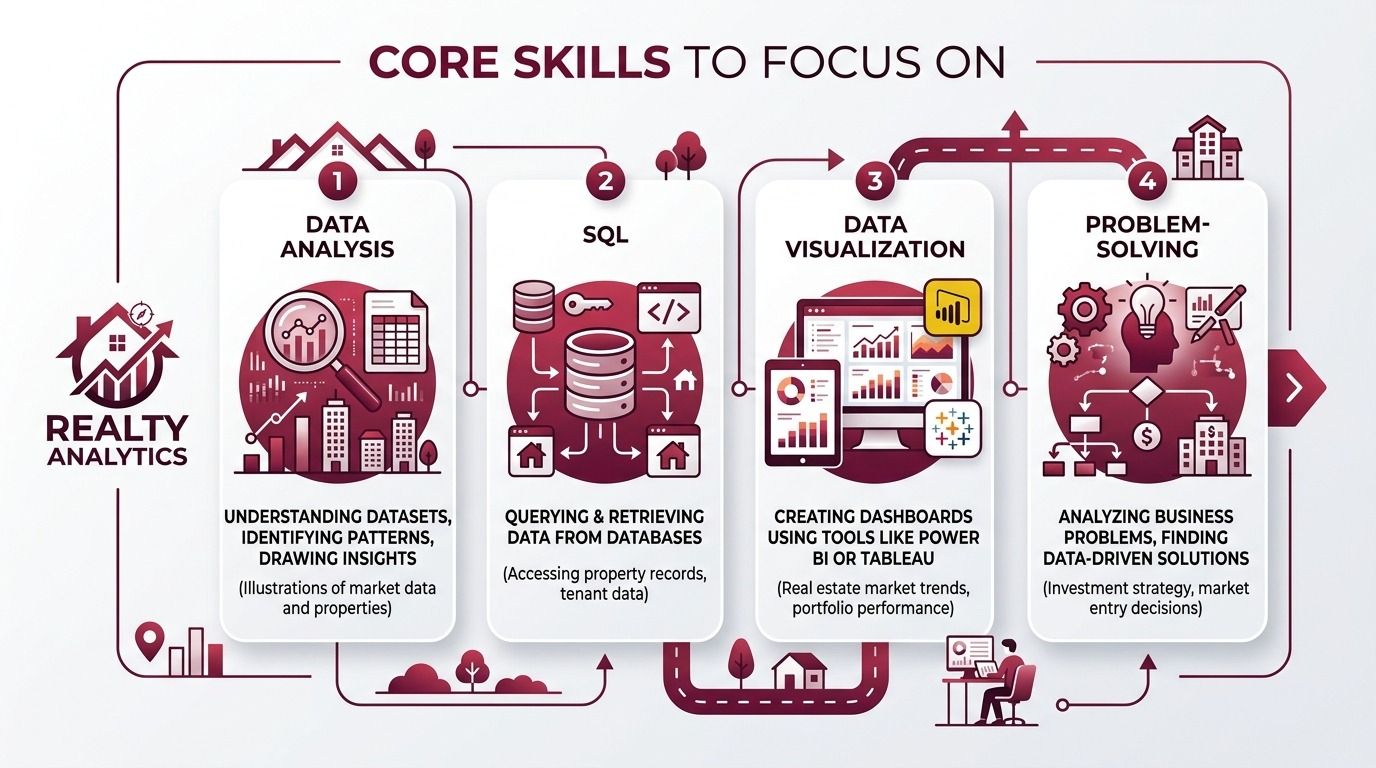
The following skills represent key data analyst skill priorities that are most valuable for beginners:
- Data Analysis – understanding datasets, identifying patterns, and drawing insights
- SQL – querying and retrieving data from databases
- Data Visualization – creating dashboards using tools like Power BI or Tableau
- Problem-Solving – analyzing business problems and finding data-driven solutions
These skills are widely used across industries and form the backbone of most data-related roles. Once you develop strong proficiency in these areas, learning additional tools becomes much easier because the underlying concepts remain the same.
Many discussions around effective data strategy emphasize that focusing on these core capabilities helps learners achieve faster and more meaningful progress.
By prioritizing these high-impact skills, beginners can build confidence, complete projects more efficiently, and move closer to job-ready proficiency.
Tools vs Skills: Where Beginners Go Wrong
One of the biggest mistakes beginners make in their learning journey is focusing more on tools than skills. While tools are important, they are only effective when backed by strong foundational knowledge. The 80/20 data career strategy emphasizes that mastering core skills is far more valuable than learning multiple tools without depth.
A well-defined data career learning strategy helps avoid this mistake by focusing on skills over tools.
Many learners assume that knowing several tools will make them job-ready. However, recruiters often look for candidates who can solve problems, interpret data, and communicate insights-regardless of the specific tools used. Tools can change over time, but core skills remain relevant across different roles and industries.
The confusion usually happens when beginners prioritize tool-based learning instead of understanding how data analysis actually works. This leads to shallow knowledge and difficulty applying concepts in real-world scenarios.
The difference between the wrong and right approach.
| Focus Area | Wrong Approach | Right Approach |
|---|---|---|
| Tools | Learn many tools quickly | Focus on a few essential tools |
| Learning | Random tutorials | Follow a structured path |
| Practice | Minimal application | Work on real projects |
| Skills | Tool-dependent knowledge | Strong analytical thinking |
Understanding this difference helps learners shift their focus from tool collection to skill development. Many learners also explore feedback from real experiences through student reviews to understand how structured learning approaches lead to better outcomes in data careers.
How to Apply the 80/20 Strategy in Your Learning
Applying the 80/20 data career strategy is not about learning less-it’s about learning smarter. Instead of spreading your time across multiple tools and topics, you focus on a few high-impact areas and build strong depth in them. This approach helps you gain practical skills faster and makes your learning more effective.
The first step in any data career roadmap for beginners is to identify the core tools and skills that are widely used in real data roles. For most beginners, this includes data analysis, SQL, and one visualization tool like Power BI or Tableau. Once you choose these, the goal is to practice them consistently instead of jumping to new tools.
Another important step is focusing on project-based learning. Working on real datasets allows you to apply concepts, understand challenges, and build confidence. Projects also help you create a portfolio, which is essential when applying for data roles.
To apply the 80/20 approach effectively:
- Choose 2–3 key tools and focus on mastering them
- Practice regularly with real datasets
- Build small projects to apply your skills
- Avoid switching tools frequently
Many beginners also have questions about learning paths and career direction. Exploring resources like career FAQs can help clarify common doubts and guide you toward a more structured learning approach.
By focusing on consistency and depth, you can accelerate your progress and become job-ready much faster.
Simple Learning Plan Using the 80/20 Approach
To make the 80/20 data career strategy practical, it’s important to follow a clear and structured learning plan. Instead of randomly switching between tools and concepts, dividing your learning into focused phases helps you build skills step by step.
This structured plan reflects a practical data career learning strategy that simplifies the learning process.
The idea is to first build a strong foundation, then apply your knowledge through projects, and finally prepare for real-world job scenarios. This approach ensures that your learning is both efficient and aligned with industry expectations.
A simple learning plan using the 80/20 approach.
| Phase | Focus |
|---|---|
| Phase 1 | Learn core tools like SQL, Excel, and visualization |
| Phase 2 | Work on beginner data projects |
| Phase 3 | Practice solving real-world data problems |
| Phase 4 | Prepare for interviews and job applications |
Each phase builds on the previous one, helping you move from understanding concepts to applying them in practical situations. This structured progression ensures that you don’t just learn tools but also develop the ability to use them effectively.
As you reach the final stage, preparing for interviews becomes crucial. Practicing real questions and scenarios through resources like interview prep can help you gain confidence and improve your chances of success in data job interviews.
Following a clear plan like this allows you to stay focused, track your progress, and make steady improvements in your data career journey.
Final Thoughts
Many beginners struggle in their data journey not because they lack effort, but because they lack direction. The 80/20 data career strategy offers a smarter way to learn by focusing on the few skills that truly matter instead of trying to master everything at once.
By prioritizing core skills such as data analysis, SQL, visualization, and problem-solving, learners can build strong foundations that are applicable across multiple roles. This focused approach not only improves understanding but also helps in applying knowledge through real projects and practical scenarios.
Key takeaways to remember:
- Learning too many tools slows down progress
- A few core skills based on clear data analyst skill priorities drive most real-world results
- Depth is more valuable than breadth in data careers
- Structured learning leads to faster job readiness
Instead of chasing every new tool or trend, focusing on what actually delivers value can accelerate your growth and help you become job-ready more efficiently. By applying the 80/20 approach, you can transform your learning strategy and build a stronger, more practical path toward a successful data career.
Start Focusing on Skills That Matter
Following a structured data career roadmap for beginners can significantly improve your learning outcomes.
If you want to move forward with a more structured and focused approach, choosing the right learning path can make a huge difference. Instead of learning random tools, focusing on core skills with guided support helps you become job-ready faster.
Explore the AI-powered data science course designed to help you build strong fundamentals, work on real-world projects, and apply the 80/20 data career strategy effectively in your learning journey.