





Table of Contents
- 1.
- 2.
- 3.
- 4.
- 5.
- 6.
- 7.
- 8.
- 9.
- 10.
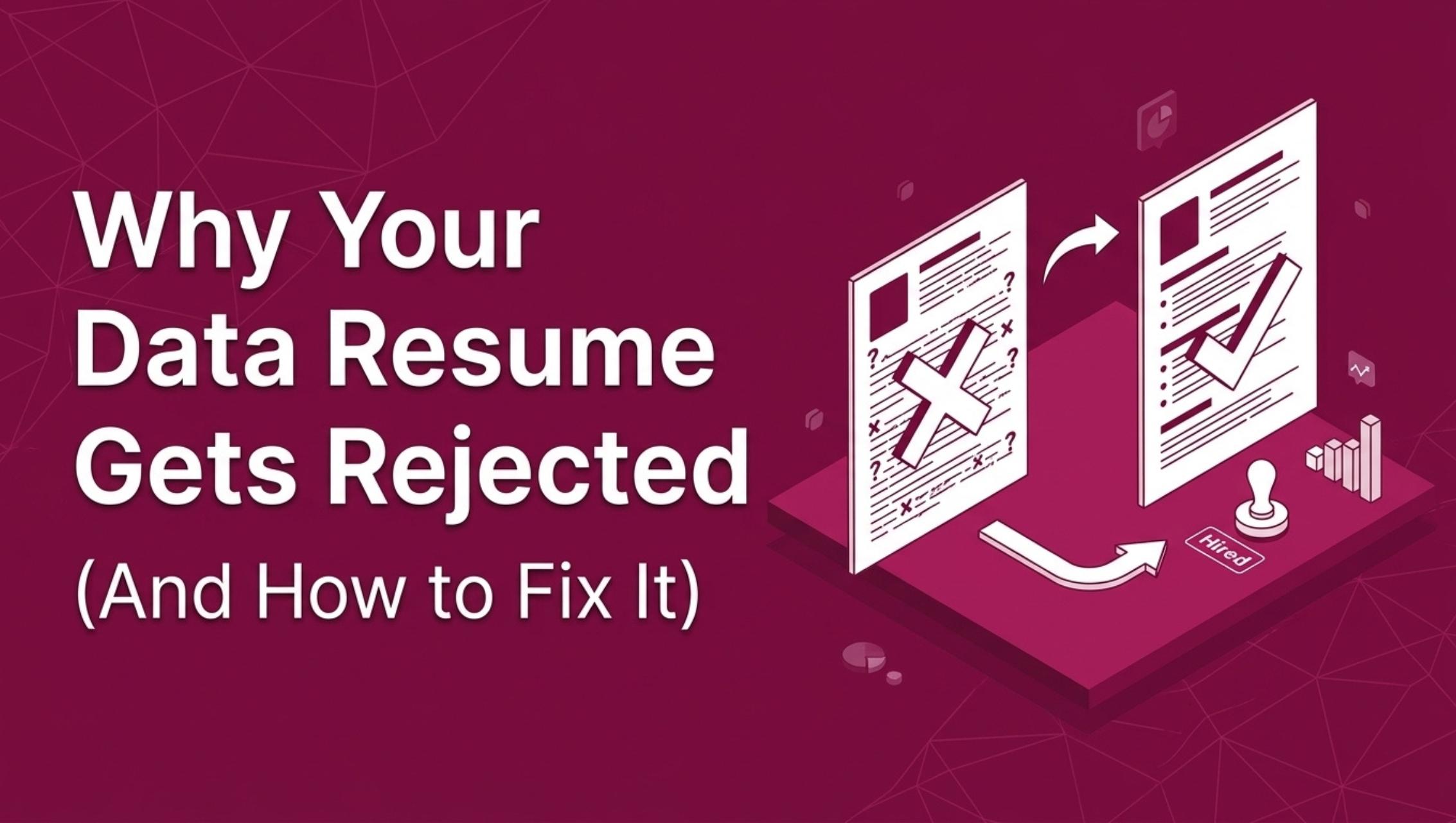
You spend hours preparing your resume, carefully listing your skills, courses, and tools-yet when you apply for data roles, the response is often silence. This is a common experience for many fresh graduates and beginners trying to enter the data field. In many cases, the problem isn’t a lack of ability, but the way the data resume is structured and presented to recruiters.
Hiring managers and automated tracking systems often scan resumes in just a few seconds before deciding whether to move forward with a candidate. If a resume doesn’t clearly highlight relevant projects, tools, or measurable achievements, it can easily get filtered out-even if the candidate has the potential to succeed in the role.
The good news is that most data resume rejections happen because of a few common and fixable mistakes. By understanding how recruiters evaluate resumes and what they expect to see, you can significantly improve your chances of getting shortlisted. In this blog, we’ll explore why many data resumes get rejected and how you can fix these issues to make your resume stand out in competitive data job applications.
Why Data Resumes Get Rejected So Often
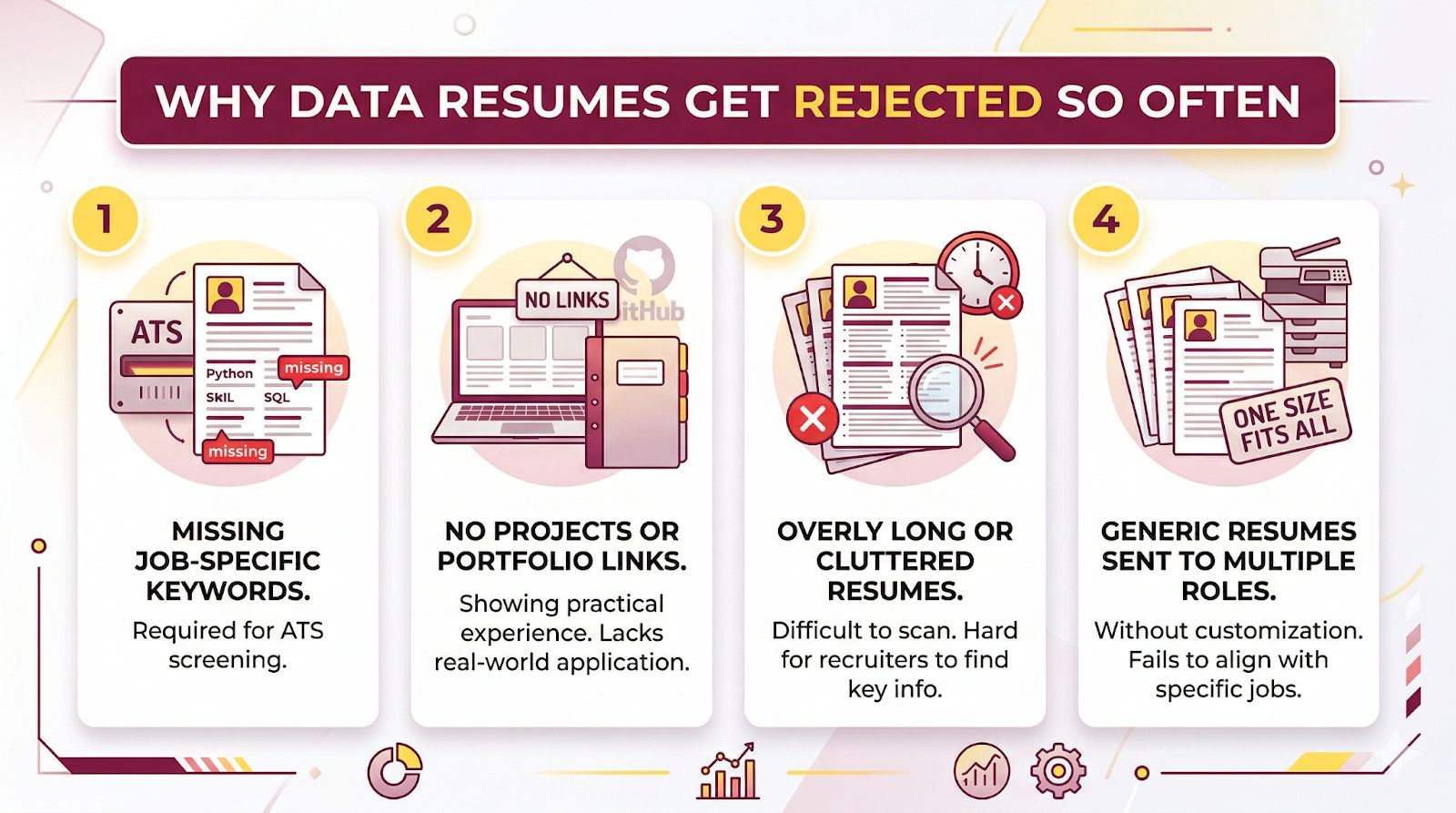
Many applicants assume that resumes are rejected only because they lack experience or technical skills. In reality, many resumes are filtered out before a recruiter even reads them properly. In competitive fields like analytics and data science, recruiters often review hundreds of applications, and a poorly structured data resume can easily be overlooked.
One major reason for rejection is the use of Applicant Tracking Systems (ATS). Many companies use these systems to scan resumes automatically for specific keywords related to the job description. If a resume does not include relevant tools, technologies, or role-specific terms, the system may filter it out before it reaches a hiring manager.
Another common reason is the lack of practical evidence. Recruiters usually prefer candidates who can demonstrate their abilities through projects, case studies, or portfolios. Simply listing tools like Python or SQL without showing how they were used in real work often makes a resume appear weak.
Some common reasons why data resumes get rejected include:
- Missing job-specific keywords required for ATS screening
- No projects or portfolio links showing practical experience
- Overly long or cluttered resumes that are difficult to scan
- Generic resumes sent to multiple roles without customization
Many industry experts discuss these data job rejections and explain how small resume issues can significantly reduce the chances of getting interview calls.
Understanding these factors can help candidates structure their resume more effectively and improve their chances of getting shortlisted.
Mistake #1: Your Resume Is Too Generic
One of the most common reasons a data resume gets rejected is because it looks too generic. Many freshers create a single resume and use it to apply for dozens of jobs without making any changes. While this approach saves time, it often reduces the chances of getting shortlisted.
Recruiters usually look for resumes that clearly match the specific role they are hiring for. For example, a data analyst role may require strong data visualization and SQL skills, while a data science role may focus more on machine learning and statistical modeling. If a resume lists many skills without highlighting the ones relevant to the job description, it may appear unfocused.
Another issue with generic resumes is the lack of clear achievements or project results. Simply listing tools such as Python, Excel, or Power BI is not enough. Recruiters want to see how these tools were used to solve real problems or generate insights.
Some signs that a resume may be too generic include:
- Using the same resume for every job application
- Listing many tools without explaining their usage
- No measurable achievements or project outcomes
- Skills not aligned with the job description
Experts often highlight these ATS mistakes as common reasons why resumes fail to pass automated screening systems.
Customizing your resume for each role and highlighting relevant projects can significantly increase your chances of getting noticed by recruiters.
Mistake #2: Missing Data Projects
Another common reason a data resume gets rejected is the absence of practical projects. Many freshers list tools such as Python, SQL, or Power BI in their resume, but recruiters usually look for evidence of how those tools were actually used. Without projects, a resume can appear theoretical rather than practical, which makes it harder for hiring managers to evaluate a candidate’s real capabilities.
Data roles are highly skill-based, and companies prefer candidates who can demonstrate their ability to work with datasets and generate insights. Projects help bridge the gap between learning concepts and applying them to real-world problems. Even simple projects such as analyzing sales data, creating dashboards, or building predictive models can show recruiters that a candidate understands how to apply data skills in practice.
Why Projects Matter for Data Resumes
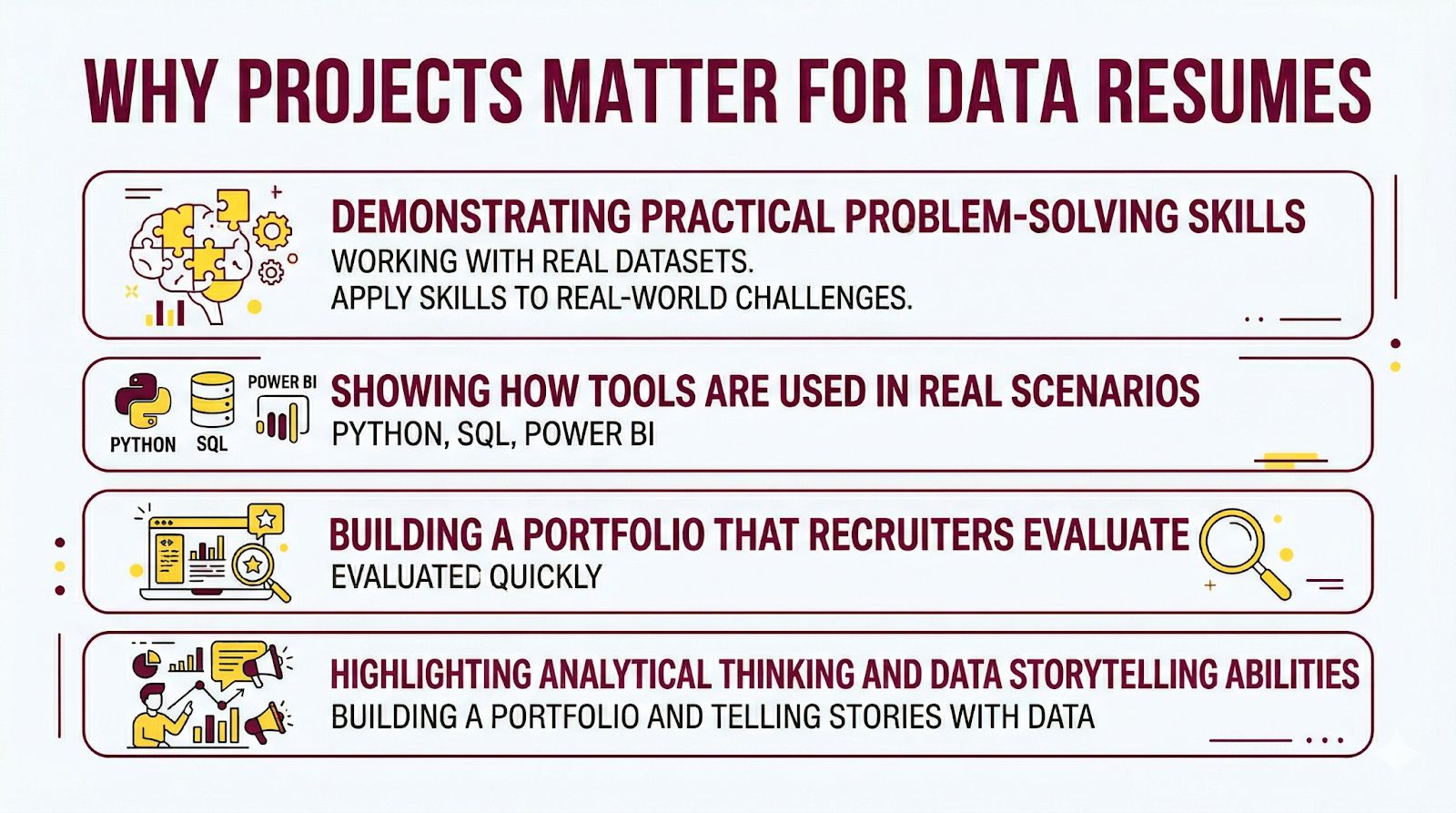
Projects play a critical role in strengthening a data resume because they showcase both technical and analytical abilities. When recruiters review resumes, they often focus on project experience to understand how candidates approach data problems and communicate insights.
Some advantages of including projects in your resume include:
- Demonstrating practical problem-solving skills with real datasets
- Showing how tools like Python, SQL, or Power BI are used in real scenarios
- Building a portfolio that recruiters can evaluate quickly
- Highlighting analytical thinking and data storytelling abilities
Projects can include tasks such as analyzing customer behavior, building data dashboards, or identifying patterns in business data. These experiences help recruiters visualize how a candidate might perform in an actual data role.
Freshers who are unsure about structuring their projects or presenting their skills clearly can also use tools like a resume builder to organize their resume sections effectively. A well-structured resume that highlights projects, tools, and measurable outcomes makes it easier for recruiters to quickly identify your strengths and potential.
What Hiring Managers Look for in a Data Resume
When recruiters review a data resume, they usually spend only a few seconds scanning it before deciding whether to continue reading. Because of this, hiring managers look for specific elements that quickly demonstrate a candidate’s technical skills, practical experience, and ability to work with data.
One of the first things recruiters check is whether the resume includes relevant projects and tools. Data roles require practical skills, so candidates who showcase real data analysis work often stand out. Recruiters also pay attention to the technologies mentioned in the resume, such as Python, SQL, Excel, or data visualization tools like Power BI and Tableau.
Another important factor is clarity and organization. A well-structured resume makes it easier for recruiters to identify key information quickly. Clear headings, concise bullet points, and well-organized sections help highlight a candidate’s strengths and achievements.
key sections recruiters usually evaluate in a data resume.
| Resume Section | What Recruiters Expect |
|---|---|
| Projects | Real data analysis work and insights |
| Tools | Python, SQL, Excel, or visualization tools |
| Portfolio | Links to GitHub or project dashboards |
| Skills | Statistics, data analysis, and visualization |
To strengthen these sections, many beginners choose to improve their practical skills through structured learning. Programs such as an analytics certification can help learners build projects and gain hands-on experience that makes their resume more attractive to recruiters.
Common Resume Mistakes Freshers Make
Even when freshers have the right skills, small mistakes in their data resume can reduce their chances of getting shortlisted. Recruiters often review dozens or even hundreds of resumes for a single role, which means they quickly scan each one for clarity, relevance, and practical evidence of skills. If a resume is difficult to read or lacks key information, it may be rejected even before a detailed review.
One common mistake is creating overly long resumes. Many freshers try to include every detail about their education, coursework, and skills, which can make the resume cluttered. For entry-level data roles, recruiters usually prefer a clear, concise resume that highlights the most relevant information.
Another frequent issue is listing generic skills without context. Simply mentioning tools such as Python or SQL is not enough. Recruiters want to see how these tools were used in projects or real-world tasks.
Typical mistakes freshers make and the better approaches to improve their resumes.
| Mistake | Better Fix |
|---|---|
| Very long resume | Keep it concise (1 page if possible) |
| No project descriptions | Add clear project summaries |
| Generic skill lists | Show how tools were used |
| Missing keywords | Include job-specific tools and technologies |
Freshers who want to strengthen their technical profile and build stronger resumes often explore advanced training programs. For example, a structured data science program can help learners develop real-world projects and gain deeper technical expertise that improves their resume credibility.
How to Build a Data Resume That Gets Interviews
Building a strong data resume is not just about listing skills or tools. Recruiters want to quickly understand how your abilities can contribute to real business problems. A well-crafted resume highlights practical experience, measurable achievements, and the tools you used to complete specific data tasks.
One of the most effective ways to improve your resume is by focusing on project-based achievements. Instead of simply writing “Python” or “SQL” under skills, describe how you used these tools to analyze datasets, build dashboards, or generate insights. This helps recruiters see the value you can bring to a data role.
Another important step is optimizing your resume for Applicant Tracking Systems (ATS). Many companies use these systems to filter resumes based on keywords. Including relevant technologies such as Python, SQL, machine learning libraries, or visualization tools can help ensure your resume passes this initial screening.
To build a data resume that attracts interview calls, consider the following tips:
- Highlight 2-3 strong data projects with clear outcomes
- Mention tools and technologies used in each project
- Include measurable results such as insights or performance improvements
- Keep the resume concise and well-structured
By focusing on practical experience and presenting your skills clearly, you can transform your data resume into a strong profile that captures the attention of recruiters.
Final Thoughts
Getting your data resume rejected can feel frustrating, especially when you’ve invested time learning new tools and completing courses. However, many resume rejections happen because of simple and fixable issues such as missing projects, generic skill descriptions, or poorly structured resumes. Understanding what recruiters look for can help you improve your resume and increase your chances of getting interview calls.
The most effective data resumes focus on practical experience and clear presentation. Recruiters want to see how candidates apply their skills to real data problems rather than just listing technologies. Adding strong projects, measurable outcomes, and relevant tools can significantly improve your profile.
Key points to remember:
- Avoid generic resumes and customize them for the role
- Include real data projects that demonstrate your skills
- Highlight tools and technologies with practical examples
- Keep the resume clear, concise, and well structured
By focusing on these improvements, you can turn your data resume into a stronger professional profile that stands out in competitive data job applications.
Build Skills That Strengthen Your Data Resume
A strong resume is built on real skills and practical experience. Developing hands-on analytics knowledge and working on real projects can make your profile more attractive to recruiters.
Explore structured data training programs that help learners build practical data skills, complete projects, and create a stronger resume for data career opportunities.