






Table of Contents
- 1.
- 2.
- 3.
- 3.1
- 4.
- 5.
- 6.
- 7.
- 8.
- 9.
- 10.
- 11.
- 12.
- 12.1
- 13.
One of the most common questions beginners ask when exploring data careers is whether coding is mandatory. Many people assume that every role in data analytics or data science requires advanced programming skills, which can discourage those who come from non-technical backgrounds. This confusion has led to an ongoing debate around coding vs no coding in data careers.
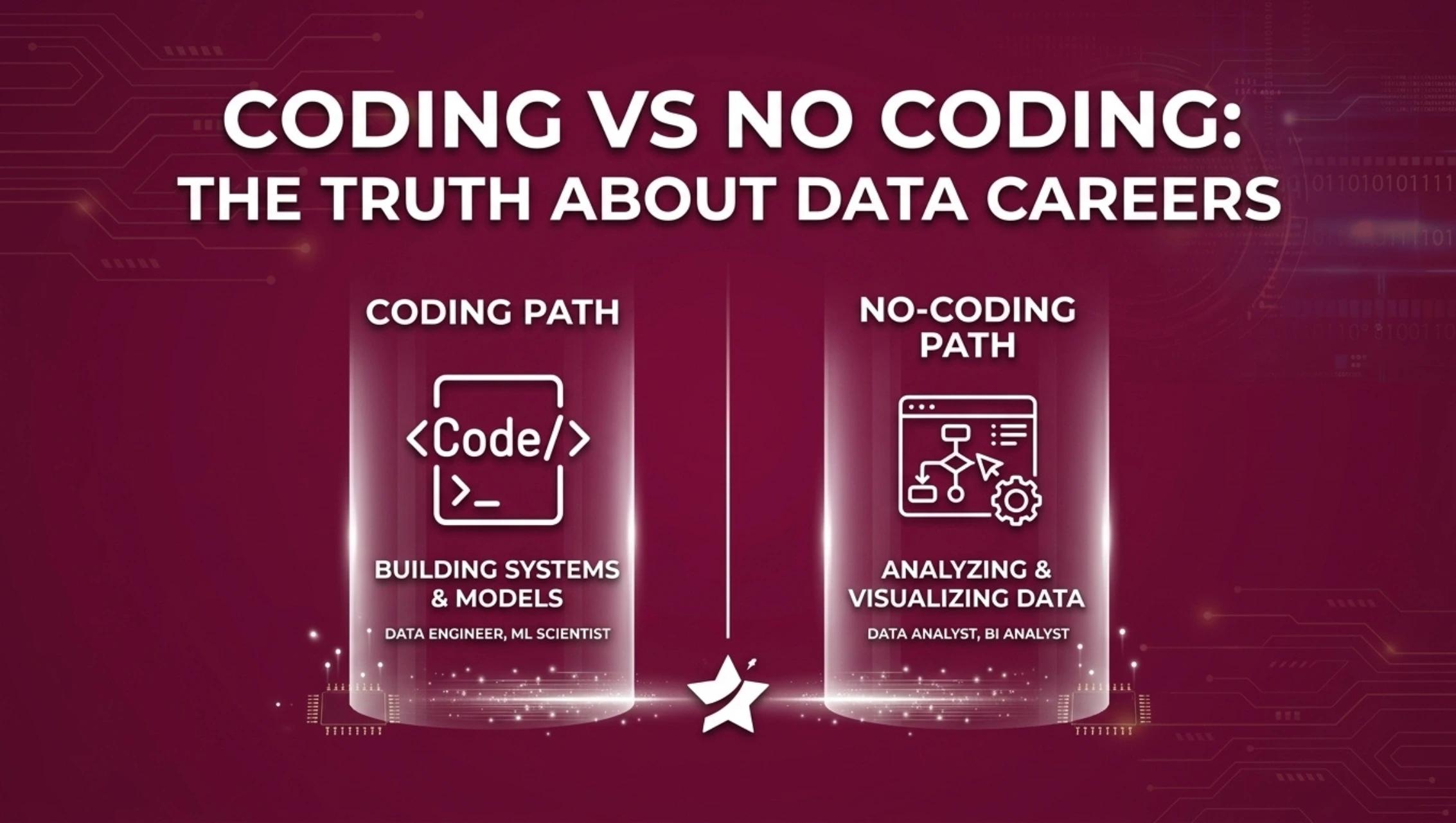
In reality, the requirement for coding varies depending on the type of data role. Some positions, such as data scientists or machine learning engineers, rely heavily on programming languages like Python or R. However, other roles-such as data analysts or business intelligence professionals-often focus more on tools that allow data analysis and visualization without extensive coding.
The good news is that the data field offers multiple entry points for beginners. With the rise of modern analytics platforms and low-code tools, many professionals can begin working with data using platforms like Excel, Power BI, or Tableau before gradually learning programming if needed. In this blog, we’ll explore the truth behind coding vs no coding in data careers and help you understand which skills actually matter when starting a career in the data industry.
Why Many People Think Coding Is Mandatory
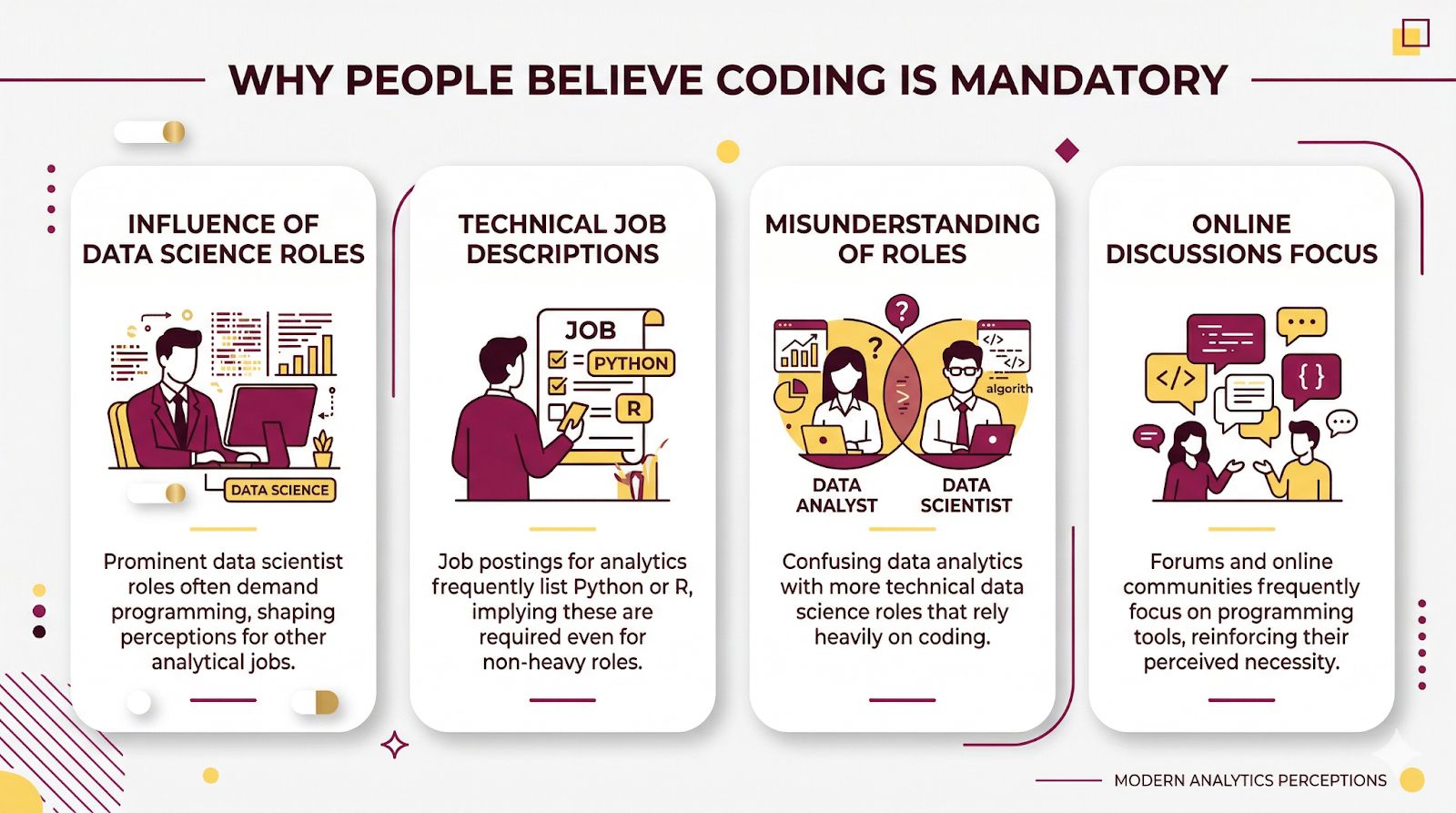
Many beginners believe that coding is essential for every data career. This perception often comes from the way data science is portrayed in job descriptions, courses, and online discussions. Because programming languages like Python and R are commonly associated with data science, people often assume that all data-related roles require strong coding skills.
Another reason for this belief is the growing popularity of data science and machine learning roles. These roles heavily rely on programming to build models, automate data processing, and develop advanced analytics systems. When beginners read about these careers, they may assume that coding is a requirement for entering the entire data field.
However, this assumption overlooks the wide variety of roles within the data ecosystem. Not every data professional needs to build algorithms or develop machine learning models. Many roles focus on analyzing data, creating visualizations, and helping businesses interpret information to support decision-making.
Some reasons why people think coding is mandatory include:
- Influence of data science roles that require programming
- Technical job descriptions mentioning Python or R
- Misunderstanding between analytics and data science roles
- Online discussions focusing mainly on programming tools
Industry experts often clarify this confusion when discussing data science coding and explaining that the coding requirement depends on the specific role within the data field.
Understanding this distinction helps beginners explore data careers with a clearer perspective.
The Reality: Some Data Roles Require Coding, Others Don't
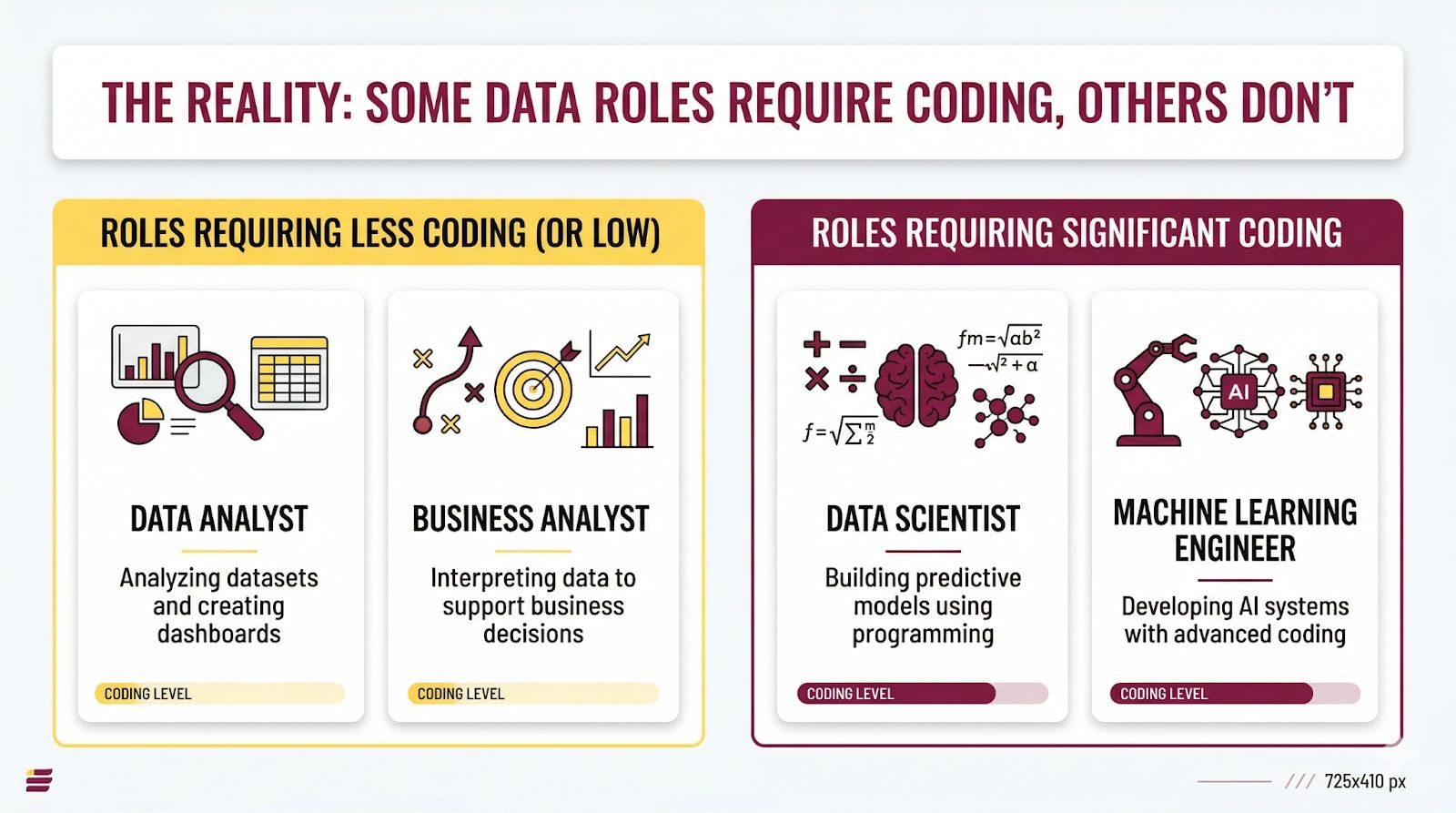
The truth about coding vs no coding in data careers is that different roles have different skill requirements. While some positions depend heavily on programming, others focus more on interpreting data and creating insights using analytical tools. Understanding this distinction helps beginners choose a career path that matches their interests and technical background.
For example, data scientists and machine learning engineers typically rely on programming languages such as Python or R to build predictive models and work with large datasets. These roles require a strong technical foundation because they involve designing algorithms and performing advanced statistical analysis.
On the other hand, many entry-level roles in the data field require little or moderate coding. Data analysts often use tools like Excel, SQL, Power BI, or Tableau to analyze datasets and create dashboards. These tools allow professionals to work with data and generate insights without writing extensive code.
Some common data roles include:
- Data Analyst – analyzing datasets and creating dashboards
- Business Analyst – interpreting data to support business decisions
- Data Scientist – building predictive models using programming
- Machine Learning Engineer – developing AI systems with advanced coding
Experts discussing modern data careers often highlight that many professionals begin with analytical tools and gradually develop coding skills as their careers progress.
Recognizing that not all data roles require the same level of coding can help beginners explore the field more confidently.
No-Code Tools Used in Data Analytics
With the growing demand for data insights, many modern analytics platforms now allow professionals to work with data without extensive programming knowledge. These tools make it possible to analyze datasets, build dashboards, and generate reports through visual interfaces rather than writing code. This development has made it easier for beginners to explore coding vs no coding in data careers without feeling restricted by programming skills.
No-code and low-code analytics tools are widely used in organizations because they allow analysts to focus more on interpreting data rather than writing complex scripts. These platforms often include drag-and-drop features, built-in visualizations, and automated calculations that simplify the data analysis process.
Popular No-Code Analytics Tools
Several tools allow professionals to perform data analysis and create visual insights without heavy coding.
Some commonly used platforms include:
- Excel – widely used for data cleaning, analysis, and reporting
- Power BI – used for interactive dashboards and business intelligence
- Tableau – powerful visualization platform for analyzing large datasets
- Google Data Studio – tool for creating data reports and dashboards
These tools help analysts transform raw datasets into visual insights that decision-makers can easily understand. Professionals exploring no coding careers often start with these platforms before learning programming languages later in their career journey.
The availability of no-code tools shows that beginners can start working with data even without strong coding skills.
Coding vs No Coding Roles in Data Careers
To better understand coding vs no coding in data careers, it’s helpful to compare how different data roles use programming. Some positions require strong coding skills because they involve building algorithms, handling large datasets, or developing machine learning models. Other roles focus more on analyzing data and presenting insights using analytics tools.
Entry-level roles often involve less coding and more work with visualization and reporting tools. These positions allow beginners to start their careers by learning how to interpret data and support decision-making. As professionals gain experience, they may gradually learn programming to handle more advanced analytical tasks.
More technical roles, however, rely heavily on programming because they involve developing predictive models and automated systems. In these cases, coding becomes an essential part of the job.
How coding requirements vary across different data roles.
| Role | Coding Required |
|---|---|
| Data Analyst | Low to moderate |
| Business Analyst | Minimal |
| Data Scientist | High |
| Machine Learning Engineer | Very high |
Understanding these differences helps beginners identify the roles that best match their skills and interests. For those who prefer working with analytical tools and dashboards, roles with lower coding requirements may be a good starting point.
When Coding Becomes Important in Data Careers
Although many beginners can start working with data using no-code tools, coding gradually becomes more valuable as professionals move into advanced roles. In the discussion of coding vs no coding in data careers, it’s important to understand that coding is not always required at the beginning but can significantly expand career opportunities over time.
For example, analysts who work with large datasets often find programming languages like Python helpful for automating repetitive tasks and performing deeper analysis. Coding also allows professionals to work with complex data pipelines, build predictive models, and handle data processing more efficiently.
Another situation where coding becomes important is when professionals want to transition into roles such as data science or machine learning. These fields rely heavily on programming for developing algorithms and training models that can analyze large datasets automatically.
Coding becomes useful in several situations, including:
- Handling large datasets that require automation
- Performing advanced statistical analysis
- Building predictive models and machine learning systems
- Automating repetitive data processing tasks
Beginners often have many questions about how coding fits into different career paths. Exploring resources like career FAQs can help learners understand the skills required for various roles in the technology and data fields.
For those who prefer structured learning paths, exploring data training programs can help beginners gradually develop both analytical and technical skills needed in modern data careers.
Skills Beginners Should Focus On First
When exploring coding vs no coding in data careers, beginners often worry about learning programming immediately. However, most successful data professionals begin by building a strong foundation in analytical and problem-solving skills before moving into advanced technical areas. Focusing on the right fundamentals helps learners understand data more effectively and prepares them for future growth in the field.
One of the most important starting points is data analysis. Beginners should learn how to examine datasets, identify trends, and draw meaningful conclusions. Along with analysis, understanding basic statistics helps analysts interpret patterns and make data-driven decisions.
Another important skill is data visualization. Creating clear charts, dashboards, and reports allows analysts to present insights in a way that business teams can easily understand. Visualization tools such as Power BI or Tableau make this process easier and often require little or no coding.
Foundational skills beginners should prioritize when starting their journey in data analytics.
| Skill | Why It Matters |
|---|---|
| Data Analysis | Helps understand patterns and trends in datasets |
| Data Visualization | Communicates insights through dashboards |
| Statistics | Supports accurate interpretation of data |
| Tools | Excel, Power BI, and visualization platforms |
By focusing on these core skills first, beginners can gradually build confidence in working with data and decide whether they want to explore programming in later stages of their career.
Final Thoughts
The debate around coding vs no coding in data careers often creates unnecessary confusion for beginners. The reality is that the level of coding required depends on the specific role within the data field. While advanced roles such as data science and machine learning rely heavily on programming, many entry-level analytics positions focus more on data interpretation, visualization, and business insights.
For beginners, the most important step is developing a strong foundation in data analysis, statistics, and visualization tools. These skills help professionals understand datasets and communicate insights effectively, even without extensive coding knowledge. Over time, learning programming languages such as Python can open doors to more advanced opportunities in data science and automation.
Key points to remember:
- Not all data careers require heavy coding
- Many entry-level roles focus on analytics and visualization tools
- Coding becomes more important in advanced technical roles
- Building strong analytical skills is the best starting point
By understanding how coding fits into different roles, beginners can choose learning paths that match their interests and gradually expand their technical abilities as their careers grow.
Build the Skills for Modern Tech Careers
Whether you start with analytics tools or move into programming later, structured learning can help you develop the skills needed for technology-driven careers.
Explore a full stack program designed to help learners build strong technical foundations and practical development skills for modern tech roles.