





Table of Contents
- 1.
- 2.
- 2.1
- 3.
- 3.1
- 4.
- 4.1
- 4.2
- 5.
- 6.
The demand for skilled data analysts in India is growing rapidly, making a clear Data Analyst Roadmap 2026 more important than ever. but many aspiring professionals still struggle to find a clear starting point. With the rise of AI-powered analytics and data-driven decision-making across industries, Companies are now looking for professionals with strong data analyst skills in India demands in 2026, who can do more than just work with spreadsheets. They want professionals who can interpret data, generate insights, and contribute to business growth.
However, most learners struggle to follow a structured Data Analyst Roadmap 2026 when building their career path. Many beginners searching for how to become a data analyst in India focus only on tools without understanding business impact, while others jump between courses and certifications without a structured plan. Without clarity on the right skills, tools, projects, and salary expectations, it becomes difficult to stay competitive in the evolving analytics job market.
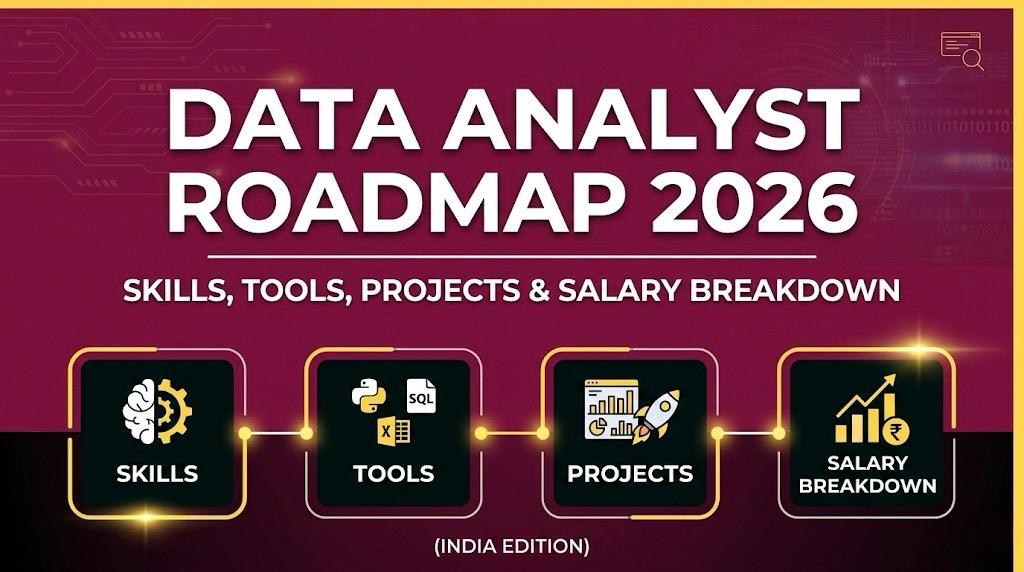
In this Data Analyst Roadmap 2026, we will break down the essential skills, tools, real-world projects, and salary insights required to build a successful data analyst career in India. We will see a brief and structured understanding of this topic in the sections below to help you successfully follow the Data Analyst Roadmap 2026 and make informed, career-focused decisions.
Why 2026 Is a Turning Point for Data Analysts in India
The Indian analytics job market is evolving faster than ever before, making the Data Analyst Roadmap 2026 more important than ever.. Businesses are no longer looking for professionals who can only prepare reports or dashboards. Instead, they want data analysts who can interpret insights, support decision-making, and contribute directly to business growth. This shift makes 2026 a critical year for anyone planning a career aligned with the Data Analyst Roadmap 2026.
According to the Data Analyst Roadmap 2026, the modern data analyst role blends technical expertise with business understanding. Organizations expect analysts to collaborate with marketing, finance, and operations teams to solve real problems using data. As a result, hiring has moved away from tool-focused resumes toward outcome-driven capabilities.
Several industry changes highlighted in the Data Analyst Roadmap 2026 are shaping hiring expectations in India:
- Rapid adoption of AI-powered analytics tools
- Strong push toward data-backed decision-making
- Higher expectations even from entry-level candidates
- Growing importance of communication and data storytelling
- Clear preference for candidates with hands-on project experience
Recruiters now assess candidates based on how effectively they can convert data into actionable insights. This trend is also visible in recent placement results, where candidates with structured learning paths and real-world exposure tend to secure roles faster than those relying only on theory.
For aspiring analysts, this means random learning is no longer enough. A focused, industry-aligned roadmap that connects skills, tools, and business impact has become essential to stay competitive in 2026.
Core Skills Required in the Data Analyst Roadmap 2026
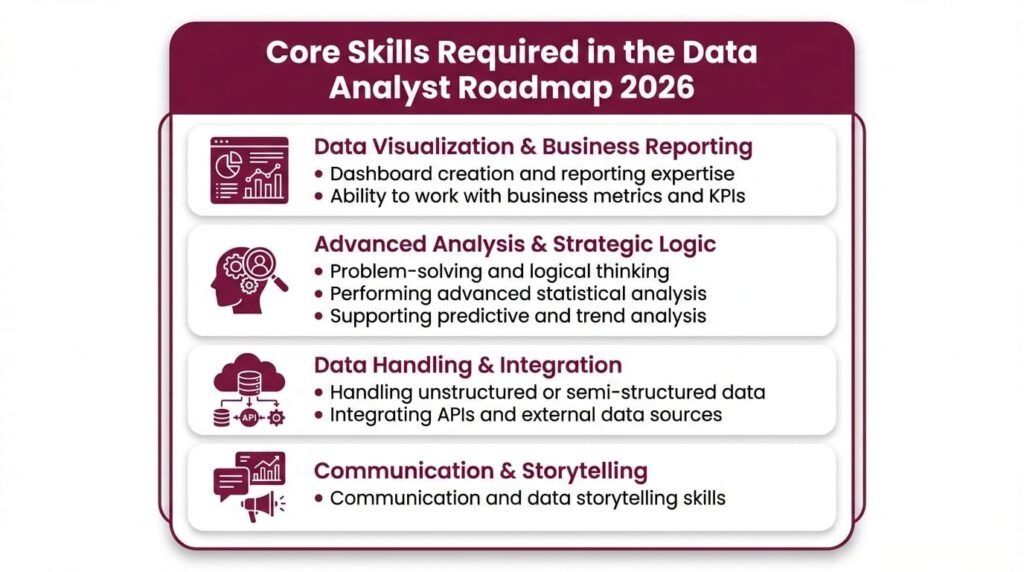
To succeed in the Data Analyst Roadmap 2026, learning random tools is not enough. Companies in India are hiring analysts who can combine technical skills with business understanding and deliver measurable outcomes. Recruiters now expect candidates to show how their analysis can support decision-making, improve efficiency, and drive growth.
A strong skill foundation helps you stay competitive and scalable in the analytics job market. Instead of focusing only on certifications, you should focus on building practical and job-ready capabilities that align with real industry requirements.
Key focus areas recruiters look for:
- Strong data handling and analysis skills
- Ability to work with business metrics and KPIs
- Dashboard creation and reporting expertise
- Problem-solving and logical thinking
- Communication and data storytelling skills
Technical vs Business Skills - What Recruiters Prioritize
Many aspiring analysts who do not follow the Data Analyst Roadmap 2026 spend months learning tools but still struggle to get interviews. The reason is simple - recruiters are not just looking for technical knowledge. They want professionals who can use data to solve real business problems and support decision-making.
To stand out in the hiring process, you must build a balanced skillset that combines technical capability with business understanding.
🔹 Technical Skills (Core Foundation)
These are essential for any data analyst role in India:
- SQL for data analysis - data extraction, joins, aggregations
- Excel for analytics - pivot tables, dashboards, advanced formulas
- Python for data analyst roles - Pandas, NumPy, visualization basics
- Power BI or similar BI tools - interactive dashboards and reporting
- Data cleaning and preprocessing techniques
These tools form the base of daily analytics tasks across most organizations.
🔹 Business & Analytical Skills (Career Growth Drivers)
This is what separates average candidates from high-performing analysts:
- Understanding business metrics and KPIs
- Asking the right questions before starting analysis
- Data storytelling and presentation clarity
- Stakeholder communication
- Converting insights into actionable recommendations
Today, companies don’t just want someone who can analyze data.They want someone who can explain what the data means and what action should be taken.
A balanced approach aligned with the Data Analyst Roadmap 2026 that builds both technical and business skills will make you job-ready and future-proof in the evolving analytics job market.
Essential Tools Every Data Analyst Must Master
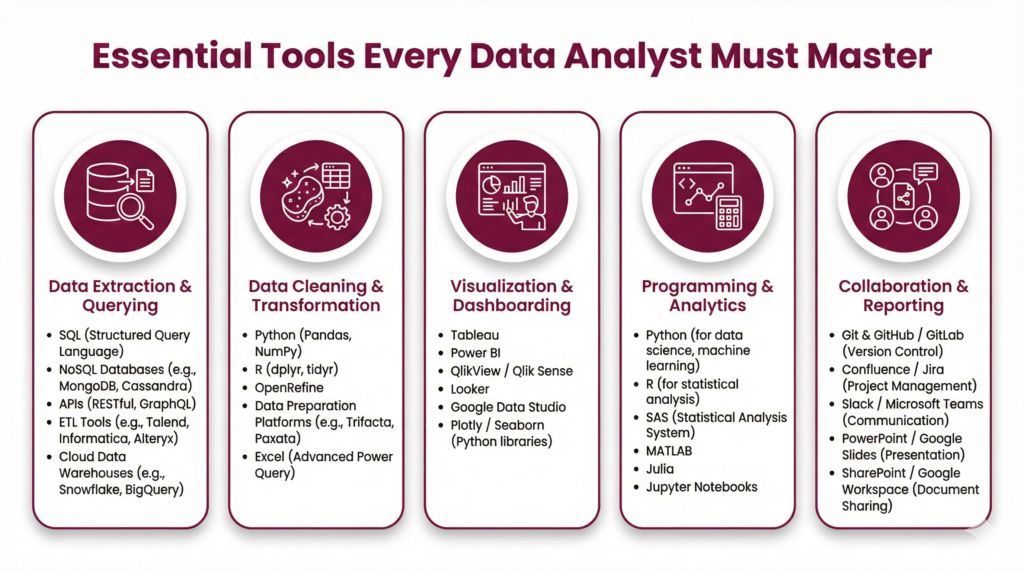
The Data Analyst Roadmap 2026 clearly shows that mastering the right tools is critical for every aspiring data analyst in India. Companies in India expect candidates to work confidently with tools used for data extraction, analysis, visualization, and reporting. Learning tools without understanding real-world application can slow down career growth and reduce job readiness.
A structured Data Analyst Roadmap 2026 helps you focus on tools that actually matter in the industry. Many learners today prefer enrolling in an industry-focused AI analytics program that combines tool training with practical business use cases, making them job-ready faster and more confident during interviews.
Below is a complete data analyst tools list aligned with the Data Analyst Roadmap 2026:
- Data extraction and querying tools
- Data cleaning and transformation tools
- Visualization and dashboard tools
- Programming tools for analytics
- Collaboration and reporting platforms
Most In-Demand Tools in 2026
The following tools are widely used across startups, MNCs, and analytics-driven companies in India:
- SQL - database querying and structured data extraction
- Microsoft Excel - dashboards, reporting, quick analysis
- Python - data cleaning, automation, and visualization
- Power BI - interactive dashboards and business insights
- Cloud-based tools - collaboration and real-time reporting
Recruiters prefer candidates who can combine multiple tools to solve business problems. For example, extracting data using SQL, processing it in Python, and presenting insights through Power BI reflects the workflow expected from modern data analysts.
Mastering these tools with practical implementation ensures you are prepared for real-world analytics roles and can confidently handle business datasets across industries.
Real-World Projects That Strengthen Your Resume
Learning tools alone will not help you stand out in the hiring process. Recruiters in India now evaluate candidates based on practical project experience and problem-solving ability. Real-world projects demonstrate that you can apply your skills to business scenarios and generate meaningful insights.
Working on structured project ideas helps you build a strong portfolio that showcases your technical expertise, analytical thinking, and business understanding. A well-built project portfolio often becomes the deciding factor between getting shortlisted and getting ignored.
Key reasons projects matter for data analyst roles:
- Show practical implementation of tools and concepts
- Demonstrate problem-solving and analytical thinking
- Build a strong portfolio for interviews
- Increase confidence in handling real datasets
- Improve chances of landing entry-level roles
Project Progression for Career Growth
| Project Stage | Example Project | Skills Built | Business Outcome |
|---|---|---|---|
| Beginner | Sales dashboard analysis | Excel, SQL | Reporting accuracy |
| Intermediate | Customer churn analysis | Python, BI tools | Customer retention insights |
| Advanced | Demand forecasting model | SQL, Python | Business planning support |
A strong portfolio should include projects from different domains such as sales, marketing, finance, and operations. This shows recruiters that you can work with diverse datasets and adapt to different business environments.
Instead of building random projects, focus on projects that solve real business problems and clearly explain the insights generated. This approach significantly improves your chances of getting shortlisted for data analyst interviews in 2026.
Data Analyst Salary India 2026: Freshers vs Experienced
Understanding salary expectations is an important part of planning your analytics career under the Data Analyst Roadmap 2026, especially for those researching how to become a data analyst in India.The projected data analyst salary India 2026 varies based on technical expertise, business understanding, and overall data analyst skills India recruiters expect from candidates.. Companies are willing to offer higher packages to candidates who can deliver measurable business impact rather than just technical knowledge.
Recent salary trends show that professionals with strong SQL, Python, and dashboarding skills combined with real-world project experience tend to earn significantly more than candidates with only theoretical knowledge. As demand for data-driven decision-making grows, the data analyst salary India 2026 trend continues to remain strong across industries.
Key factors that influence data analyst salary India 2026 and define essential data analyst skills India include:
- Technical skill depth (SQL, Python, BI tools)
- Real-world project and portfolio strength
- Internship or practical experience
- Domain knowledge (finance, marketing, product, etc.)
- Communication and business understanding
Data Analyst Salary Growth in India (2026)
| Experience Level | Avg Salary Range (India) | Core Skills Needed | Growth Potential |
|---|---|---|---|
| 0–1 Year | ₹3–6 LPA | Excel, SQL, basic dashboards | Entry-level growth |
| 2–4 Years | ₹6–12 LPA | Python, Power BI, advanced SQL | Fast career growth |
| 5+ Years | ₹12–20+ LPA | Advanced analytics, business insights | Leadership roles |
Professionals who continuously upgrade their skills and build strong portfolios often see faster salary growth compared to those who rely only on basic reporting skills. By aligning your learning roadmap with industry demand, you can significantly improve both earning potential and long-term career stability in the analytics field.
Step-by-Step Action Plan to Become a Data Analyst in India
Starting a career in data analytics can feel overwhelming without a clear plan. Many aspiring professionals jump between tools and courses but fail to build a structured learning path. Following a step-by-step roadmap helps you stay consistent, build practical skills, and become job-ready faster.
If you still have doubts about timelines, learning difficulty, or career transition, reviewing common questions in student FAQs can give clarity on what to expect while building your analytics career. A structured approach ensures you focus on skills that directly improve employability.
Practical Roadmap to Follow in 2026
Step 1: Build Strong Foundations (Month 1–2)Start with core concepts and basic tools:
- Excel for data handling and reporting
- SQL for querying databases
- Understanding datasets and KPIs
- Basic statistics for analytics
Step 2: Learn Core Analytics Tools (Month 3–4)Focus on tools used in real jobs:
- Python for data analysis
- Power BI for dashboards
- Data cleaning and preprocessing
- Visualization techniques
Step 3: Work on Real Projects (Month 5–6)Apply what you learn:
- Sales or marketing dashboard
- Customer analysis project
- Business performance report
- End-to-end portfolio project
Step 4: Build Portfolio & ResumeShowcase your work clearly:
- GitHub or portfolio website
- Project case studies
- Dashboard screenshots
- Problem–solution explanations
Step 5: Prepare for InterviewsFocus on:
- SQL and Excel interview questions
- Case study-based questions
- Scenario-based problem solving
- Communication and storytelling
Following a structured roadmap helps you move from beginner to job-ready data analyst with clarity and confidence. Consistency, real-world practice, and business understanding are the key factors that determine how quickly you can land your first analytics role in India.
The demand for skilled data analysts in India continues to grow as businesses rely more on data-driven decision-making. However, success in this field now requires more than just learning a few tools. A clear roadmap that combines technical skills, business understanding, real-world projects, and continuous upskilling is essential to stay competitive in 2026 and beyond.
By focusing on the right skills, mastering industry-relevant tools, working on practical projects, and understanding salary trends, aspiring professionals can build a strong and sustainable career in analytics. The key is to follow a structured approach rather than learning randomly, ensuring that every step you take adds real value to your career growth and job readiness.
Final Thoughts
The demand for skilled data analysts in India continues to grow as businesses rely more on data-driven decision-making. However, success in this field now requires more than just learning a few tools. A clear roadmap that combines technical skills, business understanding, real-world projects, and continuous upskilling is essential to stay competitive in 2026 and beyond.
By focusing on the right skills, mastering industry-relevant tools, working on practical projects, and understanding salary trends, aspiring professionals can build a strong and sustainable career in analytics. The key is to follow a structured approach rather than learning randomly, ensuring that every step you take adds real value to your career growth and job readiness.
Build a Job-Ready Data Analyst Career with Structured Guidance
If you want to become a data analyst in 2026, following random tutorials and scattered courses won’t be enough. Companies are hiring professionals who can work with real datasets, build dashboards, and generate insights that support business decisions. A structured learning path with practical exposure can significantly reduce your learning curve and improve your job readiness.
A career-focused program that combines tools, projects, and placement support can help you transition faster into the analytics industry. If you’re serious about building a future-proof analytics career with real-world skills and placement-driven training, explore the Certification in AI Powered Data Analytics to gain industry-relevant expertise and accelerate your journey into high-demand data roles.