








Table of Contents
- 1.
- 2.
- 2.1
- 3.
- 3.1
- 3.2
- 4.
- 4.1
- 4.2
- 5.
- 5.1
- 6.
- 6.1
- 7.
- 7.1
- 8.
- 8.1
- 9.
- 9.1
- 9.2
- 9.3
- 9.4
- 9.5
- 10.
Introduction
India’s demand for data analysts is accelerating faster than any other digital role, driven by rapid digital transformation across industries.
- According to NASSCOM, India’s analytics and data science market is expected to grow at over 26% CAGR.
- LinkedIn – Jobs on the Rise consistently ranks data analytics among the top 5 in-demand skills in India.
This surge makes 2026 a critical inflection point, not just for job availability, but for salary growth in India, as companies compete for skilled talent amid:
- AI adoption
- Machine learning integration
- Big data-driven decision-making
From startups scaling data-driven products to MNCs and government agencies modernizing decision-making:
- Data analytics jobs are no longer niche
- They are now foundational to business strategy and operations
This blog breaks down data analyst salaries in India 2026, covering:
- Fresher-level salaries
- Mid-level and senior salary ranges
- Impact of skills on pay
- Top hiring industries
- Realistic career outlooks
All to help you make informed, future-proof career decisions.
Data Analyst Job Market in India (2026)
The data analytics job market in India is expanding at record speed because businesses can no longer rely on intuition alone. Digital transformation across industries has made data the backbone of decision-making from pricing and marketing to supply chains and customer experience. According to NASSCOM, India’s analytics and data science ecosystem is growing at 25%+ annually, creative equity options. Anal analysts.
A major driver is the adoption of AI, machine learning, and big data. Companies are collecting massive volumes of structured and unstructured data, but raw data has no value without professionals who can analyze, interpret, and translate it into business insights. This gap is pushing salaries upward, especially for analysts who combine technical skills with domain knowledge.
Industries Hiring Data Analysts in 2026
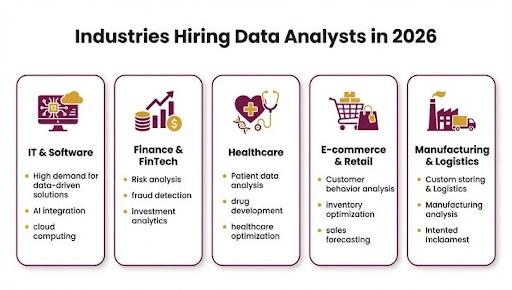
By 2026, data analytics jobs span multiple high-growth industries:
- IT & Software: Product analytics, SaaS optimization, and performance tracking
- Finance & FinTech: Fraud detection, risk modeling, and customer behavior analysis
- Healthcare: Patient data analysis, predictive diagnostics, and operational efficiency
- E-commerce & Retail: Demand forecasting, pricing optimization, and personalization
- Manufacturing & Logistics: Supply chain analytics, quality control, and predictive maintenance
This wide industry adoption makes data analytics one of the most future-proof careers in India, with strong job security and salary growth potential through 2026 and beyond [Upgrad]
ChatGPT can make mistakes. Check important info. See Cookie Preferences.
Data Analyst Salary in India 2026: Complete Breakdown
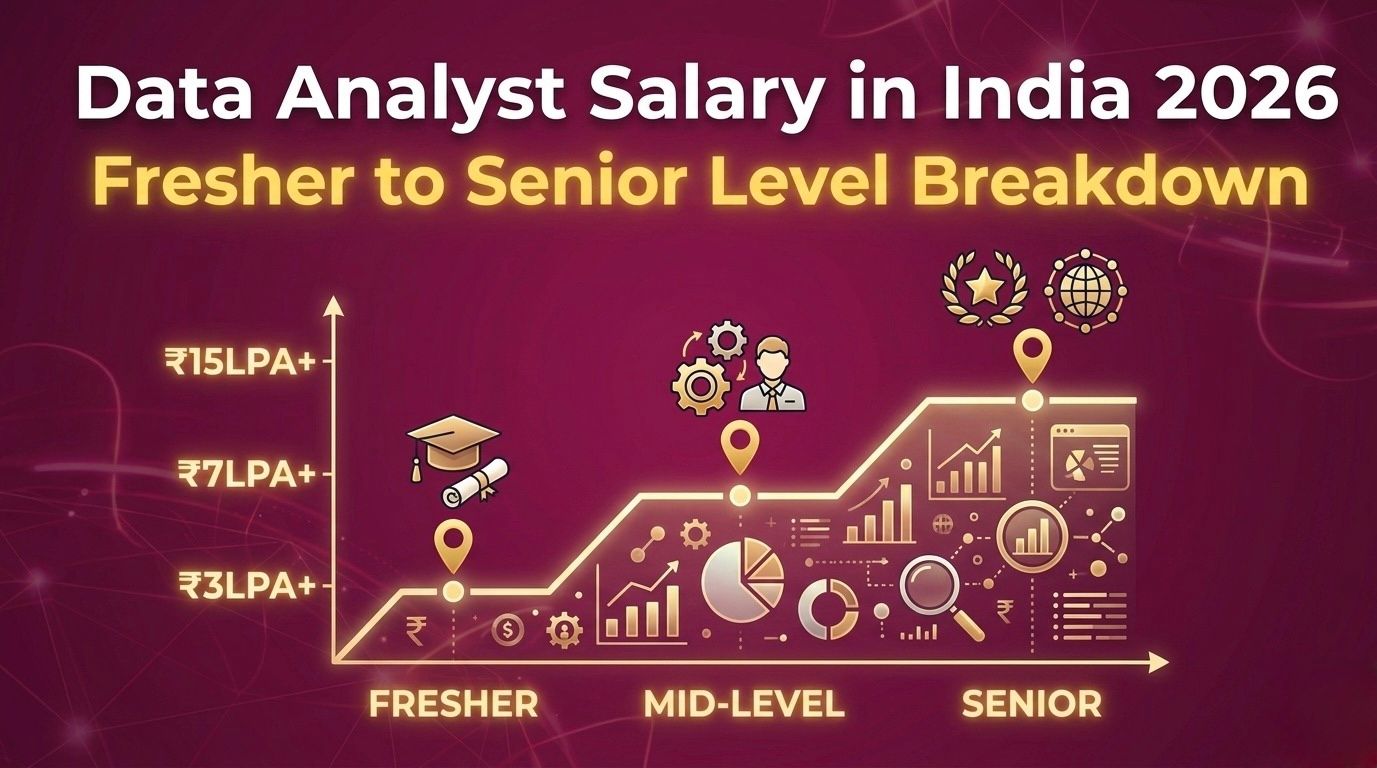
For freshers entering the field in 2026, data analytics offers a strong starting salary compared to many other tech and non-tech roles. On average, a fresher data analyst in India can expect ₹4 LPA to ₹7 LPA, depending on skills and location.
Data Analyst Fresher Salary Expectations (0–1 Year)
Entry-level roles often include Junior Data Analyst, Business Analyst Trainee, or Reporting Analyst. Paid internships and apprenticeships (₹15,000–₹40,000/month) are increasingly common and often convert into full-time roles within 6–12 months.
- Tier-1 cities (Bengaluru, Hyderabad, Pune, Chennai, Mumbai): ₹5–7 LPA due to higher demand and cost of living
- Tier-2 cities (Coimbatore, Kochi, Indore, Jaipur): ₹3.5–5 LPA with growing analytics hubs
Mid-Level Data Analyst Salary (2–5 Years Experience)
With hands-on experience, salaries rise sharply. In 2026, mid-level data analysts earn between ₹8 LPA and ₹15 LPA, depending on expertise and industry.
Key salary boosters include:
- Domain specialization (FinTech, healthcare analytics, product analytics)
- Advanced tools like Python, SQL optimization, Power BI/Tableau
- Exposure to real business problem-solving, not just reporting
At this stage, professionals often transition into roles such as Senior Data Analyst, Product Analyst, or Analytics Consultant. Many also move toward data science or analytics manager tracks, unlocking faster salary growth and leadership opportunities.
Overall, the 2–5 year phase is where data analysts experience the highest salary acceleration, making skill-building and domain focus critical for long-term career success.
Salary Growth in India for Data Analysts
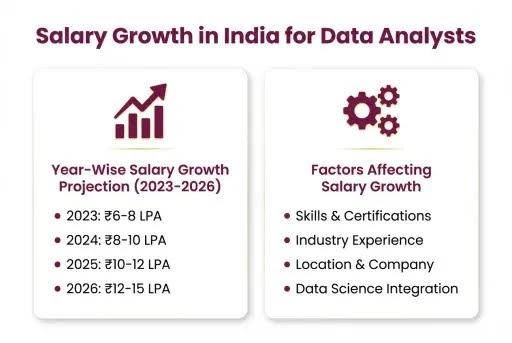
Data analytics has been one of the fastest-growing salary tracks in India over the last few years. Between 2023 and 2025, average data analyst salaries increased by 8–12% annually, outperforming many traditional IT roles. This growth was fueled by digital adoption, AI integration, and a shortage of skilled professionals.
Year-Wise Salary Growth Projection (2023–2026)
Looking ahead to 2026, industry estimates suggest analytics salaries will grow at a CAGR of 10–14%, depending on skill level and industry. For example:
- Freshers earning ₹4 LPA in 2023 are likely to reach ₹6–7 LPA by 2026
- Mid-level analysts earning ₹8 LPA can move to ₹12–15 LPA
- Senior professionals continue to see double-digit hikes, especially in product-based and global firms
This consistent upward trend makes data analytics a financially resilient career choice.
Factors Affecting Salary Growth
Several factors directly influence how fast a data analyst’s salary grows in India:
- Skills and Certifications: Proficiency in Python, SQL, Power BI/Tableau, cloud analytics, and AI-driven tools can increase pay by 20–40% over basic reporting roles
- Company Size and Industry: Product companies, FinTech firms, and global MNCs pay significantly more than service-based firms
- Location and Remote Work Impact: Tier-1 cities still offer higher base pay, but remote and hybrid roles now allow Tier-2 professionals to access metro-level salaries
In short, salary growth in India for data analysts isn’t just time-based, it's skill-driven, industry-aligned, and increasingly location-independent, especially by 2026.
Skills That Increase Data Analyst Salary in 2026
In 2026, a data analyst’s salary is directly tied to how well they can work with data, not just view it. Employers consistently pay more for analysts who can handle end-to-end analysis using core tools.
- SQL, Python, and R: Analysts proficient in SQL for complex queries and Python/R for data cleaning and analysis earn 25–40% higher salaries than those limited to basic reporting. Python, in particular, is widely used for automation and predictive insights.
- Power BI and Tableau: Visualization skills remain critical. Analysts who can turn raw data into clear dashboards and business stories typically earn ₹2–4 LPA more than peers without BI tool expertise.
Technical Skills with High Salary Impact
Advanced Skills That Boost Pay
- Machine Learning Basics: Understanding regression, clustering, and forecasting can push analysts toward data scientist roles and increase pay by 30% or more.
- AI-Driven Analytics: Experience with automated insights, NLP, and AI-powered analytics platforms is increasingly valued in product and marketing analytics.
- Cloud Platforms (AWS, Azure, GCP): Analysts who work with cloud data warehouses and pipelines earn 20–35% higher salaries, as most enterprise data now lives on the cloud.
In short, 2026 rewards data analysts who combine core analytics with AI and cloud skills, making continuous upskilling the fastest path to higher pay.
Location-Wise Data Analyst Salary in India
Location continues to influence data analyst salaries in India, though the gap is narrowing. Metro cities like Bengaluru, Hyderabad, Pune, and Chennai remain top-paying hubs due to the concentration of tech companies, startups, and global delivery centers.
- Hyderabad: ₹5.5–16 LPA (strong presence of global MNCs)
- Pune & Chennai: ₹5–15 LPA (IT services and product firms)
In contrast, Tier-2 cities such as Coimbatore, Kochi, Indore, Jaipur, and Ahmedabad offer salaries in the range of ₹3.5–8 LPA for similar roles. However, hiring in these cities is growing wrong, long-term earning potential and reduce costs. With lower living expenses, many professionals report better savings despite slightly lower pay.
Remote and Global Job Opportunities
Remote work has significantly reshaped salary structures. Many Indian data analysts working in remote-first roles earn 20–40% higher pay compared to local offers, especially when hired by metro-based or international companies [Taggd]
Key opportunities include:
- Remote full-time roles with Indian product companies
- Global contracts with US, UK, and Middle East firms
- Freelancing platforms offering ₹2,000 - ₹6,000 per hour for experienced analysts
By 2026, location matters less than skills, experience, and the ability to deliver insights remotely. For data analysts, this shift unlocks global earning potential without relocating.
Company-Wise Salary Comparison
MNC vs Indian Companies
Company type plays a major role in determining data analyst salaries in India. Multinational corporations (MNCs) generally offer higher and more structured pay packages compared to many Indian service-based companies.
- MNCs: ₹7–18 LPA, with additional benefits like bonuses, ESOPs, health insurance, and global exposure
- Indian service companies: ₹4–10 LPA, especially at entry and mid levels
Startup vs Enterprise Roles
The difference between startups and large enterprises is even more pronounced.
- Startups: Salaries range from ₹6–15 LPA, often combined with ESOPs or equity options. Analysts here gain rapid exposure to product decisions, experimentation, and business impact.
- Enterprises: ₹8–20 LPA, with stable roles, defined processes, and long-term career security.
Startups offer faster growth
MNCs tend to pay more with risks such as funding uncertainty and high workload. Enterprises provide predictable salary hikes (8–12% annually) and job stability, but slower role changes.
In 2026, the best choice depends on your career stage startups for accelerated learning and upside potential, enterprises for steady income and long-term stability.
Career Path After Data Analyst Role
Next Career Levels
A data analyst role often acts as a launchpad to higher impact and higher-paying positions. After 2–4 years of experience, professionals typically move into one of these career paths:
- Senior Data Analyst: Focuses on complex problem-solving, stakeholder communication, and advanced analytics. Salaries in 2026 range from ₹12–20 LPA, depending on industry and skills.
- Data Scientist: Requires deeper expertise in machine learning, statistics, and programming. Many analysts transition here after upskilling, with salaries starting at ₹15 LPA and going up to ₹30+ LPA in top firms.
- Analytics Manager: Combines analytics expertise with leadership and strategy. Managers oversee teams, align insights with business goals, and earn ₹18–35 LPA, especially in product and enterprise environments.
These paths are not linear; professional often switch between them based on interests and skill development.
Is Data Analytics a Good Career in India in 2026?
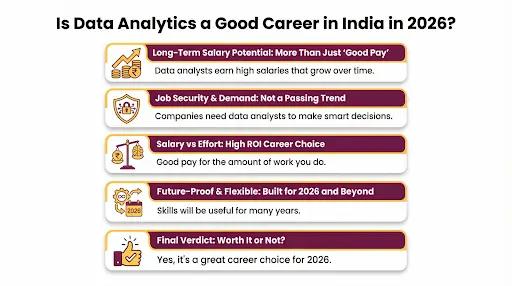
If you’re wondering whether Data Analytics is still worth it in 2026, you’re asking the right question at the right time. Short answer? Yes. Long answer? Also yes.
Long-Term Salary Potential: More Than Just “Good Pay”
Data analytics isn’t a “quick money” career, it’s a smart money career.
In India, the long-term earning potential for data professionals continues to look strong and sustainable. Here’s what a realistic salary journey looks like:
- Entry-level analysts typically start between ₹4–7 LPA
- Mid-level professionals (2–5 years experience) earn around ₹8–15 LPA
- With advanced skills (SQL, Python, Power BI/Tableau, AI analytics), the curve gets steeper and faster
Compared to many traditional IT roles where growth can feel painfully slow, analytics rewards skill upgrades more than job hopping. In simple terms: learn more → earn more.
Job Security & Demand: Not a Passing Trend
Data analytics is not a buzzword anymore, it’s a business necessity.
From IT and finance to healthcare, retail, manufacturing, and even government sectors, companies are relying heavily on data-driven decisions. According to NASSCOM, India’s analytics and data science workforce is expected to grow at over 25% annually.
That means:
- More roles
- More stability
- Less fear of waking up to a “role made redundant” email
In a tech world where some jobs come and go, data analytics is sticking around.
Salary vs Effort: High ROI Career Choice
Let’s be honest - every career demands effort. But not every career rewards it fairly.
Data analytics offers one of the best ROI (Return on Investment) among tech careers:
- You don’t need hardcore coding like a full-stack developer
- You don’t need 10 years to see growth
- Strategic upskilling can accelerate salaries within 2–3 years
If you enjoy problem-solving, numbers, dashboards, and insights (and don’t mind Excel becoming your second home), analytics treats you well.
Future-Proof & Flexible: Built for 2026 and Beyond
As AI, machine learning, and cloud technologies become mainstream, the need for professionals who can interpret, visualize, and act on data is only increasing.
What makes analytics even better?
- It’s not limited to IT
- Roles exist in finance, healthcare, e-commerce, manufacturing, logistics, and public policy
- Hybrid and remote roles let Indian analysts work for global companies—without relocating
In short, analytics careers grow with technology, not against it.
Final Verdict: Worth It or Not?
Data analytics in India offers:
✔ Strong job security
✔ Competitive and fast-growing salaries
✔ Industry-wide demand
✔ Future-ready skills
✔ Global opportunities
With the right skills and smart upskilling, data analytics isn’t just a safe career—it’s one of the most growth-oriented career paths in India for 2026 and beyond.
If stability, salary, and scalability matter to you - data analytics checks all three boxes.
At WHY TAP, our Certification in AI-Powered Data Analytics is designed to take you from beginner to job-ready, with:
- ✅ AI-powered analytics tools
- ✅ SQL, Python & BI tools (Power BI / Tableau)
- ✅ Real-time industry projects
- ✅ Portfolio & interview preparation
- ✅ Placement guidance from an active IT company
Whether you’re a fresher, career switcher, or working professional, this program is built for real jobs, not just certificates.
Explore the course here: https://whytap.in/courses/certification-in-ai-powered-data-analytics/
Conclusion
The data analyst salary in India 2026 reflects a career with tremendous growth potential from fresher salary expectations of ₹4–7 LPA to senior-level packages reaching ₹30+ LPA in top firms. Across industries like IT, finance, healthcare, e-commerce, and manufacturing, salary growth in India for data analytics professionals is driven by both experience and specialized skills in SQL, Python, AI, and cloud platforms. Aspiring analysts who focus on continuous upskilling, domain expertise, and hands-on projects can accelerate their career trajectory, Ready to Start Your Data Analytics Career in 2026?
Reading about data analyst salaries is one thing.
Building the skills to actually earn that salary is what matters.