






Table of Contents
- 1.
- 2.
- 3.
- 3.1
- 4.
- 5.
- 6.
- 7.
- 8.
- 9.
- 10.
Many aspiring data analysts focus heavily on learning technical tools such as Python, SQL, Excel, or data visualization platforms. While these skills are essential, recruiters often look beyond technical abilities when evaluating candidates. In reality, the skills recruiters look for in data analysts include a combination of analytical thinking, communication, and business understanding that help transform raw data into meaningful insights.
Hiring managers are not only interested in whether a candidate can work with data but also in how effectively they can interpret results and communicate findings. Data analysts frequently collaborate with business teams, managers, and stakeholders who may not have technical backgrounds. Because of this, the ability to explain insights clearly and connect data analysis to real business problems becomes extremely valuable.
Understanding these hidden expectations can make a significant difference during the hiring process. Candidates who combine technical knowledge with strong analytical and communication abilities are often more successful in landing interviews and progressing in data careers. In this article, we’ll explore the skills recruiters look for in data analysts that go beyond technical tools and explain how beginners can start developing these abilities.
Why Technical Skills Alone Are Not Enough
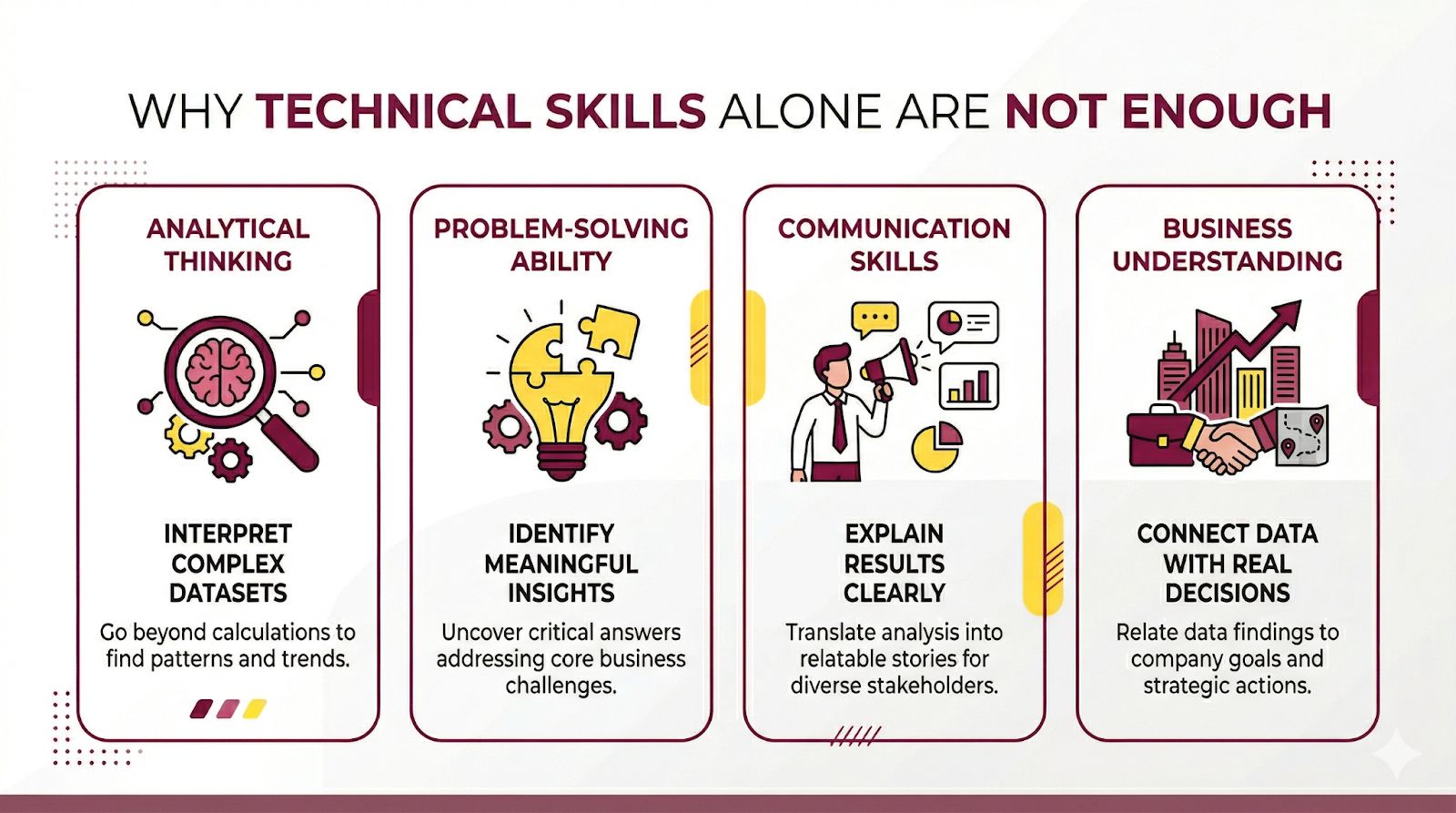
Many beginners believe that mastering tools like Python, SQL, or Power BI is enough to succeed as a data analyst. While these technical abilities are important, recruiters often evaluate candidates based on a broader set of capabilities. The skills recruiters look for in data analysts usually go beyond tools and include the ability to understand business problems, analyze data logically, and communicate insights effectively.
In real-world business environments, data analysts are expected to translate complex datasets into actionable insights. This means they must understand the context behind the data and identify patterns that can help organizations make better decisions. Simply knowing how to run queries or create dashboards is not always sufficient if the analyst cannot explain what the results actually mean.
Another important factor is collaboration. Data analysts often work with marketing teams, finance departments, or product managers who rely on data insights to guide strategies. The ability to communicate clearly and present findings in a simple and meaningful way becomes a valuable skill.
Some important capabilities recruiters often evaluate include:
- Analytical thinking to interpret complex datasets
- Problem-solving ability to identify meaningful insights
- Communication skills to explain results clearly
- Business understanding to connect data with real decisions
Industry experts frequently highlight these essential analytics skills as critical for professionals who want to build successful careers in data analysis.
Hidden Skill #1: Analytical Thinking
One of the most important skills recruiters look for in data analysts is analytical thinking. While technical tools help process data, analytical thinking allows analysts to interpret results and identify meaningful insights. Recruiters value candidates who can look beyond numbers and understand what the data is actually telling them.
Analytical thinking involves asking the right questions and examining data from different perspectives. For example, when analyzing sales data, an analyst should not only identify trends but also explore the reasons behind those trends. This ability to dig deeper into the data helps organizations make better strategic decisions.
Data analysts with strong analytical thinking skills can also identify inconsistencies or unusual patterns in datasets. Recognizing these patterns helps businesses uncover hidden opportunities or potential problems that may not be immediately visible.
Some key aspects of analytical thinking in data analysis include:
- Identifying patterns and relationships within datasets
- Asking meaningful questions about the data
- Interpreting results logically instead of just reporting numbers
- Connecting insights with business objectives
Developing strong analytical abilities helps analysts transform raw data into actionable insights. Professionals who cultivate these analytics abilities often stand out during the hiring process because they demonstrate a deeper understanding of how data can support business decisions.
Hidden Skill #2: Data Storytelling
Another critical ability among the skills recruiters look for in data analysts is data storytelling. While analyzing data is important, the real value comes from communicating insights in a way that decision-makers can easily understand. Many recruiters look for candidates who can translate complex datasets into clear and meaningful narratives.
Data storytelling involves combining analysis, visualization, and explanation to highlight key insights. Instead of presenting raw numbers or complex tables, analysts create dashboards, charts, or summaries that help stakeholders quickly understand trends and patterns. This skill is especially valuable because many business leaders rely on these insights to guide strategic decisions.
Why Data Communication Matters
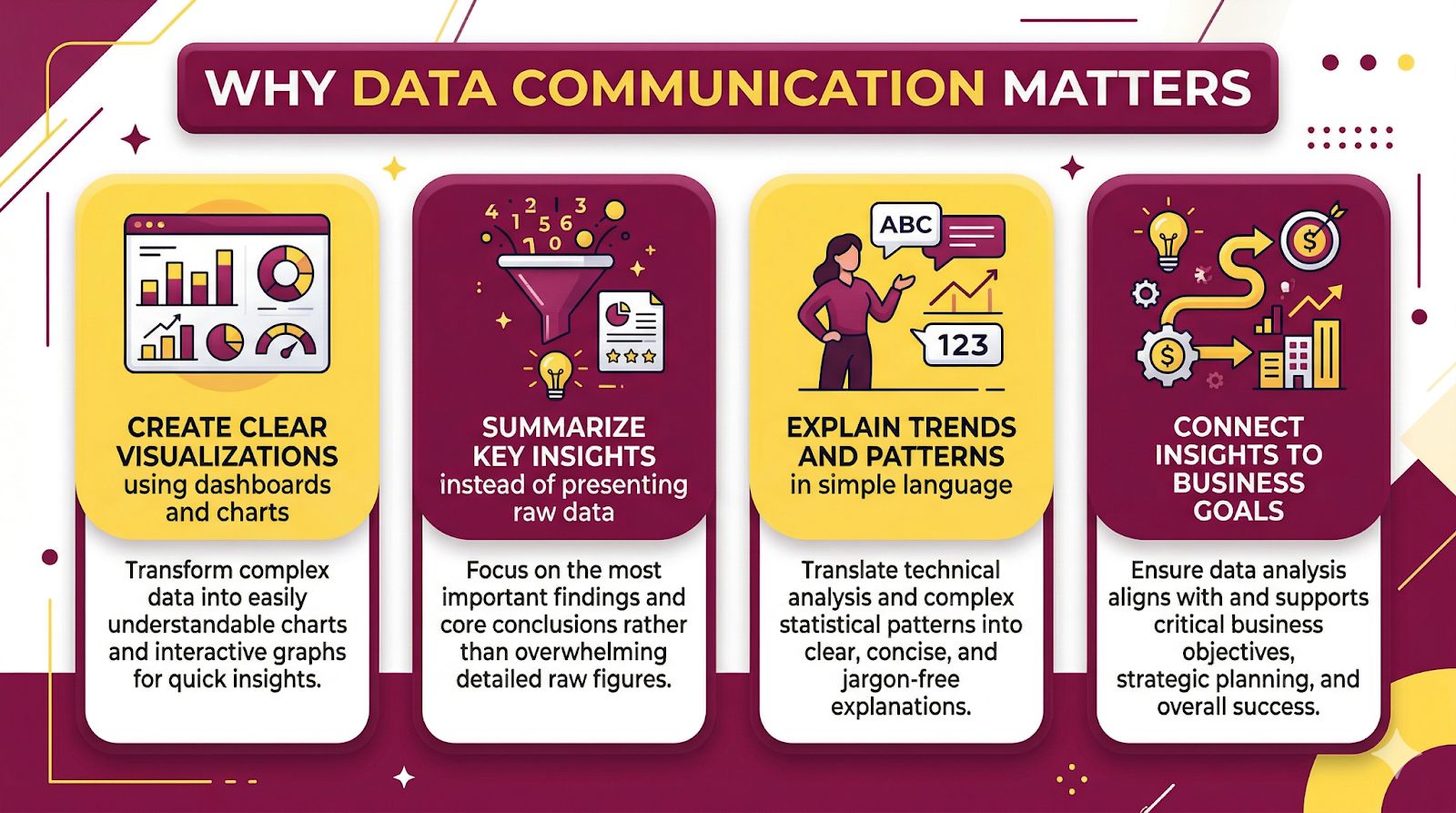
In many organizations, data analysts work with teams that may not have strong technical backgrounds. Marketing managers, product teams, and executives often depend on analysts to explain findings in simple terms. Effective communication ensures that insights are not only understood but also applied in decision-making.
Some ways analysts practice data storytelling include:
- Creating clear visualizations using dashboards and charts
- Summarizing key insights instead of presenting raw data
- Explaining trends and patterns in simple language
- Connecting insights to business goals
Industry experts frequently emphasize these analyst skills because the ability to communicate insights effectively can significantly influence how organizations use data to drive decisions.
Technical vs Hidden Skills Recruiters Evaluate
When reviewing candidates, recruiters typically evaluate a mix of technical and non-technical abilities. While technical knowledge helps analysts process and analyze data, the skills recruiters look for in data analysts often include hidden capabilities such as analytical thinking, communication, and business understanding. These skills help transform technical analysis into actionable insights that organizations can use.
Technical skills are usually easier to measure because they involve specific tools and technologies. Recruiters can quickly see whether a candidate knows Python, SQL, Excel, or data visualization platforms. However, hidden skills are equally important because they determine how effectively a candidate can apply these tools in real-world situations.
For example, an analyst may know how to build dashboards or write queries, but without strong communication skills, it may be difficult to explain the insights derived from the data. Similarly, understanding the business context helps analysts focus on the most relevant data rather than simply generating reports.
The difference between technical skills and hidden skills that recruiters often evaluate.
| Skill Type | Example Skills |
|---|---|
| Technical Skills | Python, SQL, Excel |
| Analytical Skills | Problem-solving, critical thinking |
| Communication Skills | Explaining insights clearly |
| Business Skills | Understanding organizational goals |
Beginners who want to evaluate their readiness for data roles can use tools such as a skill assessment to identify areas where they can improve their analytical and technical abilities.
How Beginners Can Develop These Hidden Skills
Developing the skills recruiters look for in data analysts does not happen overnight. These abilities grow gradually through consistent learning, practical experience, and exposure to real-world problems. While technical tools can be learned through tutorials and courses, hidden skills such as analytical thinking and communication improve through practice and real application.
One effective way beginners can develop these skills is by working on data projects. Projects help learners practice analyzing datasets, identifying patterns, and explaining insights. When beginners present their findings through reports or dashboards, they also strengthen their ability to communicate data effectively.
Another useful approach is learning the business context behind data. Instead of focusing only on tools, beginners should try to understand why companies analyze data and how insights influence decisions. This mindset helps analysts connect their technical work with real organizational goals.
Some practical ways beginners can develop these hidden skills include:
- Working on real datasets to improve analytical thinking
- Creating dashboards or reports to practice data storytelling
- Presenting insights clearly through written summaries or visualizations
- Learning how businesses use data to solve problems
For learners who want structured guidance and hands-on experience, exploring data training programs can help build both technical and analytical skills required for data analyst roles. These programs often combine tools, projects, and mentorship to prepare beginners for real-world data challenges.
Key Skills That Make Data Analysts Stand Out
While many candidates may have similar technical knowledge, the skills recruiters look for in data analysts often determine who stands out during the hiring process. Recruiters usually prefer candidates who combine technical expertise with strong analytical and communication abilities. These qualities help analysts not only work with data but also translate insights into meaningful business decisions.
Data analysts who stand out typically demonstrate a balance between technical proficiency and practical thinking. They are able to analyze data effectively, interpret patterns, and communicate insights in a way that helps teams understand the impact of the findings. This combination of skills makes them valuable contributors in data-driven organizations.
Key abilities that recruiters often value when evaluating candidates for data analyst roles.
| Skill | Why Recruiters Value It |
|---|---|
| Analytical thinking | Helps identify patterns and solve complex problems |
| Communication | Allows analysts to explain insights clearly |
| Data visualization | Makes complex data easier to understand |
| Business understanding | Connects data insights with real decisions |
Developing these capabilities helps candidates build stronger professional profiles and increases their chances of succeeding in data analyst interviews. By combining technical tools with these hidden skills, aspiring analysts can position themselves as well-rounded professionals in the competitive data job market.
Final Thoughts
Succeeding as a data analyst requires more than just learning technical tools. While skills such as Python, SQL, and data visualization are important, the skills recruiters look for in data analysts often include deeper abilities like analytical thinking, communication, and business understanding. These hidden skills help analysts transform raw data into insights that organizations can use to make better decisions.
Recruiters prefer candidates who can not only analyze data but also explain their findings clearly and connect insights to real-world problems. This combination of technical expertise and practical thinking helps analysts contribute more effectively within teams and organizations.
Key takeaways to remember:
- Technical tools are important but not enough on their own
- Analytical thinking helps interpret complex datasets
- Data storytelling and communication improve decision-making
- Business understanding connects data insights with real impact
By focusing on both technical knowledge and these hidden skills, aspiring analysts can build stronger professional profiles and increase their chances of success in competitive data roles.
Build the Skills Recruiters Look for in Data Analysts
Developing the right combination of technical and analytical abilities can significantly improve your readiness for data analyst roles. Structured learning and practical projects often help beginners build these capabilities more effectively.
Explore an analytics certification that focuses on practical analytics tools, real-world projects, and the key skills recruiters value in data professionals.