






Table of Contents
- 1.
- 2.
- 3.
- 3.1
- 4.
- 5.
- 6.
- 7.
- 8.
- 9.
Over the past few years, data science jobs have gained enormous attention. Social media posts, online courses, and career guides often highlight the high salaries and growing demand for data scientists. While these opportunities are real, many beginners enter the field with expectations that don’t always match the actual hiring process or day-to-day responsibilities of data professionals.
In reality, the journey into data science is more complex than simply learning a few programming languages or completing a certification. Recruiters evaluate a combination of skills including problem-solving ability, project experience, and the capacity to translate data insights into business decisions. Many candidates discover these expectations only after facing multiple job rejections.
Understanding what recruiters truly look for can make a big difference for aspiring professionals. In this article, we will explore the realities behind data science jobs, discuss the skills recruiters prioritize, and uncover some of the important insights that are rarely explained during the early stages of a data science career.
The Reality Behind Data Science Jobs
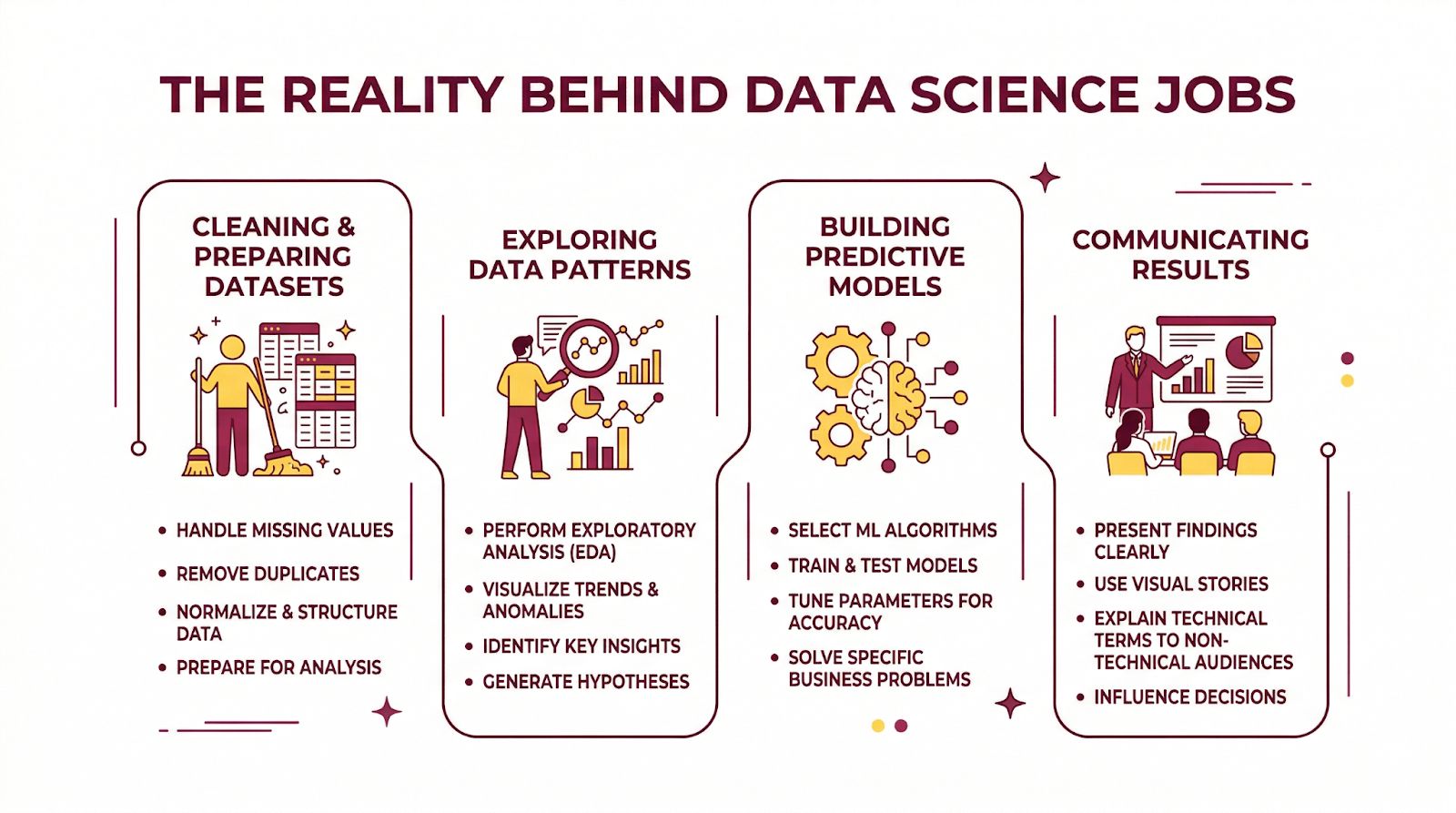
Many beginners imagine that data science jobs mainly involve building machine learning models and working with advanced artificial intelligence systems every day. While these tasks are part of the field, the reality is often quite different. In most organizations, a large portion of a data scientist’s work focuses on understanding data, cleaning datasets, and preparing information for analysis.
Data preparation is one of the most time-consuming steps in the analytics process. Before any model can be built, data professionals often need to collect information from multiple sources, handle missing values, and organize the dataset into a usable format. This process ensures that the analysis produces reliable results.
Another important aspect of data science roles is collaboration with business teams. Data scientists frequently work with product managers, marketing teams, or executives who rely on data insights to guide strategic decisions. Because of this, the role involves explaining findings clearly and connecting technical analysis to real-world business problems.
Some common tasks in real data science roles include:
- Cleaning and preparing datasets for analysis
- Exploring data patterns to identify insights
- Building predictive models when required
- Communicating results to business stakeholders
Many professionals realize these realities only after entering the field or facing several data job rejections during the application process. Understanding the true nature of data science work can help candidates prepare more effectively for the industry.
Recruiters Look for More Than Technical Skills
Many candidates preparing for data science jobs focus heavily on learning programming languages and machine learning algorithms. While technical skills such as Python, SQL, and data modeling are important, recruiters often evaluate candidates based on a broader set of abilities. Successful data professionals are expected to combine technical expertise with analytical thinking, communication, and business understanding.
One key quality recruiters value is the ability to solve real-world problems using data. Companies are not only interested in whether a candidate can build models but also in whether they can identify meaningful patterns in data and translate those insights into business decisions. This requires strong analytical thinking and the ability to ask the right questions when working with datasets.
Communication skills also play a major role in data science roles. Data professionals frequently present insights to teams that may not have a technical background. Being able to explain complex findings in simple terms helps organizations make better decisions based on data.
Some qualities recruiters often evaluate include:
- Problem-solving ability to interpret complex datasets
- Communication skills to explain insights clearly
- Business understanding to connect analysis with decisions
- Collaboration skills to work with different teams
Modern hiring strategies increasingly rely on data recruiting approaches that focus on evaluating these broader capabilities rather than only technical knowledge. Understanding these expectations can help candidates prepare more effectively for data science job opportunities.
The Skills Gap Many Candidates Ignore
One of the biggest challenges in securing data science jobs is the gap between what candidates learn and what companies actually expect. Many beginners focus primarily on completing online courses or earning certifications, assuming that these credentials alone will be enough to secure a job. However, recruiters usually look for practical experience and problem-solving ability rather than theoretical knowledge alone.
The data science field is highly practical. Employers want candidates who can work with real datasets, identify patterns, and generate insights that support business decisions. This means that having hands-on experience with projects often carries more weight than simply listing tools or courses on a resume.
Why Projects Matter More Than Certificates
Projects help candidates demonstrate how they apply their skills in real-world situations. When recruiters review resumes for data-science jobs, they often look for portfolio projects that show the candidate’s ability to analyze data, build models, and communicate results.
Working on projects provides several advantages:
- Demonstrates practical problem-solving ability
- Shows experience working with real datasets
- Builds a portfolio that recruiters can evaluate
- Highlights analytical thinking and data storytelling
Candidates who actively work on projects and share their results often have a stronger advantage in job applications. Many professionals also recommend following structured job application tips that focus on building portfolios and improving job readiness.
What Recruiters Actually Evaluate in Data Science Candidates
When reviewing applications for data-science jobs, recruiters typically evaluate more than just academic qualifications or certifications. Hiring managers want to understand how well a candidate can apply data science concepts to real-world business problems. This means evaluating a combination of technical knowledge, project experience, and communication abilities.
Technical skills are often the first thing recruiters look for. Familiarity with programming languages such as Python or SQL, as well as basic machine learning techniques, is usually expected. However, technical knowledge alone is not enough. Recruiters also pay close attention to whether candidates have applied these skills in real projects.
Another key factor is the ability to communicate insights effectively. Data scientists frequently work with non-technical teams, so the ability to explain complex results in simple language is highly valuable. Business understanding is also important because organizations want professionals who can connect data analysis to real strategic decisions.
key areas recruiters typically evaluate in candidates applying for data science roles.
| Skill Area | What Recruiters Expect |
|---|---|
| Technical Skills | Python, SQL, and machine learning basics |
| Projects | Real-world problem solving with data |
| Communication | Ability to explain insights clearly |
| Business Thinking | Connecting analysis to decision-making |
Developing these skills often requires structured practice and hands-on learning. Many beginners choose to explore data training programs that provide practical projects and guided learning paths to build these competencies.
Common Misconceptions About Data Science Jobs
There are many misconceptions surrounding data-science jobs, especially among beginners entering the field. Because of the growing popularity of data science careers, many people assume that the role mainly involves advanced machine learning or artificial intelligence work. However, the day-to-day responsibilities of data professionals often include tasks that are less glamorous but equally important.
For example, many beginners believe that building complex machine learning models is the main activity in data science roles. In reality, data professionals often spend a significant amount of time cleaning data, preparing datasets, and exploring patterns before any modeling begins. These foundational tasks are essential for producing accurate and reliable insights.
Another common misconception is that completing multiple certifications automatically guarantees a job. While certifications can help learners understand concepts, recruiters usually prioritize candidates who have worked on real-world projects and can demonstrate practical experience.
common myths about data science careers and the actual reality in the industry.
| Myth | Reality |
|---|---|
| Data science is only about coding | It involves analysis and business understanding |
| Machine learning is daily work | Data cleaning and exploration take most time |
| Certificates guarantee jobs | Practical projects matter more |
| Data scientists work alone | Collaboration with teams is common |
To strengthen their practical skills and better prepare for industry expectations, many beginners explore structured programs such as an analytics certification that combine theoretical learning with hands-on project experience.
How to Prepare for Real Data Science Jobs
Preparing for data-science jobs requires more than just learning algorithms or completing online courses. Recruiters usually prefer candidates who demonstrate practical experience, strong analytical thinking, and the ability to solve real-world problems using data. Building these capabilities takes consistent practice and exposure to real datasets.
One of the most effective ways to prepare for the industry is by working on real data projects. Projects help candidates understand how data science workflows operate from collecting and cleaning data to building models and presenting insights. When candidates showcase these projects in a portfolio, recruiters can easily evaluate their practical skills.
Another important step is developing strong analytical and communication abilities. Data scientists frequently work with teams across departments, so the ability to explain insights clearly and connect analysis to business goals is highly valued.
Some practical steps to prepare for data science roles include:
- Building a portfolio of data projects using real datasets
- Learning essential tools such as Python, SQL, and visualization platforms
- Practicing problem-solving with real business scenarios
- Improving communication skills to explain insights effectively
Learners who want to deepen their technical expertise and gain more project experience often explore structured programs such as a data science program that focuses on real-world analytics workflows and industry-relevant skills.
Final Thoughts
Understanding the reality behind data science jobs can help aspiring professionals prepare more effectively for the industry. While the field offers exciting opportunities, recruiters often look for more than just technical knowledge. They evaluate candidates based on their ability to solve real problems, communicate insights, and apply data science techniques in practical situations.
Many beginners enter the field with expectations shaped by online trends or simplified career advice. However, the day-to-day responsibilities of data professionals often involve tasks such as data cleaning, analysis, and collaboration with business teams. Recognizing these realities early can help candidates build the right skills and avoid common mistakes during the job search process.
Key takeaways to remember:
- Data-science jobs involve both technical and analytical skills
- Practical projects often matter more than certifications
- Communication and business understanding are valuable abilities
- Hands-on experience helps candidates stand out during hiring
By focusing on real-world skills and building a strong project portfolio, aspiring professionals can prepare themselves more effectively for the evolving demands of the data science industry.
Build the Skills Recruiters Expect in Data Science Jobs
Developing industry-relevant skills and practical project experience can significantly improve your chances of securing data science opportunities. Structured learning paths often help beginners gain both technical knowledge and hands-on experience.
Explore data training programs that focus on real datasets, practical analytics tools, and the essential skills recruiters expect in modern data science roles. These programs can help learners move from theoretical knowledge to real industry readiness.