





Table of Contents
- 1.
- 2.
- 2.1
- 3.
- 3.1
- 3.2
- 3.3
- 3.4
- 3.5
- 3.6
- 4.
- 4.1
- 4.2
- 4.3
- 4.4
- 4.5
- 5.
- 6.
- 6.1
- 6.2
- 6.3
- 6.4
- 7.
- 7.1
- 7.2
- 7.3
- 7.4
- 7.5
- 8.
- 8.1
- 8.2
- 8.3
- 8.4
- 8.5
- 8.6
- 9.
- 9.1
- 9.2
- 9.3
- 9.4
- 10.
Introduction
Cracking interviews is one of the biggest challenges for graduates today. According to the India Skills Report 2025 paints a slightly better picture, estimating employability at 54.8 percent, up from just 30–35 percent a decade ago. Yet, both studies underline persistent gaps in non-technical and meta-skills, inconsistent institutional quality, and rapidly shifting employer expectations. The reason isn’t a lack of knowledge it’s a lack of interview skills. Recruiters often reject candidates within the first few minutes due to poor communication, low confidence, unclear answers, and weak body language. In fact, LinkedIn reports that communication and problem-solving skills are among the top factors influencing hiring decisions for entry-level roles in India.
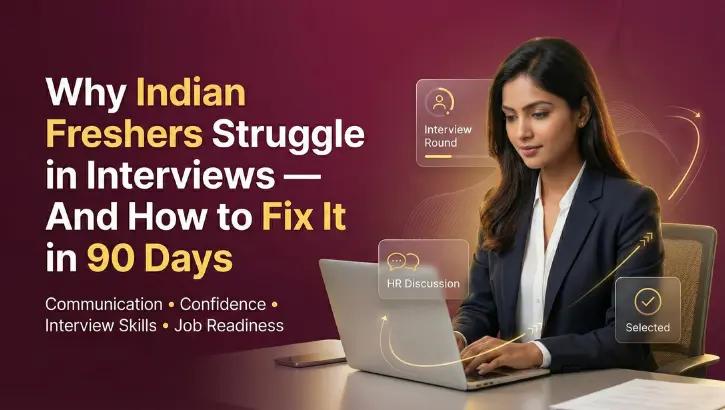
This is where interview skills for freshers struggle in interviews in India become critical. The good news? Interview skills are not talent-based they are learnable. With the right structure, practice, and feedback, freshers can significantly improve their performance and become job-ready within 90 days. This blog breaks down exactly how.
What Are Interview Skills? (And Why They Matter More Than Your Degree in India)
Interview skills are the abilities that help you communicate your value clearly and confidently during a job interview. They include how you speak, listen, think, present yourself, and respond under pressure. In India’s competitive job market, these skills often matter more than your degree or marks.
Here’s why.
According to the India Skills Report, nearly 1 out of 2 Indian graduates fail to meet basic employability standards, even though they hold formal degrees. Recruiters don’t reject candidates because they lack certificates they reject them because they fail to explain what they know.
Core Interview Skills Every Fresher Needs
- Clear communication – explaining answers without memorizing scripts
- Confidence & body language – eye contact, posture, and voice control
- Structured thinking – answering questions logically, not randomly
- Resume explanation skills – confidently describing projects and internships
- HR conversation skills – handling questions like “Tell me about yourself”
For example, two freshers may have the same degree. One gives short, confused answers. The other explains a college project clearly, admits gaps honestly, and shows eagerness to learn. Recruiters almost always choose the second candidate.
In fact, LinkedIn reports that communication skills rank higher than academic performance for entry-level hiring decisions in India.
Degrees get your resume shortlisted. Interview skills get you hired.
The best part? You can learn and improve these skills with practice, regardless of your background, language level, or college tier.
Top Reasons Why Indian Freshers Struggle in Interviews
Most Indian freshers don’t fail interviews because they are “bad candidates.” They fail because they prepare for exams, not conversations. Interviews test clarity, confidence, and thinking not memory.
Here are the real reasons freshers struggle in interviews again and again
1. Weak Communication Skills
Many freshers know the answer but can’t explain it clearly.
- They overthink grammar
- They give long, confusing responses
- They panic when asked follow-up questions
Example: A candidate knows Python basics but struggles to explain how they used it in a project.
2. No Practice Explaining Their Own Resume
Freshers often write resumes for ATS but forget to prepare explanations.
- Can’t explain projects
- Can’t justify skills listed
- Get stuck on basic questions
3. Low Confidence & Poor Body Language
Interviewers notice confidence in the first 2 minutes.
- No eye contact
- Slouched posture
- Very low or rushed voice
According to LinkedIn, recruiters value confidence and communication more than marks for entry-level roles.
4. Memorized Answers Instead of Understanding
Freshers mug up answers from Google and YouTube.
- Same scripted responses
- No originality
- Collapse when questions change slightly
5. Lack of Interview Awareness
Many freshers don’t understand what interviews test.
| What Freshers Think | What Interviewers Actually Check | ||
|---|---|---|---|
| Correct answers | English fluency | Degree name | Perfect resume |
| Clear thinking | Confidence & clarity | Skill application | Honest explanations |
6. Poor HR Interview Preparation
Freshers focus only on technical rounds and ignore HR.
- “Tell me about yourself” goes wrong
- Salary questions create panic
- Career goals sound unclear
The truth: Interviews reward clarity over intelligence. Once freshers practice speaking, structuring answers, and handling pressure, results change fast.
Most Common Interview Mistakes Freshers in India Make
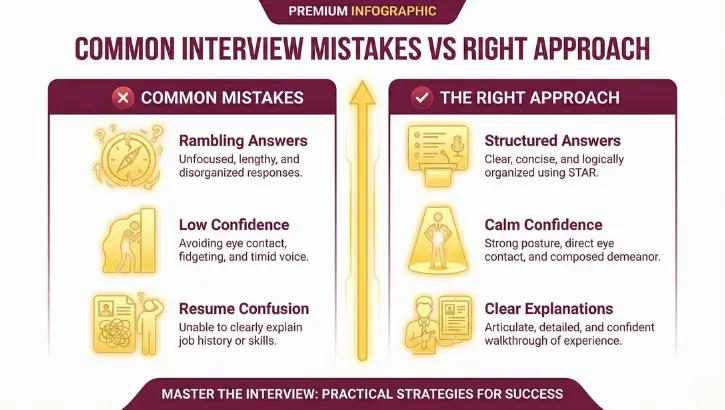
Freshers often lose interview opportunities not because they lack skills, but because they repeat the same avoidable mistakes. These errors usually appear in the first 10–15 minutes and once that impression forms, recovery becomes hard.
Here are the mistakes that cost Indian freshers job offers
1. Giving Unstructured, Rambling Answers
Many freshers speak without direction.
- No clear start or end
- Too many irrelevant details
- Interviewers lose interest quickly
Example: When asked about a project, the candidate explains the entire syllabus instead of focusing on their role and outcome.
2. Memorizing Answers from the Internet
Freshers often copy answers word-for-word.
- Sound robotic
- Fail when questions change slightly
- Struggle with follow-up questions
Interviewers immediately recognize scripted answers.
3. Poor First Impression
Recruiters judge confidence within minutes.
- Weak posture
- No eye contact
- Very low or rushed voice
According to LinkedIn, communication and confidence strongly influence early hiring decisions especially for entry-level roles.
4. Not Knowing Their Own Resume
This mistake surprises freshers struggle in interviews the most.
- Can’t explain projects
- Can’t justify listed skills
- Forget internship details
Example: A fresher lists “Advanced Excel” but can’t explain a simple VLOOKUP use case.
5. Treating HR Rounds Casually
Many freshers underestimate HR interviews.
- Generic “Tell me about yourself”
- Unclear career goals
- Panic during salary discussions
Fresher Mistakes vs Recruiter Expectations
| Fresher Mistake | Recruiter Expectation | ||
|---|---|---|---|
| Memorized answers | Long explanations | Marks-focused talk | Nervous behavior |
| Clear thinking | Structured responses | Skill application | Calm confidence |
The key takeaway: Interviews reward clarity, honesty, and confidence not perfection. Once freshers stop these mistakes and start practicing real interview conversations, their success rate improves dramatically.
The 90-Day Interview Skills Improvement Plan for Freshers
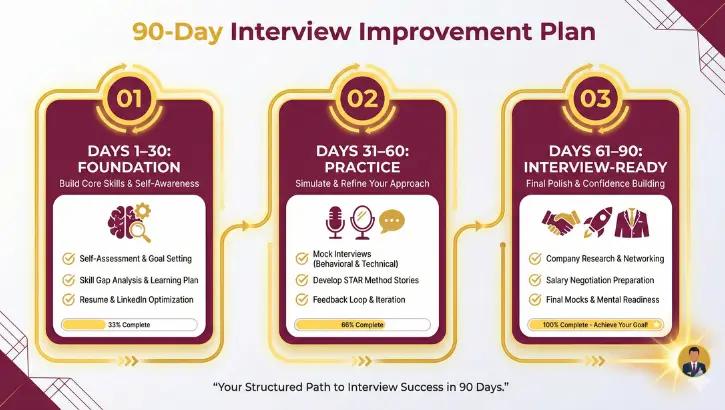
Improving interview skills doesn’t require talent or luck it requires structure and consistency. A focused 90-day plan can transform how freshers speak, think, and perform in interviews.
Here’s a simple, realistic roadmap that works
Days 1–30: Build the Foundation
Focus on clarity, basics, and self-awareness.
- Improve spoken English with daily practice (15–20 minutes)
- Write and refine a clear “Tell me about yourself”
- Understand every line of your resume
- Learn how to structure answers (Situation → Action → Result)
Example: Record yourself answering one interview question daily and note fillers, pauses, and clarity issues.
Days 31–60: Practice Like Real Interviews
This phase creates confidence through repetition.
- Attend mock interviews (online or with peers)
- Practice technical + HR questions together
- Learn to explain projects and internships clearly
- Practice thinking aloud while solving problems
Days 61–90: Interview Readiness & Confidence
Now focus on pressure handling and polish.
- Improve body language and voice control
- Practice salary and HR conversations
- Simulate full interviews with time limits
- Learn how to handle “I don’t know” questions confidently
Example: Practice interviews in formal clothes to reduce real-day anxiety.
90-Day Interview Skill Plan at a Glance
| Phase | Focus Area | Outcome |
|---|---|---|
| Days 1–30 | Days 31–60 | Days 61–90 |
| Communication basics | Mock interviews | Real simulations |
| Clear answers | Confidence | Job-ready mindset |
The result: Freshers stop fearing interviews and start controlling conversations. With daily effort, interview skills improve faster than most expect and job offers follow.
How to Practice Interview Skills at Home (Without Coaching Centers)
You don’t need expensive coaching centers to improve interview skills. You need daily practice, honest feedback, and the right structure. Freshers who practice at home consistently often outperform those who rely only on classes.
Here’s how to build interview-ready skills from your room
1. Practice Speaking Every Single Day
Interviews test how you speak under pressure.
- Answer one interview question aloud daily
- Speak in simple, clear English
- Avoid memorized sentences
Example: Set a 2-minute timer and explain your final-year project like you’re talking to an interviewer.
2. Record and Review Yourself
Self-review improves clarity faster than reading theory.
- Record video or audio answers
- Notice filler words (“um”, “actually”)
- Check eye contact, posture, and tone
Seeing yourself speak exposes mistakes you never notice otherwise.
3. Use Free Online Mock Interviews
Many free platforms offer practice questions and simulations.
- Practice technical and HR rounds
- Answer timed questions
- Learn how to think aloud
Example: Practice problem-solving questions while explaining your thought process, not just the final answer.
4. Build a 30-Minute Daily Interview Routine
Consistency beats long, irregular sessions.
- 10 minutes: Speak answers aloud
- 10 minutes: Resume & project explanation
- 10 minutes: Review and improve
Studies on skill learning show that short daily practice improves retention and confidence more than occasional long sessions.
5. Practice with Friends or Family
You don’t need experts to simulate pressure.
- Ask friends to interrupt with follow-up questions
- Practice explaining answers simply
- Get honest feedback
Example: Ask a friend to question you like an HR interviewer.
The truth: Interview skills grow through action, not observation. When freshers practice speaking, structuring, and explaining daily confidence follows naturally, even without coaching centers.
What Recruiters in India Actually Expect From Freshers
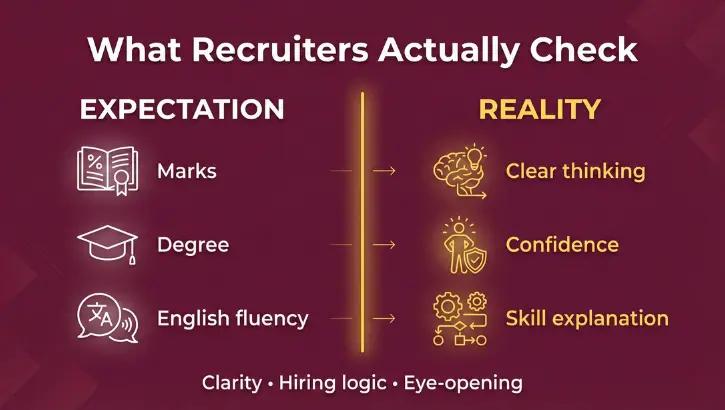
Many freshers assume recruiters expect perfect answers, top marks, and fluent English. That assumption causes unnecessary pressure and poor performance. In reality, recruiters look for potential, clarity, and attitude, not perfection.
Here’s what hiring managers actually want to see
1. Clear Thinking, Not Fancy Answers
Recruiters value how you think, not how big your vocabulary sounds.
- Simple explanations beat complex jargon
- Logical flow matters more than speed
- Honest thinking beats memorized responses
Example: A fresher who clearly explains how they solved a small project problem often outshines someone who recites theory.
2. Willingness to Learn
Freshers don’t need to know everything but they must show curiosity.
- Asking thoughtful questions
- Accepting feedback calmly
- Showing interest in skill improvement
Recruiters often prefer a trainable candidate over an overconfident one.
3. Confidence and Professional Behavior
Confidence doesn’t mean arrogance.
- Steady eye contact
- Calm voice
- Respectful listening
Example: Saying “I’m not sure, but this is how I would approach it” shows maturity and confidence.
4. Ability to Explain Their Own Resume
Recruiters expect freshers to know their basics.
- Projects
- Internships
- Tools and skills listed
If you can’t explain your resume, recruiters question your honesty.
5. Positive Attitude and Cultural Fit
Recruiters assess whether you can work in a team.
- Polite communication
- Openness to guidance
- Realistic career expectations
What Freshers Think vs What Recruiters Expect
- Marks → Mindset
- Speed → Clarity
- Perfection → Potential
- Fluency → Confidence
The reality: Recruiters hire freshers who think clearly, speak honestly, and show growth potential. When you focus on these traits, interviews become conversations not interrogations.
Real Examples — Fresher Interview Answers (Bad vs Good)
Interviewers don’t expect perfect answers from freshers but they do expect clarity and honesty. The difference between rejection and selection often comes down to how you answer, not what you know. Let’s look at real examples.
Question 1: “Tell me about yourself”
Bad Answer
- Talks about childhood and family
- Lists marks and certificates
- No connection to the job
Good Answer
- Brief education summary
- Relevant skills and projects
- Clear interest in the role
Example:
“I’m a computer science graduate. I worked on a mini project using Python where I automated data cleaning. I enjoy solving practical problems and I’m looking to grow as a junior analyst.”
Question 2: “Explain Your Project”
Bad Answer
- Explains theory
- Uses technical jargon
- Doesn’t mention personal role
Good Answer
- Explains the problem
- Mentions what you did
- Shares the result
Example:
“Our project reduced manual data entry. I designed the Excel dashboard, cleaned the data, and improved reporting speed by 30%.”
Question 3: “What Are Your Strengths?”
Bad Answer
- Generic words like “hardworking”
- No proof
Good Answer
- One strength
- One real example
Example:
“My strength is consistency. I practiced mock interviews daily for two weeks and improved my confidence.”
Question 4: “What If You Don’t Know the Answer?”
Bad Answer
- “I don’t know” and silence
Good Answer
- Shows thinking approach
Example:
“I haven’t worked on this yet, but I would approach it by first understanding the requirement.”
Key Difference Between Bad and Good Answers
- Memorized → Structured
- Long → Clear
- Nervous → Confident
Remember: Interviews reward clear communication and genuine effort, not perfect answers.
Skill-to-Interview Bridge
Once you start improving your interview skills, applying to the right jobs matters just as much. ARC360jobs helps freshers find genuine opportunities where interview readiness actually counts.
Final Thought
In today’s competitive hiring market, interview skills for freshers in India decide outcomes more than degrees, marks, or college names. Clear communication, confident body language, structured answers, and honest explanations consistently separate selected candidates from rejected ones. As this blog showed, interview performance improves with the right mindset, daily practice, and a focused 90-day plan not luck or expensive coaching.
The key takeaway is simple: interviews reward clarity, confidence, and readiness. When freshers stop memorizing answers and start practicing real conversations, results change fast. Job offers follow preparation.