







Table of Contents
- 1.
- 2.
- 3.
- 4.
- 5.
- 6.
- 7.
- 8.
Online advertising has grown explosively over the last decade, and with it, three core pricing models dominate the marketing world: CPC, CPM, and CPA.
If you're entering Digital Marketing, Social Media Marketing, Performance Marketing, or learning advertising at WHY TAP, these terms may seem confusing at first.
But here’s the good news
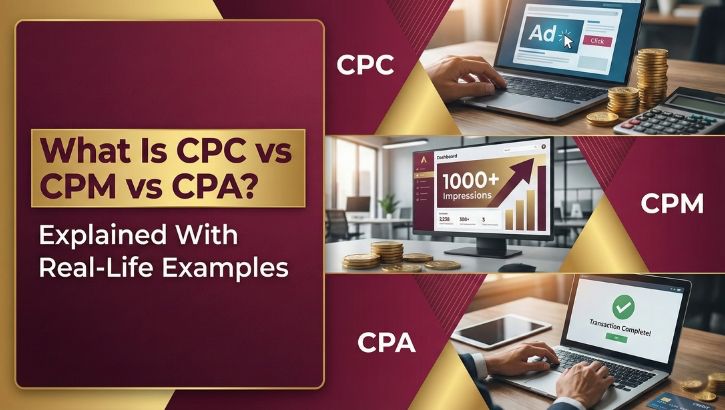
By the end of this guide, you’ll clearly understand CPC vs CPM vs CPA, how each model works, where they apply, real-life examples, and how businesses choose between them to optimize their ROI.
Why Understanding CPC vs CPM vs CPA Is Essential in 2025
Whether you are:
- Running ads for your business
- Launching a product
- Learning digital marketing
- Preparing for interviews
- Or planning to specialize in performance marketing
…understanding these pricing models is not optional. It is the foundation of how online ads work.
According to Statista, global digital ad spend reached $627 billion in 2023 and is projected to cross $870 billion by 2027.
This means brands are spending more than ever—and they expect marketers who understand cost models deeply.
Mastering CPC vs CPM vs CPA ensures you:
✔ Allocate ad budgets correctly
✔ Improve campaign performance
✔ Avoid wasting money
✔ Optimize for leads, sales, and awareness
✔ Build high-ROI ad funnels
Let’s break down each model.
1. What Is CPC (Cost Per Click)?
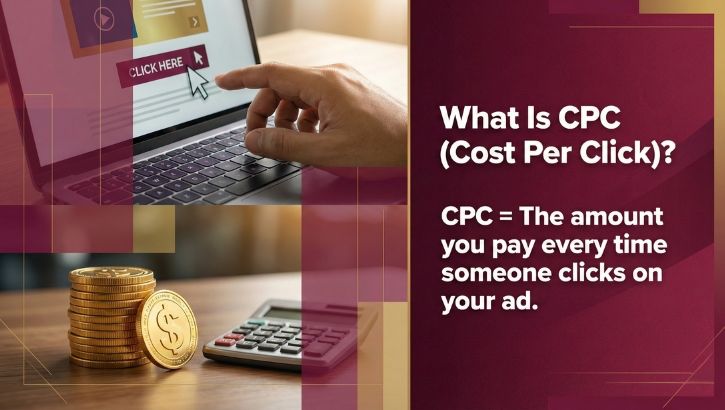
CPC means you pay each time someone clicks on your ad.
Whether 1,000 or 100,000 people see your ad—you pay only when a user clicks.
When to Use CPC
Use CPC campaigns if your goal is:
- Drive traffic to a website
- Bring users to a landing page
- Generate leads
- Send people to an e-commerce product page
- Test new creatives or audiences
Platforms That Use CPC
- Google Search Ads
- Meta (Facebook & Instagram Ads)
- YouTube
- LinkedIn Ads
- Microsoft (Bing) Ads
Real-Life CPC Example
Your Google Ad receives:
- 500 clicks
- CPC = ₹10 per click
Total cost = 500 × 10 = ₹5,000
You pay only for meaningful engagement.
Industry CPC Benchmark
- Global average Google Ads Search CPC = $2.69
- In India, CPC can range from ₹3 to ₹80 depending on industry
(Finance, Insurance, Legal = High CPC; Fashion, F&B = Low CPC)
2. What Is CPM (Cost Per Mille / Cost Per 1000 Impressions)?
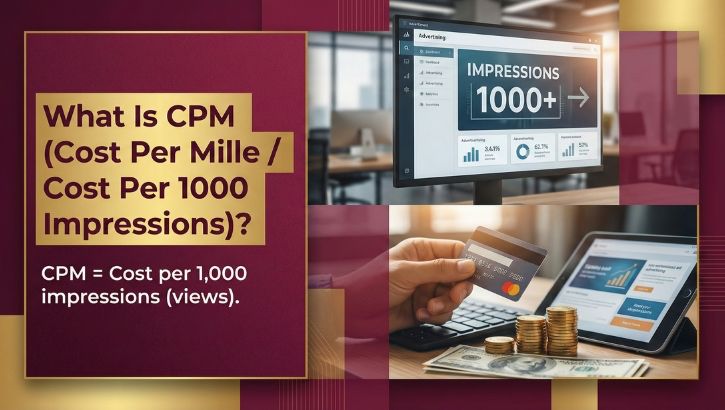
CPM means Cost Per 1,000 impressions (views).
You pay for visibility—not clicks, not actions.
“Mille” simply means 1,000 in Latin.
When to Use CPM
Ideal for:
- Brand awareness
- Big reach campaigns
- Video promotions
- Display and banner ads
- Top-of-funnel marketing
- Launching a new product
Platforms Using CPM
- Facebook & Instagram
- Google Display Network
- YouTube
- TikTok, Twitter, Snapchat
Real-Life CPM Example
If:
- CPM = ₹120
- Total impressions = 50,000
50,000 impressions = 50 × 1,000
Total cost = 50 × ₹120 = ₹6,000
You pay for visibility—whether users click or not.
Industry CPM Benchmark
- Average Facebook Ads CPM = $14.90 globally
- In India, CPM often ranges from ₹60 to ₹250, depending on niche
3. What Is CPA (Cost Per Acquisition / Action)?

CPA means you pay only when the user completes a specific action.
Action = Conversion.
Examples:
- Purchase
- Lead form submission
- App install
- Registration
- Booking
- Add to cart
CPA is the most result-driven pricing model.
When to Use CPA
Use CPA for:
- E-commerce sales
- Lead generation
- App installs
- Sign-up campaigns
- High-ROI performance marketing
Platforms Using CPA
- Google Ads (Target CPA)
- Meta Ads
- Affiliate networks
- Mobile install networks
Real-Life CPA Example
CPA = ₹200
Conversions = 30 registrations
30 × ₹200 = ₹6,000
You pay ONLY when you get leads or sales.
Industry CPA Benchmark
- Global Google Ads Search CPA = $53.52
- In India, CPA can range from ₹80 to ₹1,500, based on niche and funnel quality
CPC vs CPM vs CPA: When to Use Each
CPC vs CPM vs CPA
| Goal | Choose | Why | |
|---|---|---|---|
| Get more website traffic | Increase reach / awareness | Get leads or purchases | Build a full-funnel strategy |
| CPC | CPM | CPA | Mix of all |
| You pay for clicks only | Cheapest for branding | Pay only for results | CPM (Awareness) → CPC (Traffic) → CPA (Sales) |
Real-Life Examples
Example 1: Burger Shop
- Goal: Show menu to 100,000 people
- Best model: CPM (Brand Awareness)
Example 2: WHY TAP Lead Campaign
- Goal: Get student inquiries
- Best model: CPA
- WHY TAP pays only when students submit the lead form
Example 3: E-Commerce Website
- Goal: Increase sales
- Best model: CPA
Example 4: App Install Campaign
- Goal: Increase installs
- Best model: CPA (Cost Per Install)
How CPC, CPM & CPA Work Together (Marketing Funnel)
A strong digital marketer uses all three models:
- CPM → Create awareness
- CPC → Drive traffic
- CPA → Convert traffic into sales/leads
This creates an end-to-end performance funnel.
Which Model Should Beginners Learn First?
For any student or aspiring performance marketer entering the world of digital advertising, the biggest question is:
“Which Pricing model should I learn first—CPC, CPM, or CPA?”
Understanding CPC vs CPM vs CPA is not just a theory lesson; it determines how effectively you can run campaigns, optimize budgets, and deliver business results in real marketing environments.
Beginners often feel overwhelmed when faced with these three models. However, when you approach them in the right sequence—CPC → CPM → CPA—the learning curve becomes smoother and far more practical.
Below is the recommended step-by-step learning path for beginners.
1. Start with CPC: The Foundation of All Advertising
CPC (Cost Per Click) is the ideal entry point for anyone learning digital marketing. When comparing CPC vs CPM vs CPA, CPC stands out as the simplest, most beginner-friendly model.
Why CPC Is Perfect for Beginners
Easy to Understand
CPC is straightforward:
You pay only when someone clicks your ad.
There are no complicated calculations, no advanced conversions, and no multi-step analytics.
This simplicity helps freshers grasp campaign basics quickly.
Simple Budgeting
CPC allows total control over daily and monthly budgets.
For example, with a CPC of ₹5 and a daily budget of ₹500, you can predict around 100 clicks.
This makes it easier for beginners to test targeting, creatives, and landing pages without risk.
Immediate Feedback
The biggest advantage of learning CPC first is speed.
Within hours of launching an ad, you can see:
- Clicks
- CTR (Click-Through Rate)
- Cost per click
- Basic audience response
This instant feedback loop helps beginners understand what works and what doesn’t.
You quickly learn how ad copy, visuals, targeting, and call-to-actions influence user behavior—lessons that are crucial before moving to CPM or CPA.
Why CPC Must Be Your First Step in CPC vs CPM vs CPA
CPC teaches you the fundamentals of:
- Audience targeting
- Creative testing
- Understanding user intent
- Optimizing response rates
These are the core building blocks needed before you move to more advanced models like CPM or CPA.
2. Move to CPM: Master Awareness & Visibility Advertising
After learning CPC, the next logical step in the CPC vs CPM vs CPA pathway is CPM (Cost Per Thousand Impressions).
CPM introduces you to the world of brand-building campaigns, top-of-funnel marketing, and audience reach strategies.
Why CPM Is the Second Step
Best for Awareness & Reach Campaigns
CPM teaches you how to get your brand, product, or service in front of as many people as possible.
It’s used for:
- Brand promotions
- Video ads
- Display ads
- Launch campaigns
Understanding CPM prepares you for large-scale marketing strategies used by brands and agencies.
Perfect for Learning Creative Psychology
With CPM, your goal isn’t clicks—it’s attention.
You learn how to create ads that:
- Capture attention
- Communicate value in seconds
- Deliver strong messaging
- Increase brand recall
This pushes you to think like a strategist, not just a click-optimizer.
Essential for Video & Social Media Ads
In 2025, video ads dominate platforms like Instagram, YouTube, TikTok, and Facebook.
Most video campaigns run on CPM, not CPC.
Learning CPM expands your skill set into high-demand areas of content-driven advertising.
Why CPM Comes After CPC
You must first understand user behavior through clicks (CPC) before managing large visibility campaigns (CPM).
CPC builds your tactical skill; CPM builds your strategic thinking.
3. Master CPA: The Most Advanced and High-Value Skill
Once you understand both CPC and CPM, the last and most powerful model in the CPC vs CPM vs CPA framework is CPA (Cost Per Acquisition/Action).
This is where digital marketers earn the highest salaries and deliver the most ROI to companies.
Why CPA Is the Most Advanced
Requires Deep Skill & Analytical Thinking
CPA deals with conversions:
- Leads
- Purchases
- Registrations
- Installs
To optimize CPA, you must understand:
- Landing page quality
- Audience behavior
- Conversion funnels
- Retargeting
- Analytics
- Attribution
This is why CPA should be learned last, after mastering CPC and CPM.
Highest Demand in 2025
Every business, whether D2C, SaaS, EdTech, or e-commerce, wants results—not views or clicks.
CPA marketers deliver measurable outcomes, making them extremely valuable.
Highest Paying Performance Marketing Roles
Entry-level CPC marketers earn moderate salaries.
But CPA specialists often jump to:
- Performance Marketing Manager
- Growth Marketer
- Acquisition Specialist
These roles come with higher compensation because CPA focuses on business outcomes.
Why CPA Must Be Learned Last
CPA builds on everything learned in CPC and CPM.
You need experience with:
- Audience testing
- Budget handling
- A/B testing
- Funnel optimization
- Creative strategy
Without these foundational skills, CPA becomes overwhelming.
Conclusion
CPC vs CPM vs CPA
- CPC = Pay per click (Best for traffic)
- CPM = Pay per 1,000 impressions (Best for awareness)
- CPA = Pay per conversion (Best for ROI)
Mastering the difference between CPC vs CPM vs CPA is essential for every digital marketer, especially in 2025 when companies demand high-ROI campaigns and data-driven execution.
Once you understand these models, you’ll make better marketing decisions, run profitable campaigns, and position yourself for high-growth digital marketing roles.