



Table of Contents
- 1.
- 2.
- 2.1
- 2.2
- 3.
- 3.1
- 3.2
- 4.
- 4.1
- 4.2
- 5.
- 5.1
- 5.2
- 6.
- 6.1
- 6.2
- 7.
- 7.1
- 7.2
- 8.
- 8.1
- 8.2
- 9.
- 9.1
- 9.2
- 10.
- 11.
- 11.1
Data-Driven Marketing for Beginners
Marketing today is no longer driven by guesswork it’s driven by data. For many students, however, data-driven marketing can sound complex and intimidating, especially when starting with zero experience. Yet modern businesses rely heavily on data to understand customer behavior, measure performance, and make smarter marketing decisions.
This creates a common challenge for beginners: they want to enter digital marketing but feel unsure about working with numbers, tools, and reports. The good news is that data-driven marketing doesn’t require coding or advanced mathematics to get started. With the right fundamentals and beginner-friendly tools, students can build confidence quickly.
In this blog, we’ll break down what data-driven marketing really means, why it matters today, and how beginners can start building these skills from scratch.
What Is Data-Driven Marketing?
Data-driven marketing focuses on using real customer and performance data instead of assumptions to plan, execute, and improve marketing campaigns. In today’s digital world, every click, view, scroll, and purchase leaves a data trail and modern marketers use this data to make smarter, more predictable, and measurable decisions rather than relying on guesswork.
Simply put, it helps brands understand who their audience is, what content performs best, and which channels drive results. This approach also allows marketers to continuously test, learn, and optimise campaigns in real time reducing wasted budget and increasing return on investment.
In a competitive digital market, data-driven marketing turns marketing from an opinion-based activity into a performance-driven growth engine.
Simple Meaning of Data-Driven Marketing for Beginners
In simple terms, data-driven marketing means using numbers and insights to decide what works and what doesn’t in marketing.
For beginners, think of it this way:
● You don’t assume what your audience likes
● You check the data to see what they actually do
Guess-based marketing vs Data-driven marketing
● Guess-based marketing:
○ Decisions based on opinions or instincts
○ No clear proof of what works
○ High risk of wasted time and budget
● Data-driven marketing:
○ Decisions based on user behavior and performance metrics
○ Clear visibility into results
○ Continuous improvement using insights
As explained in Data-driven marketing: definition, examples, and how to do it, this approach helps marketers understand customers better, personalize campaigns, and improve ROI making it a core skill in digital marketing today.
Real-Life Examples of Data-Driven Marketing
Data-driven marketing is already part of everyday digital activities:
● Ads optimization
○ Tracking which ads get more clicks or conversions
○ Pausing low-performing ads and scaling winning ones
● Email performance tracking
○ Analyzing open rates and click-through rates
○ Improving subject lines and content based on results
● Content decisions using analytics
○ Identifying blogs or videos with high engagement
○ Creating more content around topics users actually read or watch
These examples show that data-driven marketing is practical, beginner-friendly, and focused on making better decisions, not complex mathematics.
Why Data-Driven Marketing Matters in Today’s Digital World
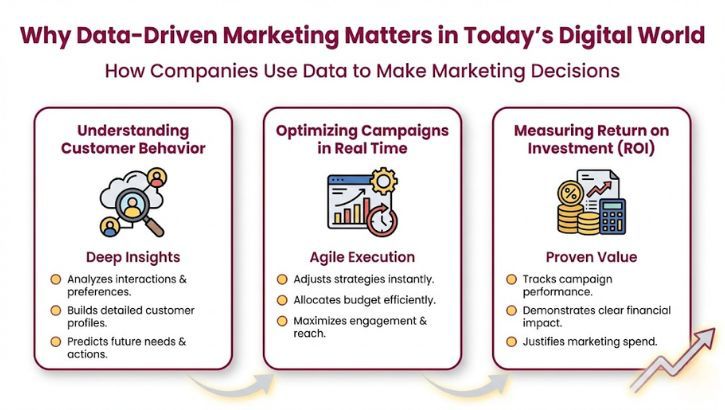
Data-driven marketing has become essential because digital platforms generate massive amounts of user data every day. Brands that use this data effectively can understand their audience better, optimize campaigns faster, and achieve more consistent results than those relying on intuition alone.
How Companies Use Data to Make Marketing Decisions
Modern companies depend on data at every stage of marketing to reduce risk and improve performance.
Key ways data is used include:
● Understanding customer behavior
○ Tracking how users search, click, scroll, and convert
○ Identifying what content or ads attract the right audience
● Optimizing campaigns in real time
○ Adjusting budgets based on performance
○ Improving targeting, messaging, and formats using insights
● Measuring return on investment (ROI)
○ Knowing exactly which channel or campaign drives results
○ Eliminating low-performing strategies early
As highlighted in Data-driven marketing trends, organizations using data-led strategies consistently outperform competitors in engagement and efficiency.
Digital Marketing Statistics That Prove the Power of Data
Statistics clearly show why data-driven marketing is no longer optional.
Key insights include:
● Data-backed campaigns deliver higher conversion rates
● Personalized marketing powered by analytics improves engagement
● Performance marketing relies heavily on metrics and reporting
● Businesses increasingly demand marketers who can interpret data
According to latest digital marketing statistics, analytics-driven decision-making is now a core requirement across SEO, paid ads, email marketing, and content strategy.
For beginners, this means learning data-driven marketing is not an advanced add-on - it’s a must-have skill to stay relevant in today’s digital marketing job market.
Can Students Start Data-Driven Marketing With Zero Experience
Many students assume that data-driven marketing is only for experienced professionals or people with a technical background. In reality, this is one of the most beginner-friendly specialisations in digital marketing when learned the right way.
With simple tools and clear fundamentals, students can start even with zero experience. You don’t need coding, advanced maths, or a data science degree. What you actually need is the ability to observe performance, understand basic metrics, and take small optimisation decisions.
Data-driven marketing teaches students how to:
- Read campaign results instead of guessing
- Understand user behaviour
- Identify what content, ads or pages really perform
- Improve results using simple changes
The biggest advantage for beginners is that the learning curve is practical and fast.
You can start by analysing:
- Website visits
- Social media engagement
- Ad clicks and conversions
- Email open and click rates
More importantly, students learn a powerful mindset shift:
Don’t ask “Is my idea good?”
Ask “What does the data prove?”
From a career point of view (straight talk): companies don’t hire students for theory they hire for measurable impact. Data-driven marketing helps students show real results early, even with small projects, internships or personal experiments.
Common Myths Beginners Believe About Data and Marketing
Beginners often hesitate because of misconceptions that make data-driven marketing seem harder than it actually is.
Common myths include:
●“You need coding or programming skills”
○ Most beginner tools work through dashboards and reports, not code
● “You must be a data scientist or math expert”
○ Marketing analytics focuses on trends and patterns, not complex formulas
● “Only senior marketers use data”
○ Entry-level roles also rely on basic metrics like clicks, traffic, and conversions
These myths often stop students from starting, even though the learning curve is manageable.
Why Beginners Are Actually Well-Suited for Data-Driven Roles
Students often adapt faster to data-driven marketing because they learn tools and concepts from scratch without fixed habits.
Reasons beginners do well include:
● Comfort with digital tools and platforms
● Ability to learn analytics step by step
● Openness to structured learning and practice
● Willingness to test, analyze, and improve continuously
With the right guidance and practice, beginners can quickly move from understanding basic metrics to making data-backed marketing decisions. This makes data-driven marketing an ideal entry point for students aiming to build a strong, future-ready digital marketing career.
Skills Students Need to Learn Data-Driven Marketing
To start a career in data-driven marketing, students don’t need advanced technical knowledge - but they do need the right mix of marketing and analytics skills. These skills help beginners understand what’s working, what’s not, and how to improve results using data.
Core Digital Marketing Skills
Before working with data, students must understand how digital marketing channels function. These basics give context to the numbers and metrics.
Key skills include:
● Search Engine Optimization (SEO)
○ Understanding traffic sources and search intent
● Social Media Marketing
○ Measuring reach, engagement, and audience growth
● Paid Advertising○Tracking clicks, conversions, and ad performance
● Content Marketing
○ Knowing how blogs, videos, and posts support goals
● Campaign Planning
○ Setting objectives before analyzing results
These fundamentals help students connect data with real marketing actions.
Basic Data and Analytics Skills Beginners Should Focus On
Once the basics are clear, students can start learning simple analytics concepts that are widely used in entry-level roles.
Beginner-friendly data skills include:
● Understanding key metrics○ Impressions, clicks, CTR, conversions, bounce rate
● Reading dashboards○ Google Analytics and ad platform reports
● Tracking performance trends
○ Identifying what improves or drops results
● Basic reporting
○ Explaining insights in simple terms
Developing these skills early aligns well with long-term career growth, as discussed in 7 Powerful Insights That Will Shape Your Digital Marketing Career by 2030.
Together, these skills prepare students to move confidently into data-driven digital marketing roles without feeling overwhelmed.
Tools Beginners Can Use for Data-Driven Marketing
One of the biggest advantages for beginners today is access to easy-to-use, mostly free tools that make data-driven marketing simple. These tools don’t require coding or technical expertise and are widely used in entry-level digital marketing roles.
Beginner-Friendly Marketing and Analytics Tools
Students can start learning data-driven marketing using the same tools professionals use - just at a basic level.
Popular beginner-friendly tools include:
● Google Analytics
○ Tracks website traffic, user behavior, and conversions
○ Helps understand where users come from and what they do
● Google Search Console
○ Shows how websites perform in search results
○ Helps analyze clicks, impressions, and search queries
● Meta Ads Manager
○ Tracks ad performance across Facebook and Instagram
○ Provides insights into reach, engagement, and conversions
● Email Marketing Dashboards
○ Measure open rates, click-through rates, and user response
● Content Performance Tools
○ Analyze which blogs or videos get more views and engagement
These tools present data visually, making them ideal for beginners.
How Students Can Practice Data-Driven Marketing Using These Tools
Learning tools becomes easier when students apply them through practice rather than theory.
Effective practice methods include:
● Using demo accounts or sample datasets
● Working on practice websites or blogs
● Running small test campaigns with limited budgets
● Analyzing past campaign data to identify patterns
● Creating simple reports explaining what worked and why
By regularly practicing with these tools, students gain confidence in reading data and making decisions. This hands-on exposure is what transforms beginners into job-ready data-driven marketers.
Career Scope in Data-Driven Marketing for Beginners
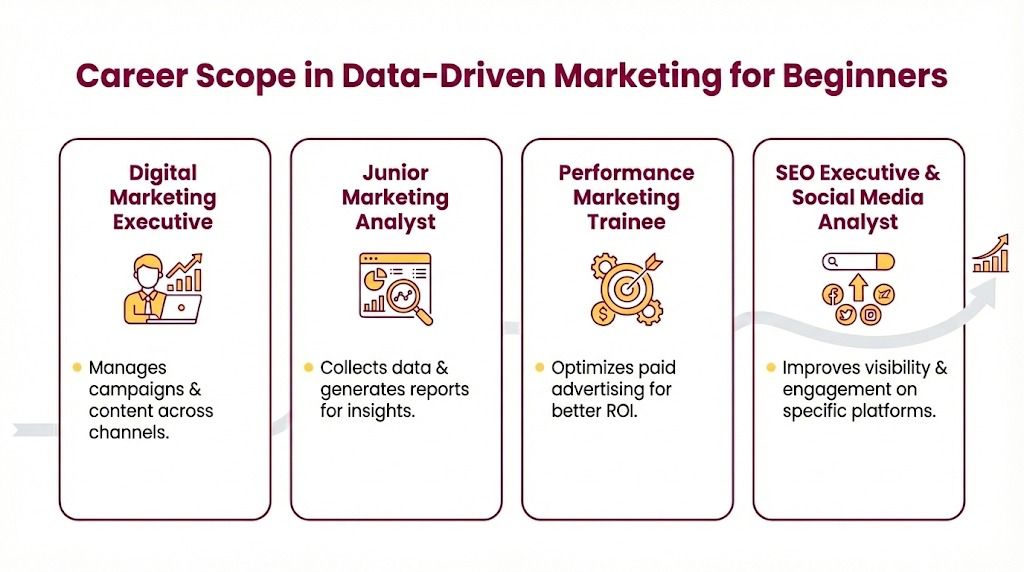
Data-driven marketing opens up strong career opportunities for students because companies increasingly rely on analytics to guide decisions. Even at entry level, businesses look for marketers who can understand data, track performance, and improve results using isights.
Entry-Level Jobs Students Can Target
Beginners with data-driven marketing skills can apply for multiple roles without prior experience, as long as they understand tools and metrics.
Common entry-level roles include:
● Digital Marketing Executive
○ Tracking campaign performance and website traffic
● Junior Marketing Analyst
○ Assisting in data reporting and performance analysis
● Performance Marketing Trainee
○ Supporting paid ad campaigns using data insights
● SEO Executive
○ Monitoring rankings, traffic, and user behavior
● Social Media Analyst
○ Analyzing engagement, reach, and audience growth
These roles focus more on execution and reporting, making them ideal starting points for beginners.
Why Data Skills Improve Salary and Career Growth
Adding data skills to digital marketing significantly boosts long-term career growth and earning potential.
Key advantages include:
● Faster promotions due to measurable impact
● Higher demand across industries and roles
● Better decision-making confidence
● Easier transition into specialized roles like analytics or performance marketing
As highlighted in Is Data Analytics a Good Career in India in 2025? – Complete Guide for Beginners, professionals with analytics knowledge consistently enjoy stronger career stability and growth.
For students, learning data-driven marketing early creates a competitive edge in an increasingly data-focused job market.
Why Structured Training Helps Beginners Learn Data-Driven Marketing Faster
While free videos and blogs are useful for understanding basic concepts, beginners often struggle to apply data-driven marketing in real situations without proper guidance. Most learners know the theory, but feel confused when they open real dashboards, reports, or ad accounts.
Structured training helps students move from confusion to clarity by giving them a clear learning path, hands-on practice, and real-world exposure.
It helps beginners:
- learn what metrics actually matter
- understand how to read reports correctly
- connect data with marketing decisions
- practice optimisation using real examples
Most importantly, structured training saves time. Instead of jumping between random tutorials, students follow a step-by-step process that builds confidence and practical skills faster.
Problems With Learning Data-Driven Marketing Alone
Self-learning can feel flexible, but it comes with clear limitations especially for beginners.
Common challenges include:
● Tool confusion
○ Too many platforms with no clear learning order
● Lack of practical application
○ Knowing concepts but not how to use them in real scenarios
● No feedback or correction
○ Mistakes go unnoticed, slowing progress
● Unclear career direction
○ Difficulty understanding which skills employers actually expect
Without structure, students often learn randomly and struggle to connect data insights with real marketing outcomes.
How Practical Training Makes Beginners Job-Ready
Structured, hands-on training focuses on learning by doing, which is critical in data-driven marketing.
Effective training programs offer:
● Guided practice with analytics and marketing tools
● Real-world projects that involve tracking, analyzing, and optimizing campaigns
● Clear understanding of metrics, KPIs, and reporting
● Mentorship to connect data insights with business decisions
Real Success Stories of Beginners Entering Data-Driven Marketing
Seeing how beginners successfully move into data-driven marketing roles makes this career path feel achievable and practical, especially for students who are unsure where to start.
In reality, many successful learners begin with zero experience. They do not come from technical backgrounds and they do not have prior industry exposure. What makes the real difference is a clear learning path combined with regular hands-on practice using real tools and real data.
With the right learning approach, beginners gradually learn how to read basic performance reports, understand user behaviour, and improve campaigns using simple insights. As their confidence grows, they are also able to explain their results clearly in interviews and practical tests.
This is how most beginners move forward in data-driven marketing. Not through theory alone, but by building small, real projects that show their ability to analyse data and take smart, measurable actions.
How Beginners Move From Zero Experience to Job-Ready
Most successful beginners follow a clear and structured progression rather than trying to learn everything at once.
Common patterns seen among successful learners include:
● Starting with digital marketing basics before jumping into analytics
● Learning how to read simple reports and dashboards, not complex data
● Practicing on real tools like Google Analytics, ads dashboards, and content reports
● Working on small projects or case studies to understand performance tracking
● Building confidence by explaining insights in simple, business-focused language
This gradual approach helps students overcome fear around data and focus on practical skills that employers actually value.
Why Practical Exposure Makes a Real Difference
Employers don’t expect beginners to be experts - but they do look for candidates who understand how to use data in real situations.
What makes beginners job-ready:
● Ability to track basic metrics like traffic, clicks, and conversions
● Understanding how data supports better marketing decisions
● Hands-on exposure to tools used in real campaigns
● Confidence in discussing results during interviews
Many learners who follow this approach have successfully transitioned into entry-level digital marketing and analytics roles, as shared through WHY TAP student testimonials. These real outcomes show that data-driven marketing is not just for experienced professionals - it’s a realistic and rewarding career path for beginners who start with the right foundation.
Step-by-Step Roadmap for Students to Start Data-Driven Marketing
Starting data-driven marketing can feel overwhelming at first, but when broken into clear steps, it becomes manageable - even for students with zero experience. The key is to focus on progress, not perfection.
Beginner Roadmap to Get Started With Confidence
Follow this simple, practical roadmap to build data-driven marketing skills step by step:
● Understand the basics of digital marketing
○ Learn how SEO, social media, paid ads, and content marketing work
○ Know where data fits into each channel
● Learn basic marketing metrics
○ Focus on impressions, clicks, CTR, conversions, and engagement
○ Understand what each metric tells you about performance
● Start using beginner-friendly tools
○ Explore Google Analytics, Search Console, and ad dashboards
○ Learn how to read reports, not just view numbers
● Practice with small projects
○ Analyze blog traffic or social media performance
○ Compare results and note what improves engagement
● Build a simple portfolio
○ Document what you tracked, what insights you found, and what actions you’d take
○ Focus on learning outcomes, not perfectio
● Prepare for entry-level roles
○ Practice explaining data insights in simple language
○ Be ready to show how data helps make better marketing decisions
Final Thoughts
Data-driven marketing is no longer an advanced or intimidating skill it has become a core requirement for modern digital marketing roles. For students and beginners, it offers a practical way to enter the industry by focusing on real performance, not guesswork. With the right fundamentals, simple tools, and consistent practice, anyone can learn to understand data and use it to make better marketing decisions.
Starting early with data-driven thinking helps build stronger confidence, clearer career direction, and better long-term growth. If you approach learning step by step, data-driven marketing can become one of the most valuable skills in your digital marketing career journey.
Empower Your Career with WHY TAP
At WHY TAP, we help students and working professionals build future-ready skills through industry-focused, AI-powered Digital Marketing programs. With expert mentorship, hands-on projects, and dedicated placement support, you gain the practical experience and confidence needed to grow faster in today’s competitive job market.
Take the next step toward a smarter, data-driven digital marketing career with WHY TAP.