







Table of Contents
- 1.
- 2.
- 3.
- 3.1
- 3.2
- 3.3
- 3.4
- 3.5
- 4.
- 5.
- 6.
Voice and visual search in digital marketing are reshaping how people discover information online, and 2025 is the turning point where traditional SEO evolves into AEO answer Engine Optimization. Today, users don’t rely only on typing. They talk to devices, take photos to search, and expect instant, AI-powered answers.
This shift has completely transformed how brands must create content, structure information, and optimize for search engines.
In this blog, you’ll learn:
✅ What voice & visual search really are
✅ Why SEO is evolving into AEO
✅ How marketers (and students) in Chennai can adapt
✅ Practical steps to future-proof your career in 2025
Let’s dive in.
1. The Changing Shape of Search
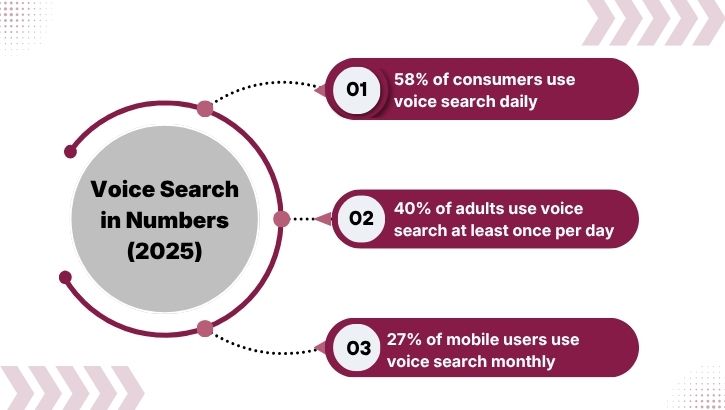
Voice search refers to queries made by speaking into a device (smartphone, smart speaker, car infotainment system) instead of typing. As one analysis puts it, “Voice search optimisation has emerged as a key pillar … enabling brands to appear in the quick, conversational queries that customers make on the go.” Soluzione | Microsoft Gold Partner+2First Launch+2
Users are increasingly asking natural-language questions: “Hey Siri, what’s the best digital marketing course near Chennai?” vs. “best digital marketing course Chennai”. The shift in how queries are phrased has major implications for how content must be structured. First Launch
Visual Search: Snap & Discover
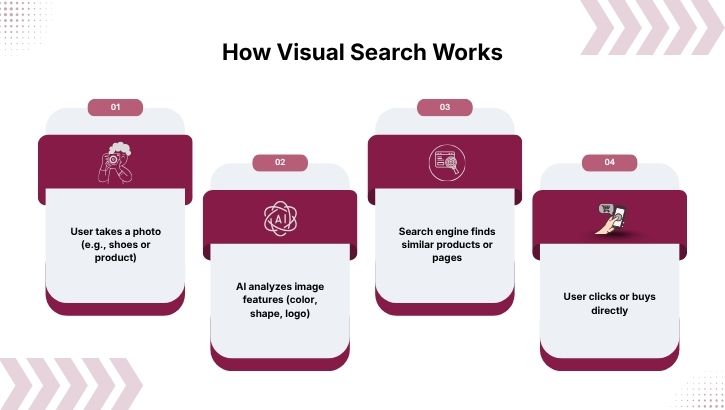
Visual search allows users to use images e.g., the camera on their phone, to search. For example, you photograph a product (say a pair of shoes) and get results of where to buy, similar items, etc. According to a recent article: “In the digital marketing industry … Visual Search and Voice Search: two rising stars have taken centre stage.” Nivida Software+1
Platforms such as Google Lens, Pinterest Lens and Bing Visual Search make visual search increasingly accessible and for marketers, that means optimising not just text but imagery, metadata, context. Nivida Software+1
Why the Shift? Changing Consumer Behaviour + Technology
- More smart devices with voice assistants and cameras mean these search modes are more popular. Soluzione | Microsoft Gold Partner+1
- Queries are becoming more conversational, context-aware, multimodal (text + voice + image) — meaning users expect immediate answers, not a list of links. Nivida Software
- Search engines are evolving: AI, machine learning, natural language processing are enabling devices to interpret voice, image and context better than before. IoT Marketing+1
In short: Search isn’t just about keywords anymore, it’s about how humans naturally ask questions and how devices interpret those questions.
2. From SEO to AEO: The Paradigm Shift
Traditional SEO (Search Engine Optimisation) focused on ranking webpages in search engine results pages (SERPs) via keywords, backlinks, page-rank signals, on-page factors etc. But in 2025 this is evolving toward AEO (Answer Engine Optimisation).
What is AEO?
According to the definitions:
“Answer Engine Optimisation (AEO) is a digital strategy focused on optimising content to provide direct, concise answers to user queries through AI-powered answer engines … Unlike traditional SEO … AEO emphasises structured, conversational content that aligns with natural language patterns and user intent.”
Rather than simply appearing on page 1 and hoping for clicks, brands now must position themselves as the direct answer to the query — whether that means being read aloud via a smart speaker, or surfaced as a featured snippet, or matched via image context.
Why This Matters for Marketers
- Voice assistants often read out the answer from a featured snippet or knowledge panel, meaning you might not get the click, but you want to be the answer. First Launch
- With visual search, users may bypass typed queries entirely and go from image to purchase, so optimising images, product-metadata becomes critical. Nivida Software+1
- Metrics are evolving: It’s no longer just about “rank #1 for keyword X”, but about appearances in voice/visual queries, being selected by a device as the answer, optimising for multi-modal search contexts.
SEO vs AEO - A Quick Comparison
| Factor | Traditional SEO | AEO / Voice & Visual Search Era |
|---|---|---|
| Query type | Short keywords (“digital marketing course Chennai”) | Conversational, question-based (“Which digital marketing course in Chennai has best jobs?”) |
| Device/context | Typing on desktop or mobile | Speaking to device, snapping image, smart speaker, wearable device |
| Content format | Paragraphs, keyword-rich, static pages | FAQ style, structured data, natural-language, images & alt text, quick answers |
| Success metric | Page rank, backlinks, clicks | Featured snippet selection, voice answer, visual context match, local voice/visual prominence |
| Optimisation focus | Keywords, links, on-page SEO | Conversational triggers, schema markup, image meta, mobile speed, local context, multimodal input |
So when you adopt the title From SEO to AEO, you are signaling that you are moving from “optimize for search engines” toward “optimize for how users will actually ask, via voice/image, and how devices will deliver the answer”.
3. How Voice & Visual Search Are Rewriting Digital Marketing Strategy in 2025
Let’s explore concrete ways in which these trends affect digital marketing and what you need to build into your strategy.
3.1 Keyword and Content Strategy - Go Conversational
- Voice queries are often longer and framed as questions: e.g., “Hey Google, what are the best paid digital marketing courses in Chennai under ₹50,000?” vs. typed “digital marketing course Chennai”. Soluzione | Microsoft Gold Partner+1
- So content must include question headers (H2/H3) such as: “What makes a digital marketing course job-ready in Chennai?” followed by concise answer paragraphs.
- Use FAQ sections and “People also ask” style questions. These help you capture voice search results and featured snippets. First Launch+1
- For visual search, your content needs to pair strong visuals with descriptive alt text, descriptive filenames, and context explaining what the image is about, you essentially “tell the image story”. Nivida Software+1
3.2 Technical SEO & Site UX - Mobile, Speed, Structured Data
- Most voice & visual searches happen on mobile devices. So mobile-first design, responsive pages, fast loading times matter more than ever. Soluzione | Microsoft Gold Partner+1
- Structured data (schema markup) helps search engines understand the context and content of your page — this is especially critical for voice/answer engines. Example: marking up FAQs, courses, events, local business info. First Launch
- For visual search, ensure images are optimised (size, format, alt-text, relevant metadata). Use image sitemaps. Ensure the site uses HTTPS, has clean markup, and provides good image context (surrounding text). Nivida Software
3.3 Local SEO Gets a Boost
- Voice queries are often “near me” or location-based (“digital marketing institute near Raipur”). Offline behavior and local intent are critical. For instance: “Where is the best digital marketing course in Chennai for freshers?”
- Ensure your Google Business Profile (now often used in voice queries) is properly configured. Encourage reviews, ensure NAP (Name, Address, Phone) consistency. First Launch+1
- Local keywords in voice form: “What digital marketing course in Chennai offers a stipend and live projects?” Content must be ready to answer that question.
3.4 Paid Advertising & New Formats
- With the rise of voice/visual search, new ad opportunities are emerging: audio ads for smart speakers, voice-activated purchase prompts, image-based shopping ads triggered by a snap. Soluzione | Microsoft Gold Partner+1
- Marketers need to think about multimodal campaigns: For example, a user sees a product (image) via camera and then asks the voice assistant about price or availability, your ad/content must work across that user journey.
3.5 Analytics & Measurement - Evolve Your KPIs
- As devices provide answers directly (without click-through), traditional metrics like click-through rate (CTR) may decline. Instead, you might track answer-ability, voice/visual appearance, featured snippet capture, local voice query stats, and voice-commerce conversions.
You may need to adopt new dashboards that track “how often were we the spoken answer?”, “How often were we the image match?” etc. Some emerging frameworks call this “Generative Engine Optimisation” (GEO) or “Answer Engine Optimisation”.
4. Pitfalls to Avoid & Common Mistakes
Mistake 1: Treating Voice Search like Traditional SEO
Many marketers apply the same short-keyword mindset to voice search, e.g., just stuffing keywords. This doesn’t work. Voice search is conversational and intent-driven. First Launch
Mistake 2: Ignoring Schema/Structured Data & Mobile UX
Without proper schema markup and mobile responsiveness, your site may never be picked up as a voice answer or image match. Soluzione | Microsoft Gold Partner+1
Mistake 3: Thinking Visual Search is Just About Pretty Images
Visual search requires context: meaningful images with alt text, descriptive metadata, surrounding textual context. Poorly optimized images may never rank. Nivida Software+1
Mistake 4: Only Focusing on Global Keywords
Local intent is crucial — many voice and image searches are hyper-local. For Chennai/India, you may need to account for regional languages, local intent, near-me queries.
Mistake 5: Neglecting Measurement and Adaptation
Without tracking new KPIs, you’ll be optimising blindly. What worked for traditional SEO may not work for voice or image search you need to test, learn and evolve.
5. Opportunities & Future Trends
Multimodal Search is Going Mainstream
Users will increasingly combine voice + image + text. For instance, point the camera at a product and ask via voice: “Is this available in my size?” or “Where can I buy this in Chennai today?” Marketers who optimise for such journeys will be ahead. First Launch+1
Voice Commerce (V-Commerce) Rising
As devices become purchase‐ready via voice (“Alexa, reorder my running shoes”), marketers must optimise for voice-activated purchases, not just search. First Launch
Regional and Multilingual Search Gains Importance
In India especially, voice search in regional languages is soaring. You should consider creating content in Tamil, Telugu, Hindi, etc., and using localised conversational phrasing. Soluzione | Microsoft Gold Partner
AI Generated Answers & Answer Engines
Search engines (and answer engines) are moving toward AI-driven responses, not just list of blue links. Being the source that these AI systems pull from, via clean structured content and high authority is going to matter.
Image Search Meets Shopping
Visual search is turning into visual commerce: you see a product, you snap it, you buy it. Optimising product images, making sure they are indexable, and enabling “snap to buy” flows will create competitive advantage. Nivida Software
6. Conclusion
Voice and visual search in digital marketing are redefining the entire marketing playbook.. SEO still matters, but it’s no longer enough. In 2025 and beyond, brands that master AEO (Answer Engine Optimization) will dominate discoverability.
For aspiring marketers and students in Chennai, this is your opportunity to stay ahead. Learn, adapt, and lead the change because the future of search doesn’t type… it talks and sees.